Ethics Quote Of The Month: John W. Jenkins

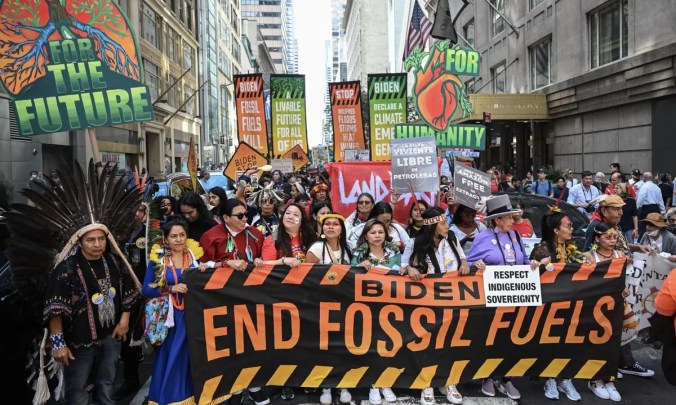
“The University defends the truth,” says the Harvard logo. ‘The emblem shows respect for science, using only verified facts within the University’s walls and a willingness to defend the truth.’ Yet as it relates to climate change, the University has set aside obvious truths and brought together its five professional schools supporting the new “Save the Planet” religious dogma of the past decade.”

—Harvard M.B.A John W. Jenkins, in a letter to the alumni magazine protesting the University’s complicity in promoting “imprudent policies perpetuated on our populations by Green environmental activists whose view of history is only 20 years deep.”

Jenkins, whom I have thus far not succeeded in contacting, has authored one of the clearest and most persuasive debunking of current climatic change cant, and perfectly chastised our mutual alma mater, Harvard, for its cowardly and irresponsible alliance with an unethical and destructive movement. The author appears to be in his late eighties, and more skilled in communication than graduates half, indeed a quarter his age.

Harvard Magazine published his letter, but I am trying hard to believe it was a coincidence that its second half was difficult to locate due to a pagination error. I hope Mr. Jenkins does not mind Ethics Alarms re-publishing his entire statement. It deserves to be seen by as many people as possible. The whole thing is an Ethics Quote of the Month. Here it is:

Continue reading

Regarding Justice Alito’s “Appearance Of Impropriety” Scandal

Justice Samuel Alito did not disclose a 2008 trip on the private jet of Paul Singer, a billionaire GOP donor, and did not recuse himself from a later case involving Singer’s hedge fund. Since the Supreme Court is now under a sustained attack by Democrats and progressives, partially because of the Dobbs ruling (How dare unelected judges rule that unelected judges shouldn’t decide matters the Constitution leaves to legislators?) and partially because they see the current conservative-leaning Court as its greatest roadblock to a socialist, quasi-totalitarian Nirvana, his best, most responsible and most ethical course was to admit he made a mistake, show that he understood the public’s concern, and vow to be more mindful of his conduct going forward.

Instead, Alito penned a Wall Street Journal op-ed defending his indefensible conduct,  declaring himself as innocent as a newborn lamb, and, of course, making things worse. His piece was full of legalistic hair-splitting to explain why he was well-within the requirements of the Ethics in Government Act, but the universal ethics requirement that judges must avoid the appearance of impropriety does not rest upon legal niceties. It rests upon how the public perceives things, and most of the public can’t read a statute and don’t read court opinions.

Continue reading

Baseball Ethics: Everything Isn’t About Race, Kurt

Kurt Streeter is allegedly the New York Times; primary sports pundit, but if he has written more than a handful of columns that didn’t drag race into his commentary, I’d be surprised. Most sports fans would be happy never to have to think about the obsessions of partisans and social justice warriors while following their favorite teams and athletes, but it is the mission of activists posing as sports analysts to have that hope a pipe dream.

In his latest column, Streeter marvels at Luis Arraez, a Miami Marlins infielder and last year’s American League batting champion, who is making the first plausible run at a season-long .400 average since George Brett came close (.390) in 1980. Arraez, who makes the softest contact in the Major Leagues and might best be compared to “Wee” Willie Keeler, a 19th Century star known for poking baseballs “where they ain’t,” is a fun story this season, but Streeter being Streeter, he must examine Arraez through a racial lens. “No player,” Streeter informs us portentously, “has ever finished a season batting at or above .400 since Major League Baseball became an integrated game.”

Ah! I get it: Streeter is saying that all those other.400 seasons by white players aren’t really legit, because they didn’t have to face all the great black pitchers who were being kept out of the game by racism. In this he includes Ted Williams, the last .400 hitter (.406 in 1941), just a bit short of Babe Ruth as the greatest hitter in MLB history, implying that if “Teddy Ballgame” was playing in a fair league, he might not have hit .400 at all.

The contention can’t be proved or disproved, of course, but this is the second time in a week I’ve heard the argument and it is illogical and offensive. Consider:

Continue reading

Dispatches From The Trans Ethics Train Wreck

[ Rose’s breast-baring at the White House will serve as the regular graphic accompanying this topic in the future, because it perfectly symbolizes the attitide of these activists toward the public,

The Tran Ethics Train Wreck was made official back in February, and in retrospect Ethics Alarms should have designated it much earlier. An ethics train wreck is a continuing and evolving situation involving ethics issues and dilemmas that entice anyone becoming involved in them to end up looking foolish at best, misguided at worst, and in between, subject to anger and abuse. Latest developments:

  • The University of Wyoming’s Kappa Kappa Gamma sorority is being sued for allegedly changing the definition of ‘woman’ to accept a trans member, a biological male with equipment intact who is 6’2″ and 260lb. She has been accused of ogling her “sisters” with a full erection, among other issues. The suit alleges that the sorority’s leadership  bullied and intimidated member to accept Artemis Langford. The current and altered sorority rules only require  that a member “identify” as female. KKGs lawyers argue that the definition of “woman” has evolved since the sorority’s founding 150 years ago”The term (woman) is unquestionably open to many interpretations,” the sorority’s filing claimed. I question whether a law suit can prevail here, as clear as it seems that the complaining members were subjected to a bait-and switch. If they cannot get the sorority to agree to a policy they find tolerable, and if they really have been subjected to bullying, I suggest that they quit.
  • AMC Theaters  canceled screenings of a documentary film showcasing the experiences of de-transitioning transsexuals following an aggressive campaign by a group called the Queer Trans Project which sends “Build-a-Queer kits” to “transitioning” LGBTQ+ individuals. The kits include chest binders and tucking tape The online activist group encouraged protesters to send letters to AMC executives to block the screening of the documentary titled “No Way Back: The Reality of Gender-Affirming Care.”  The film shares the stories of five young transsexuals regretting their decision to cross gender lines as well as critical commentary from medical experts. Once AMC announced that it would not show the film, the group posted: “We did it! Our community’s swift action is a testament to the power of advocacy and the importance of raising our voices against harmful content. Your collective efforts have made a significant impact, and the decision to pull No Way Back from AMC theaters is a step towards fostering a more inclusive and respectful environment. Thank you for your dedication and commitment to creating positive change.” AMC claims that the decision was based entirely on poor advance ticket sales.
    And absent leaked documents or emails, there is no way to determine which story is true, or if reality is some mixture of both. The activist group would try to take credit regardless the actual impact of its lobbying, and AMC would never admit to suppressing speech and art because of political pressure.

  • This doesn’t help: New Hampshire’s first transgender state representative, Stacie-Marie Laughton has been arrested and charged with multiple counts of distributing child sexual abuse images. Laughton’s girlfriend was also arrested on the same day on one count of sexual exploitation of children, and one count of distribution of child pornography. She was working at a daycare called Creative Minds and is accused of taking pictures of the children in her care. 

That’s quite a role-model you have there, Trans World! Continue reading

Harvard! Ethicists! Experts! What’s Not To Trust?

From Financial Times:

Francesca Gino is one of HBS’s best-known behavioral scientists and author of Rebel Talent, a 2018 book with the subtitle “Why It Pays to Break the Rules at Work and in Life”…[The ]high-profile expert on ethics and dishonesty is facing allegations of dishonesty in her own work and has taken administrative leave from Harvard Business School… Gino, whose work has been widely cited, including in the Financial Times, has been a professor of business administration at HBS since 2014. Her HBS profile was recently altered to indicate that she is on administrative leave. She did not respond to FT requests for comment via email and social media.

A Harvard Business School spokesman said: “We have no comment at this time.” A group of academics who compile the Data Colada blog about the evidence behind behavioural science has started publishing a series of posts in which they say they will detail “evidence of fraud in four academic papers” co-authored by Gino. “We believe that many more Gino-authored papers contain fake data,” they wrote in the first post of the series, which appeared on June 17.

See? She really is an expert in dishonesty!

That The Washington Post, New York Times And The Rest Of The MSM Refused To Report This Story Is More Significant Than The Story Itself [Expanded]

I want to apologize in advance for the tone of this post. This issue makes me frightened, angry, frustrated and depressed. It is appropriate that I convey that, but this is not my favorite mode of expression.

Last month, Amazon blocked a Baltimore, Maryland-based Microsoft engineer named Brandon Jackson from accessing his “smart home” features. It disabled his Alexa and Echo Show, which managed his other smart devices. The justification for this intrusion was that an Amazon delivery driver thought he heard a racist remark from Jackson’s automated Eufy audio message when the driver rang the doorbell, which would have been odd indeed, since Jackson is black and he wasn’t at home at the time. The driver, good little Orwellian that he is, reported the imagined offense to Big Brother Amazon, which then exacted its revenge for Jackson’s WrongThink.

There was no racist comment. Jackson has multiple security cameras, and confirmed that fact, as did Amazon’s investigation. The Eufy doorbell had issued its programed response: “Excuse me, can I help you?” and the driver, walking away and wearing headphones, must have misinterpreted the message as “Bite me, you mocha-colored product of second-rate evolutionary processes!” or something similar. A completely understandable mistake on the driver’s part that resulted in Jackson’s Amazon account, his Alexa and Echo Show locking him out the next day. It took a week to undo it all.

Amazon confirmed the episode, and issued a statement promising that it was working to prevent similar incidents from happening in future. That’s nice. Everything is groovy, then!

Continue reading

Open Forum: Raiders Of The Lost Ethics Stories

More than the usual number of major or potentially major ethics tales swirling around that Ethics Alarms hasn’t gotten around to (yet), and having been chastised yesterday by a veteran commenter for “all this e-ink on Bud Light” (marketing is one of my many past and present occupations and special interests, so bite me), I am even more interested than usual in what issues the commentariat wants to discuss.

I think my favorite news item that I’m not going to write about is the Mississippi state Senator who says it’s time to revive the old Confederate-themed state flag. I’ll just mention that by pure coincidence, Grace and I re-watched “Mississippi Burning” last night.

I wonder if that senator has seen it?

(And no, I will not be seeing an 80-year-old Harrison Form reprise Indiana Jones. I care about the integrity of the character even if he and Disney don’t.)

Where Reporting Ends And Propaganda Takes Over: The NYT On Affirmative Action

Dominating today’s New York Times front page (above) is a report headlined “How It Feels to Have Your Life Changed By Affirmative Action” online and “Inside the Lives Changed by Affirmative Action” in the print version of the Times. The piece is naked and blatant advocacy for the Constitution- and U.S. law-violating policy that has been given temporary pass by a conflicted Supreme Court multiple times despite an unavoidable fact: it’s discrimination, and the Constitution doesn’t distinguish between good discrimination and bad discrimination. By the principles and values this nation was founded upon, all discrimination on the basis of qualities like religion, race, gender and ethnicity is wrong.

The Times approach to the subject is similar to its coverage of the illegal immigration controversy. In that matter, as periodically pointed out by Ethics Alarms, the Times has given readers frequent heart-warming tales of “the good illegal immigrant,” a hard-working immigration law violator who is the salt of the earth, a wonderful parent, and yet cruelly held accountable for his or her law-breaking anyway. The motive of such articles seems clear: use emotions to overcome and blot out law, ethics, fairness and common sense. As the Supreme Court seems poised to finally call college and university affirmative action programs what they are: illegal, the Times is trying to build support for its favorite party’s inevitable accusations of racism and illegitimacy against the five or six justices who will have simply done their jobs.

The headlines tell it all. Affirmative action changed the lives of its beneficiaries for the better, so obviously, affirmative action is good, and ending it would be unethical. What is striking about the article is that none of the affirmative action beneficiaries—all black—interviewed appear to have given a second’s thought to the individual whose opportunity they seized because of their “better” color. Some express regrets because they faced, or felt like they faced, skepticism about their degrees or career accomplishments because they were presumed to be “undeserving” affirmative action beneficiaries. None hint at any regret that someone who deserved to be accepted to an elite school or program was not so they could be.

Continue reading

The Rogan-Kennedy-Hotez Controversy: Is It Ever Unethical To Debate?

A controversy among three people I usually have no interest in paying attention to raises fascinating ethics issues.

Joe Rogan is a giant in the podcaster universe despite having risen to fame as the host of the disgusting reality show “Fear Factor” and having little education beyond high school. Last week he had Robert Kennedy as a guest on his show to his Presidential run and his views as an anti-vaxxer. Dr. Peter Hotez, one of the more obnoxious and arrogant scientists with an addiction to the media spotlight tweeted to his 400,000+ Twitter followers that the podcast was “nonsense” and “misinformation.” This prompted Rogan—who is a giant in the podcaster universe because he knows how to “stir the pot”— to challenge Hotez to come on his show and debate Kennedy (or, failing that, Rogan), offering to give $100,000 to a charity of Hotez’s choice if he agreed. Hotez refused, saying that scientists don’t debate ignoramuses and charlatans (or words to the effect), Elon Musk tweeted in to support Rogan, and pundits left and right began taking sides.

The episode immediately called to mind the battle between Holocaust historian Deborah E. Lipstadt and Holocaust denier David Irving, a story recounted in the film “Denial.” Lipstadt took the unshakable position that a debate on this topic automatically gave dangerous credibility to a position that has none. If there is a debate, she reasoned, then uninformed people will think, ‘So—maybe the Holocaust happened, and maybe it didn’t!’ “Some things happened, just like we say they do. Slavery happened, the Black Death happened. The Earth is round, the ice caps are melting, and Elvis is not alive, ” her character, played by Rachel Weisz, says in the film. (Maybe that’s an actual quote from Lipstadt, but I can’t find it.)

Continue reading

Very Interesting Points On The Trump Indictment From Will Sharf

Will Scharf is a former federal prosecutor a Republican candidate for Missouri Attorney General; take that last part as you will. In a piec for The Federalist, he ticks off six problems for prosecutors trying to prove the alleged crimes in the Justice Department’s case against Donald Trump. Few of them have been explained thoroughly in the mainstrem media by an analyst not obviously inclined to declare Trump guilty, at least none that I have found.

Here are Scharf’s six; my few comments are in italics:

1. Interplay Between the Espionage Act and the Presidential Records Act: “…The Presidential Records Act sets up a system where the president designates all records that he creates either as presidential or personal records (44 U.S.C. § 2203(b)). A former president is supposed to turn over his presidential records to the National Archives and Records Administration (NARA), and he has the right to keep his personal records.  Based on the documents I’ve read and his actions I’ve read about, I believe Trump viewed his “boxes” as his personal records under the PRA. There are statements he made, quoted in the indictment, that support that view. If Trump considered the contents of these boxes to be of purely personal interest, hence his designation of them as personal records, did he knowingly retain National Defebse Information? Did he really think these documents, like years-old briefing notes and random maps, jumbled together with his letters, news clippings, scribbled notes, and random miscellaneous items, “could be used to the injury of the United States”? Or did he just think of them as mementos of his time in office, his personal records of the four years, akin to a journal or diary?”

2. Classification and National Defense Information: “…Trump’s legal team needs to drive home this point over and over again: Classification is not dispositive in this case. Harm to America or benefit to foreign countries is the standard.  Anyone who has worked around government knows that overclassification is a huge problem. A ton of documents end up being classified because of arcane technical rules that may not reflect the real world. If the president were to ask the Navy what’s for lunch for the next week at Coronado, for example, there is a good chance the answer comes back with a classification marker on it.”

Continue reading