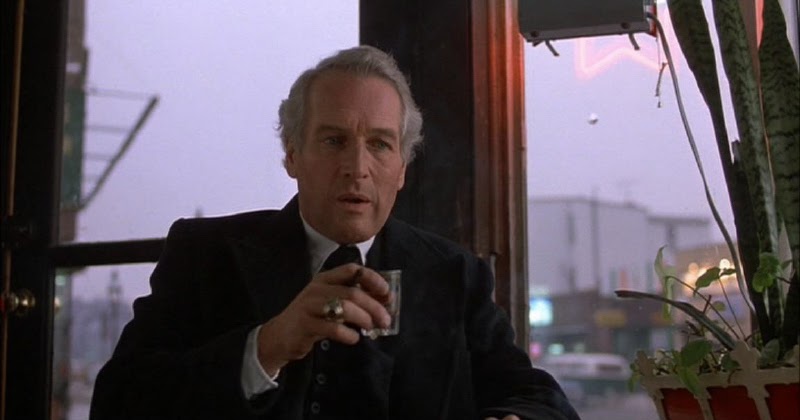
[That’s Paul Newman above, playing the alcoholic trial lawyer in “The Verdict.”]
I recently caused consternation (again) on the listserv of the Association of Professional Responsibility Lawyers (APRL), the organization that brings together most of the lawyers who concentrate on the contentious field of legal ethics as ethics partners, professors, state bar disciplinary counsel, CLE trainers, consultants, and just interested lawyers. I had been considering dropping this metaphorical bomb on the group for some time. My thesis: lawyers who are alcoholics, “recovering” or not, are ethically obligated to inform their clients of that ongoing and incurable malady. I see no way out of this ethical obligation, but the legal profession has been scrupulously avoiding confronting reality for centuries.
Alcoholism was once the secret meaning of “moral turpitude” in state bar associations’ requirements for admission: if you were guilty of moral turpitude, you couldn’t get a law license because of a presumed character deficit. When alcoholism was finally recognized as the illness it is, being an alcoholic was no longer a basis for bar exclusion or discipline. Bar associations all established “Lawyer Assistance Programs” as the alternative to punishment for lawyers with alcohol or substance abuse problems. That’s nice. However, none of the measures currently employed deal with the inconvenient facts of alcoholism.
Based on my knowledge and extensive experience with friends, family and associates, all alcoholics are untrustworthy by definition. They have a strong tendency to lie, for example (and they will admit that, if pressed) to conceal their addiction as well as the often disastrous results of it. No one, including the alcoholic himself or herself, can know when a relapse will occur or what will trigger it. A binge alcoholic can seem healthy and dependable for months or years, and suddenly go on a bender that incapacitates him. My late wife, a brilliant and capable woman who struggled courageously with the illness her whole life and ran our business and finances (or, should I say, said she was and made a good show of it) would have sudden unpredictable relapses that she covered up with consummate skill. She was what is called a maintenance-level alcoholic. She had a degree of intoxication she needed to maintain to function well and appear sober; below that level of alcohol consumption she suffered from withdrawal symptoms. One drink over that set-point, however, and she was physically and mentally incapacitated. Many maintenance level alcoholics successfully hide their addictions while actually being drunk every day in highly challenging jobs…until they can’t. Alcoholism is a progressive disease. Over time, alcoholics’ ability to control their addiction deteriorates along with their over-all health and mental state.


Ooooh..oooooh! Do physicians next!
My mother-in-law’s cardiologist totaled a highway patrol vehicle while driving drunk. No charges were filed. It was a weekday. He may have done procedures that day.
I always wondered what “moral turpitude” meant. Maybe alcoholism should be disqualifying. Or maybe just from private practice. If your client is your employer and/or the government and they know, you should be good to go.
“I always wondered what ‘moral turpitude’ meant.”
C’mon, YB; MORAL TURPITUDE was main-streamed when the aptly-named Beulah Balbricker (Nancy Parsons) chose it as THE way to fire the (IMO) very fetching Kim Cattrall’s Honeywell in Porky’s.
That’s when it became clear to me, leastways…
PWS
You’re dating me, Paulie. “Porky’s” was more heir no. 2’s era than ours.
I think that ethics lawyer is either marinating in something other than modest proposals, or the field of legal ethics is not as selective of their representatives as some other fields, such as carnival workers. With a few small tweaks, this is essentially what that genius is saying:
“Bravo, Jack! A grand idea, indeed! I’ve been marinating on a modest proposal of my own: I think lawyers should be barred from operating a motor vehicle on public roads if they engage in bad-faith argumentation under the guise of independent thought and iconoclasm. Our field is also unfortunately rife with practitioners whose principal vice is not alcoholism but the conviction that every intuition they happen to hold is a profound ethical insight waiting to be unleashed. Illegally operating a motor vehicle would seem to require that condition as well. After all, how can innocent civilians feel they are being legally protected when another driver is prone to mistaking personal anecdote for empirical evidence, broad-brushing entire classes of people as inherently untrustworthy, and then announcing that any disagreement must necessarily be self-serving? Any argument to the contrary is simply a moral failing. Onward, ho!” Nonpareil ethical/legal scholar? Urbane polemicist? Multifaceted genius. Or a ratiocinative train wreck who looks in the mirror and delights that he can turn a clever phrase? (Gee… hard to tell…)
Did you get any positive reactions at all? I’d be curious to see screenshots of the whole thread.
My concern is, if any physical or mental condition is bad enough to require disclosure, t then should the person even be practicing? Not because it’s a “moral failing”, but because it’s like the one-legged man auditioning for Tarzan. If you have any kind of chronic condition that, when it manifests, cripples your ability to function, then any kind of high-stress, time-sensitive, odd-hours keeping job may not be for you.
Oh yes, but most members foxholed, and the dissenters were nasty.
I’ve written about Bill Fallon, “The Great Mouthpiece.” He was a renowned criminal defense lawyer and a famous drunk, but so effective even when drunk that his services were in demand.
Yes, practicing law, particularly in private practice, is hard, even when you’re not an alcoholic.
I remember in the late ‘eighties or early ‘nineties, all of a sudden, the county and state bars were all over getting lawyers to seek help for drug and alcohol issues before they screwed up and would have to be disciplined.
I think most of the lawyers I knew who behaved like alcoholics were what I think are called “dry drunks,” i.e., domineering assholes.
Full disclosure is the ideal, but perhaps the most difficult stage is convincing the person suffering from substance abuse that they are indeed impaired.
We’re literally talking about a person with reduced cognition, lowered inhibitions, and this state is how they feel normal.
It’s like the Dunning Kruger effect–they might feel like they’re at the top of their game after a couple shots, but they are lying to themselves and informing their client is perhaps easier than being truthful to themselves.
Alcoholics know they have a BIG problem. They just don’t know how to deal with it.
A few years ago, a complaint was made on our local social media about a cake shop nearby. The customer explained that she had gone to the shop several weeks ahead of time to order a custom-made cake for an important family event taking place. She’d spent an hour with the proprietor, discussing the features of the cake and placing the order. On her way out the door, her heart nearly stopped when the proprietor mentioned casually that she was having brain surgery later that week.
Immediately, the customer expressed her concern that the business owner would be able to fulfill the order after what sounded like a serious medical condition. The owner assured her that she would be back up and running by then and that her daughter would be assisting her. Against her better judgment, the customer accepted this.
I’m sure you can predict what happened. The business owner’s surgery had complications, the customer began having a hard time communicating with the daughter who still insisted she could fulfill the order until she finally admitted at the last minute that she could not. The customer had to purchase a sheet cake from a local supermarket.
I realize that cake bakers are not lawyers and that the cake baker did disclose her upcoming surgery (though it doesn’t seem that it was intended to help the customer make an informed decision), in each case, someone is hiring a professional to perform a service. A service the quality of which could be affected by the professional’s illness. In the case of a lawyer, though, a client could be out money, freedom or even his life if his attorney cannot perform his duties or makes mistakes due to his alcoholism.
On point.