Ethics Workout, “Get In Ethics Shape For 2022 Edition,” 12/27/21: No Pain, No Gain!

1. On second thought, who needs work? The United States has been a nation that embraced work as a value and a mark of character as no other. Naturally, this core value has been under assault from the Left as part of its cultural overhaul strategy. The pandemic created an opining that has been brilliantly exploited politically, leading to a large part of the work force now unwilling to work. The Congressional Progressive Caucus, the biggest bloc of liberal lawmakers in Congress, has endorsed a bill proposed by Rep. Mark Takano, D-Calif., which would seek to implement a four-day workweek. Americans work far more than people in most other affluent countries, and we also produce more without using, as some countries do that I might mention, slave labor. But the work ethic is weakening.

The anti-work ethic is the goal on one of Reddit’s fastest growing sites — r/antiwork. The subreddit is “for those who want to end work, are curious about ending work, [and] want to get the most out of a work-free life.” It is up to 1.4 million members, ranking among the top subscribed-to subreddits.

Members discuss tactics workers can use to slack off, cheat, sabotage, and steal from their employers. You would learn there, for example, that April 15th is “Steal Something From Work Day.” [Pointer and source: Linking and Thinking on Education]

2. Observations on the Gallup Poll on public approval of Federal leaders (You can find the poll here).

  • Yes, I know, polls. But Gallup is straighter than most, and while the specific numbers should be ignored, the relative values are interesting.
  • The big finding, and what has been attracting all the headlines, is that Chief Justice John Roberts is way ahead of anyone else on the list, with a bipartisan 60-40 favorability split. This undercuts the pro-abortion strategy of warning that the Supreme Court can’t afford to make its decision on Roe v. Wade cases without considering the potential harm to the Court’s legitimacy. The Court seems to have the most trust of any of the branches, which means that it can (and should) be courageous if legal principles require.
  • Federal Reserve Chair Jerome Powell is second. How many Americans know who he is or what he does? 20%? Less? What is it they approve of?
  • Dr. Fauci is third at 52% approval, which shows you can fool a lot of the people all of the time.
  • Mitch McConnell is dead last, even behind Nancy Pelosi. Good.

Continue reading

Ethics Alarms On The New York Times’ “Most Important Debates” Of 2021, Part 2

Part I set some kind of Ethics Alarms record for reader disinterest, which I much admit, I don’t understand. These are all topics we have covered in some detail here over the last year, and the analysis of them by the alleged “newspaper of record’s” experts is, to say the least, perverse and revealing…yet the post’s first installment inspired just a single comment. Well, the Times’ take on the remaining issues are arguably worse. I find it fascinating, anyway. Here’s the rest of the highlights…

Can we save the planet?

It is embarrassing for a supposedly respectable news organization to frame an issue in such a hysterical and intentionally fear-mongering manner, which assumes one side of a debate is correct without reflection of nuance. The Times’ author on this topic, Farhad Manjoo, is a tech reporter, not an expert on climatology, so he has been given a platform to opine on something he doesn’t understand sufficiently to discuss reliably. On the topic of climate change, this is, sadly, typical. His article contains the kind of sentence midway through that would normally make me stop reading because of the bias, spin, hyperbole and mendacity: “During the Trump years — as the United States tore up international climate deals and flood and fire consumed swaths of the globe — unrestrained alarm about the climate became the most cleareyed of takes.”

There were no “climate deals,” just unenforceable virtue-signaling and posturing like the Paris Accords; the link between present day “flood and fire” and climate change is speculative at best, and unrestrained alarm is never “cleareyed,’ especially when those alarmed, like Manjoo, couldn’t read a climate model if Mr. Rogers was there explaining it. Then, after telling us that the Trump years were a prelude to doom, he says that since 2014, things are looking up. Much of what he calls “bending the needle” occurred under Trump.

Should the Philip Roth biography have been pulled?

This one is so easy and obvious that the fact that the Times thinks it deserves special attention is itself a tell. The answer is “Of course not!,” as an Ethics Alarms post explained. An absolutely competent biography was pulled by its publisher, W.W. Norton, never to be in print again, because its author, who had written other acclaimed biographies, was in the process of being “cancelled” for allegations of sexual misconduct toward women. I wrote,

“…[P]ublisher W.W. Norton sent a memo to its staff announcing that it will permanently take Blake Bailey’s biography of Philip Roth out of print, as a result of allegations that Bailey sexually assaulted multiple women and also behaved inappropriately toward his students when he was an eighth grade English teacher.

If that sentence makes sense to you, The Big Stupid has you by the brain stem.

It apparently makes sense to the Times, although its review of the matter doesn’t answer its own question. Why not? This is also obvious: as journalists, the idea that what a writer writes should be judged by what a writer’s personal life has involved is anathema, but the Times’ readers are so woke that the paper would dare not say so. Integrity! Continue reading

Unethical Quote Of The Month (And Most Revealing Unethical Quote Of 2021): Atlantic Senior Editor Ron Brownstein

“I don’t think it’s fundamentally about incivility. It’s about insurrection.”

—-Ron Brownstein, Senior Editor of “The Atlantic” magazine and political analyst for CNN, commenting on the “Let’s go, Brandon!” episode during President Biden’s Christmas Eve session with NORAD tracking Santa’s sleigh

[In case you were MIA over Christmas weekend–like most people—Ethics Alarms covered what Brownstein was commenting on here,  and here (Item #3)]

Brownstein went on to say,

[T]he whole Let’s Go Brandon kind of motif is a reflection of the view of two-thirds of the Republican base, driven by Trump’s claims, false claims, and the Big Lie, that Biden is an illegitimate president.

And it reflects the findings in multiple polls by the American Enterprise Institute, Vanderbilt University, and others, that a majority of Republican voters now say the American way of life is disappearing, so fast that traditional American way of life that we may have to use force to save it.

I think you’re seeing — this is a manifestation, not just of incivility but of the fundamental view of the illegitimacy, and the ominous shores we’re sailing toward very quickly in 2022 and especially 2024.

A digression is in order...Commenters critical of Ethics Alarms, both here and on my off-site email, often say that I am irrationally “angry” about situations and incidents that I rate as unethical. That’s an unfair tactic employed to misrepresent what are serious, analytical assessments as emotional ones. I write hard–always have; it’s my style— but I’m not an angry person. I’m essentially an optimistic and happy person. I don’t fume over politics or the culture: I’m aware of developments, but getting angry does no good at all, and I’m not wired that way.

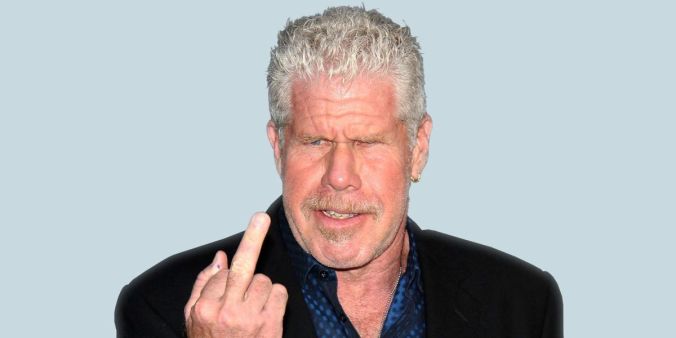
But Brownstein’s statement does make me angry (that’s me above). Who charted that course to that shore, Ron, you flaming, dishonest asshole? Your magazine, along with the rest of the “resistance” that it helped fuel for the length of the entire Trump administration, from the moment he was elected in 2016. Continue reading

H Jackson Browne And “Life’s Little Instruction Book”

In 1991, H. Jackson Brown Jr. hit the best seller lists with a humble tome called “Life’s Little Instruction Book.” It consisted of 511 pieces of advice, common sense, traditional wisdom and best practices in life, adapted from a hand-written 32 page guide he handed to his son when he went off to college. “This is what your dad knows about living a rewarding life,” Brown told his son. He had tried his hand at authorship with two earlier books of fatherly advice, but decided that his latest approach had more promise.

It sure did. Re-tooled and expanded into “Life’s Little Instruction Book,” it was a bestseller for years, much imitated, and a contribution both to Brown’s fame and financial well-being and the nation’s healthy ethics alarms. By 1997, the book had sold about seven million copies, and it was translated into 33 languages

The book is all about ethics, though not explicitly. Even the corniest of the entries are based in ethical principles. “Resist the temptation” just means to keep your ethics alarms functioning and not let them be silenced by non-ethical considerations. #34, “At meetings, resist turning around to see who has just arrived late,” is a Golden Rule application; #22, “Learn three clean jokes,”is a subtle way to remind us to not allow incivility to become a habit.  “Avoid sarcastic remarks,” # 81, is no more than a caution against being a habitual jerk. #89, “Don’t let anyone ever see you tipsy” is a call for dignity and decorum. #254, “Learn to show cheerfulness, even when you don’t feel like it,” is a reminder that being a responsible member of society means not allowing your own feelings to undermine your group’s spirit. “Overtip breakfast waitresses”  was #7, a call for generosity and gratitude. #144, much ridiculed at the time, is “Take someone bowling.” It just means be kind, and to reach out to someone who might be lonely.

Ethics is never considered cool, and efforts to encourage good behavior is typically mocked. Journalists and critics mostly ridiculed “Life’s Little Instruction Book” as collection of naive nostrums unrelated to the real world. Pittsburgh Post-Gazette columnist Brian O’Neill wrote, in a typical reaction, that the book was “designed to teach nothing but how to part with $5.95.”

In truth, what Brown’s book most resembled was  “110 Rules of  Civility & Decent Behavior in Company and Conversation,” which our first President was forced to commit to memory by his father. Those rules served George well, and had a major impact on the degree to which he was trusted by the infamously competitive and back-stabbing Founders. Pretty much all of George’s guidelines turn up in various forms in the “Instruction Book;” I have often wondered if Brown ever read them. His book also has one advantage over the “110 Rules”: it isn’t interrupted with archaic howlers like George’s #13:

 Kill no vermin, or fleas, lice, ticks, etc. in the sight of others; if you see any filth or thick spittle put your foot dexterously upon it; if it be upon the clothes of your companions, put it off privately, and if it be upon your own clothes, return thanks to him who puts it off.

Continue reading

Boxing Day Ethics Parcels, 12/26/2021: Assholes, Hypocrites, Fake Martyrs And Monsters [Updated]

There was originally a video of the incident above, but YouTube took it down, and its videos are the only ones I can use. You can see the video here. The episode is instructive, as it

1) …shows how far things can get out of hand when people with dead ethics alarms meet by chance…

2)…demonstrates how the still ongoing fear-mongering over the Wuhan virus and friends by the news media is exacerbating already-strained fault-lines in U.S. society

3)…how really, really stupid the mask rules are and how ignorant fanatics are who think masks are more than minimally helpful in keeping infection at bay.

When once normal people start using the conflict resolving skills of guests on the old Jerry Springer Show, we need to worry about it. The man’s solution to being confronted in this incident was to start name-calling. (Calling anyone “Karen” is signature significance for a dolt); the woman’s approach was to start acting like a first-grader. I particular like her declaration that she won’t wear her mask until he puts on his. One article I saw today claimed that this kind of mask dispute was about “What it meant to be an American.” No, it’s about the importance of not being an asshole just because someone else is being an asshole.

Conservative talk-radio host Monica Matthews tweeted: “The legacy of Fauci, CDC, WHO, NIH, Congress & every airline. This is what they’ve done to us. Merry Christmas.” Indeed those culprits don’t help, but nobody makes anyone act unethically.

1. Project Veritas Ethics Train Wreck update! When last we looked in on this mess, Justice Charles D. Wood of State Supreme Court in Westchester County had issued an order requiring the The New York Times to cease further efforts to solicit or acquire attorney-client privileged material, including information related to Ashley Biden’s diary, and also blocked the Times from publishing documents prepared by Project Veritas lawyers f that the paper had acquired through leaks from the FBI. The Times’s executive editor, Dean Baquet, described the ruling as “unconstitutional.” On December 24, the judge, ordered The Times to turn over any physical copies of the Project Veritas documents in question, and to destroy any electronic copies in the newspaper’s possession. Now the Times says it will seek a stay of the ruling and will appeal.

The publisher of The Times, A.G. Sulzberger, said in a statement,

“This ruling should raise alarms not just for advocates of press freedoms but for anyone concerned about the dangers of government overreach into what the public can and cannot know. In defiance of law settled in the Pentagon Papers case, this judge has barred The Times from publishing information about a prominent and influential organization that was obtained legally in the ordinary course of reporting.”

Well, “legally” is a weasel word here: the documents were illegally leaked to the Times, though they could legally accept them because the press thinks document laundering is wonderful, and it usually gets away with it. Nevertheless, the public has no “right to know” about the communications between an organization and its lawyers. Continue reading

Ethics Alarms On The New York Times’ “Most Important Debates” Of 2021, Part 1

Debates Times

The print edition of today’s Sunday Times, the usually unreadable Sunday Review Section (which I mostly stopped reading mid-Trump administration when it became a monotonous and shrill “bash the President” orgy every week), is devoted to an alleged examination of “The Year in Opinion.” Online, the feature is called “The Year in 41 Debates.” At Ethics Alarms, I have several apropos descriptions of it:

  • Predictable, as the Times’ commentary follows the paper’s usual lock-step progressive/Democratic Party bias
  • Dishonest, and many of the “debates” are framed in ways that support the writer’s spin on the topic at hand, which is advocacy, not review, and
  • Satisfying, because the vast majority of the issues and events were covered here, and, with the invaluable assistance of EA commenters, better (and without the $80 a month charge I pay to review the daily distortions of the U.S.’s “paper of record”), with the exception of a couple I missed that were not worth covering anyway. For example, apparently on January 2 a social media controversy erupted over whether a father was mean to his daughter by not helping her figure out how to open a can of beans. He was attacked world-wide, dubbed”Bean Dad,” and accused of abusive and toxic behavior. I’m glad I missed that one….and
  • Facile

I am going to briefly encapsulate some of the Times’ takes on the significant, nonbean-related topics that relate to ethics, or the Times’ lack of them. I’ll be skipping the pure partisan punditry, like “Is the G.O.P. still the party of Trump?” Continue reading

Comment Of The Day: “Christmas Ethics Stocking Stuffers, 12/25/21,” Item #3, The ACLU And Canceling Student Loan Debts

Activists And Musicians Gather At The White House To Greet The Staff With Joyful Music And A Demand To Cancel Student Debt

I have a frightening backlog of posts and topics (especially after getting the bare minimum up during the traditional Christmas Traffic Crash,though in 2021 the whole year has been something of a crash, but “that way madness lies”), but this Comment of the Day by the ever-provocative and reasonable Extradimensional Cephalopod pushed it’s way to the front of the line on sheer merit.

Here is his/its (EC had never specified his pronouns, and for that I am grateful) COTD on yesterday’s collection of notes, specifically #3 on the ALCU pimping for student loan forgiveness:

***

I think the whole “student debt” issue should be re-framed.

Q1: Why do so many people need to go to college?

A1a: To learn how to think, in theory.
Rejoinder to A1: They should be learning to think in primary and secondary schools, and in their families and communities.
A1b: To get jobs that require college degrees.

From A1b:
Q2: Why do they need jobs that require college degrees? Continue reading

Christmas Ethics Stocking Stuffers, 12/25/21

One of my favorite Christmas songs, introduced by one of my favorite singers…the remarkable story of “Do You Hear What I Hear?’, written during the 1962 Cuban Missile Crisis, was last told in a  2018 Ethics Alarms post.

1. Because women and minorities must be the “heroes” of everything…Washington Post “gender” contributor Monica Hesse contributed a truly fatuous (but predictable) column yesterday explaining that Mary (Donna Reed) was the “real hero” of “It’s A Wonderful Life,” which  had its 2021 updated ethics companion published here on Christmas Eve. Hesse’s one use to society is to demonstrate repeatedly that if the only tool one has is a hammer, everything looks like a nail. All Hesse’s column shows is that she doesn’t understand the movie or its message despite claiming to love it.  George is the hero of the story, but he doesn’t realize it—that’s the point. Next on the hero standings has to be Clarence the Angel, who does stop George from killing himself, as well as teach him that that he hasn’t been a failure, the misconception that leads George to the bridge. Mary certainly does her part, but reframing the film as one centering on her is like  so many other such distortions during The Great Stupid: it requires woke biases to smother perspective, common sense and facts. Here’s Hesse’s whole case:

When, in one flashback, a market crash threatens to sink the Bailey Building & Loan, whose idea is it to donate George and Mary’s honeymoon funds to keep things afloat? Not George’s. Panicked customers are storming the lobby when Mary shows up with fistfuls of cash. When George wants to throw rocks at an abandoned house, it’s Mary who suggests they restore the house instead. The film’s final, triumphant scene is only made possible because while George’s genius plan to correct his uncle’s error involves jumping off a bridge for the life insurance policy, Mary is racing around town rustling up donations.

Well, A) the honeymoon money was the money George had saved, and Mary offered to give it up without consulting her new spouse: it wasn’t hers to give, as I noted in the IAWL post; B) calling Mary’s determination to renovate a derelict house “heroic” is quite a stretch, and Hesse’s representation of the scene is false. Mary never says she wants to renovate it; she says, “It’s full of romance, that old place. I’d like to live in it,” which sounds more like hyperbole than an expression of dedication to the cause of historic building restoration. Then she picks up a rock and breaks a window. C) Mary’s canvassing for cash would never have led to that grand finale if Clarence hadn’t stopped George from killing himself. Besides, most of Mary’s fundraising was unnecessary: all she needed to do was call up poor Sam Wainwright, whom she and George betrayed and mocked, and exploit his tenderness for Mary and inexplicable affection for George. Sam’s generosity made all the other donations superfluous.

Continue reading

The Kim Potter Verdict

Kim_Potter

After four days of deliberations, a Minnesota jury found former police officer Kim Potter guilty of first-degree manslaughter and second-degree manslaughter in connection with the April 11th shooting death of Daunte Wright.

Bodycam footage of his arrest showed Wright, who was being detained after a traffic stop due to an outstanding warrant, struggling with police. He managed to evade them got back into the car. He appeared to be attempting flee in his vehicle. Potter could be heard saying, “I’ll tase you,” followed a few seconds later by, “Taser, taser, taser!” Potter then shot Wright with her gun. She immediately said, “Oh, shit, I just shot him.” Officers attempted CPR, but Wright was pronounced dead at the scene.

Neither the prosecution nor the defense seemed to question that Potter had made a terrible mistake in the heat of the confrontation. Based on the Minnesota first degree manslaughter law, I see no way Potter could have been convicted of that crime:

Continue reading

Ethics Resuscitation,12/23/21: Lift, Spirits, LIFT!

Boy, has today ever been a rotten prelude to Christmas! There’s nothing like feeling like Bob Cratchit and Scrooge at the same time….Hit it, Judy!

Yeah, easy for YOU to say…

1. Admittedly, it’s hard to be unusually unethical on a phony show like “Paranormal Experiences,” but I was fascinated to see how actual news footage of a dog rescue would be tied into the show’s theme. A dog was viewed by a crowd at New York’s East River as it desperately dog-paddled for land, then panicked and began swimming in circles. A police officer dived into the freezing (and filthy) water and grabbed the dog by the collar, getting bitten in the face and hand in the process, to tow the canine to safety as the crowd cheered him on. How was this “paranormal”?

As one onlooker explained it, the officer was a water rescue specialist, and the crowd had gathered for a ceremony honoring him. It couldn’t be a mere coincidence that a drowning dog just happened to turn up during that ceremony for that officer, could it? No, something supernatural was afoot! Such a coincidence can’t happen by itself!

Yes, it can, and does, every day, many, many times, you moron. A TV episode like this makes the public stupid and superstitious, which makes them easy to manipulate and con. Given enough time and random events, anything that can happen will happen, and the proclivity to see portents and miracles in standard chaos-driven events undermines life competence.

Where do you think the term “lucky dog” came from?

Continue reading