Friday Ethics Wrap-Up, 6/25/21: Little Bighorn Edition

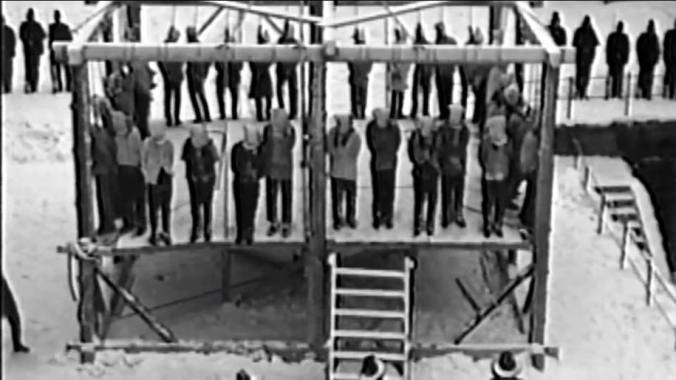
On June 25, 1876, Sioux and Cheyenne forces led by Crazy Horse and Sitting Bull wiped out the U.S. Army troops of Lt. Col. George Armstrong Custer in the Battle of the Little Bighorn near southern Montana’s Little Bighorn River. Custer had been asking for such a fate for sure: he had long been crippled by hubris, ambition and arrogance, despite other compensating positive leadership traits and one extremely important success, which I’ll write about again in about a week. The U.S. Army had also firmly established themselves as the bad guys in this true life Western. After gold was discovered in South Dakota’s Black Hills, in the previous year, the U.S. Army ignored previous treaty agreements and invaded the region. Custer and some 200 men blundered into the Little Bighorn Valley where his battalion was overcome by 3,000 angry warriors. Custer and every last one of his soldier had been killed within an hour. The Battle of the Little Bighorn, better known as “Custer’s Last Stand,” was the most decisive Native American victory and the worst U.S. Army defeat in the long Plains Indian War. It was a classic Pyrrhic victory, of course. Custer was elevated to undeserved martyr status, and the U.S. Government redoubled its efforts against Native Americans. Within five years, almost all of the Lakota Sioux and Cheyenne were confined to reservations.

It took a while for history, popular culture and public opinion to catch up with reality regarding Custer. More than 20 movies and too many television shows to count portrayed him as a hero right into the Sixties. Among the actors who played the doomed and dashing cavalry leader: Ronald Reagan, Errol Flynn, Leslie Neilson, Robert Shaw, and Sheb Wooley, who sang the hit ’50’s ditty “Purple People Eater.” The tide turned against Custer for good after some critical biographies and when Richard Mulligan played him as preening idiot in the dark Western satire “Little Big Man” in 1970.

There was cosmic justice for Custer, if not for the Indians he persecuted.

1. Perhaps the greatest IIPTDXTTNMIAFB we will ever see! I really jumped the gun earlier this month when I marked a ridiculous lie out of the mouth of President Biden as an “IIPTDXTTNMIAFB for the ages.” ( The initials stand for “Imagine if President Trump did X that the news media is accepting from Biden.”“Imagine if President Trump did X that the news media is accepting from Biden.”) That doesn’t come within miles of Biden’s extemporaneous tough guy blather during his recent “all of the recent increase in crime in Democrat-run cities is caused by guns” speech, when he began with a historical gaffe, saying that a citizen couldn’t buy a cannon in Revolutionary times (citizens could buy cannons and did well into the 20th Century—the crazy publisher of the Los Angeles Times had one mounted on the hood of his car) and then really jumping the responsible Potus shark with this:

“Those who say the blood of lib- — “the blood of patriots,” you know, and all the stuff about how we’re going to have to move against the government. Well, the tree of liberty is not watered with the blood of patriots. What’s happened is that there have never been — if you wanted or if you think you need to have weapons to take on the government, you need F-15s and maybe some nuclear weapons.”

This has been discussed a bit today in the Open Forum, so I will just add that if Trump had said anything like this, Democrats and the news media would be screaming that he was psychologically unfit to be President, and that the 25th Amendment should be put into action immediately. But Trump never said anything that crazy or threatening. In addition to the statement being bellicose and offensive, it also evinces that understanding of the Second Amendment of the average 14-year-old. The Second Amendment like the rest of the Bill of Rights, was created to ensure that the Federal government knew its place, and also knew that like the colonies, American citizens would not surrender their liberties without a fight. The Founders never thought local groups of armed citizens could prevail in combat against the full resources of the Federal government, even in a world without AR-15s, nukes, and tanks. But they knew that the prospect of substantial numbers of armed citizens would deter government tyranny, assuming sane leadership. For example, an attempt to go houise to house confiscating guns would be unacceptably bloody and risk turning a majority of the public against the government.

Even though the news media is already trying to memory-hole Joe’s stupid threat, it is destined to haunt him, and should.

Continue reading

Open Forum, As Everything Is Seemingly Spinning Out Of Control!

President Biden threatening to nuke citizens? Seattle approving an event that will charge whites “reparations fees”? The Red Sox lifting a starting pitcher when he’s throwing a no-hitter? I can’t handle all of this chaos!

Maybe you can.

Go to it.

America Last: Good News And Bad News At The Same Time

Reuters-Survey-Trust-In-Media-June-2021

As you can see in the chart above, a report released by the Reuters Institute for the Study of Journalism at Oxford and the University of Oxford found that out of 46 nations surveyed the US public ranks last in its trust of the news media at 29%. The study surveyed 92,000 news consumers in those countries. Finland finished first with a trust rate of 65%.

I doubt that Finland’s journalists deserve that much more trust, which is one reason the report is good news for the United States. I think it is highly likely that the journalists everywhere else suffer from the same arrogance, relative lack of intellectual depth, and hive-mind leanings as U.S. journalists. I think that the U.S. public’s lack of trust shows growing and essential understanding of the true nature of what has become a corrupt and dangerous false profession that does not serve the interests of the people as it is pledged to according to journalistic ethics, but its own. Nor do I believe the U.S. has the worst and most unethical journalists in the world—far from it, I suspect. The U.S. has the journalists with the most freedom, making it especially easy to do their job as dishonestly as they do; yet unlike in many of those nations, their government isn’t forcing American journalists to substitute spin, distortion and propaganda for the truth.

The U.S. public has, finally, had its blinders ripped off, and is no longer under the delusion that they are being informed by altruistic and dedicated pros who only seek to reveal the facts necessary for us to live our lives as we choose to. Knowledge is power, and while our news media is wielding their control over knowledge to transfer power to their political allies, the public, at least most of it, has acquired crucial knowledge to neutralize it: the knowledge that that are not trustworthy.

Unfortunately, the bad news aspect of the study’s finding is arguably worse than the good news is encouraging. Democracy cannot function without a trustworthy news media, or as the Founders called it, “press.” Journalism rot is an existential threat.

Continue reading

Ethics Hero And Ethics Quote Of The Week: Jason Whitlock

Floyd statue

The George Floyd statue outside the Newark, NJ. City Hall.

I was introduced to sportswriter Jason Whitlock 20 years ago, when he was the featured speaker at a Kansas City legal convention I was attending. He was a forceful and entertaining speaker, and quick and witty in his question and answer session after his remarks. Since then, I have followed his career with interest, especially his recent emergence as a black conservative with the courage to be direct unequivocal, and not only regarding sports.

Commenting on the epic rant by a black parent and radio pundit about Critical Race Theory I featured over the weekend, esteemed Ethics Alarms commenter Humble Talent opined,

“One of the worst trends to come out of conservative politics in the last couple of years is to put up on a pillar any minority person that will say things that conservatives agree with. I think it’s a reactionary measure; Progressives say we’re racist, sexist, or homophobic, so we go out of our way to find female/minority/gay people to platform in order to prove we aren’t…Don’t get me wrong, I don’t think they’re bad people, I just don’t think they’re smart, funny, or talented enough to get space in conservative media absent these identity markers that conservatives seem especially hungry for….”

That point is legitimate, but it can’t be fairly applied to Jason Whitlock. Yes, I believe he has received special attention because he is a black man standing up to The Great Stupid, but he also deserves special attention because he is unusually astute, persuasive and eloquent. A white analyst, like, say, me, can be automatically squelched as biased when noting, for example, that George Floyd is an absurd and intellectually indefensible martyr for the Black Lives Matter movement since there was no evidence that his death was a product of racism, systemic or otherwise. When an astute, persuasive and eloquent black critic makes a similar argument, it demonstrates that my conclusion was not necessarily motivated by racial bias.

I know: people will say it anyway.

Whitlock has made a different argument regarding Floyd in his latest essay, but it is an excellent one. Indeed, if there were any integrity at the major newspapers, Vanity Fair, The Atlantic, New York Magazine and the Usual Suspects that have destructively carried the banners of those who have, quite successfully, exploited that neatly symbolic manner of Floyd’s demise, he would not have had to seek publication in the relatively marginal Glenn Beck website, The Blaze, where he hosts a podcast called “Fearless.” The essay is titled, “The Veneration of George Floyd is racist and must be stopped.”

Continue reading

Tuesday Ethics Titillations, 6/22/2021: Too Much MSNBC, I Know

tales

So close to Fathers Day I would be remiss in not remembering June 22, 1944, when President Roosevelt signed the ethical G.I. Bill, unprecedented legislation devised to compensate returning G.I.s for their gallantry, sacrifice, and service to their country in World War II. I owe my very existence to the law, as my father met the lovely Greek girl Eleanor Coulouris on the campus of the school that the G.I. Bill allowed him to attend. She was a secretary in the Office of the President of the College That Shall Not Be Named. Jack A. Marshall, Sr. would wave to her as he passed beneath her third floor window in Massachusetts Hall in “The Yard,” and she would smile and wave back. After several weeks, the retired Major gathered the courage to go up to meet her, and asked for a date. He proposed to her before their second one, and she said no. Things went better after that.

1. No weenies in Randolph, New Jersey! The Randolph Board of Education voted 8-1 Monday to restore its school calendar that showed all New Jersey state and federal holidays, including Columbus Day. In May, the board had voted wokely to change Columbus Day to Indigenious Peoples’ Day, and when Italian Americans, among others, objected, the body voted to remove all holidays from the calendar, which would only read “Day Off” in the interests of “diversity and inclusion.” Morons. Conservative media “pounced,” as the mainstream media likes to say to deflect the blame when its team gets caught doing something really stupid. About 400 citizens showed up at a public session to object. USA Today reported that “some” people accused the board of being influenced by “woke” beliefs and “cancel culture.” Gee, ya think? There were calls for the school board to resign. State Sen. Anthony Bucco, who represents Randolph in the NJ legislature, said eliminating Columbus Day “was bad enough,” but the board’s decision to go even further allowed their “pursuit of diversity to spiral into division.” “I woke up and found out that my town had turned into a nationwide embarrassment,” said John Sharples, a Randolph resident. Few supporters of the board’s brain-dead decision showed up.

So the board backed down. There is a lesson in this. [Pointer: Steve-O-in NJ]

Continue reading

From The Signature Significance Files: A Question For “The Ethicist” That Proves The Questioner Is Ethically Obtuse

GoFundMe for car

When I read the headlined question in an April installment of “The Ethicist” advice column in the New York Times Magazine, I would have done a spit-take if I had just taken a sip of something. It was “Is It OK to Use Money Raised for a Child’s Cancer Care on a Car?” What? No it’s not “OK,” you idiot! The questioner has to write to a professor of philosophy like Kwame Anthony Appiah, who is the current version of the Times’ ethics expert, to puzzle out that query? Why not ask a neighbor, a minister, a friend who isn’t in jail, a reasonably socialized junior in high school?

Then I started wondering what percentage of American think that question is a really tough one, and I got depressed.

Here was the whole question:

My grandchild is being treated for leukemia. A friend of the child’s parents set up a GoFundMe page for them. They’re both well loved and have siblings who know a ton of people. So the goal was surpassed in three hours, and donations totaled more than double that amount. They plan to donate anything over and above direct hospital-related expenses to leukemia research organizations.This couple have some needs that aren’t strictly related to the child’s care, like a new car. Am I rationalizing by saying they need to drive the child to the hospital and should use some of this money for a dependable car? Is there a strict line you would not cross? And is it germane that they’re not extravagant and extremely honest?

I don’t need to discuss Appiah’s answer; he got it right. If he hadn’t, he would need to have his column, his teaching position at NYU and his degree in philosophy taken away. My concern is how hopelessly inept our culture must be at installing the most basic ethical principles if someone grows to adulthood unable to figure out in a snap that if one receives charity to pay for a child’s medical expenses, it is unethical, indeed criminal, to use the money to buy a car.

This isn’t hard, or shouldn’t be. Why is it? If the GoFundMe raised more money than is needed for the purpose donors contributed, the ethical response is to send the now un-needed fund back, with a note of thanks. (Appiah, after far more explanation and analysis than should be necessary—but he does have a column to fill—-eventually points this out.) No, you do not give the extra contributions to “leukemia research organizations,” because the donors could have contributed to those on their own, and didn’t give the money after a general appeal for all leukemia sufferers. They gave money for this particular child’s treatment. Doing as the family plans is a classic bait-and-switch. The questioner doesn’t comprehend that, either.

Then the rationalizations for theft start. “This couple have some needs that aren’t strictly related to the child’s care, like a new car.” “Strictly” is such a wonderful weasel word; it greases slippery slopes so well. Again, “The Ethicist” is forced to explain the obvious: the donors weren’t contributing to a needed car, they were giving to support leukemia treatment. If the family wants a new car, let’s see what that GoFundMe will bring in.

Which of the family’s needs couldn’t be sufficiently linked to the child’s welfare to support a rationalization for using the funds? “Am I rationalizing…?” Of course you’re rationalizing; in fact, I think even this ethically illiterate correspondent knows this is rationalizing, and is just hoping that an ethics authority will validate an unethical calculation. The tell is that she feels it necessary to add that they are only seeking a reliable car, not a Lexus. But come on. “Think of the children!”(Rationalization #58) Isn’t this desperately ill child worth, not just a reliable car, but the most reliable car?

As if any further evidence was needed that this reader of “The Ethicist”—and wouldn’t you think that if she did read the column, she might have picked up just a teeny smidgen of ethical thinking over time?—has no clue at all, we get, “[I]s it germane that they’re not extravagant and extremely honest?”

What is that, some kind of cut-rate version of the King’s Pass? Actually, it is: this is a blatant Rationalization #11A, ”I deserve this! or “Just this once!” (The King’s Pass is #11.) The theory is that ordinary, greedy, sneaky people shouldn’t use money intended to save the life of a child to get a new set of wheels, but thrifty, honest, good people deserve a little leeway.

What percentage of the population thinks like this? 25% 50%? 90%?

In his answer, “The Ethicist” does provide an unintended hint regarding how Americans end up thinking this way. Like most academics, he’s a socialist, so he writes, “It is immoral that anyone here has to borrow large sums of money for essential medical treatment, especially for a child….we need to expand the pinpoints of empathy to … light the way toward a country where health care is treated not as a privilege but as a right.” Bad Ethicist. Bad! That’s a false dichotomy, and he knows it, but he’s spouting progressive cant now. Health care is like many other human needs that we have to work and plan for as individuals, and recognize that the vicissitudes of fate sometimes turn against us. If health care is a right, surely a home, sufficient food, an education—heck, why not a graduate-level education?—a satisfying job, guaranteed income, having as many children as one’s fertility allows, child care and transportation also should be “rights.”

Why shouldn’t it be ethical to use other people’s money to get a reliable “reliable” car?

Comment Of The Day: “Ethics Heroes: The US Conference of Catholic Bishops”

I have a few notes to clarify as I present Sarah B’s excellent Comment of the Day.

1. I should have been clear that the reason I judge the US Conference of Bishops as “Ethics Heroes” is that they are remaining true to their Church’s role as a moral authority, and not engaging in politics or utilitarian trade-offs.

2. I do not want t get into debates over morality—this is an ethics site— or Catholic Church politics. However, denying that the Pope, and therefore the Vatican, is political is impossible. The Vatican is an independent state. The Pope is the head of state. By definition, his (or is it “His”?) words are political, like the statements of all heads of state. And like all heads of state, the Pope is responsible for the political impact of what he says.

3. From the COTD below: This debate deals with the trouble of how to get sinners to deal with the consequences of their sin without driving them away from the church and the path to heaven.” If the Church believes that life begins at conception, and it says it does, then posing abortion as a utilitarian ethics conflict has one huge and irresolvable problem. Every year, there are an estimated 40-50 million abortions, or approximately 125,000 abortions per day. The Catholic Church says that those are all premeditated murders by definition. That’s the equivalent of eight Holocausts every year. If the Church believes that, then the choice of whether to strongly condemn those who enable, support and facilitate murders of the innocent—again, that is the Church’s position, not necessarily mine—or to “drive them away from the Church” should be pretty damn easy.

4. The Catholic Church is the wealthiest organization in the world, with estimated assets of more than 30 billion dollars. It pays no taxes. How does one fairly describe the head of an organization with 30 billion dollars who lectures against the evils of greed and capitalism, and emphasizes the moral duty to share property and wealth with the poor?

Here is Sarah B.’s Comment of the Day on the post, “Ethics Heroes: The US Conference of Catholic Bishops”:

Pope Francis is not a communist. He even condemns socialism (as does the entire Catholic Church) as a grave evil. (As a note, I do not personally care much for the Pope, but will defend at least this for him.)

As for why he would “shade important Catholic doctrine”, Pope Francis is the latest personification of one side of an age old debate in the Catholic Church, doctrine vs pastoral response. This debate deals with the trouble of how to get sinners to deal with the consequences of their sin without driving them away from the church and the path to heaven. I firmly fall on the doctrinaire side of the debate, so my explanation will certainly be biased, no matter how fair I try to make this explanation, but I will try my best. On one hand, if you are too harsh on sinners, you drive them away from the faith. On the other, if you are too lenient, you risk diminishing the realization of the evil they have done, and bringing scandal (definition below) upon the church. Permitting people to receive the Eucharist after having committed grave matter is, in most minds, far too lenient. However, if we look back to history, there was a time when penances for sin were so extreme, most people refused to get baptized until their deathbed to avoid such penances. When one considers that the Catholic Church believes in both justice AND mercy for any action, it also compounds the issue.

Continue reading

Insomnia Ethics Obsessions, 6/19/2021: Bad Art, Bad Employee, Bad Children’s Book, And Other Bad Stuff

Sleeping disorder or insomnia concept

I’m starting this post at 4:11 am. Is the infuriating Red Sox loss because an umpire called an obvious ball four a strike responsible? Is it the Facebook friend’s fatuous post about how opposing the teaching of systemic racism is systemic racism? Or is it the picante sauce and Tostidos at 11:30? I may never know.

1. When ethics alarms don’t ring in Shanghai...The OCT Contemporary Art Terminal (OCAT), a Shanghai museum advertised artist Song Ta’s artwork with the Chinese title “Campus Flower” and English title “Uglier and Uglier”featuring a collection of still images and videos completed in 2013. Ta recorded women passing by him, then he rated them and numbered them according to how beautiful (or not) he thought they were, showing them in a seven-hour video from prettiest to ugliest.

For some reason, the women included without their consent and others with a shred of decency had a problem with this. After furious criticism, the museum announced that it would immediately remove the artwork, saying,

“After receiving criticism, we re-evaluated the content of this artwork and the artist’s explanation, we found it disrespected women, and the way it was shot has copyright infringement issues. As a museum that supports diversity, we will take this as a warning, improve our services and treat everyone with empathy.”

Sure. If the individuals running the museum remain in charge, I wouldn’t hold out much hope that the management would be able to recognize an unethical exhibit if it contained neon signs flashing UNETHICAL.

2. Here’s a fanatic’s reaction to the passage of “Juneteenth” as a national holiday! Let’s play “When did the writer lose all credibility?” It was here: “Senator Tom Cotton of Arkansas reintroduced his Saving American History Act, which would ban federal funding to schools that have New York Times writer Nikole Hannah-Jones’s Pulitzer Prize-winning epic, “The 1619 Project,” on their curricula. Like his fellow Republicans, Cotton is about as concerned with saving American history as GOP-led state legislatures passing voter suppression laws are interested in protecting election integrity.” Citing winning a Pulitzer Prize is a dishonest appeal to a discredited authority, and calling the thoroughly debunked and discredited 1619 Project epic, or even history, is proof or an opinion writer whose opinions aren’t worth considering.

Continue reading

Friday Open Forum!

hith-charge-of-the-light-brigade-2

Let’s see if the brilliance, perception and foresight of the Ethics Alarms Commentariat can put an upbeat exclamation point at the end of what for me has been an unexpected entry into my Top Ten Worst Weeks ever—which, by the way, pales in worst-ness compared to what the vast majority of humanity has experienced. I know I’ve been very, very lucky. This is just one of the weeks where I wish I was luckier. And smarter.

As one of the many excellent mentors, role models and teachers I’ve had, Tom Donohue, recently retired as head of the U.S. Chamber of Commerce, use to say, “Charge on!”

Afternoon Ethics Incitements, 6/17/2021: Goodbye, Victoria’s Secret!

VC angels

1. IIPTDXTTNMIAFB! Today’s “Imagine if President Trump did X that the news media is accepting from Biden” note officially takes in President Biden’s stumbling, fumbling, often embarrassing conduct during the G7 summit and his meeting with Putin, ranging from calling Putin a “killer” in advance of what was advertised as a diplomatic meeting, to snapping at a reporter, to periodically babbling incoherently and appearing over two hours late for a press conference. To read the conservative media, this was an unequivocal disaster; to read the rest of the news media, Biden’s class and dignity restored respect in the republic. My position is that it is unethical for domestic media to attack the President when he is abroad, so I would generally support the media’s treatment of Joe this week, except for the “refusing to report what happened when it reflected badly on their guy” part. But the news media mercilessly ridiculed President Trump for no more egregious conduct when he was meeting with foreign leaders. With one side of the news media primed to be hyper-critical, and the other side being hypocritical, it is impossible to figure out what really happened.

On the bright side, if you travel to Australia, the media will give you the straight story.“I just think Joe Biden is a lucky person,” said Sophie Elsworth of “The Australian”. “He has got all the media on his side—or most of the media on his side—particularly CNN. Completely at odds with what they did to Trump. So his popularity surely can only win from this because he’s getting so much positive PR through the journalists who are massive fans of him. It’s quite appalling to watch. And what happened to straight news reporting, which doesn’t seem to be existent there?”

It became 100% partisan propaganda, that’s what happened, Sophie.

2. Yeah, I’ll go out on a limb and say this is unethical…During a 30-minute call with a conservative activist, Republican Congressional candidate William Braddock warned an activist to not support GOP candidate Anna Paulina Luna in the Republican primary, because he might just put a hit on her.

“I really don’t want to have to end anybody’s life for the good of the people of the United States of America,” Braddock said at one point in the conversation according to a recording “That will break my heart. But if it needs to be done, it needs to be done. Luna is a fucking speed bump in the road. She’s a dead squirrel you run over every day when you leave the neighborhood.” He added, “I have access to a hit squad, too, Ukrainians and Russians … Luna’s gonna go down and I hope it’s by herself.”

I’m sure Braddock will say he was only speaking metaphorically, and maybe he was. By “end anybody’s life,” he just meant their political life. After all, he has no criminal record. I’m sure he will also point out that Florida, like California, Connecticut, Illinois, Maryland, Massachusetts, Montana, New Hampshire, Pennsylvania and Washington, is a two party consent state regarding recorded conversations, so the taping was illegal, and thus unethical. However the words “I really don’t want to have to end anybody’s life for the good of the people of the United States of America…But if it needs to be done, it needs to be done,” unless accompanied by unequivocal laughter, is too sinister and creepy to ignore. I wouldn’t trust someone who talks like that, even in private.

Would you? [Pointer: valkygrrl]

Continue reading