
Boy, that week went by fast…maybe because I was a worthless slug and got fewer posts up than my self-imposed minimum. On the plus side, that should leave more fascinating ethics issues for you to debate.
You’re on.
Boy, that week went by fast…maybe because I was a worthless slug and got fewer posts up than my self-imposed minimum. On the plus side, that should leave more fascinating ethics issues for you to debate.
You’re on.
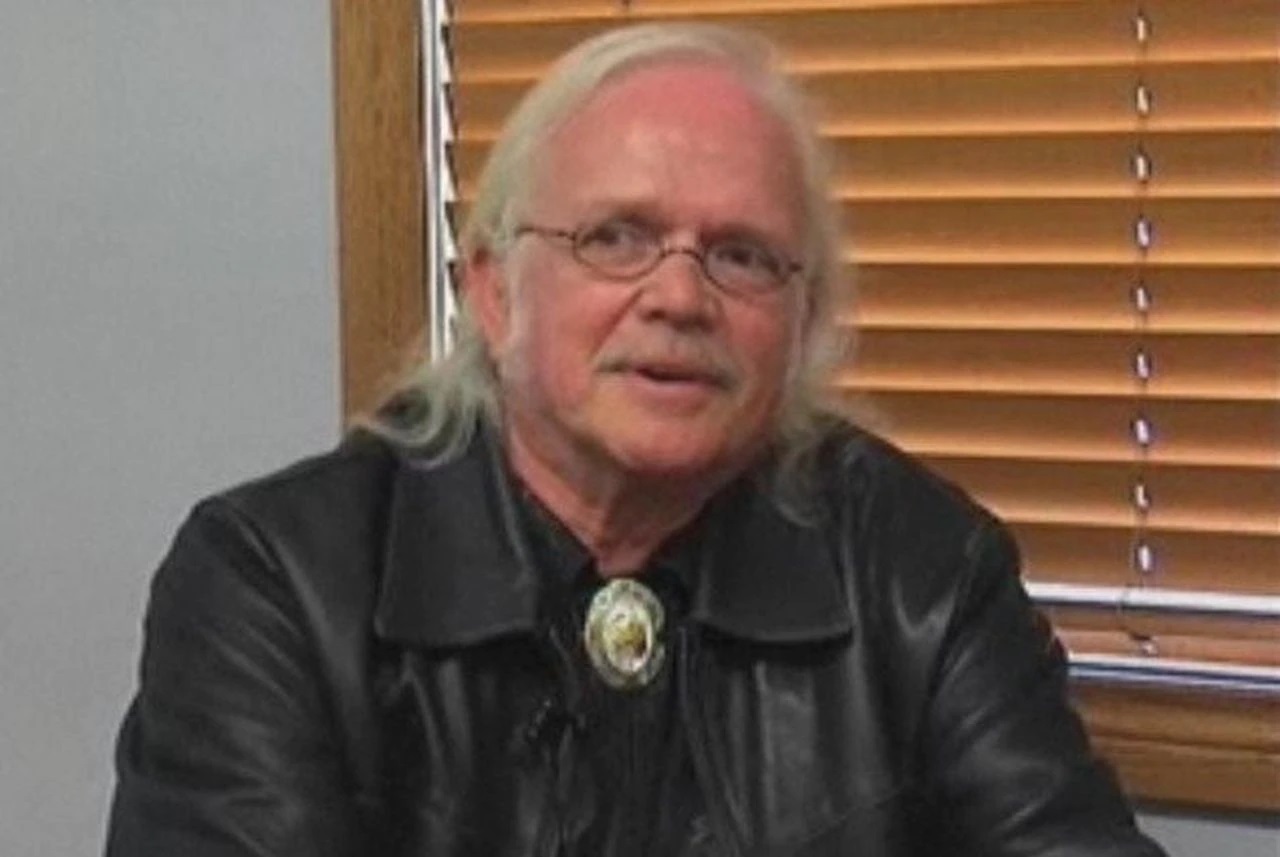
Leroy Fick died in June, but not before gaining a small measure of ethics immortality by giving his name to an Ethics Alarms term of art. In 2011, Leroy happily admitted that he had continued to collect public assistance after winning $2 million dollars in the Michigan lottery because a loophole in the law allowed him to do so. Thus his name was originally attached to those guilty of especially despicable, anti-social conduct. Eventually, the definition was refined to mean “unethical people who openly and blatantly violates social norms of responsibility, honesty or fairness without shame or remorse.”
That’s Leroy in the photo above. Ficks lack ethics alarms, so it will not surprise you to learn that many of them end up in jail. Leroy did.
Now comes Bennett Madison, writing on the repeatedly ethically inert site Gawker, boasting about deceiving advice columnists and their trusting reader in an article titled, “Help! I Couldn’t Stop Writing Fake Dear Prudence Letters That Got Published.” Fick.
He writes,

The Comment of the Day below is really two consecutive comments in the same thread, as Sarah B. argues that fathers are not only justified in leaving their jobs at critical times to be with their wives at childbirth and thereafter for as long as they deem necessary, but that this is the most ethical choice. My note prompting her response involved the case of Red Sox star Alex Verdugo, who left the team at a crucial time when the season hung in the balance, and stayed away for four days to be with his girlfriend and their new-born child: there is no indication that he provided anything but companionship and moral support.
(I just learned that he is not married to the mother (above). No, I don’t think that changes the ethics issue, though it raises others.)
I stated that this was a breach of his duty to the team, which he is paid handsomely to respect. I am quite certain that this is the correct ethical position, but my view represents the resolution of an ethics conflict, where two ethical principles oppose one another. I can’t say that how Sarah prioritizes these principles is wrong, only that I would prioritize them differently, and have in analogous situations.
Here is Sarah B’s Comment of the Day on #1 from the post, “Post-Labor Day Ethics Laments, 9/7/21.” I will have a few rebuttal points at the end…
***
“The priorities are linked, but still need to be ranked and four days is nothing. Heck, if my husband only got four days after the birth of our children, unless his absence from me would literally cause someone to die, I’d give him the choice of his job or his family. If we want men to step up and be good husbands and fathers (which would do amazing things for our society) we need to let them do that. Considering what a woman’s body goes through with the birth of a child and the incredible amount of healing she must do after the fact, four days barely lets a mom get home from the hospital (having had complication-free natural births has led to us getting to go home on day three at my hospital) and set up a good feeding schedule for the first kid (my best kid so far took two weeks before we got the bugs worked out enough for their health and mine). Subsequent kids require so much more because of the need to care for the older children too. The fact of being in high levels of pain for every action and dealing with incredible dizziness for days lead to a new mom being a literal danger to herself and the baby (not to mention any other kids) if left alone. According to my OBs, that condition is totally normal, even expected.
“Due to the danger, new moms are forbidden from lifting their own child or walking with the child in their arms in my hospital. My hospital also asks about the support a mother can expect for at least two weeks post baby before they will even let the child go home with the mother. Sure, a lot of us rely on other family members for that second (or third or fourth week), but the dad has to be there in the beginning if he wants to start himself off on a good foot of proper prioritization of responsibility. Most marriages I have seen where a dad does not give totally of himself for 1-2 weeks after a baby are at best strained. The mother needs support, and who is best able and most desired to give that support, but the father of the baby? If MLB cannot give new fathers a week away at minimum, they need to require that their players are celibate while on contract, so no babies come about. If a multimillion dollar contract is enough to abandon a wife and kid for at a time of great need, it should be enough to abandon sex for. Family is the primary responsibility, and all the more so at the birth of a baby.

1. Civil War progressive smugness is starting to get to me...Netflix is showing “Cold Mountain,” which I only saw in a redacted version on my flight home from Mongolia in 2003. This time, it struck me completely differently. The film adaptation of the novel about the suffering of ordinary Southerners during the Civil War reminded me how arrogant, ignorant and smugly cruel the social justice warriors are who want to topple all monuments to and memories of what half of this country endured, frequently with great courage, during a war that was infinitely more nuanced than “Pro-slavery vs Anti-slavery.”
Near the center of Old Town Alexandria, about 15 minutes from my home, was a statue of an unnamed Confederate soldier that stood at the intersection of two major streets. It was hauled away last summer at the peak of the George Floyd Freakout with nary a defender in the local media. The average soldier for the South, as “Cold Mountain” makes clear, wasn’t a supporter of slavery, didn’t own slaves, and was just following the decisions of state leaders who believed, quite correctly, that their states had every right to leave the U.S. when they felt it was in their best interests. Lincoln’s refusal to let them do so was legally wrong but ethically and pragmatically correct, but that doesn’t mean that the common man siding with states he regarded as his “country” were evil, traitors, or without character. The common Confederate soldiers, along with their families, were victims in many ways, and, as Mrs. Loman says, “Attention should be paid.” A statue commemorating their experiences, exploits and suffering is not only appropriate but valuable.
“Cold Mountain” made my mind flash back to this post, in which a social justice warrior baseball writer, Craig Calcaterra, mocked the opposition to Virginia tearing down Lee’s famous statue in Richmond by writing, “The only sad part of this is that, now that the statue is gone, how will we ever know what happened in the Civil War? I mean, that’s what those things were all about, right? At least according to a lot of people on the right who are so enthralled with monuments to racists and traitors.”
Calcaterra proved in that statement that HE doesn’t know what happened in the Civil War.
2. In case there is any doubt, pro-Trump “whataboutism” is exactly as obnoxious as anti-Trump “whataboutism.” A reader of Ethics Alarms sent me an email reacting to Sunday”s post about the “Fuck Biden” outbreak. She suggested that I was hypocritical, asking “Did you complain about the ‘Fuck Trump’ phenomenon?” and accusing me of a double standard. Nah, I never complained about the endless disrespect and calumny heaped on President Trump—I only wrote about it constantly from November, 2016 to the present! To use one of my Dad’s favorite expressions, the email made me “hit the roof,” so I wrote back in part,
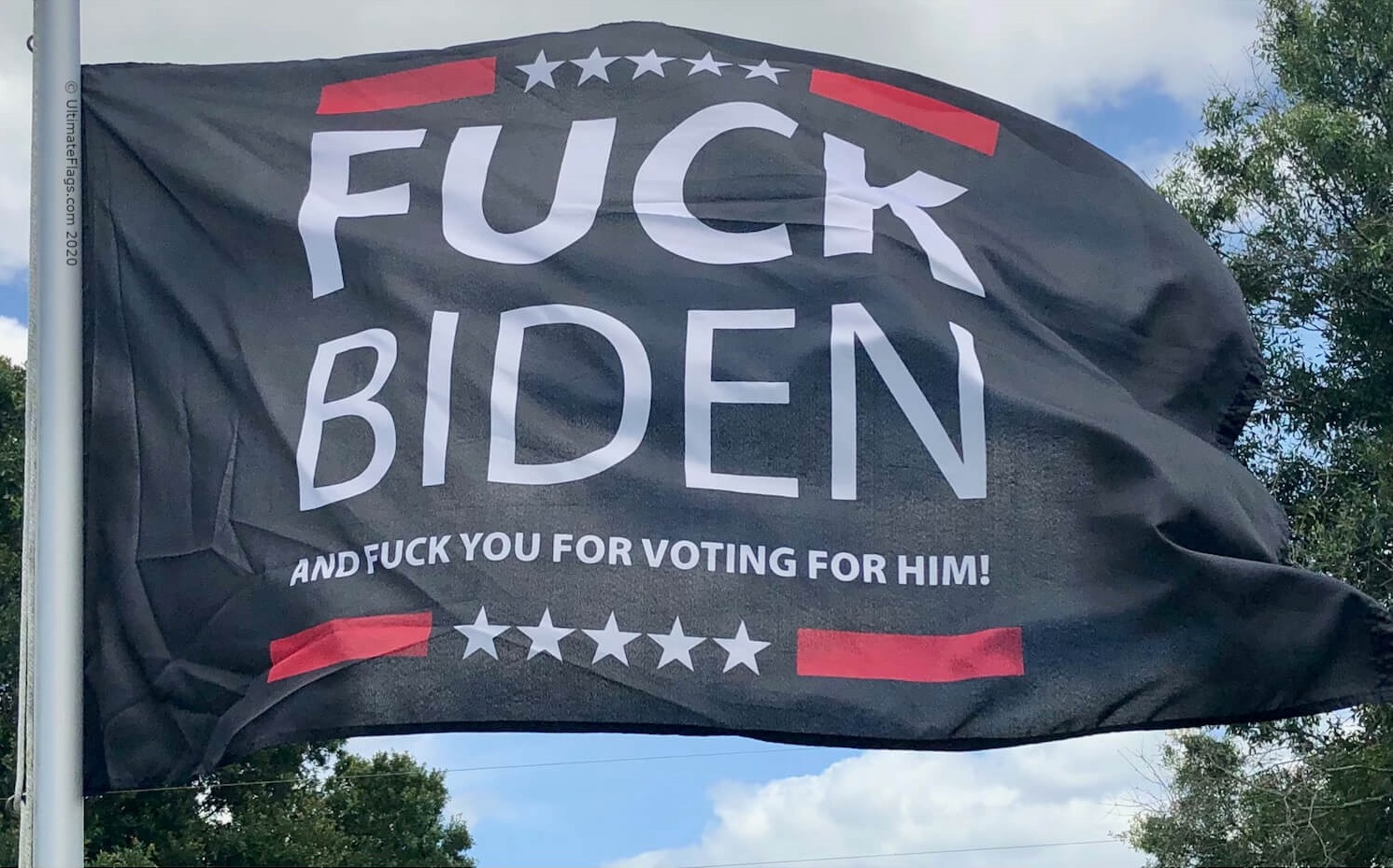
Yesterday, on the anniversary of the Twin Towers’ fall, President Biden was heckled by vocal members of a crowd, and “Fuck Biden” chants broke out at various football games across the nation. As an American and a scholar of the Presidency, I view this development with sadness and worry. As an ethicist, I look upon it as a confirmation of much of my analysis during the Trump administration, and what was tagged on Ethics Alarms as the 2016 Post-Election Ethics Train Wreck. As a critic of what the nation’s progressives and the Democratic Party have devolved into, my reaction is anger tinged with satisfaction. This is what they did to the Presidency. I warned them, as did others with a lot more authority and influence than I, that the harm they were inflicting on the office, the nation and the government might be irreversible and ruinous. They didn’t listen, or, more likely, they didn’t care. All that mattered was their hatred for Donald Trump. Now their President is inheriting the inevitable results of the wreckage from their recklessness.
No, I won’t say “Good!,” but they deserve it.

I’m going to watch the film “Flight 93” again as my 9/11 commemoration. It is an excellent, if almost too clinical, approximation of what went on when the terrorists tried to fly a plane into the Capitol or White House, after picking what had to be the worst possible set of passengers to try to intimidate. Otherwise, I will avoid TV commentary today as I would the plague. Turner Movie Classics may have been making some wry commentary the last two days: first, it ran a series of old historicla disaster movies like “A Night To Remember” (The Titanic) and “San Francisco” (the earthquake and the fire). Then last night was “cult night.” September 11 and its aftermath was all about cults: Islam, Al Qida, neocons, Truthers.
This date will also always remind me of the utter incompetence of the news media. I will never forget the idiot on CNN who, after the second plane hit a tower, said when a colleague offered that it looked like a terrorist attack, that we shouldn’t jump to conclusions, that it just could be a coincidence. These are the people we trust to inform us about events affecting our lives.
1. Justifiable homicide? Tucker Gales, a 15-year-old from Columbia County in Georgia shot his father in the head with a .22-caliber rifle back in October 2020. Last week, a grand jury decided that Gales explanation that he did it because “he had enough of his father abusing his mother” was good enough for them. The teen will not be indicted. Good.
Wesley Gales’ had a well-documented pattern of violent abuse. He allegedly threatened to shoot his son in the head and “kicked his ex-wife in the groin area,” the The Augusta Chronicle reported. A few months before his son killed him, Wesley Gales pleaded guilty to domestic abuse and child cruelty charges. “The police visited the home multiple times since 2011. No action was taken to remove this family from the danger in the home. He pleaded for help on multiple occasions and the system failed him,” said Emily Martinez, the organizer of a GoFundMe campaign for Tucker. “It’s a sad day because this child had to take matters into his own to hands to defend and protect him and his mom.”
The grand jury call doesn’t surprise me, and it is consistent with a lot of cases as well. I once wrote an appellate brief for a man who was convicted of shooting the neighborhood bully who regularly beat him up. There were a lot of self-defense opinions holding that a potential victim with good reason to believe that an individual was getting ready to seriously injure him or her was justified in using deadly force. The fact that the shooter in this case was a juvenile made his case especially compelling.
2. Incompetent ad of the year! Here’s a WayFair ad for a coffee table:

 Here’s another shot of the same photo:

Apparently the photo originated with the supplier. Nobody at Wayfair can read upside-down, I guess. An investigation is underway…
RealClearInvestigations developed the database below. The thing speaks for itself…

What are the odds that Randy Newman’s satirical song would be attacked today as offensive and accused of making short people feel unsafe? I think pretty high in favor, don’t you?
I was thinking about this after watching “Movie 43” last night, an astounding 2013 project in which a huge, all-star cast was recruited into doing a series of sophomoric, gutter humor skits that had bad taste galore but not much humor or wit beyond “Oh my God, I can’t believe they did that!” Still, while the movie got horrible reviews (although the critics calling it “The Worst Movie Ever Made” beclowned themselves: I can name 20 worse ones off the top of my head) and bombed, I am pretty sure that it would spark boycotts and “cancellations” today for being so spectacularly politically incorrect. Watching it, I was nostalgic for the time when artists could cross lines and not have a virtual price placed on their heads. In just seven years, we have come to a place where Americans are terrified of enraging the woke. I think watching Movie 43 is good tonic for that, and also good practice for those who want to purge their inner weenie.
1. One more bit of proof that we should not trust “experts,” scientists, or academics. Harvard cognitive psychologist Steven Pinker has written several best-selling books, such as “The Better Angels of Our Nature: Why Violence Has Declined” (2011) and “Enlightenment Now: The Case for Reason, Science, Humanism, and Progress” (2018) and is regarded as a public intellectual. Yet when the New York Times asked him, “Do you see any irrational beliefs as useful?,” Pinker answered,
“Yeah. For example, every time the media blames a fire or a storm on climate change, it’s a dubious argument in the sense that those are events that belong to weather, not climate. You can never attribute a particular event to a trend. It’s also the case, given that there is an availability bias in human cognition, that people tend to be more influenced by images and narratives and anecdotes than trends. If a particular anecdote or event can in the public mind be equated with a trend, and the impression that people get from the flamboyant image gets them to appreciate what in reality is a trend, then I have no problem with using it that way.”
Yes, this respected intellectual believes that deceiving the public is justified if it leads them to support the “right” policies and beliefs. He, and those like him, are the real threats to democracy.
My Harvard diploma is already facing the wall; staring today, I’m going to spit at it when I pass by…
Coincidentally, today I was asked to write something for my class’s reunion book. What should I write?

By all means, talk about the President’s vaccine mandate if you want, or anything else ethics-related. I wish I had time to do a deep dive into the legality of such a move, and I wish the news media was competent enough to do one for me. I do like the question offered on several blogs about how Biden thinks that he can mandate vaccinations when he is on record saying that he can’t mandate masks.

1. Look! Another survey you can’t trust! Lee Drutman, a senior fellow at New America and author of “Breaking the Two-Party Doom Loop: The Case for Multiparty Democracy in America,” is co-founder of Fix Our House, a new campaign for proportional representation designed, apparently, to turn the U.S. into Italy. It’s a bad idea, but in a Times op-ed, he argues for six parties, divided according to ideological fault lines. He even has a 20 question survey you can take that places you in or near one of the parties.
Here is how valid that survey is: I was told “You are closest to the Christian Conservative Party.” To be fair to Lee, his survey did place me closer to dead center than to that party, and furthest away from The Progressive Party.
2. Foiled again! President Biden one again had to pull the nomination of an openly radical zealot from a position such an individual has no business being in: David Chipman will not head the ATF. He openly advocated banning many kinds of guns, and has been hostile to the Second Amendment. Before his nomination, Chipman worked as a senior policy adviser at the Giffords Law Center, which announces on its website landing page, “We’re on a mission to save lives from gun violence.” Translation: “We’re on a mission to make it difficult for law-abiding citizens to acquire firearms. Chipman’s exchange with Sen. John Kennedy (R-La.) of the Senate Judiciary Committee earlier this year should have sealed his fate. Kennedy asked Chipman, “Do you believe in private ownership of assault weapons?” Chipman quickly responded in the affirmative. Kennedy then asked him, “Do you believe in banning assault weapons?” Chipman responded that he does. So Kennedy asked how Chipman would define “assault weapons.” Chipman said that “assault weapons would be something that members of Congress would define.”
“Well, how do you define it?” Kennedy asked. Chipman finally said, “There’s no way I could define an assault weapon.”
Got it. He wants to ban a kind of guns he can’t define, and that could be defined any way the government chooses.
Bye!

