Tuesday Ethics Titillations, 6/22/2021: Too Much MSNBC, I Know

tales

So close to Fathers Day I would be remiss in not remembering June 22, 1944, when President Roosevelt signed the ethical G.I. Bill, unprecedented legislation devised to compensate returning G.I.s for their gallantry, sacrifice, and service to their country in World War II. I owe my very existence to the law, as my father met the lovely Greek girl Eleanor Coulouris on the campus of the school that the G.I. Bill allowed him to attend. She was a secretary in the Office of the President of the College That Shall Not Be Named. Jack A. Marshall, Sr. would wave to her as he passed beneath her third floor window in Massachusetts Hall in “The Yard,” and she would smile and wave back. After several weeks, the retired Major gathered the courage to go up to meet her, and asked for a date. He proposed to her before their second one, and she said no. Things went better after that.

1. No weenies in Randolph, New Jersey! The Randolph Board of Education voted 8-1 Monday to restore its school calendar that showed all New Jersey state and federal holidays, including Columbus Day. In May, the board had voted wokely to change Columbus Day to Indigenious Peoples’ Day, and when Italian Americans, among others, objected, the body voted to remove all holidays from the calendar, which would only read “Day Off” in the interests of “diversity and inclusion.” Morons. Conservative media “pounced,” as the mainstream media likes to say to deflect the blame when its team gets caught doing something really stupid. About 400 citizens showed up at a public session to object. USA Today reported that “some” people accused the board of being influenced by “woke” beliefs and “cancel culture.” Gee, ya think? There were calls for the school board to resign. State Sen. Anthony Bucco, who represents Randolph in the NJ legislature, said eliminating Columbus Day “was bad enough,” but the board’s decision to go even further allowed their “pursuit of diversity to spiral into division.” “I woke up and found out that my town had turned into a nationwide embarrassment,” said John Sharples, a Randolph resident. Few supporters of the board’s brain-dead decision showed up.

So the board backed down. There is a lesson in this. [Pointer: Steve-O-in NJ]

Continue reading →

From The Signature Significance Files: A Question For “The Ethicist” That Proves The Questioner Is Ethically Obtuse

GoFundMe for car

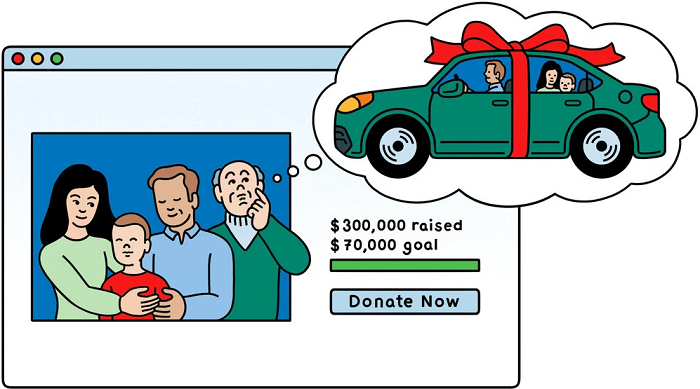
When I read the headlined question in an April installment of “The Ethicist” advice column in the New York Times Magazine, I would have done a spit-take if I had just taken a sip of something. It was “Is It OK to Use Money Raised for a Child’s Cancer Care on a Car?” What? No it’s not “OK,” you idiot! The questioner has to write to a professor of philosophy like Kwame Anthony Appiah, who is the current version of the Times’ ethics expert, to puzzle out that query? Why not ask a neighbor, a minister, a friend who isn’t in jail, a reasonably socialized junior in high school?

Then I started wondering what percentage of American think that question is a really tough one, and I got depressed.

Here was the whole question:

My grandchild is being treated for leukemia. A friend of the child’s parents set up a GoFundMe page for them. They’re both well loved and have siblings who know a ton of people. So the goal was surpassed in three hours, and donations totaled more than double that amount. They plan to donate anything over and above direct hospital-related expenses to leukemia research organizations.This couple have some needs that aren’t strictly related to the child’s care, like a new car. Am I rationalizing by saying they need to drive the child to the hospital and should use some of this money for a dependable car? Is there a strict line you would not cross? And is it germane that they’re not extravagant and extremely honest?

I don’t need to discuss Appiah’s answer; he got it right. If he hadn’t, he would need to have his column, his teaching position at NYU and his degree in philosophy taken away. My concern is how hopelessly inept our culture must be at installing the most basic ethical principles if someone grows to adulthood unable to figure out in a snap that if one receives charity to pay for a child’s medical expenses, it is unethical, indeed criminal, to use the money to buy a car.

This isn’t hard, or shouldn’t be. Why is it? If the GoFundMe raised more money than is needed for the purpose donors contributed, the ethical response is to send the now un-needed fund back, with a note of thanks. (Appiah, after far more explanation and analysis than should be necessary—but he does have a column to fill—-eventually points this out.) No, you do not give the extra contributions to “leukemia research organizations,” because the donors could have contributed to those on their own, and didn’t give the money after a general appeal for all leukemia sufferers. They gave money for this particular child’s treatment. Doing as the family plans is a classic bait-and-switch. The questioner doesn’t comprehend that, either.

Then the rationalizations for theft start. “This couple have some needs that aren’t strictly related to the child’s care, like a new car.” “Strictly” is such a wonderful weasel word; it greases slippery slopes so well. Again, “The Ethicist” is forced to explain the obvious: the donors weren’t contributing to a needed car, they were giving to support leukemia treatment. If the family wants a new car, let’s see what that GoFundMe will bring in.

Which of the family’s needs couldn’t be sufficiently linked to the child’s welfare to support a rationalization for using the funds? “Am I rationalizing…?” Of course you’re rationalizing; in fact, I think even this ethically illiterate correspondent knows this is rationalizing, and is just hoping that an ethics authority will validate an unethical calculation. The tell is that she feels it necessary to add that they are only seeking a reliable car, not a Lexus. But come on. “Think of the children!”(Rationalization #58) Isn’t this desperately ill child worth, not just a reliable car, but the most reliable car?

As if any further evidence was needed that this reader of “The Ethicist”—and wouldn’t you think that if she did read the column, she might have picked up just a teeny smidgen of ethical thinking over time?—has no clue at all, we get, “[I]s it germane that they’re not extravagant and extremely honest?”

What is that, some kind of cut-rate version of the King’s Pass? Actually, it is: this is a blatant Rationalization #11A, ”I deserve this!“ or “Just this once!” (The King’s Pass is #11.) The theory is that ordinary, greedy, sneaky people shouldn’t use money intended to save the life of a child to get a new set of wheels, but thrifty, honest, good people deserve a little leeway.

What percentage of the population thinks like this? 25% 50%? 90%?

In his answer, “The Ethicist” does provide an unintended hint regarding how Americans end up thinking this way. Like most academics, he’s a socialist, so he writes, “It is immoral that anyone here has to borrow large sums of money for essential medical treatment, especially for a child….we need to expand the pinpoints of empathy to … light the way toward a country where health care is treated not as a privilege but as a right.” Bad Ethicist. Bad! That’s a false dichotomy, and he knows it, but he’s spouting progressive cant now. Health care is like many other human needs that we have to work and plan for as individuals, and recognize that the vicissitudes of fate sometimes turn against us. If health care is a right, surely a home, sufficient food, an education—heck, why not a graduate-level education?—a satisfying job, guaranteed income, having as many children as one’s fertility allows, child care and transportation also should be “rights.”

Why shouldn’t it be ethical to use other people’s money to get a reliable “reliable” car?
Comment Of The Day: “Ethics Heroes: The US Conference of Catholic Bishops”

I have a few notes to clarify as I present Sarah B’s excellent Comment of the Day.

1. I should have been clear that the reason I judge the US Conference of Bishops as “Ethics Heroes” is that they are remaining true to their Church’s role as a moral authority, and not engaging in politics or utilitarian trade-offs.

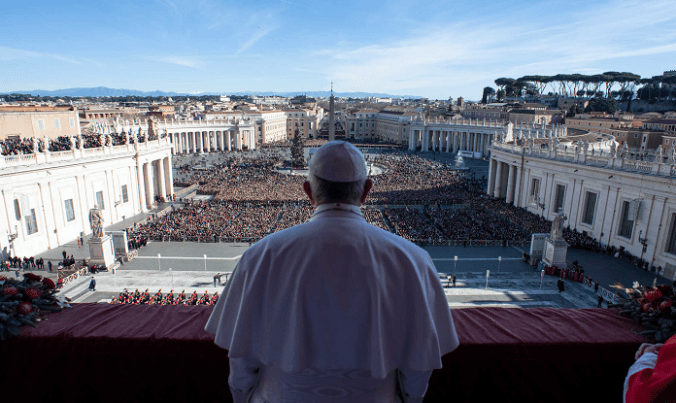
2. I do not want t get into debates over morality—this is an ethics site— or Catholic Church politics. However, denying that the Pope, and therefore the Vatican, is political is impossible. The Vatican is an independent state. The Pope is the head of state. By definition, his (or is it “His”?) words are political, like the statements of all heads of state. And like all heads of state, the Pope is responsible for the political impact of what he says.

3. From the COTD below: “This debate deals with the trouble of how to get sinners to deal with the consequences of their sin without driving them away from the church and the path to heaven.” If the Church believes that life begins at conception, and it says it does, then posing abortion as a utilitarian ethics conflict has one huge and irresolvable problem. Every year, there are an estimated 40-50 million abortions, or approximately 125,000 abortions per day. The Catholic Church says that those are all premeditated murders by definition. That’s the equivalent of eight Holocausts every year. If the Church believes that, then the choice of whether to strongly condemn those who enable, support and facilitate murders of the innocent—again, that is the Church’s position, not necessarily mine—or to “drive them away from the Church” should be pretty damn easy.

4. The Catholic Church is the wealthiest organization in the world, with estimated assets of more than 30 billion dollars. It pays no taxes. How does one fairly describe the head of an organization with 30 billion dollars who lectures against the evils of greed and capitalism, and emphasizes the moral duty to share property and wealth with the poor?

Here is Sarah B.’s Comment of the Day on the post, “Ethics Heroes: The US Conference of Catholic Bishops”:

Pope Francis is not a communist. He even condemns socialism (as does the entire Catholic Church) as a grave evil. (As a note, I do not personally care much for the Pope, but will defend at least this for him.)

As for why he would “shade important Catholic doctrine”, Pope Francis is the latest personification of one side of an age old debate in the Catholic Church, doctrine vs pastoral response. This debate deals with the trouble of how to get sinners to deal with the consequences of their sin without driving them away from the church and the path to heaven. I firmly fall on the doctrinaire side of the debate, so my explanation will certainly be biased, no matter how fair I try to make this explanation, but I will try my best. On one hand, if you are too harsh on sinners, you drive them away from the faith. On the other, if you are too lenient, you risk diminishing the realization of the evil they have done, and bringing scandal (definition below) upon the church. Permitting people to receive the Eucharist after having committed grave matter is, in most minds, far too lenient. However, if we look back to history, there was a time when penances for sin were so extreme, most people refused to get baptized until their deathbed to avoid such penances. When one considers that the Catholic Church believes in both justice AND mercy for any action, it also compounds the issue.

Continue reading →

Insomnia Ethics Obsessions, 6/19/2021: Bad Art, Bad Employee, Bad Children’s Book, And Other Bad Stuff

Sleeping disorder or insomnia concept

I’m starting this post at 4:11 am. Is the infuriating Red Sox loss because an umpire called an obvious ball four a strike responsible? Is it the Facebook friend’s fatuous post about how opposing the teaching of systemic racism is systemic racism? Or is it the picante sauce and Tostidos at 11:30? I may never know.

1. When ethics alarms don’t ring in Shanghai...The OCT Contemporary Art Terminal (OCAT), a Shanghai museum advertised artist Song Ta’s artwork with the Chinese title “Campus Flower” and English title “Uglier and Uglier”featuring a collection of still images and videos completed in 2013. Ta recorded women passing by him, then he rated them and numbered them according to how beautiful (or not) he thought they were, showing them in a seven-hour video from prettiest to ugliest.

For some reason, the women included without their consent and others with a shred of decency had a problem with this. After furious criticism, the museum announced that it would immediately remove the artwork, saying,

“After receiving criticism, we re-evaluated the content of this artwork and the artist’s explanation, we found it disrespected women, and the way it was shot has copyright infringement issues. As a museum that supports diversity, we will take this as a warning, improve our services and treat everyone with empathy.”

Sure. If the individuals running the museum remain in charge, I wouldn’t hold out much hope that the management would be able to recognize an unethical exhibit if it contained neon signs flashing UNETHICAL.

2. Here’s a fanatic’s reaction to the passage of “Juneteenth” as a national holiday! Let’s play “When did the writer lose all credibility?” It was here: “Senator Tom Cotton of Arkansas reintroduced his Saving American History Act, which would ban federal funding to schools that have New York Times writer Nikole Hannah-Jones’s Pulitzer Prize-winning epic, “The 1619 Project,” on their curricula. Like his fellow Republicans, Cotton is about as concerned with saving American history as GOP-led state legislatures passing voter suppression laws are interested in protecting election integrity.” Citing winning a Pulitzer Prize is a dishonest appeal to a discredited authority, and calling the thoroughly debunked and discredited 1619 Project epic, or even history, is proof or an opinion writer whose opinions aren’t worth considering.

Continue reading →

Friday Open Forum!

hith-charge-of-the-light-brigade-2

Let’s see if the brilliance, perception and foresight of the Ethics Alarms Commentariat can put an upbeat exclamation point at the end of what for me has been an unexpected entry into my Top Ten Worst Weeks ever—which, by the way, pales in worst-ness compared to what the vast majority of humanity has experienced. I know I’ve been very, very lucky. This is just one of the weeks where I wish I was luckier. And smarter.

As one of the many excellent mentors, role models and teachers I’ve had, Tom Donohue, recently retired as head of the U.S. Chamber of Commerce, use to say, “Charge on!”

Afternoon Ethics Incitements, 6/17/2021: Goodbye, Victoria’s Secret!

VC angels

1. IIPTDXTTNMIAFB! Today’s “Imagine if President Trump did X that the news media is accepting from Biden” note officially takes in President Biden’s stumbling, fumbling, often embarrassing conduct during the G7 summit and his meeting with Putin, ranging from calling Putin a “killer” in advance of what was advertised as a diplomatic meeting, to snapping at a reporter, to periodically babbling incoherently and appearing over two hours late for a press conference. To read the conservative media, this was an unequivocal disaster; to read the rest of the news media, Biden’s class and dignity restored respect in the republic. My position is that it is unethical for domestic media to attack the President when he is abroad, so I would generally support the media’s treatment of Joe this week, except for the “refusing to report what happened when it reflected badly on their guy” part. But the news media mercilessly ridiculed President Trump for no more egregious conduct when he was meeting with foreign leaders. With one side of the news media primed to be hyper-critical, and the other side being hypocritical, it is impossible to figure out what really happened.

On the bright side, if you travel to Australia, the media will give you the straight story.“I just think Joe Biden is a lucky person,” said Sophie Elsworth of “The Australian”. “He has got all the media on his side—or most of the media on his side—particularly CNN. Completely at odds with what they did to Trump. So his popularity surely can only win from this because he’s getting so much positive PR through the journalists who are massive fans of him. It’s quite appalling to watch. And what happened to straight news reporting, which doesn’t seem to be existent there?”

It became 100% partisan propaganda, that’s what happened, Sophie.

2. Yeah, I’ll go out on a limb and say this is unethical…During a 30-minute call with a conservative activist, Republican Congressional candidate William Braddock warned an activist to not support GOP candidate Anna Paulina Luna in the Republican primary, because he might just put a hit on her.

“I really don’t want to have to end anybody’s life for the good of the people of the United States of America,” Braddock said at one point in the conversation according to a recording “That will break my heart. But if it needs to be done, it needs to be done. Luna is a fucking speed bump in the road. She’s a dead squirrel you run over every day when you leave the neighborhood.” He added, “I have access to a hit squad, too, Ukrainians and Russians … Luna’s gonna go down and I hope it’s by herself.”

I’m sure Braddock will say he was only speaking metaphorically, and maybe he was. By “end anybody’s life,” he just meant their political life. After all, he has no criminal record. I’m sure he will also point out that Florida, like California, Connecticut, Illinois, Maryland, Massachusetts, Montana, New Hampshire, Pennsylvania and Washington, is a two party consent state regarding recorded conversations, so the taping was illegal, and thus unethical. However the words “I really don’t want to have to end anybody’s life for the good of the people of the United States of America…But if it needs to be done, it needs to be done,” unless accompanied by unequivocal laughter, is too sinister and creepy to ignore. I wouldn’t trust someone who talks like that, even in private.

Would you? [Pointer: valkygrrl]

Continue reading →

Afternoon Ethics Afterthoughts, 6/16/2021: Baseball Free Zone [Updated]

no baseball

You really didn’t think I was only going to write about baseball today, did you? Now, if I operated like CNN and the other networks, I might skip the current baseball ethics story entirely, since it’s not what my audience wants to hear about, obviously. But it is, in fact, the newest, most generally revealing and best ethics story out there, and Ethics Alarms isn’t here for profit or popularity. ALSO obviously.

Unfortunately, this has some unintended consequences, like my choice, 25 years ago, to concentrate my professional efforts on ethics. Despite all lip service to the contrary, law firms, Fortune 500 companies, professions, local governments and businesses generally don’t regard ethics as a high priority, so when the lock down made these and other entities cut “non-essentials,” ethics training was one of the first to go. ProEthics has weathered this period better than it might have thanks to legal ethics consulting and expert witness work, but right now we’re in our worst and scariest cash crunch ever, thanks to a wave of unexpected expenses arriving at exactly the wrong time. The reason there were no posts up yesterday afternoon and this morning is that I have to solve this problem, and the time and effort it requires risks interfering with Ethics Alarms.

Like William Saroyan, I resent that the need for money conflicts with doing what we want to do in life, but then, having chosen ethics as my vocation over many more traditional and lucrative options open to me (except theater: ethics is a lot more lucrative than theater), I set my self up for the Hyman Roth lecture: “This is the life we have chosen…” I give myself that one at least once a week.

But enough about my problems. On to Not Baseball!

1. Are you sick of this unethical narrative? I sure am. On today’s NYT front page, we are told that then-President Trump, “defying norms”—there’s that phony “norms” charge again—urged the Justice Department to investigate “false claims” of election fraud after the 2020 election. Well.

A. There is no norm for what a President should do if he genuinely believes that an election was rigged, stolen, or that there is a strong possibility that it may have been. The office is charged with protecting the Constitution, and such entreaties to the DOJ seem to me to be absolutely consistent with a President’s obligations.

B. The Times cannot say such claims are false, because the Times doesn’t know they are false.

C. As Nate Silver noted recently in another context, the constant refrain that a claim is false by those implicated in that claim without an accompanying desire to investigate the matter raises a rebuttable presumption that the claim may not be false after all.

Continue reading →

Baseball Has A Cheating Problem …It Is Relevant To More Than Baseball (Part 2): Unethical Quote Of The Week: Boston Red Sox Manager Alex Cora

Cora

“I come from suspension and I know how embarrassing that is and how tough that is, not only on you as a person but your family, your friends and the people that love you. Ten games, a year, two years, three years, it doesn’t matter. Being suspended is hell and you don’t want to go through that. I was very open to them and hopefully they understand that.”

—Boston Red Sox manager Alex Cora on Major League Baseball’s threat of 10 game suspensions for pitchers  caught cheating by using sticky substances on baseballs , a practice that has been against the rules  for a hundred years.

Almost exactly a year ago, I wrote that Alex Cora, then serving a one year suspension from Major League baseball, didn’t “get it,” it being why cheating is wrong, what ethics is, and why it is important to act ethically in all aspects of life. He still doesn’t get it. Cora (you can catch up here) was suspended because he engineered and oversaw a  season long sign-stealing scheme as bench coach in 2017 for the Houston Astros, who used it to inflate their offense and ultimately win the World Series. When it was finally discovered, Cora was the acclaimed manager of the Boston Red Sox, who succeeded the Astros as World Champions in 2018. The Red Sox had been cheating in their triumphant season too, though not as extensively, and  an investigation blamed it all on a low-level coach., not Cora, though Cora was his supervisor, and the whole thing seemed oddly reminiscent of Cora’s cheating in Houston. Continue reading →

Baseball Has A Cheating Problem That Is Old, Was Supposedly Addressed Decades Ago, And Is Strangling The Game. It Is Relevant To More Than Baseball (Part 1: Introduction)

Baseball sticky

Since about four other readers pay any attention to my baseball ethics posts, let me say right up front why this a mistake. Baseball’s current pitchers using foreign substances on the ball problem is, ethically, exactly the same as our nation’s election cheating scandal, or the illegal immigration crisis. It arises from the same dead-headed rationalizations, intellectual laziness, and self-serving deception. We can and should learn from it. But we won’t.

If you want to ignore the latest baseball ethics scandal as a niche problem unrelated to greater ethics principles, be my guest. You will be missing an important and still developing lesson.

Baseball’s hitting is way down this year, and pitching is more dominant than it has been since the mid-1960s. There is a reason: almost every pitcher is using some kind of sticky substance on the ball. This increases “spin rate,” which before computers and other technology was impossible to see, much less measure. The faster a pitcher can make a ball spin, the more it moves, curves and dives at higher speeds. Sticky substances allow a pitcher to do that. Using them is against the rules; it’s cheating. But for years now, the same kind of ethics-addled fools who allowed Barry Bonds and other cheats to use illegal steroids and wreck the game’s home run records as long as they lied about it have let pitchers illegally doctor the ball.

This week, the whole, completely avoidable ethics train wreck became an engine of destruction for the National Pastime.

Unfortunately, one has to understand the context to comprehend what is going on now, and that means looking backwards, in this case, to 2014. Here, with some edits, are two Ethics Alarms essays that provide the context. The first was titled “The Abysmal Quality of Ethical Reasoning in Baseball: A Depressing Case Study.” The second, Pineda-Pine Tar, Part II: Baseball Clarifies Its Bizarro Ethics Culture, appeared 13 days later. Yes, what is happening now was foretold by conditions that were evident seven years ago. The remaining parts of this series will bring you, and the train wreck, up to date.

***

What happened was this: During last night’s Red Sox-Yankee game in Yankee Stadium, the Boston broadcasting team of Don Orsillo and Jerry Remy noticed a glossy brown substance on New York starting pitcher Michael Pineda’s pitching hand. It was very obvious, especially once the NESN cameras started zooming in on it.   “There’s that substance, that absolutely looks like pine tar,” play-by-play man Don Orsillo said. “Yeah, that’s not legal,” color commentator and former player Jerry Remy replied.

Indeed it isn’t.  According to rule 8.02(a)(2), (4) and (5), the pitcher shall not expectorate on the ball, either hand or his glove; apply a foreign substance of any kind to the ball; [or]  deface the ball in any manner.

The Red Sox, who probably knew about the gunk on Pineda’s hand, didn’t complain to the umpires, and just went about their merry way, losing the game. Asked about the stuff on his hand, Pineda demonstrated the full range of body language indicating that he was lying his head off. “It was dirt,’ he said. Later, when the ick appeared to be gone,  Pineda explained, he had just sweated his hand clean. Right. Whatever was on his hand—beef gravy, crankcase oil, chocolate syrup…the majority of pundits think pine tar—it wasn’t “dirt.” Pineda’s manager, Joe Girardi, was brazenly evasive.

The Yankee pitcher was cheating. This isn’t a major scandal, but cheating is cheating: sports shouldn’t allow cheating of any kind, because if a sport allows some cheating, however minor, it will encourage cynical, unscrupulous and unethical individuals on the field, in the stands, and behind keyboard to excuse all other forms of cheating, from corked bats to performance enhancing drugs. Cheating is wrong. Cheating unfairly warps the results of games, and rewards dishonesty rather than skill. Cheating undermines the enjoyment of any game among serious fans who devote energy and passion to it. Any cheating is a form of rigging, a variety of lying.

And yet, this clear instance of cheating, caught on video, primarily sparked the sports commentariat, including most fans, to cite one rationalization and logical fallacy after another to justify doing nothing, and not just doing nothing, but accepting the form of cheating as “part of the game.” I’ve been reading columns and listening to the MLB channel on Sirius-XM and watch the MLB channel on Direct TV since this episode occurred. Here are the reactions:

Continue reading →

Monday Mid-Day Ethics: “It’s A Grand Old Flag!” Edition

And if the American flag triggers anyone…

Betsy Ross flag

…they can, as George Washington used to say, “bite me.”

It was George, according to legend, that asked Philidelphia seamstress Betsy Ross to make the first American Flag with stars on a blue field along with red and white stripes. Historians have been unable to conclusively prove or disprove this story, but if ever there was a case where “print the legend” was appropriate, this would be it. The design wasn’t George’s: the Continental Congress adopted a resolution during the Revolutionary War stating that “the flag of the United States be thirteen alternate stripes red and white” and that “the Union be thirteen stars, white in a blue field, representing a new Constellation.” Each new state accepted into into the United States after independence got its own stripe and star, but it quickly became clear that this plane would end up with a flag having either very thin stripes or being longer than it was wide. In 1818, Congress enacted a law stipulating that the 13 original stripes be restored and that only stars be added to represent new states. (Good idea.) It was on June 14, 1877 when the first Flag Day observance was held to commemorate the 100th anniversary of the adoption of the Stars and Stripes. The flag was flown from all public buildings across the country. In 1949 Congress officially designated June 14 as Flag Day, a national day of observance.

1. “Nah, there’s no mainstream media bias!” Are you sick of reading that? Not as sick as I am of having reason to write it, I bet. Researchers analyzed reporting from major TV networks and newspapers during the first 60 days of the five most recent Presidencies. They found that only 19% of Biden coverage was negative. When you consider almost all of the less than enthusiastic coverage had to come from Fox News, one has to conclude that ABC, NBC and CBS was nearly 100% positive. Meanwhile,, 62% of stories on former President Donald Trump were negative.

“Why have journalists stopped being adversarial to Biden?” the Washington Examiner asks without giggling (though a newspaper can’t literally giggle)….

“Biden is the least accessible president in a century, serving 64 days before holding a press conference. “Does that matter?” a USA Today headline shrugged. When Biden finally spoke, reporters didn’t inquire about the COVID-19 pandemic, instead asking “time-wasting questions,” noted journalism think tank Poynter.While Biden’s press secretary Jen Psaki holds regular briefings, she rarely gets grilled. When Dr. Anthony Fauci’s trove of concerning emails was made public, no reporter asked about it. If interrogated, Psaki deflects and says she’ll “circle back.” Or she offers mind-numbing non-sequiturs, such as when the stock market faced a crisis due to the GameStop fiasco. “Well, I’m also happy to repeat that we have the first female treasury secretary,” Psaki smirked.”

My Facebook friends think Psaki is wonderful.

Continue reading →