The Protest Ethics Check List And The Ferguson Demonstrations

APTOPIX Police Shooting Missouri

Protests are an American tradition, with protective rights enshrined in the Constitution, and a distinguished legacy that includes the Boston Tea Party and Martin Luther King’s civil rights marches and rallies. They are also perhaps the most misused and abused device in national politics. Most of them are useless, many of them are stupid, and too many of them do tangible harm.

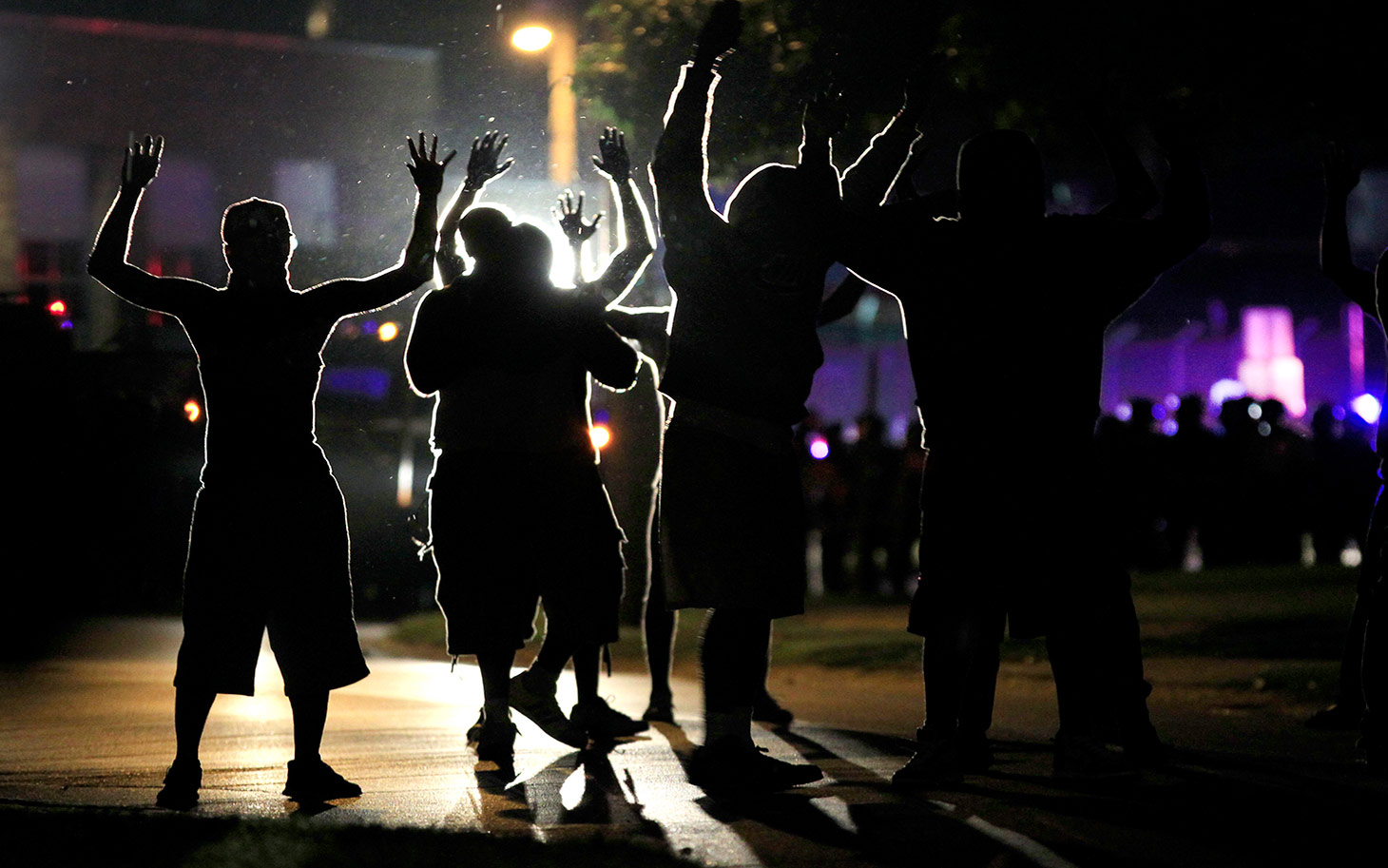
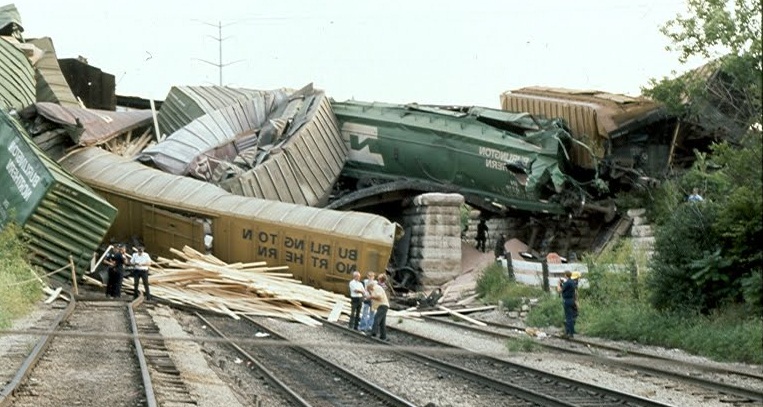
The Obama Administration’s crisis of the hour is the Ethics Trainwreck in Ferguson, Missouri, where a perfect storm arose when an an inept, distrusted and untrustworthy police force and a poor and frustrated African-American population clashed over the Rashomon shooting of an unarmed black teen. Now there are demonstrations every day in Ferguson; several people have been killed, and the demonstrations have spawned rioting and looting.

What is the purpose of all of this? It better be a good one, given its cost, and the protesters better be right. The problem is that the protesters can’t possibly be right at this point, because the facts aren’t known. We are told that the reason for the demonstrations is larger than mere anger over the shooting of Michael Brown; that it’s about police harassment, abuse and violence against African-Americans and their lack of accountability for it. That would only be a sustainable justification if in fact the death of Brown was an unequivocal, clear-cut example of the phenomenon being protested. It is not, not yet, and it may never be. So again the question has to be asked: is it ethical to be protesting in Ferguson at all? Continue reading
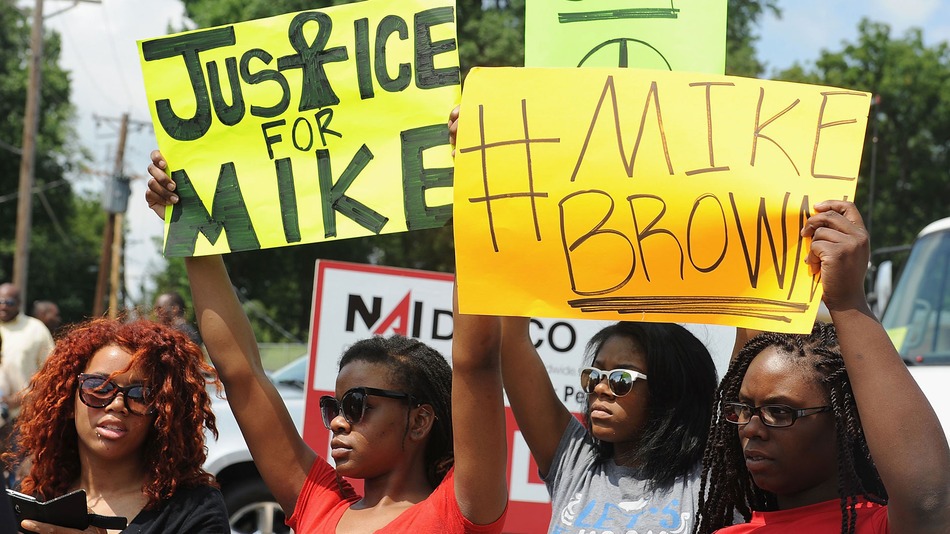
Ferguson’s “How Dare You Challenge Our Narrative?” Protest

Mike-Brown-Signs

There was another large demonstration in Ferguson last night. This one appears to have been more proportionately and wisely managed by Ferguson police, who still had a bad day that didn’t do much to erase the impression that its leadership is not equipped to deal with the challenges posed by race politics in 21st Century America. The inexplicably delayed information on the circumstances surrounding the shooting death of teenager Michael Brown, including the name of the officer involved (who can now count on receiving death threats and having celebrities try to help vigilantes by tweeting his address), “infuriated”  Brown’s family and the African American community in Ferguson, on the theory that video showing Brown robbing a convenience store and assaulting its owner was an attempt to smear the victim of a racist killing, and to “justify” an execution.

It’s an unethical theory, and the news media and fair observers should reject it. Indeed, they have a duty to reject it.

A young man is dead, and that is a tragedy. Another young man, the one who shot him, is also involved, and his life, while not over, is going to be permanently scarred in the best case scenario. If “justice,” the word that the demonstrators in Ferguson and elsewhere are using as a mantra, is being used to mean what it is supposed to mean (and, it is not), then the young police officer deserves justice too. That means, at very least, waiting until all the facts are known that can be known, and making a dispassionate, objective, non-politically motivated analysis of what occurred, who was at fault, what crimes, if any, were committed, and how to prevent such incidents in the future.

Is that too much to ask? To insist upon?

So it seems. Continue reading

Mid-EthicsTrainwreck Observations On Ferguson

train_wreck

1. This is traveling the identical route as the Trayvon Martin-George Zimmerman fiasco, and I wonder when the intentional similarity will begin dawning on the public, discrediting the participants and embarrassing the news media, which is as Pavlovian as the most conditioned canine.

2. In an environment where race grievance vultures lie in wait, the usual rule of prudence—an ethical value— for law enforcement becomes a fatal error. Now, if a police department waits and investigates before making an official report or filing charges when a white individual has killed a black one, it will be spun by those seeking to find sinister motives, and the news media will take the cue.

3. As in the Martin case, the victim was immediately portrayed by his family as being as threatening as a Care Bear, except for his race. Martin was introduced to the public by the news media with an old photo that made him look about 12. Michael Brown was introduced by his promising future: he was going to college, and his parents were proud of him, as if these factors are proof of unquestionable virtue and innocence. He was unarmed, and a teenager. But as I learned for the first time by seeing the surveillance video of the alleged robbery, he was a huge teenager. A man that big doesn’t have to be armed to be dangerous. Naturally, all public impressions of the incident were formed before any of this came to light. This also addresses the new outrage by protesters that the video was released to “justify” the killing. The video let us know that Brown wasn’t a harmless kid, and that’s valid information now. Continue reading

CNN’s Carol Costello, Making CNN Viewers Dumber Yet Again

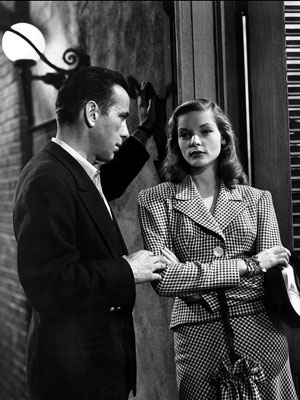
Lauren-Bacall-To-Have_l

The least we should be able to ask of the news media, since they obviously can’t be trusted to report the news competently, objectively or fairly, is to not make the public more stupid and ignorant than it already is. CNN’s Carol Costello, a prime offender in the incompetent and biased, can’t even clear this low bar.

This morning, as the networks interrupted their around the clock Robin Williams death coverage to note the passing of famed screen siren Lauren Bacall at the ripe old age of 89, Costello led her report by referencing Bacall’s “beauty, talent, and wit.” Her wit was represented by a clip of her famous line as “Slim” in “To Have and Have Not” (1944):

“You know you don’t have to act with me, Steve. You don’t have to say anything, and you don’t have to do anything. Not a thing. Oh, maybe just whistle. You know how to whistle, don’t you, Steve? You just put your lips together and… blow. “

But this quote has no relationship at all to Bacall’s wit, and she was indeed witty. The line was written by Jules Furthman, or perhaps William Faukner, both credited with the screenplay, inspired by Ernest Hemingway, who wrote the novel and created the character Bacall was playing. A seven-year-old could have been just as witty, with these guys putting words in her mouth.

Incredibly, a ridiculous number of people really think actors are responsible for the lines they say on stage or on screen. This is, you’ll agree, idiotic and an embarrassment, and CNN should not be encouraging such a misconception.

And yet it did.

Yes, Narcissists Lack Empathy And Can’t Be Trusted, But Fortunately, They’re Honest!

narcissus

There was a fascinating little story in the Washington Post last week. Apparently researchers have found that a long diagnostic survey used to identify narcissists is no more effective than a simple, direct question: “Are you a narcissist?”

Narcissists just aren’t ashamed of their narcissism, and as the story points out, that shouldn’t be surprising. Narcissists see the world as revolving around them, feel superior to everyone else, and typically aren’t inclined to hide their light under a bushel basket. They also are smart enough to know they are self-absorbed, and if they thought that was a bad thing, they wouldn’t be true narcissists, who tend to believe that everything about themselves is peachy keen. Narcissists also lack empathy, so comprehending why people like them are often distrusted (because, in fact, they aren’t trustworthy) might be beyond them.

Professor Brad Bushman, co-author of the study, tells the Post that being able to identify narcissists easily is a boon for everyone, including the narcissists themselves, pointing out that if you already think you’re perfect, you’re not going to make an effort to improve yourself. “And it’s bad for society as well,” he says, “because if you’re selfish you’re less likely to be a cooperative and helpful member of your community.”

Fortunately for them and society, narcissists, despite all their unethical tendencies, are honest…at least about their malady. Continue reading

The O’Bannon Case: A Judge Explains How The Law Requires An Unethical and Corrupt Practice To Be Fair….But It’s Still Unethical and Corrupt

NCAA-ban

Now that a federal judge has declared the elite student-athletes at big time sports colleges to be what they are…paid mercenaries…and the sports programs at such institutions to be what we always knew they were…cynical sideshows that sacrificed education to greed…will the pubic, the media, educators, and universities now stop this slow-moving ethics train wreck?

Of course not.  If they cared about how high-profile college sports were warping both America’s education and its values, they would have addressed the problem decades ago. They would have stopped it before, for example, schools started paying football and basketball coaches more than any professor. They would have stopped it before prestigious schools gave degrees to graduates whose entire education was a sham, who took ridiculously easy courses and who were held to infantile academic standards, all so rich, fat alumni would continue writing checks. They would have stopped it before a revered football coach held such power in a university that he was able to persuade the school’s leadership to allow a child sexual predator operate on campus.

U.S. District Judge Claudia Wilken, in a 99-page ruling agreeing with the claim of a group of plaintiffs fronted by former UCLA basketball player Ed O’Bannon, issued an injunction against the NCAA from “enforcing any rules or bylaws that would prohibit its member schools and conferences from offering their FBS football or Division I basketball recruits a limited share of the revenues generated from the use of their names, images, and likenesses in addition to a full grant-in-aid.”

The ruling will be appealed, and some of its legal conclusions certainly seem debatable. That is not my concern. The opinion effectively kills the fiction that the semi-literate youths who perform on-the-field heroics to burnish the images of universities and attract huge broadcast fees are what the NCAA, alumni, students , the schools and the media pretend that they are. Now that we know they are not truly students, what persuasive ethical justifications can be given for them to play college sports at all?

My answer?

None. Continue reading

Woody Allen, James Shigata, And Diversity Casting Ethics

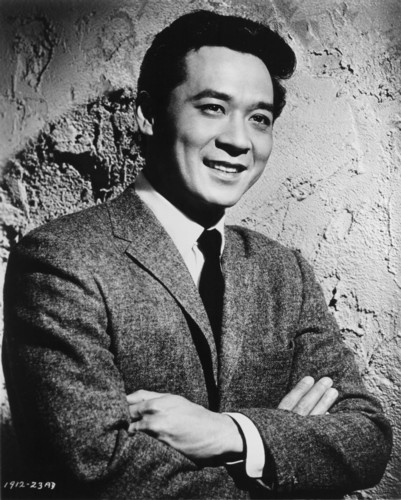
You have no idea who this is, do you? Well, it shouldn't have turned out  that way...

You have no idea who this is, do you? Well, it shouldn’t have turned out that way…

I’m sure you heard about James Garner’s recent death, but were you aware of James Shigata’s passing? Shigata, who died July 28 at the age of 85, was a contemporary of Garner’s, a superb actor, and like Garner, a leading man with leading man looks. James Shigata, however, was of Asian descent, though American through and through, and never escaped the perceived limitations of the shape of his eyes. Though he had a starring role in the hit film adaption of  the Rodgers and Hammerstein musical “Flower Drum Song” and routinely received critical acclaim for all of his film work, but though he got roles on television through the ’80s, he never was able to break through the typecasting straightjacket that deemed him only suitable for “Asian” roles. If you remember him as all, it is probably as the brave Japanese executive shot by Allan Rickman in “Die Hard.”

I thought about Shigata when I read a piece in Salon, noting that director Woody Allen didn’t cast African-Americans in his movies, and that his explanation why didn’t justify the neglect. Prachi Gupta writes, Continue reading

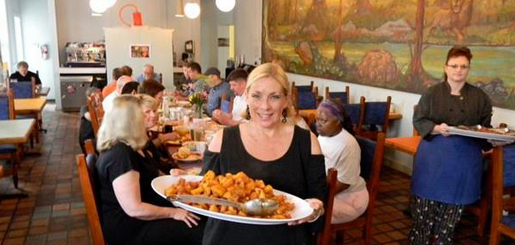
Ethics Dunce: Mary’s Gourmet Diner in Winston-Salem, N.C.

Welcome to Mary's! Some are more welcome than others...

Welcome to Mary’s! Some are more welcome than others…

I wish this were a joke, (thinking back on the previous post) but apparently it’s not.

The diner gives a 15% discount to customers who appear to say grace before eating. Yes, it’s a public prayer discount. Mary’s  has been doing this for years, a co-owner confirmed to NPR. Finally someone posted a receipt with the line item for “15% Praying in Public ($6.07)” to Facebook.

I detest this kind of thing, and so should you, because it is ethically indefensible and un-American to the core. The policy, whether it is well-publicized or quietly implemented as this one was, exacerbates societal divisions and embraces bias and prejudice. There may be a legal difference between this and charging a premium (that is, a penalty) to those who have Obama stickers on their cars or who are wearing T-shirts with the logo of the local team’s nemesis, but ethically it is all the same: splitting the world into them and us, good guys and bad guys, the virtuous and the reviled. All of “Mary’s” customers are human beings, and that is the only thing that should matter in the United States of America.

Now that this offensive policy has been outed, the question is this: Is it unethical for a non-believer to pretend to pray in order to get the diner’s unethical discount for the godly? Of course it is.

It’s also unethical to patronize a restaurant that discriminates against its own patrons.

___________________________

Facts: NPR

Rationalization #44: The Unethical Precedent

Man shrugs

44. The Unethical Precedent,

or

“It’s Not The First Time”

This rationalization can be another  variation on the Golden Rationalization, “Everybody does it,” like “It’s done all the time” and” “We’ve always done this,” but its intent is often different. The suggestion is that because an unethical act has been done before and presumably permitted, ignored, or endorsed, that presumptively ratifies the same or similar conduct as acceptable from now on. In fact, it does not. In fact, the argument is nonsensical.

An individual instance of bad conduct may have been tolerated or forgiven on the theory that a warning was sufficient, or that the circumstances prompting it were unlikely to occur again. That didn’t mean that the conduct was desirable, responsible, fair or something that would make a good societal norm. Moreover, “It’s not the first time” cuts the other way: if this conduct is happening repeatedly and with increasing frequency, that may make it worse, not more permissible.(“Hey, this isn’t the first shell that Hamas has shot into Israel! What are you getting so bent out of shape for?”) Continue reading

[Update] Mission Accomplished, NPR: Classic American Folk Song Censored

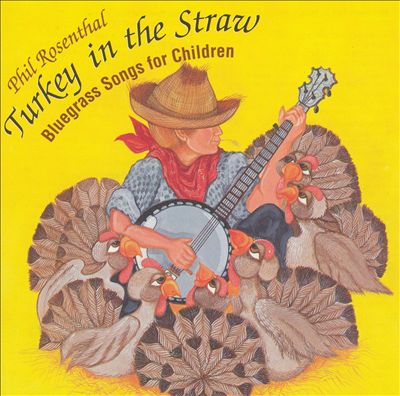
turkey in the straw

In May, National Public Radio carried an essay arguing that the old American folk tune “Turkey in the Straw,” long the melody of choice for ice cream trucks, was really “horribly racist.” Of course, a tune can’t be racist unless it is intended to communicate a racist message, which is impossible if nobody who hears the music discerns racial animus. NPR took care of that in a hurry. As soon as that new bit of imaginary racism surfaced, I knew that this grand old tune, a standard for square dances, country fiddlers, blue-grass bands and of course, the Good Humor truck, was on the way to oblivion. I wrote..

“You know the next step, though, because it is so familiar. Some race-huckster…will seize on NPR’s piece, and organize a Good Humor boycott, and the weak and principle-free corporate executives will fold immediately, issue an apology, and change the tune played by the trucks…”

Shortly after the appearance of the NPR piece and its progeny, Audi began running a TV ad that involved an ice cream truck playing…”Turkey in the Straw.” Someone, I don’t know who, maybe my predicted race-huckster, maybe some internal political correctness watch-dog, maybe an NPR fan, intervened, and now, “Turkey in the Straw” is gone, replaced by  the melody of “Pop Goes the Weasel.”

Mission accomplished, Race Grievance Hit Squad, NPR, Cultural Censors! American musical culture heritage is diminished, and a piece of music that entertained Americans of all races for centuries is on the way to extinction. You must be so proud.

I’m curious: what’s next on your hit list, “Huckleberry Finn”?