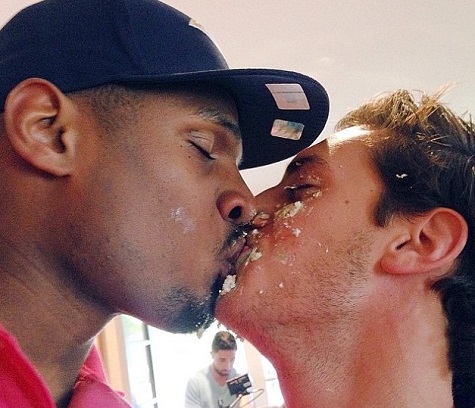
Michael Sam Flunks Trailblazer Ethics, And Many Will Suffer Because Of It

Sam kiss

The most charitable explanation for Michael Sam’s disastrous performance in the wake of the NFL draft is that he’s a young man who got terrible advice. A less charitable theory is that he’s an idiot. The worst theory of all is that Michael Sam is less interested in being the first openly gay pro-football player who blazes a clear path for those who follow him, and more concerned about becoming a gay icon, or worse, a martyr. Whatever the reason, Sam accepted the massive responsibility of being a cultural trailblazer, and fumbled the ball.

Sam wasn’t the best player in the NFL draft, but everyone knew, including Sam, that he would be the most closely watched. He had “come out” as gay soon after the college football season, and in light of his prominence and recognition as a stand-out athlete, his honesty and openness about his sexual orientation was hailed as a cultural turning point, an advance for gay Americans, and a test for the macho NFL. Would he be drafted? If he wasn’t (or was?), would it be because he was gay? ESPN’s cameras were in the Missouri defensive end’s home Saturday as the drafts neared its final stages with Sam name still uncalled. When St. Louis Rams coach Jeff Fisher called Sam at his agent’s house in San Diego to tell the former University of Missouri defensive lineman that they had selected him in the seventh and last round of the draft, it was instant drama.

There was more drama, in fact, than ESPN and viewers probably expected. Sam burst into tears while receiving the call, and then received an emotional, mouth-t0-mouth kiss from his boyfriend, Vito Cammisano.

Not that there’s anything wrong with that.

Actually, there is; several, in fact. To begin with, Sam had violated the Second Niggardly Principle, which states,

“When an individual or group can accomplish its legitimate objectives without engaging in speech or conduct that will offend individuals whose basis for the supposed offense is emotional, mistaken or ignorant, but is not malicious and is based on well-established impulses of human nature, it is unethical to intentionally engage in such speech or conduct.”

A clearer example of the SNP would be hard to find. No doubt about it, most heterosexual Americans, which means most of the public, are not used to seeing adult men kissing each other on the lips. There is no question that Sam knows this: of course he does. Even now, popular culture uses the image for shock value; it was only the 90’s when an impulsive lip-lock from Kramer on Jerry drove the studio audience to screams of laughter. No, there’s nothing “wrong” with two men kissing each other, but an awful lot of people were raised to think it is unnatural, and it is wrong to intentionally or negligently offend or upset them gratuitously. It is the flip side of tolerance: consideration and etiquette. Causing discomfort just because you can, or because your targets “deserve” or “need” to feel uncomfortable is just trouble-making for the hell of it. “Deal with it!” is confrontational and aimed at creating rancor, not comity. Continue reading

Harvard’s Black Mass: An Ethics Problem With No Answer


Impossible.

Impossible.

P versus NPthe Hodge conjecturethe Riemann hypothesisthe Yang–Mills existence and mass gap The Navier–Stokes existence and smoothness. The Birch and Swinnerton-Dyer conjecture. These are some of the unsolved problems of mathematics, but they are child’s play compared to the unsolvable ethics dilemma concocted at Harvard College.

Is Harvard right to allow students to hold a historic recreation of a Black Mass? Is Harvard wrong? Is it unethical for the students to engage in the project? Is it gratuitously insulting to religion, particularly Catholicism? Does it even matter if it is?

To bring you up to date:

The Harvard Extension Cultural Studies Club is planning to recreate a “satanic black mass” on campus next week, enacted by Satanic Temple, a New York-based, Satanist group that engages in outrageous displays to draw attention to First Amendment rights. “Our purpose is not to denigrate any religion or faith, which would be repugnant to our educational purposes, but instead to learn and experience the history of different cultural practices,” the HECSC said in a statement.

The statement lays the foundation for a hung jury in seeking an ethics verdict. Since the Black Mass was originally devised to denigrate the holy mass, saying that recreating the mass isn’t intended to denigrate religion is the kind of thing Captain Kirk used to say to evil, logic-bound computers to make smoke come out of their hard drives. “It-is-true-but- it’s-not-true-but-nothing-can-be-true-and-not-true–KABOOM! Continue reading

HGTV And Corporate Cowardice: Hold Companies Accountable For Stifling Speech, Opinion, And Thought

"Remodeling Homes, and Wrecking Democracy"

“HGTV: Remodeling Homes, and Wrecking Democracy”

Once again,  a company that is in effect punishing an American for his or her views on a complex social or political issue is being excused as simply “watching out for the bottom line.” This time, it is cable network HGTV, which cancelled a planned cable show about home repair because one of the prospective stars expressed an opinion adverse to gay activists. Last week, it was the NBA; before that, the agent of activist vengeance was Mozilla, and before that, A&E, until it decided that it was more profitable to do one “right thing” (not punish the duck call eccentrics for being open about who the network and its viewers always knew they were) rather than what it had decided earlier was the “right thing” (“STONE THE BIGOTS!!!”). None of these profit-making organizations are the least bit interested in what is right or wrong, of course, and probably don’t give the ethical implications of their acts a moment’s thought. All they are worried about is money, and what they will grandstand as their “principled decision” will always, amazingly, coincide with whose bullying tactics are more likely to succeed. Continue reading

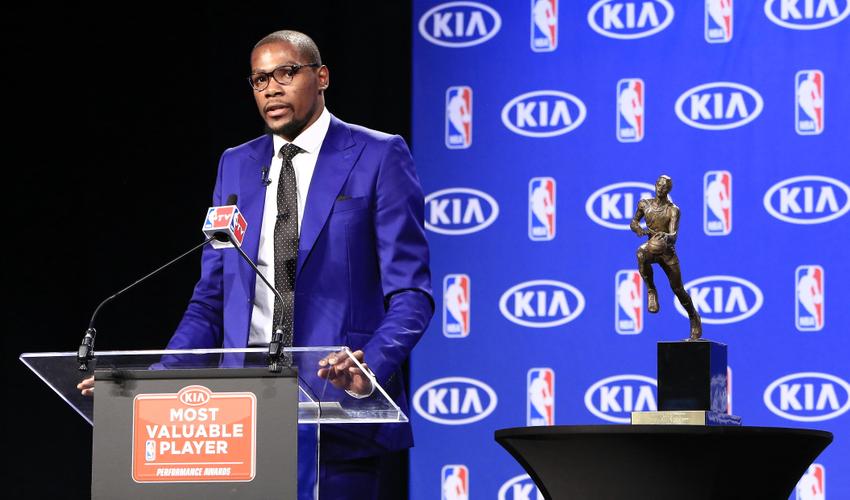
Ethics Hero, Mother’s Day Division: NBA MVP Kevin Durant

kevin-durant-nba-kevin-durant-mvp-press-conference2

Just in time to temporarily relieve the National Basketball Association from public exposure of its expediency, hypocrisy and criminalization of thought, and also just in time for Mother’s Day, Oklahoma Thunder forward Kevin Durant delivered an ethics slam-dunk of an acceptance speech when he was honored with the league’s Most Valuable Player Award.

‘Tis not always thus. Another NBA great, Michael Jordan, revealed the bleakness of his character in his nauseating speech upon being admitted to pro basketball’s Hall of Fame, settling old grudges and celebrating himself. Durant, in glorious contrast, was graceful, humble, sincere, gracious, and filled with gratitude, particularly toward his mother, who was in the audience. It takes a sense of fairness, respect and perspective, as well as confidence,  to use the spotlight at an event that honors you to shift attention to others, and that is what Durant did. His speech itself is proof that his mother raised him well, and his words drove the message home:

“One my best memories I have is when we moved into our first apartment. No bed, no furniture, we all just sat in the living room and just hugged each other. We thought we made it. … You wake me up in the middle of the night in the summertime, making me run up a hill, making me do push-ups. Screaming at me from the sidelines of my games at eight or nine years old … When you didn’t eat, you made sure we ate. You went to sleep hungry. You sacrificed for us. You’re the real MVP.”

Here is his entire speech, displaying an ethical character that can’t be faked.

Chinese Food Ethics, Mexican Food Ethics

Chinese Food

In a dilemma reminiscent of my ice cream sundae problem last year, I faced the question of how to ethically respond to yet another food service botch. We ordered a modest dinner from the local Chinese carry-out establishment, and after we got the order home, discovered that it was missing an appetizer. It was raining hard, and when I called the restaurant, they agreed, after putting me through the third degree, that they had screwed up. They said they would deliver it. I was prepared to drive over and pick it up, but at least this allowed us to begin eating the rest of the dinner before it got cold. It took about a half an hour, but my precious pan-fried pork dumplings finally arrived, along with profuse apologizes from the deliverer.

The ethics issue: Should I tip him or not? Continue reading

A Donald Sterling Ethics Train Wreck Surprise: Something GOOD May Come Out Of This Mess!

French_Revolution_GuillotineBut I doubt that it will feel very good.

Even more than usual, I was physically nauseated by the Sunday morning network news shows this weekend, which all blurred together in a nightmarish display of how lazy and biased the news media is, and how aggressively it now seeks to make Americans complacent, ignorant, and ethically stunted. I’m not sure which of these journalistic disgraces it was—I think it was “Meet the Press”—where the host, briefly attempting to inject some content into his panel’s obligatory Donald Sterling bashing, asked if it mattered that his comments were intended as private. “There is no privacy any more!” a female panelist exclaimed, not as protest or complaint, but as a dismissive rebuttal. Oh. Well, that settles it then! We should now assume that any of us can be publicly pilloried and humiliated for what we say in our homes, bedroom, automobiles, and safe rooms.  Next issue! Boy, the President killed at the White House Correspondents dinner, didn’t he?

Over at ABC, the token conservative this week in that “roundtable,” Laura Ingraham—the allegedly smart, ultra-right wing, acerbic former Supreme Court clerk for Justice Thomas turned radio host—couldn’t manage the presence of mind or the wit to point out that fellow panelist Van Jones had just compared NBA players—you know, the African Americans who make more money in a week than you make all year?—-to black slaves, and twice at that. What good are you, Laura, if you can be intimidated like that, and allow a shimmering opportunity to illustrate the racial double standard being used today for cynical political ends, so the public might start paying attention? No, Laura had her own agenda, so she wasn’t paying attention. She was there to use the Oklahoma “botched” execution as a platform to inveigh against—abortion. I would call her performance pundit malpractice, but how one can be judged incompetent on a Sunday public issues show, when the shows themselves are journalistic abortions?

Retribution is coming for all, however. Eventually, thanks to the excessive and imprudently unrestrained abuse being heaped on Donald Sterling, these knaves, bumblers and hypocrites are going to have to face the reality of the dilemma they have created for themselves, because the standard they so happily apply to Sterling—deceptively safe and easy because he’s objectively repulsive–is now going to be applied to everyone including their champions and heroes, , and the carnage will be unrelenting. And it will be good for the culture, I think, because like the French Revolution, the force unleashed by the politically correctness bullies, race-hucksters and Bigotry Furies will prove unmanageable, and consume its creators. Continue reading

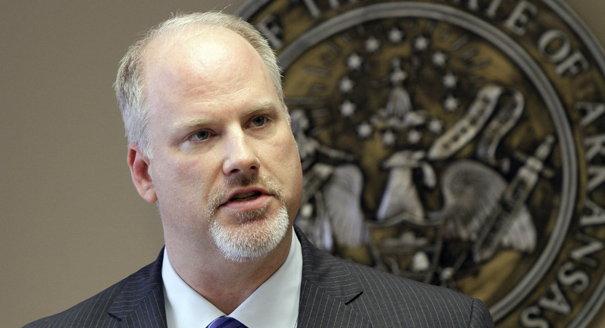
Ethics Hero: Arkansas Attorney General Dustin McDaniel

Dustin McDanielSome attorneys general understand the obligation of a state’s highest legal representation, even if the Attorney General of the United States does not.

Arkansas Attorney General Dustin McDaniel, a Democrat,told the press yesterday that he personally  he supports allowing same-sex couples to marry,  but will nonetheless continue defending his state’s 2004 ban on gay marriages in court.

The news angle, as reported, was that McDaniel, a Democrat serving his final year as the Arkansas AG, is the first statewide official in conservative Arkansas to back same-sex marriage. Ethically, however, the significance is that although he disagrees with the current law of the state that is his client, he will nonetheless do his duty according to the laws he swore he would uphold….as he should, as an ethical and honorable lawyer who is there to serve the public’s interests, not his own conscience. Continue reading

Ethics Dunce: Van Jones

Slavery, 2014 style.

Slavery, 2014 style.

On this Sunday’s edition of ABC’s This Week with George Stephanopoulis, the weekly gorge-rising moment occurred when former White House “czar” and alleged truther turned pundit Van Jones weighed in on the Donald Sterling saga, noting that in the NBA owner’s taped remarks he arrogantly alluded to the fact that his highly paid NBA players are dependent on him for their livelihood. To plenty of nods and amens around the table (the Sunday talk shows no longer even attempt to attempt partisan or ideological balance), Jones said that this “sounded more like 1814 than 2014.”

I will observe again, though no one in the panel was fair enough to because Sterling is disgusting and doesn’t deserve journalistic fairness, that these comments were spontaneous and off-the-cuff, and not designed to withstand the scrutiny of critical parsing and hostile analysis, as few private conversations are. But that is a secondary point.

The main point is that nobody in the ABC roundtable, including moderator Stephanopoulis, was impertinent, brave, professional or competent enough to note that last week, rancher Cliven Bundy was crucified for making an ignorant statement that minimized the horrors of slavery, and that Jones’s idiotic comparison was as bad or worse. Continue reading

The Sterling Backlash: Signature Significance, Racism, Hypocrisy, and Double Standards

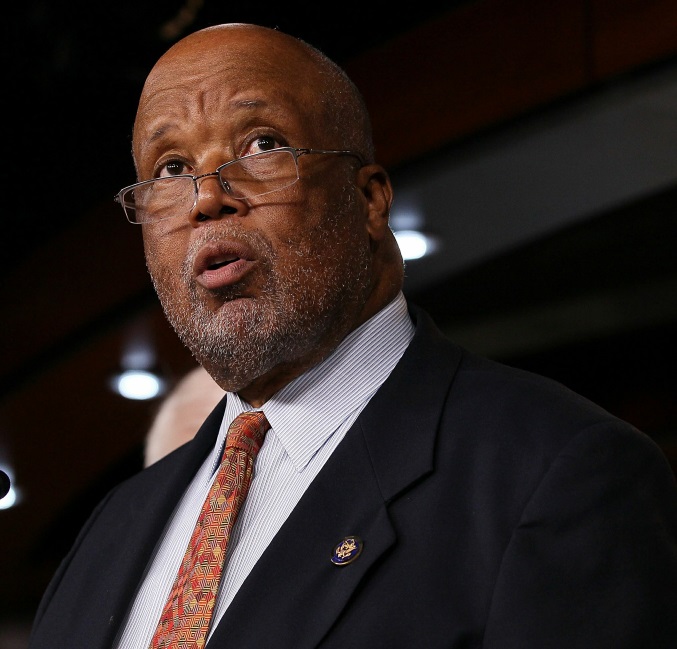
Bennie Thompson

“No big deal, he’s  just a Congressman…”

I often use the term “signature significance” in posts, and since it is a term that is not often applied to ethics, I thought today would be a perfect time to illustrate it in its original context, while clarifying the ethical murk around the Donald Sterling Ethics Train Wreck.

The original context of the phenomenon of signature significance is baseball, and I just watched an example of it. Today Red Sox left-hander John Lester beat the Oakland A’s, a very good team, by hurling eight innings in which he gave up no runs, only one hit, two bases on balls, while striking out 15 batters. If you don’t know anything about the game, let me tell you: this is extraordinarily good. Pitching performances can be measured and compared by using the “game score” method, developed by sabermetrics (that is, baseball statistics) pioneer Bill James. The best game score ever achieved was 105; the highest score in major league history for a pitcher who did not pitch all nine innings (as with Lester today) is 95, and has only been done once. (Theoretically, a game score could be as high as 145)

James also devised the term “signature significance” in the context of such games. His research showed that pitchers who were not outstanding talents never pitched a game with such a high game score even once—it simply didn’t happen. Thus, he reasoned, pitching a single game like Lester’s (the actual game he used was a similar performance by a young Roger Clemens before anyone knew what Clemens would become) was sufficient proof, all by itself, to conclude fairly and scientifically that the game was meaningful, without any other data. In cases of signature significance, he explained, the usual statistical rule that small sample sizes are not reliable indicators do not apply. Sometimes one incident, performance or episode is sufficient to make a confident verdict.

Signature significance is very useful, I have found, to rebut unethical rationalizations for unethical conduct that are used to excuse the agent of the ethical breach. “It’s only one mistake” and “Anyone can make a mistake” are the main ones. In the case of some serious kinds of bad conduct, this reasoning is misleading and false. Donald Sterling’s comments recorded and publicized by his whatever-you-call-her V. Stiviano have signature significance: they prove he’s a racist. Can you imagine any non-racist individual saying, in public or private, that he didn’t want his girlfriend being seen at his team’s games in the company of blacks?  How could this possibly occur? It wouldn’t, of course. Only those who hold racist attitudes and beliefs think and say such things. Sterling is a racist.

Stiviano, for her part, despite being the one who brought the media, the sports world and the public down on Sterling’s 80-year-old head, now says she doesn’t believe he’s a racist. Of course, she also says she’s his “silly rabbit” and that she is going to be President some day. She is an idiot. But I digress.

Other figures have made statements in the media that also have signature significance of the same sort as Sterling’s, yet the very same groups and journalists who have been whipped into a self-righteous froth over Sterling are strangely silent: Continue reading

A Brief Ethics and Culture Lesson For First Amendment Pedants

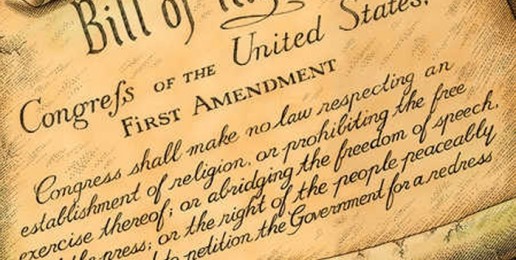
First-Amendment-on-scroll1

Thousands or pundits and web commenters, perhaps hundreds of thousands, in their concerted effort to justify the speech and thought police, (at least as long as the Enforcers are not likely to disapprove of their thoughts and speech), are mocking those who cite the First Amendment as authority for the proposition that the treatment of Donald Sterling, and others, are harmful, sinister, and un-American. The pedants are technically correct, of course. When someone who is fired for posting something offensive on Facebook screams, “My First Amendment right of free speech has been violated!”, that typically speaks of a poor civic education. The Bill of Rights only constrains government action, not private transactions. No rights, which are enumerated and protected from government incursions by the Constitution, have been lost or affected when only private action is involved.

That does not mean, however, that when private action opposes an individual’s Constitutional rights, it is necessarily acceptable, fair, harmless, reasonable or right. Indeed, the government and law serves a crucial function by delineating and encouraging cultural and ethical values. The principles articulated in the Declaration of Independence, the Constitution and the Bill of Rights do not merely constrain government. They form the basis of the ethical values that make the United States a unique culture, and point the way to what Americans, as Americans, regard as right and wrong.

Thus, while searching though a friend’s private e-mail account isn’t a violation of one’s right to privacy under the 10th Amendment, violating a fellow citizen’s privacy is wrong, and the Bill of Rights stands as authority that it is something important to each individual that should be respected. The Constitution and the 13th, 14th, and 15th Amendments won’t and can’t stop Americans like Sterling from being bigots in their private dealings, but they send a clear message that bigotry is not approved by the United States and was not by those who have charted our ethical course. Privately interfering with someone’s right to worship as they please is wrong, and the fact that the government is prevented from doing it tells us so. The First Amendment’s existence also tells us that preserving free speech—open, fearless, speech—is essential to core American values, because it also supports free thought, that which tyrants and dictators fear. Yes, we all have the right to make free speech, thought and discourse costly, difficult and painful, but we should not. We have the right to punish severely the non-conformist, the iconoclast, the rebel, or the citizen who may be a little late, or slow, or reluctant, to accept the conventional wisdom of the moment. We have the right to do it, but it is wrong. It is un-American. The Constitution tells us so.

Addendum: After I wrote the post, I encountered this.