Ethics Dunce: Bismarck, North Dakota’s CBS Affiliate, KXMB

will Farrell

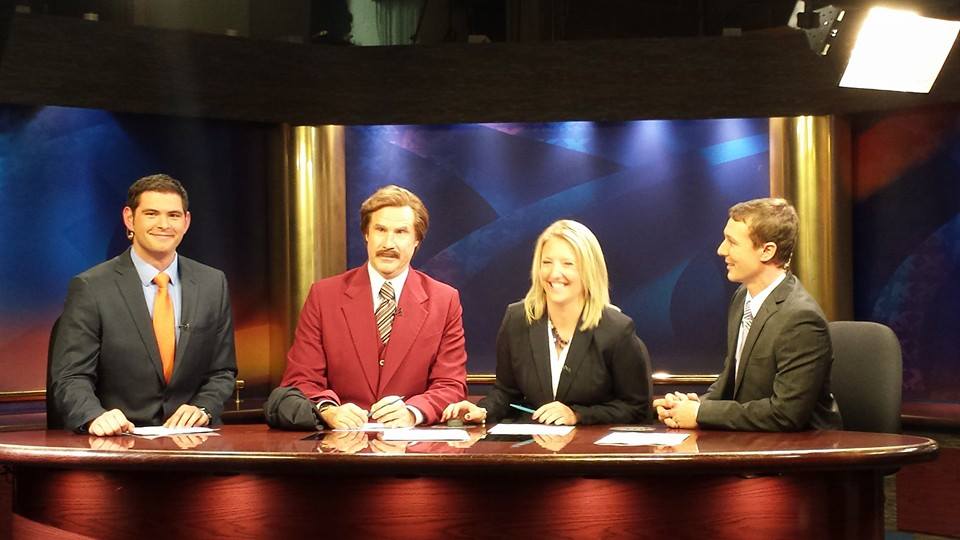
Actor and comedian Will Ferrell donned his  Ron Burgundy persona from “Anchorman”  and delivered the news for KXMB in Bismarck Saturday night. It was a promotion for “Anchorman 2: The Legend Continues,” the sequel to Ferrell’s  2004 hit comedy about a fictional news team in the politically incorrect 1970’s. The station’s sales manager, Tammy Blumhagen, explained that Ferrell’s agent contacted her in May and asked if he could anchor or co-anchor a newscast as part of the promotion tour for “Anchorman 2.” “When they called us, we kind of jumped at the opportunity,” she said.

Well, why wouldn’t she? Since U.S. journalism has abandoned all but the wan pretense of being a legitimate profession, perhaps all TV news broadcasts should just go the route of Bismarck’s local CBS station, and let clowns, reality stars, high school athletes, citizens picked at random, talking macaws and trained seals deliver the news. After all, neither the news judgment, integrity nor competence of what passes for journalists these days can be assumed or even expected. Why not just turn over the broadcast of the evening news to a comedian who plays a idiotic anchorman in films? It’s not like informing the public about what’s going on in the nation and the world is important or anything. The public doesn’t have a right to know. The public has a right to be amused. Continue reading →

The Ethics Stories I’m Not Going To Write About

FlamingBirthdayCake1

I am often tempted to write one of those short, bullet point, stream-of-consciousness posts like some fool used to pay Larry King to write for his awful syndicated column, which included trenchant observations like, “For my money, there’s no better game show host than Bert Convy!” Such a post would take a lot less time, and I could cover more of the myriad ethics issues I encounter in my research every day that for one reason or another—the main one being I have to work for a living—never make it to the pages of Ethics Alarms. But it’s my birthday, dammit; I am one year closer to death, I miss my Dad (you too, Mom, but you picked a better day to die), and it’s pretty clear that I will have “epic underachiever” on my headstone where Jack Marshall, Sr’s reads “Silver Star,” so in lieu of any other celebration, I’m going to, just this once, use the bullet point format to note a bunch of the things I normally wouldn’t get around to writing about. Like: Continue reading →

Black Friday Ethics: Holiday Capitalism Hate In The Media

Thanksgiving shopper. How DARE they?

Thanksgiving shopper. How DARE they?

Left-leaning media and pundits are so biased against corporate America and the profit motive that they will concoct ridiculous theories of wrong-doing just to bombard the ears of listeners with accusations about how cruel, crass and greedy the nation’s employers and retailers are. There is no ethical basis on which to criticize Walmart, Target, Macy’s or any of the retailers who chose to lure shoppers this year by “Black Friday” sales that reached into Thanksgiving. None.  Continue reading →

Comment of the Day: “Ethics Quiz: The Kidneys of Orlac”

But first, a last act of altruism...

But first, a last act of altruism?

The presumptive winner of the annual Ethics Alarms award for “Commenter of the Year” in 2013, texagg04,  has delivered a Comment of the Day expanding the topic of the post regarding a condemned prisoner in Ohio who wrangled a postponement of his execution so he could donate his organs to relatives. Here is  texagg04’s  take on “Ethics Quiz: The Kidneys of Orlac.” I’ll have some comments at the end.

“First, a murderer or other capital criminal being held responsible for his or her conduct seems to be in conflict with the same individual being allowed to display charity when you say they  forfeited their freedom, all of it, with their commission of a  capital crime. I’m not so sure it should be viewed from that angle.

Punishment serves a variety of purposes. Some petty crimes receive punishment designed to compensate, as best as can be, the victim – the victim being dead, capital punishment does not serve this purpose. Some crimes are of an anti-social nature, and the apt punishment seeks to rehabilitate or reconcile the perpetrator to the community. Capital crimes are so heinous that we have determined that the perpetrator must be completely cut off from society, through their death. In this case, the punishment does nothing for the victim OR for the criminal; the punishment is designed solely for the benefit of society.

If the criminal wishes to donate his/her organs to (what we must assume is to salve their own conscience – even though we can, probably, cynically assume is just a delaying tactic), we should not care one bit. They are gaining no material benefit from the community, nor are they engaging in any direct interaction with the community – so the act of cutting them off from the community as part of the punishment is still complete. Continue reading →

Ethics Quiz: The Kidneys of Orlac

Kidneys, okay, maybe...BUT NOT THE HANDS! NEVER THE HANDS!!!

Kidneys, okay, maybe…BUT NOT THE HANDS! NEVER THE HANDS!!!

One individual who may be having complicated sentiments this Thanksgiving is Ronald Phillips, who is current residing on Ohio’s death row. He was supposed to be dead by now, but was spared at the last moment when Governor John Kasich issued a stay of execution to ponder Phillips’ unusual request, which had been rejected by prison officials. Phillips, you see, is not a nice guy, as his current address might suggest. He was convicted of raping and killing the three-year-old daughter of his girl friend. (They subsequently broke up. It was him, not her.) He had experienced a change of heart, however, or rather, wished to facilitate one. His sister needs a heart transplant, and he wants his to be passed over to her after his execution by lethal injection. He also wants his kidneys donated to his mother, who is on dialysis because hers are failing, and any other parts of him that might save a life given to others.

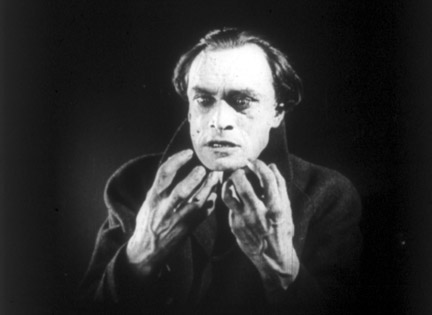
Presumably this will not include his hands, because there are a couple of horror movies, one old one in particular, about what happens after that operation, and they are pretty scary. There are no horror films that I know of, however, about the aftermath of getting an executed murderer’s kidney.

Yet.

Gov. Kasich, who is a nice guy, has explained that as heinous as Phillips’ crime was, the state should try to accommodate his desire to save innocent lives. The tentative plan is to hollow Phillips out, execute him in July, and then harvest anything that’s left.

Have you seen that movie, by the way?

Your Ethics Alarms Ethics Quiz:

Should such a request by a condemned prisoner be granted?

I’ll play devil’s advocate here, except that the advocate for the child rapist deserves the title more than I do. I think Kasich is confused, and that Phillips or his lawyers have figured out one more way to foil the criminal justice system. Continue reading →

Unethical Quote Of The Week: Liz Sloan, Ellen Browning Scripps Elementary School Principal (San Diego)

“This morning we told the students that there will be no romance in 5th grade.”

–—Principal Liz Sloan, in a letter to the parents of fifth graders at the Ellen Browning Scripps Elementary School in San Diego.

"You're a bully, Charlie Brown..."

“You’re a bully, Charlie Brown…”

When exactly was it that the public schools began believing that they had unlimited power over the private lives of students? That they could encroach upon the authority of parents, as well as the natural autonomy of children themselves? is this a byproduct of the increasingly arrogant micromanagement of our lives by the government, and those who believe that liberty, even as it is expressed in the once sacrosanct realms of the family home or the recreation of children, should be subordinate to what government “experts,” bureaucrats and autocrats believe is “best” for us? I don’t know when, but I do know that I thank the fates every time I reflect on our choice to home school my son, not merely because of its effect on him, but because I fear that it would have taken just a couple of encounters with people like Liz Sloan to give me a police record that would have been a serious occupational handicap.

Here is the rest of her letter: Continue reading →

The Ethics Of Rush Limbaugh’s Fillibuster-Rape Analogy, And Why You Should Read Ann Althouse’s Blog

wolves-and-sheep…and also never, ever underestimate Rush Limbaugh.

Law prof-blogger Ann Althouse perfectly analyzes Rush Limbaugh’s virtuoso attack on the U.S. Senate Democratic majority’s much-criticized curtailing of the filibuster this week, to pave the way for President Obama’s stalled judicial nominations. Feminists and other knee-jerk Rush-bashers are furious, and, of course, knowing exactly what to say and how to say it to annoy the hell out of them is part of his mission in life, and one which he does very, very well. If you missed it, here’s what Rush said in response to a caller (though if he hadn’t planned on this, I will be shocked, as well as very impressed)… Continue reading →

Ethics Quote Of The Month: Dr. Jonathan Gruber

“We currently have a highly discriminatory system where if you’re sick, if you’ve been sick or [if] you’re going to get sick, you cannot get health insurance. The only way to end that discriminatory system is to bring everyone into the system and pay one fair price. That means that the genetic winners, the lottery winners who’ve been paying an artificially low price because of this discrimination now will have to pay more in return. And that, by my estimate, is about four million people. In return, we’ll have a fixed system where over 30 million people will now for the first time be able to access fairly price and guaranteed health insurance.”

—– Dr. Jonathan Gruber of MIT, an economics professor who is among the designers of the Affordable Care Act, a.k.a Obamacare. He was interviewed by NBC’s Chuck Todd regarding the troubled law’s problems.

lottery

Could it be that the act of getting involved with this administration turns even non-politicians into deceivers and liars? For an economist to talk so deceitfully and manipulatively is distressing. He, of all people, certainly knows how insurance works, and has to work. The insurance company accepts, in essence, wagers from its insured, in the form of premiums, that they will “win” by incurring health care costs that require more funds more than the accumulated “wagers.” The insurance company gambles that it will “win” by the insured remaining relatively healthy, so that the premiums (and whatever investment income they generate) exceed what the company has to pay in medical costs for that individual. The only way a company can keep providing insurance is to win more bets than it loses.

Saying that an insurance company is “discriminating” (in the unjust and biased sense) when it refuses to  accept a wager that is virtually certain to win is like saying that a poker player is engaging in discriminatory conduct by refusing to play with a new player who brings a royal flush to the table with him. It is not discrimination to refuse to lose money, and Gruber knows it. But  like an expert liar, as I must presume he is, he plants a false definition of discrimination at the beginning of his discussion and then treats it as an agreed-upon description of what is occurring. Not selling something to a customer who can’t afford a fair price is not discrimination, and refusing to gamble with someone who is assured of winning is also not discrimination. But discrimination is something that everyone regards as wrong, unfair, and unlawful, so that is how the lawful operation of insurance companies is framed by this clever, learned, dishonest man.

I no longer trust Dr. Gruber, nor should you.

His statement is of additional interest, however, because it starkly defines the unique Progressive definition of “fairness,” by his repeated use of lottery imagery to describe the fact that some people, through no fault of their own, have fewer advantages than others, while those others, often through no virtue of their own, have more resources and opportunities. Progressives regard this as inherently wrong and unfair, and so unfair that it must be remedied by obtrusive government interference. The rest of America regards this as “life.” Continue reading →

Maryland’s Ethics Dunce State Senator, Len Bias, And Statue Ethics

The late Len Bias. No hero he.

The late Len Bias. No hero he.

Maryland State Sen. Victor R. Ramirez (D-Prince George’s County) has introduced a bill to designate state funds to erect a statue of Len Bias, a former University of Maryland basketball star, at Northwestern High School in Hyattsville, Md. Bias, a graduate of the school, died in 1986 of cocaine intoxication less than two days after he was drafted s by the NBA’s Boston Celtics, shocking the area and the nation. Ramirez’s efforts, as well as a recent decision to name another local high school after President Obama, is causing the Prince George’s County Education Board to revise and formalize its policy for such honors as statues and building names. Will an African-American kid who cut off his promising life as it was just beginning with a self-administered drug overdose be deemed worthy of immortalization, to serve as inspiration for future generations of black youth? Stay tuned.

The Stupid is strong in this one...

“Len Bias was a student athlete in Prince George’s,” Sen. Ramirez argues. “He moved the University of Maryland basketball program to new heights. He and Michael Jordan were the two best college players at that time, until he tragically died. . . . We can learn something from everything. The nation learned a lot from this unfortunate incident.” Well, if learning “a lot” from someone’s demise is the criteria for honoring them with a heroic statue, that opens up all kinds of possibilities. Good thinking, Senator! A statue of Richard Nixon reminds us that power corrupts, certainly a valuable lesson for all. A statue of Benedict Arnold teaches us the dangers of pride, and how a sense of entitlement can lead to tragic choices. And what could be more illuminating than a statue of Adam Lanza, the Newtown shooter? Maybe even one showing him mowing down those kids—such a powerful statement about gun abuse, and the failures of the mental health system! In fact, what would really be appropriate is naming a public school after him.

By the end of his life, Len Bias was no hero or role model, and he deserves no honor for knowingly breaking drug laws and getting himself killed while disappointing legions of fans and supporters. Erecting a statue to Bias would be just one more step in society’s capitulation to the seductive, and destructive, appeal of the drug culture, and the elimination of the vitally important societal stigma attached to recreational drug use. What Bias did was willful, ignorant, irresponsible and illegal, and even if that last is removed for his young admirers, the first three remain.

The County Board of Education is now going to debate the appropriateness of making a hero out of a  drug abuser and a 21 year old cocaine casualty. If they have to discuss it to answer that question, they all need to be replaced, not that the pathetic performance of their schools isn’t reason enough for that. Len Bias’s death wasn’t “a tragic incident.” A car crash is a tragic incident. Bias died because, like so many young people in Prince George’s County and elsewhere, he deliberately engaged in dangerous conduct that he knew was forbidden, and learned, the hard way, why.

Placing a triumphal statue in front of a high school is no way to discourage deadly attitudes like the one that got Bias killed…unless the design of the proposed statue shows the young man at the exact moment his heart seized and his eyes rolled back in his head.

________________________________

Facts and Graphic: Washington Post

Source: The Nation
Comment of the Day: “Ethics Dunce: Columbia, South Carolina Police Chief Ruben Santiago”

A few quick points, before I present Chris Marschner’s excellent Comment of the Day:

  • You know you’re posting too much when a you’ve completely forgotten an essay less than a month old, like this one.
  • Why didn’t someone tell me that I left the “l” out of “Columbia”?
  • I’m going to have to start working on my proof-reading again, clearly. There were a couple more typos in this post.
  • Chris just started commenting, and this is the third carefully written, well-reasoned substantive piece he has produced. I am grateful; such debuts raise everyone’s game.
  • I liked this post, and not many people read it or commented on it. I am increasingly worried about the trend in law enforcement and in government generally, especially the schools, to brush off free speech as an inconvenience. I’m grateful to Chris for raising the issue again.

Here is his Comment of the Day on the post, “Ethics Dunce: Columbia, South Carolina Police Chief Ruben Santiago”: Continue reading →