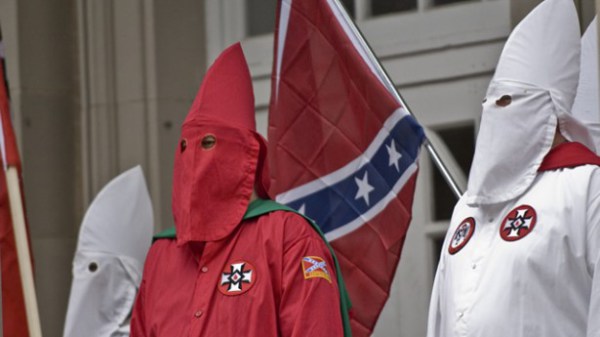
The Klan’s Birthday Cake, Individual Boycotts And The Ethics Of Refusing to Give Service To Jerks

"Happy Birthday to You! Happy Birthday to You! Happy Birthday, Dear Racists..."

“Happy Birthday to You! Happy Birthday to You! Happy Birthday, Dear Racists…”

[UPDATE: Apparently, the “news story” that prompted this post is a fake. In that case, I want to thank the hoaxers for  inadvertently sparking a useful discussion—nothing in my post is dependent on the factual nature of the story. I wasn’t the only one fooled, and I originally noted the links on reliable sites. On the other hand, to hell with people who plant fake stories that are not obviously tongue in cheek or satirical: it’s a despicable practice, and abuse of the web, and right down there with public vandalism and creating computer viruses as unforgivable public conduct. I apologize to readers here for misidentifying a false story as true, but I’m not the unethical jerk involved. If anyone knows who that is, please forward their names. I have some choice words for them.]

As I wrote the first time I stuck my ethics big toe into this kind of controversy, I am conflicted over the current trend of forcing certain kinds of service providers to serve customers they just don’t feel like serving. I have consistently come down on the side of the rejected customer, even when the service, as in the case of bakeries and photography salons, edges perilously close to art. I think I am there still, but my resolve is weakening. I think. Let’s look at this again, in the context of the kind of recent case that always eventually occurs when one sits on the slippery slopes.

A three judge panel of a Georgia appellate court recently ruled in favor of Marshall Saxby, the Grand Wizard of a local KKK chapter, after he sued a local bakery for refusing to bake a cake for the KKK chapter’s  annual birthday party. Elaine Bailey, who owns Bailey Bakeries, said she rejected the Klan its activities violated her religious beliefs, and Saxby claimed that Bailey’s refusal of service discriminated against his religious beliefs.

The difficulty with making an ethical call on this case and others like it (and sort of like it, arguably like it or a little bit like it) is that the crucial question in ethics analysis, “What’s going on here?” cannot be answered with certainty or clarity. There are ethical arguments and ethical principles, on both sides, making the issue an ethical conflict (rather than an ethical dilemma). In an ethical conflict, we must prioritize among important ethical principles that are opposing each other.

Let’s answer “What’s going on here?” in some of the various ways this case allows, as if only one of these ethical principles were in play: Continue reading

Grassy Knoll Ethics: How Deception Breeds Distrust

UmbrellaMan2

We once again must squarely face the hoary  quote from Walter Scott’s epic poem Marmion: “Oh what a tangled web we weave when first we practice to deceive.” It is hoary because it is true, and this month’s Smithsonian Magazine reminds us of how true it is, recounting how well-intentioned deceptions by the news media regarding evidence in the assassination of President Kennedy helped create a conspiracy theory that will not die, and that may have begun the slow, relentless deterioration of America’s trust in its own government that has reached dangerous proportions today.

Frame 313 of Abraham Zapruder’s accidental record of one of the pivotal moments in U.S. history gave him nightmares, and when he sold the rights to his amateur movie to Life Magazine, he insisted that frame be withheld from the public, and not published. “We like to feel that the world is safe,” documentary maker Errol Morris explains in the article.“Safe at least in the sense that we can know about it. The Kennedy assassination is very much an essay on the unsafety of the world. If a man that powerful, that young, that rich, that successful, can just be wiped off the face of the earth in an instant, what does it say about the rest of us?” I understand, but withholding the truth is not the way to make the world seem safer. As the story of the conspiracy shows, it is how we end up trusting no one. Continue reading

Celebrity Values: The Good, The Bad And The Ugly

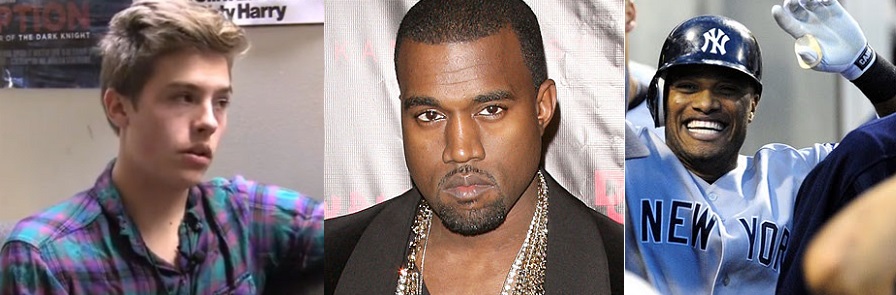
Sprouse-West-Cano

Celebrities have the opportunity to use their disproportionate and sometimes unexplainable fame to pass along good values, priorities and ethical habits to those who admire and follow them. The problem is that the U.S. culture’s current values are in a muddled state, with virtues sometimes being treated as embarrassments, and the enthusiastic embrace of non-ethical goals that once were regarded as the seven deadly sins are now often looked upon as the norm, and even appropriate. Here are some recent events in the strange world of celebrity values:

The Good: This headline on numerous web sources piqued my interest: “Dylan Sprouse Defends Restaurant Host Job.” Dylan Sprouse is a former Disney child star, a long time lead, with his brother, on the long-running “The Suite Life of Zach & Cody,” one of those loud, hyper-frenetic tween comedies that Disney and Nickelodeon acquire from some production company in Hell. Dylan was seen working in a restaurant, and this immediately spawned multiple rumors that he was broke, had blown through his millions, and was, in brief, a pathetic loser….because he has the same kind of job most American twenty-somethings fresh out of college would be thrilled to have.

Thus Dylan, who along with his brother decided to get out of the child star rat-race that has recently put Lindsay Lohan in rehab, Amanda Bynes in a mental health treatment facility and Miley Cyrus naked on a wrecking ball, and start a more conventional life with a college education (at NYU). Sprouse decided to address the weird criticism being sent his way on social media and in the gossip blogs by writing, Continue reading

Why Are The Core American Rights Ethics Alarms Malfunctioning?

The spark for this post is the recent fiasco engineered by Modesto Junior College in California, which told a student that he could not pass out copies of the United States Constitution outside the student center on September 17, 2013, which happens to be Constitution Day. College police and administrators demanded that student Robert Van Tuinen stop passing out Constitution pamphlets and told him that he would only be allowed to pass them out in the college’s tiny free speech zone, and only after scheduling it several days or weeks ahead of time. Fortunately, as is almost always the case in such campus outrages, The Fire, The Foundation for Individual Rights in Education (and what does it tell us that this indispensable champion of individual rights is widely regarded as a “conservative” organization?) was at the ready, and ripped off a letter to the school administrators that served the dual purpose of warning it to back off and holding it up to national ridicule. Continue reading

The Answer To Popehat’s Web Shaming Ethics Quiz

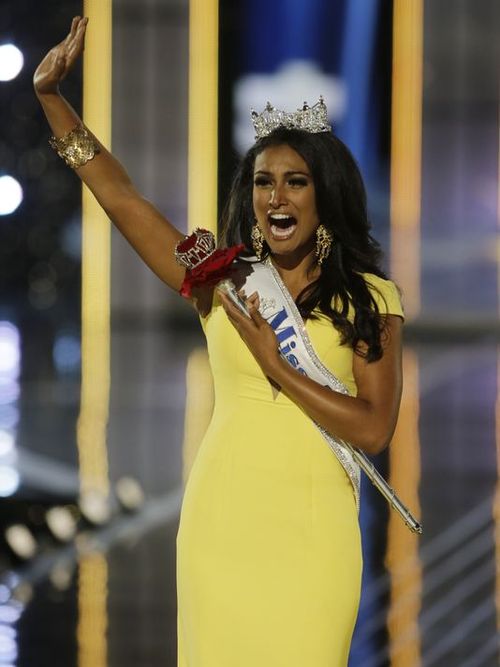
Hmmm..is it unfair to point out that tweeters who called the 2013 Miss America a terrorist and "not American enough" because of the color of her skin are bigoted morons? Let me think...

Hmmm..is it unfair to point out that tweeters who called the 2013 Miss America a terrorist and “not American enough” because of the color of her skin are bigoted morons? Let me think…

Popehat virtuoso Ken White has posed what we would call on Ethics Alarms an ethics quiz on the topic of web shaming. Is it ethical to post the embarrassing tweets of non-celebrities and public figures for the purpose widespread and national ridicule? Ken lays out the Pros and Cons thusly (these are direct quotes):

Pro:

1. It’s entertaining. Human frailty is the oldest and most consistent funny subject. People who are constantly incensed at brown people and can’t tell Arabs from Muslims from Indians are foolish and foolishness is amusing.

2. It’s whistling past the graveyard. Bigotry exists; ridiculing bigots is a mild act of defiance.

3. It’s supportive. Bigots exist; ridiculing and calling them out tells people subject to bigotry that we support them.

4. It’s a pressure release. The ability to ridicule bigots publicly reduces pressure to make the government regulate speech.

5. It’s socially transformative. Ridiculing bigots causes people to rethink being bigots.

6. It’s Darwinian. Twitter and Facebook, aided by Google, help those of us who hire employees distinguish between morons and people of normal intelligence.

Con: Continue reading

Unethical Tweet Of The Week: Prof. David Guth

Guth Tweet

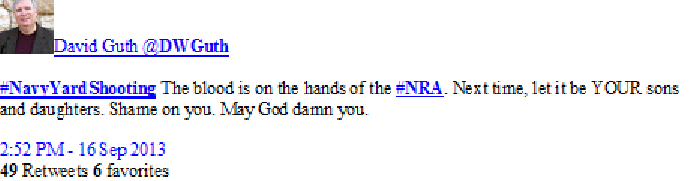
With this brain-jarring twitter offal from University of Kansas journalism professor David Guth—and if you marvel at the abysmal quality of today’s journalists, there’s a big clue right there—Ethics Alarms launches a new category, the Unethical Tweet of the Week. Clearly, Twitter has a magic ability to make even reasonable public figures and professionals engage in irresponsible, hateful and idiotic discourse, though I seriously doubt that this particular tweet’s author needed much of a shove.

What’s the matter with the tweet? Well, how long have you got? Let’s see: Continue reading

Your National Hispanic Heritage Month Assignment: Remember The Amazing Elfago Baca (February 10, 1865 – August 27, 1945)

Baca statue

As frequent readers of Ethics Alarms know, I fervently believe that history is important, and that we all have a duty to remember and honor the remarkable Americans who have gone before us, their exploits, triumphs, struggles and achievements, both for our sakes—for we can learn much from them—and theirs. I am constantly discouraged by the inspirational stories and fascinating historical figures who have nearly been forgotten. The schools don’t teach our children about them, and popular culture ignores them. This weakens the flavor and the power of our shared culture: it is wrong, that’s all.

Today, as I realized we were in the midst of National Hispanic Heritage Month ( September 15-October 15), I want to do my part to help keep alive the name and the story of a Mexican-American who may have faded from memory because the events of his life seem more fictional than real. Indeed, for most of my life, until a couple of years ago, I thought Elfago Baca was a creation of Walt Disney’s creative staff, who wrote a ten episode mini-series about him called “The Nine Lives of Elfago Baca” for the “Disneyland” show (“Now…from Frontierland!”) in 1958. I loved that series, but it never occurred to me that the series’ tales of a gunslinging, lawyer-sheriff in Old New Mexico could possibly have any connection to reality.

But they did. The real Elfago was, if anything, even more improbable than his fictionalized counterpart, portrayed by a very young and athletic Robert Loggia, who is best known as the toy magnate who plays “Chopsticks” on the giant keyboard with Tom Hanks in “Big.” Continue reading

Your Introduction To “Private Re-Homing”

Puppy, child, what's the difference? The point is make it someone else's problem, right?

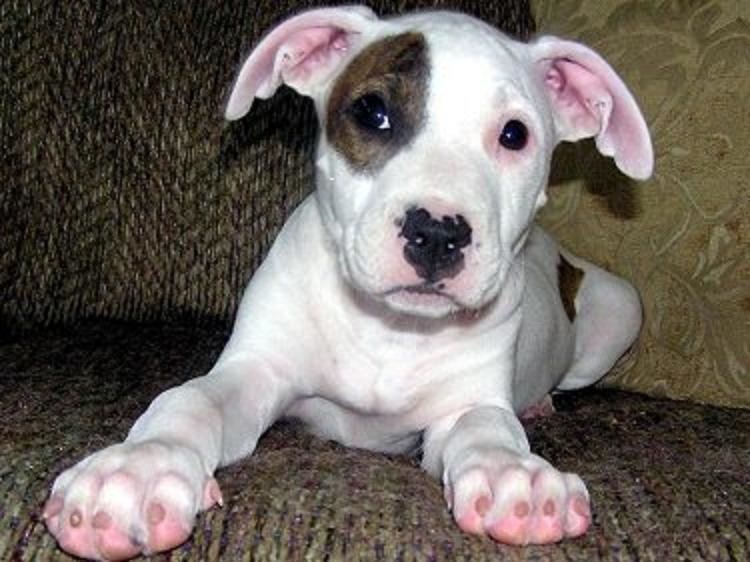
Puppy, child, what’s the difference? The point is t0 make it someone else’s problem, right?

Every time you see a national newscast take up valuable time telling us about Miley Cyrus, the Kardashians, Chelsea Clinton or the White House waterdogs, think about Inga, or Quita, victims of the increasingly common practice of underground adoption known as “private re-homing,” in which adopted children are traded around like dogs or kittens, and abused dogs and kittens at that.

I don’t have a lot of commentary about this horrible practice. My life was a little bit happier before it was brought to my attention. In the history of Ethics Alarms, perhaps the most upsetting story I have had to write about was the horrific conduct of Torry Hansen, a Tennessee mother who adopted a Russian child and then, finding that she couldn’t cope with his problems, put him, alone, on a plane bound for Russia with a note pinned to his jacket. I wrote that post with tears in my eyes; it upsets me to write about it now. Yet something very like what Hansen did to her son is being done via the internet, frequently and with little interference from the government or anyone else. I wish I didn’t know about this—no, that’s not quite right. I wish this wasn’t a feature of our society, so I wouldn’t have to know about it, much less write about it. Continue reading

Baseball Ethics And The Pitcher’s Fake Challenge: It’s All About Yu

Pitcher Yu Darvish plays Lucy...ethical?

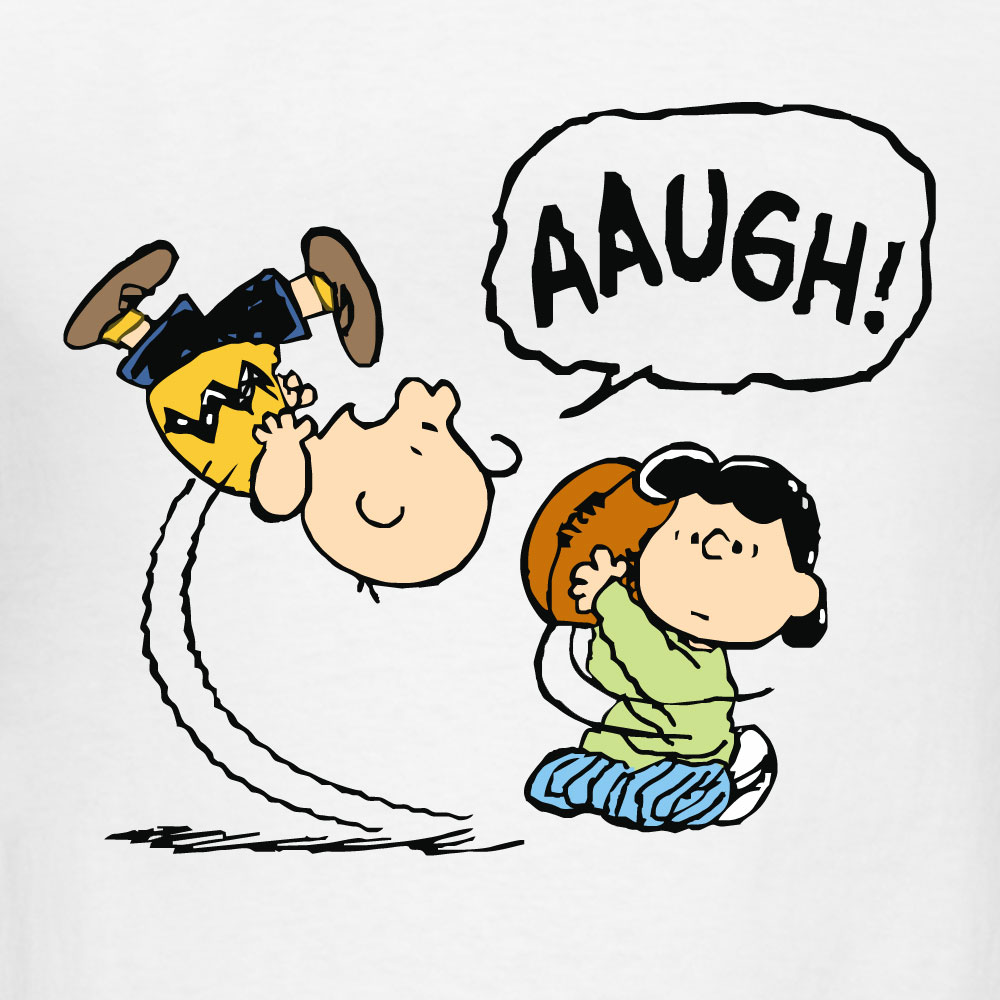
Pitcher Yu Darvish plays Lucy…ethical?

Texas Ranger ace Yu Darvish, in addition to being the only Japanese-Iranian major league baseball player and an Abbot and Costello routine come to life (“Who won the game?” “Yu did!” “Who did? “Not Who, Yu!”  “Me?” “Not you…Yu!” ), is apparently something of a trickster. In Saturday’s crucial game between the Rangers and the Oakland A’s, Darvish was facing A’s slugger Josh Donaldson, who had earlier in the season accused Darvish, a true flame-thrower, of being afraid to throw him his fastball. Darvish took up the challenge and as he prepared to throw his pitch to the Oakland thirdbaseman, shouted, “Fastball!” This, in the tine-honored traditions of the game, means that a pitcher is telling a batter that he can’t hit his best pitch, even when he knows what’s coming. It means, literally, “OK, hot shot, see if you can hit this, ’cause I’m throwing it right past you!”

Then Darvish threw Donaldson a curve.

The ruse didn’t work, for Donaldson got a hit. Still, Oakland’s dugout erupted, as the A’s expressed their belief that this was “bush league,” meaning an act consisting of unprofessional and unsporting conduct not specifically prohibited by the rules but nonetheless unfair and not worthy of big league players. Continue reading

Ethics Dunce: Prof. Glenn Reynolds, the “Instapundit”

Prof. Reynolds, the iconic conservative bloggers who wields considerable influence in the right-leaning blogospehere and beyond, has frequently displayed a dismaying affection for the unethical response of “tit-for-tat.” Has seldom done so as blatantly, however, as in a post yesterday, linking to a National Review article about CUNY students shouting down General David Petraeus, who is now a lecturer there.

The Instapundit wrote:

“I think right-leaning groups should similarly hound Hillary and other Obama Administration apparatchiks — including Obama himself, when he ventures onto campuses, both now and post-Presidency. The standard of behavior has been established. Let them live with it.”

Even giving Reynolds the benefit of the doubt and assuming that he is speaking tongue-in-cheek or hyperbolically, as he often does, this is an irresponsible statement if he doesn’t mean it, and an unethical one if he does. He is considered a sage and an opinion leader among many conservatives, and for such a prominent figure to expressly approve of the downward behavioral tail-spin that inevitably results when each competitor or adversary re-aligns  ethical standards according to the unethical acts of the other is embracing all-out culture war and chaos, with no standards at all.

“They started it, so let’s give them a taste of their own medicine and see how they like it!” is street gang thinking, (Jets: “Well they began it!” Sharks: “Well they began it!” Both:And w’ere the ones to stop it once and for all…tonight!”— “Quintet” from West Side Story) as far from ethics as one can get, and this is exactly what Professor Reynolds is endorsing. That ethically bankrupt approach, and the fact that our political system has been operating by it at least since 2000, accounts for today’s poisonous culture in Washington D.C. It has crippled both the Bush and Obama administrations, paralyzed the government and divided the public. If political and intellectual leaders embrace this reaction to misconduct in one setting, they are implicitly accepting it as a justifiable strategy, and it is not. It is a brutal, unethical strategy.

Students who interfere with invited speakers’ efforts to challenge or enlighten university audiences should be disciplined; it doesn’t matter whether the speaker is an ex U.S.general or Ilsa, Wolf of Dachau. Interfering with speech isn’t protected speech, nor is it ethical protest. That behavior isn’t a “standard of behavior,” it is a defiance of civilized standards. The President, Hillary Clinton and other targets of the right should be allowed to speak, listened to politely, and then confronted, if they are confronted, with civil and articulate rebuttals on the basis of their words and ideas. For a university professor to advise otherwise is unconscionable. For one who is respected and followed as extensively as Reynolds to write this defies reason.

____________________________________

Spark: Instapundit

Sources: NPR, National Review