How Partisanship Makes Pundits Untrustworthy

Healthcare down

Ezra Klein is a relentlessly progressive Washington Post reporter. He’s obviously also a smart guy, and it is a shame that he has allowed his total immersion into pro-Democratic politics render him incapable of seeing current events in  anything but political combat terms. But that is what he has become, and as a result, his analysis of any issue must be considered pre-poisoned by the lack of any objectivity, and a rooting interest in “his side.”

Here is an instructive paragraph from his Post blog, in a post that was also re-written slightly as a column this weekend. He was nominally criticizing the Obama Administration’s Affordable Care Act website:

But the Obama administration did itself — and the millions of people who wanted to explore signing up — a terrible disservice by building a Web site that, four days into launch, is still unusable for most Americans. They knew that the only way to quiet the law’s critics was to implement it effectively. And building a working e-commerce Web site is not an impossible task, even with the added challenges of getting various government data services to talk to each other. Instead, the Obama administration gave critics arguing that the law isn’t ready for primetime more ammunition for their case.

Amazing, isn’t it? Continue reading →

Ethics Quiz: Peter’s Problem

40 years from now, would you book Kaitlyn Hunt for your Congressional campaign fundraiser? Should you...if she's become a famous and beloved singer?

40 years from now, would you book Kaitlyn Hunt for your Congressional campaign fundraiser? Should you…if she’s become a famous and beloved singer?

Shelly Stow, an occasional commenter here who blogs provocatively at With Justice For All about the harassment and persecution of former sex offenders, raised the topic of today’s Ethics Quiz. She  posted about the plight of Peter Yarrow, the Peter in Peter, Paul and Mary, now, thanks to cruel mortality, just Peter and Paul. I was not aware of this, but in 1970, when he was 30 and a rather significant star, he had sexual relations with a 14-year-old girl. Shelly is wrong to call this “consensual,” for 14 is statutory rape territory. The law declares that a 14-year girl is a child and not capable of meaningful consent, and fans of  Roman Polanski, Woody Allen and Kaitlyn Hunt notwithstanding, it is quite right. He pled guilty to something less than rape, and served a three-month sentence; he is also, as a result, a registered sex offender. President Jimmy Carter pardoned him in 1981.

Yarrow, as Sixties folk singers tend to be, is a social activist, and is politically active as well. Not for the first time, his child molesting past became an issue recently when he  agreed to sing at a campaign event for Martha Robertson, a Democrat running for Congress in New York against incumbent Republican Tom Reed. A spokesman for the RNC told the media,

“It is absolutely deplorable that Martha Robertson would kick off her congressional campaign by having a convicted sex offender headline her fundraiser. If Robertson’s judgment is so bad that she would even entertain the idea of raising money with a man who molested a 14-year-old girl, she has no business representing the people of the 23rd District of New York in Congress.”

He also said Robertson should cancel the fundraiser and return any money she raised with Yarrow’s support.

Shelly writes,

“What is wrong with this scenario? Our criminal justice system is comprised of one part punishment and one part rehabilitation. The purpose of the punishment is to bring about rehabilitation. Sometimes it works like it is supposed to. Mr. Yarrow committed a crime in 1969. That is over 40 years ago. He served his court ordered punishment, and in light of the fact that there has been no re-offense in over 40 years, I think we are safe in declaring him rehabilitated. Everything worked just like it is supposed to. What then is the problem? Is rehabilitation not good enough for some? Is there some other standard of measure needed?”

This launches the Ethics Alarms Ethics Quiz for this weekend, which I will phrase this way:

Is it unfair for Peter Yarrow to still face criticism, suspicion and condemnation based on his crime of 40 years ago, for which he has been both punished and pardoned?

For this one, I am not at all certain of the answer, and will be very interested in your responses, not that I am not always.

Here are some of the considerations that have me, to paraphrase the title of one of the hit pop songs Mr. Yarrow helped to write, “Torn Between Two Answers.” Continue reading →


How Do You Know The Shut-Down Is An Ethics Train Wreck? When I Have To Defend Harry Reid…

"Why wouldn't you want to help this adorable little  puppy, Senator?"

“Why wouldn’t you want to help this adorable little puppy, Senator? What kind of a monster are you”

The government shut-down is hurtling to ethics train wreck status, not because the shut-down itself is unethical, for it is not, nor because the use of the debt limit as a bargaining chip is unethical, for it is a perfect bargaining chip, especially when bargaining with a fiscally irresponsible administration that is happy to spend taxpayer money flagrantly, as if a endlessly growing debt does not pose serious dangers to the nation’s security and prosperity in the not-so-long term. No, the shut-down is a train wreck because everyone connected with it, including pundits and the news media, are behaving badly….and it is getting worse.

Yup: train wreck.

Tit-for-tat is beginning to reign supreme, which often happens in a political ETR. Witness what has befallen Harry Reid, who enjoys accusing Republicans of being sub-human curs, as a result of his  reasonable, if carelessly stated, answer to a silly question by a reporter, seeded by the President’s own careless rhetoric in the past.  In a press conference on Wednesday, the Nevada Senator was addressing a series of bills proposed by the House Republicans to fund benign programs everyone  likes rather than funding the whole government.  These bills would fund parks and other D.C. attractions, veterans needs, treating children with cancer and other research projects at the National Institutes of Health, and the National Guard, among other things. It’s a clever political move, because the bills would force a veto from President Obama if they passed through the Senate, which Democrats cannot allow since Obama and Reid have pledged not to negotiate on the budget until the “clean” CR passes. This is the exchange that has Reid defending against bogus accusations of being cruel and heartless: Continue reading →

Congratulations To Hank Steuver For An Ethically Offensive Sitcom Review….No Small Feat!

"They won't consider aborting their child? That's ridiculous!"

“They won’t consider aborting their child? That’s ridiculous!”

It’s rare to find an ethically offensive TV review, and doubtlessly difficult to write one, but the Washington Post’s Hank Steuver is obviously equal to the task. Wow. My review of his review of the new NBC sitcom, “Welcome to the Family”:

“Yechhh. How Do people end up thinking like this?”

Here is the relevant section of his review:

“My nominee for quickest and most punitive cancellation goes to this facile dramedy about two 40-something couples who must learn to get along because their teenage children — a boy who is a Stanford-bound valedictorian and a girl who is an unfortunate iteration of the clueless blonde stereotype — are suddenly expecting a baby and have decided to keep it. Or perhaps they’re being forced to keep it, because they live in some parallel America in which Roe v. Wade has been fully reversed, thus reducing at least one obvious solution to the dilemma. (Which would, of course, cut the premise off right there; I understand that the point of the show is the pregnancy.) The truth is, these kids do live in a parallel America, the imaginary land of network television, which hasn’t found a way to talk frankly about abortion in the half-hour comedy format since, I don’t know, “Maude”? I’m not at all opposed to the personal choices made by the characters in “Welcome to the Family,” I just wish they’d had the choice to make. The foregone conclusion in the pilot is galling, especially in the scene where the teenagers’ combative fathers are seen chasing after the girl, believing she’s about to get on a rollercoaster.The metaphor is quite blunt: Save the fetus at all costs! (And forget Stanford!)” Continue reading →

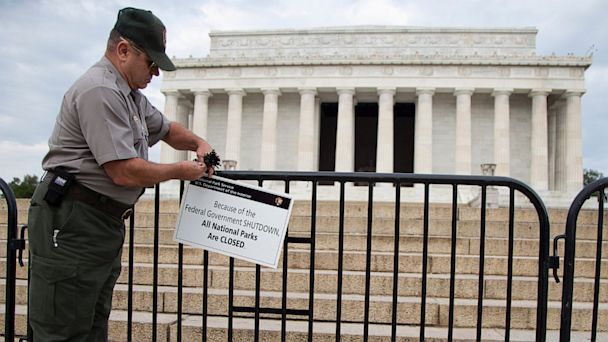
Ten Ethics Observations On The Government Shut-Down

lincoln_memorial

Stipulated: I am not in generally favor of government shutdowns, just as I do not favor strikes, boycotts, Massada-style mass suicides, wars, or any other destructive tactics, strategies and actions in response to impasses over important matters. Sometimes, however, they are necessary and responsible. Sometimes, they are not.

1. It is fascinating reading the comments on the shutdown from my friends on Facebook. It is startling how many of them simply parrot back partisan talking points they have heard on CNN and MSNBC, but especially striking are the angry rants of the government employees who appear to take the shutdown as a personal affront. How dare the evil Republicans disrupt their lives, their paychecks, their work schedule, their vacations! I wonder if my friends have the same reactions to labor strikes, wars and national disasters. Do they really believe that those elected officials struggling to decide on crucial matters of policy, firmly believing in a course that is right for the nation and reaching an impasse, should just shrug off the serious implications of the issue at hand and say, “But, hey, Joe Finsterwald will have a tough time if his agency has to shut down, and the Bradys’ DC vacation will be ruined, so the heck with it: go ahead with that law we think will be a disaster for the country. We’ll back off.” Do those Facebook complainers really think that would be responsible governance? You know, guys, this isn’t personal: it’s called politics and two party government. It’s part of the deal. Disagree with the policy arguments if you have the knowledge and perspective to do so, but taking the position that the entire business of running the country revolves around your convenience over the next few days or weeks is as juvenile as it is irresponsible. If you work for a private company, you risk disruptions because of business failures, competition and re-organizations. If you work for the government, you risk things like this. It’s not only about you.

2. What various polls show about what the American public believes or doesn’t believe is irrelevant, and anyone on either side of the dispute who cites them as support for the Affordable Care Act or gutting the Affordable Care Act is either naive or trying to deceive. Continue reading →

Comment of the Day: “The Right Thing In Spite Of Themselves: CNN And NBC Abandon Their Hillary Projects”

Frequent commenter and left-leaning warrior Ampersand delivers a typically provocative and well-stated comment touching on many matters. Here is his

I'm sure it's justcoincidence that no similarly misleading and undignified photo of President Obama found its way into the newsmedia during the 2012 campaign. Just luck of the draw. Could have just as easily happened to Democrat or Republican...

I’m sure it’s just coincidence that no similarly misleading and undignified photo of President Obama found its way into the newsmedia during the 2012 campaign. Just luck of the draw. Could have just as easily happened to Democrat or Republican…

Comment of the Day, on the post “The Right Thing In Spite Of Themselves: CNN And NBC Abandon Their Hillary Projects,” and yes, I’ll have some comment of my own afterwards:

“Especially in primary debates, I’d like to see more partisanship. Why shouldn’t candidates in the GOP primaries face questions from solidly right-wing partisans? Why shouldn’t the Democrats have to face questions from solidly left-wing partisans? There are a couple of reasons I’d like to see this.

“One, primary voters are typically more partisan than average voters. Their views should be represented. Rush is more likely to ask questions that genuinely reflect the concerns of tea party voters than some empty suit from CNN is. Ditto for Melissa Harris Perry (say) and progressives.

“Two, I’m sick of right-wingers whining about media bias every time their candidates prove to be idiots. It is NOT biased or ‘gotcha’ to ask what magazines a candidate reads; and if a candidate can’t think fast enough on her feet to answer that question, it’s NOT the media’s fault. I’d really like to see your people being asked questions only by people with impeccable right-wing credentials, so that when some of your candidates inevitably give bad answers, you’ll be forced to actually accept some actual responsibility, rather than whining and blaming everything on the “biased’ media. Continue reading →

Case Study In How Sports Encourages Consequentialism: The 1968 Detroit Tigers

Mickey Stanley in 1968: learning a new position in the World Series, making us dumber...

Mickey Stanley in 1968: learning a new position in the World Series, making us dumber…

Frequent readers here know that I often inveigh against consequentialism in its various forms, from labeling sound decisions “mistakes” when they don’t pan out due to uncontrollable factors, to pronouncing unethical conduct as ethical because it chanced to have some beneficent results. This particular hydra seems to be a tough one to kill, and one of the reasons is, I realize, the pervasiveness of sports in our culture.

Reflecting on sporting contests, particularly those involving teams, routinely generates hindsight bias on the part of fans and sports commentators….for one thing, it’s fun to second guess managers and coaches from the safety of an armschair or from behind a computer screen. Unfortunately, the practice endorses consequentialism. Decisions that result in a win are seldom criticized, no matter how moronic or misguided they may have been; tactics that ended in defeat are always called “mistakes,” or worse.

The baseball post-season began yesterday. We won’t see a World Series game until October is almost over, but there was a time, children, long ago, before divisions and the designated hitter, before steroids and ESPN, when in major league baseball, the World Series was the post season. This was the case 45 years ago, in 1968, when the Detroit Tigers, who had clobbered the American League competition on the way to a 103-59 record, including the last 30 game-winning season by any pitcher, turned in by Denny McLain. They were about to face the reigning baseball champions from 1967, the NL’s St. Louis Cardinals, led by future Hall of Famers Lou Brock, Orlando Cepeda, and Bob Gibson. Both were veteran teams and well-balanced; there was every reason to believe that each had a good chance at victory. Certainly, neither was in need of any last-minute overhaul.

Nonetheless, Tigers manager Mayo Smith decided to take a gamble. Continue reading →

The Truth Behind School Anti-Gun Madness: In The Battle of the Razors, Occam’s Beats Hanlon’s

"GUN!!!!!!!!!!!!!!!"

“GUN!!!!!!!!!!!!!!!”

My parents once gave me a tie clip with a tiny derringer on it, which I wore to school frequently. Occasionally, I loaded it…you see, the gun took a miniscule cap, and when you pulled the trigger, the report was shockingly loud. Had this been the kind of itsy-bitsy gun that 12-year-old Joseph Lyssikatos had on his key chain (his gun was slightly larger than a quarter; mine was slightly smaller than a nickel), then his school might have had a valid reason to object. But it wasn’t. His gun was a decoration only, but it didn’t stop the school from suspending him for three days.

I’ve been pretty dense about these cases, I must admit. I used to think it was just no-tolerance idiocy, merged with post-Sandy Hook paranoia, that was behind all of the silly news stories. It finally dawned on me that it is far more sinister than that: this is a deliberate and relentless process of state indoctrination. The schools, teachers and administrators are determined to make  future generations of Americans just as fearful and negatively disposed toward guns, and thus toward self-sufficiency and the Second Amendment, while pushing them to embrace complete dependence on a government that cannot be depended upon, and trust in a government that has proven progressively more untrustworthy. Continue reading →

The Klan’s Birthday Cake, Individual Boycotts And The Ethics Of Refusing to Give Service To Jerks

"Happy Birthday to You! Happy Birthday to You! Happy Birthday, Dear Racists..."

“Happy Birthday to You! Happy Birthday to You! Happy Birthday, Dear Racists…”

[UPDATE: Apparently, the “news story” that prompted this post is a fake. In that case, I want to thank the hoaxers for  inadvertently sparking a useful discussion—nothing in my post is dependent on the factual nature of the story. I wasn’t the only one fooled, and I originally noted the links on reliable sites. On the other hand, to hell with people who plant fake stories that are not obviously tongue in cheek or satirical: it’s a despicable practice, and abuse of the web, and right down there with public vandalism and creating computer viruses as unforgivable public conduct. I apologize to readers here for misidentifying a false story as true, but I’m not the unethical jerk involved. If anyone knows who that is, please forward their names. I have some choice words for them.]

As I wrote the first time I stuck my ethics big toe into this kind of controversy, I am conflicted over the current trend of forcing certain kinds of service providers to serve customers they just don’t feel like serving. I have consistently come down on the side of the rejected customer, even when the service, as in the case of bakeries and photography salons, edges perilously close to art. I think I am there still, but my resolve is weakening. I think. Let’s look at this again, in the context of the kind of recent case that always eventually occurs when one sits on the slippery slopes.

A three judge panel of a Georgia appellate court recently ruled in favor of Marshall Saxby, the Grand Wizard of a local KKK chapter, after he sued a local bakery for refusing to bake a cake for the KKK chapter’s  annual birthday party. Elaine Bailey, who owns Bailey Bakeries, said she rejected the Klan its activities violated her religious beliefs, and Saxby claimed that Bailey’s refusal of service discriminated against his religious beliefs.

The difficulty with making an ethical call on this case and others like it (and sort of like it, arguably like it or a little bit like it) is that the crucial question in ethics analysis, “What’s going on here?” cannot be answered with certainty or clarity. There are ethical arguments and ethical principles, on both sides, making the issue an ethical conflict (rather than an ethical dilemma). In an ethical conflict, we must prioritize among important ethical principles that are opposing each other.

Let’s answer “What’s going on here?” in some of the various ways this case allows, as if only one of these ethical principles were in play: Continue reading →

Grassy Knoll Ethics: How Deception Breeds Distrust

UmbrellaMan2

We once again must squarely face the hoary  quote from Walter Scott’s epic poem Marmion: “Oh what a tangled web we weave when first we practice to deceive.” It is hoary because it is true, and this month’s Smithsonian Magazine reminds us of how true it is, recounting how well-intentioned deceptions by the news media regarding evidence in the assassination of President Kennedy helped create a conspiracy theory that will not die, and that may have begun the slow, relentless deterioration of America’s trust in its own government that has reached dangerous proportions today.

Frame 313 of Abraham Zapruder’s accidental record of one of the pivotal moments in U.S. history gave him nightmares, and when he sold the rights to his amateur movie to Life Magazine, he insisted that frame be withheld from the public, and not published. “We like to feel that the world is safe,” documentary maker Errol Morris explains in the article.“Safe at least in the sense that we can know about it. The Kennedy assassination is very much an essay on the unsafety of the world. If a man that powerful, that young, that rich, that successful, can just be wiped off the face of the earth in an instant, what does it say about the rest of us?” I understand, but withholding the truth is not the way to make the world seem safer. As the story of the conspiracy shows, it is how we end up trusting no one. Continue reading →