In the Wake Of The BP Disaster, Another Andersonville Trial

Someone has to be held responsible, even if nobody is to blame.

Someone has to be held responsible, even if nobody is to blame.

I don’t know about you, but I was certainly surprised to discover that in the view of the Justice Department, two men I had never heard of, Robert Kaluza and Donald Vidrine, were the ones responsible for the April 20, 2010 explosion of a BP oil rig that caused millions of barrels of oil to leak into the Gulf of Mexico for months, polluting the waters and the shores and causing billions of dollars of damages. That is the clear implication of the decision to prosecute the two rig  supervisors for manslaughter in the deaths of the eleven BP workers who perished in the blast.

Obviously, this makes no sense at all. Other government authorities have treated the BP spill as resulting from a complex series of errors, misjudgments, and regulatory violations on the part of several companies and their management teams. The allocation of responsibilities and damages will take years to unravel. How then can Kaluza and Vidrine, who are accused of disregarding abnormally high pressure readings that according to the government should have alerted them to the danger of a  blowout at BP’s Macondo well, be the ones facing criminal charges and prison time? How can this be fair, just, or even possible?

It isn’t fair or just. It is possible because it is easier to finger the two middle-managers who inherited the flawed well equipment that was a ticking time bomb than to put a whole company, or many companies, behind bars. As the F.B.I. agent investigating the theft of the Declaration of Independence keeps telling Nicholas Cage’s treasure hunter in the Dan Brown rip-off  movie “American Treasure,” “Somebody has to go to jail.” Kaluza and Vidrine may be the designated villains for the BP spill. Their only crime was one of moral luck: they were in the wrong place at the wrong time, the final links in a tangled chain of incompetence, corruption and miscalculations. Continue reading


Putting My Mouth Where My Blog Is

I’m on the way to New Mexico today, to speak to the news media there and to try to build some consensus—New Mexico is as good a place to start as any—that using faux indignation over manufactured political correctness offenses is no way to run a political system, community, society or culture. It is, in fact, a cynical and despicable practice  used by special interest groups and unscrupulous politicians to stifle legitimate debate, or, as in the case that inspired my trip, to unfairly tar the character and reputation of a political adversary. The victim in the New Mexico incident was attorney Pat Rogers, who saw his obviously satirical e-mail intentionally twisted by partisan foes who almost certainly knew its real meaning into being represented in the press as a gratuitous racist slur—which it was not. I wrote about this here, and a similar incident, with parties reversed in Washington state, here.

What am I going to tell the various interviews and reporters I speak with over the next few days? I will tell them that political blood sport has got to stop. That the effort to discredit political positions by seeking ways to demonize their advocates is unethical and wrong. That contrived accusations of racism (or sexism, homophobia, or any other form of bigotry) should not be aided and abetted by the media or tolerated by the public. I will also assert that political warriors on the right or left who intentionally choose to misinterpret innocent expressions of irony, satire or humor as racist attacks both diminish the charge of true bigotry when it is justified, and expose themselves as polluters of our culture and national cohesion.

I don’t know Pat Rogers well; we have only met once. But I know who he represents: those who have been harmed as collateral damage in a hyper-partisan environment encouraged by Washington, D.C. and cheered on by the vilest members of the blogosphere, to the detriment of our sense of community, decency, and trust. My efforts, whatever they are, will be modest at best, and, in all likelihood, inconsequential. But you never know.

Wish me luck.

The Bakery, Confectionery, Tobacco Workers and Grain Millers International Union Show Us The Way

“The operation was a success, but the patient died.”

“We had to destroy the village to save it.”

Massada. That worked out well too.

I’m sure the Bakery, Confectionery, Tobacco Workers and Grain Millers International Union approves of these classic oxymoronic statements, because its members are currently patting themselves on the back for standing up to Hostess Brands, Inc and not giving an inch in contentious labor negotiations that had put them on the picket line. “I think we’re the first ones who have stood up and said, ‘We’re not going to let you get away with it,’” was the message the union’s resolve sent according to  Sue Tapley, the strike captain at the Biddeford, Maine Hostess plant. “You can fight them. You can shut them down.” “Unions have been losing power for years,” added  a striking worker outside of the same plant. “This is an exceptional case. If Hostess had been allowed to get away with what they’d been trying to do, other corporations would have lined up to try the same tactics. Hopefully, this will be an example to other companies not to break their unions.” Continue reading

The Despicable Non-Crime of Briana Augustenborg

Alexander Jordan, 2002-2012

In US v. Alvarez, the U.S. Supreme Court upheld the 9th Circuit’s ruling that the Stolen Valor Act, which made it illegal to claim military honors that one has not in fact received, was unconstitutional. There is, the courts say, a Constitutional, First Amendment right to lie. Fraud—using lies for monetary profit, is already a crime, the courts argue, and so is slander. Making up stories about yourself and others may be unwise, annoying, even hurtful. Still, it is protected speech; so sayeth a majority of the U.S. Supreme Court, and it is now the law of the land.

This was a bad ruling, and I was surprised at it. Briana Augustenborg shows why.

One day this year she shared a story with a co-worker about a little 10-year-old boy she knew who was terminally ill with leukemia. The boy, Alex, was a big fan, she said, of Eagle Valley (Colorado) High School’s  football team. The colleague, a woman named Holly Sandoval, had a son that played on the team, and she offered to share the story with her son and get the team to sign a football for Alex. Continue reading

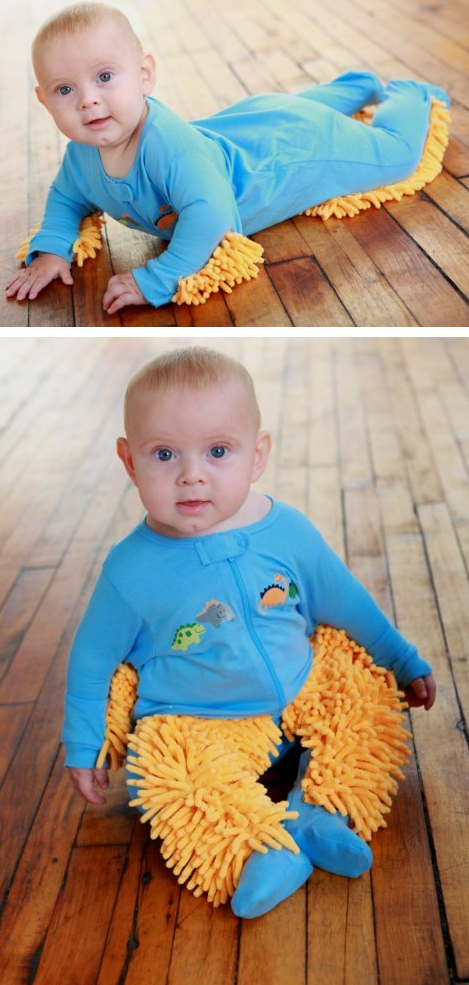
Really? The Baby Mop?

No.

One of the Kantian categorical imperatives is that no human being should ever use another for his or her own selfish objectives. Another ethical principle that is close to absolute is that one should never  exploit children. A third is not to treat human beings as objects, or to denigrate, diminish or humiliate them without their informed consent. A fourth principle is that forced child labor is inherently unethical, and a fifth is that making individuals do work that benefits you without compensation is theft.

HEY! I’ve got a brilliant idea! Let’s help parents turn their babies into living, breathing, drooling mops! Continue reading

To The Un-American Secessionists

Led by Texans, the White House is being deluged with petitions from all around the nation asking that various states be allowed to secede from the U.S. because the prospect of another four years of President Obama is so heinous. My immediate reaction is that this proves that conservatives are lazier than progressives, whose solution to a similar disappointment with parties reversed in 2004 was to pack up and move to Canada, or at least to make noises about it.  Conservatives apparently want to stay at home and leave the U.S.too. How convenient.

In 2004, when liberals and Democrats were acting like spoiled brats, I posted the following essay entitled “Escape to Canada and the Ethics of Democracy.” I think it is instructive to re-publish this post unedited to clarify what is wrong with the conservative tantrum of 2012. Oh, I could have changed “left” to “right,” Canada to Texas and Bush to Obama and Alec Baldwin to Ted Nugent, but it hardly seemed necessary, for my diagnosis and conclusions are exactly the same, just with a different group. It also seems prudent to leave the essay in its original form to remind smug liberals like Jon Stewart, now having a ball mocking Republicans, that Democrats disgraced themselves in a similar manner not that long ago. Being a hysteric, an alarmist, a bad citizen and a poor loser isn’t confined to members of one partisan group—it just seems that way at the moment. Now the conservatives are the silly people who are rejecting the principles of self-government that they were fervently  lecturing us about, because, you see, those principles didn’t work out their way…this time.

Here is “Escape to Canada and the Ethics of Democracy,” from The Ethics Scoreboard on November 17, 2004: Continue reading

Are Employers Ethically Obligated Not To Take Advantage of Women’s Negotiation Choices?


Yet another career for Shatner—coaching female job-seekers.

A recent study of 2500 job seekers indicated that men are far more likely to negotiate salary and benefits in job situations where it has no been stated that the salary is negotiable.

I am not surprised. Running non-profit organizations with limited resources, I always ended up with primarily female staffs because women would accept a lower offer than men with similar qualifications. This meant that the women got the jobs for salaries their male competition turned down. This, in turn, may have effected their salaries for a long time to come, in subsequent jobs. Is this bias?

Clearly not. The negotiations between an employer and potential employee are ethical and the conditions are known. A skilled negotiator (I am personally incompetent at negotiating my own fee; in ProEthics, my partner handles all of that) will get a better deal; a poor or reluctant negotiator will get terms more advantageous to the employer. It is not bias if the most aggressive and effective negotiators happen to be men.  Continue reading

Porn and the NFL: In Search of A Biased Referee

With condoms, what, 2.5 X’s?

55% of California voters decided yesterday to make porn stars wear condoms on the job—good for their health, bad for the health of the state’s booming XXX film industry. It is a reasonable guess that injecting condoms into the proceedings will put California’s porn products at a significant competitive disadvantage, and also a reasonable guess that the voters who enacted the measure couldn’t care less. So legal enterprises may go bust, their employees may lose their careers, and consumers may lose a form of entertainment they crave because of the policy priorities of those who hold all three in low regard, and who are unlikely to apply any kind of balancing standard. It’s safer for all concerned to require condoms, that’s all. Porn companies, porn careers, porn lovers—who cares about what they want? Continue reading

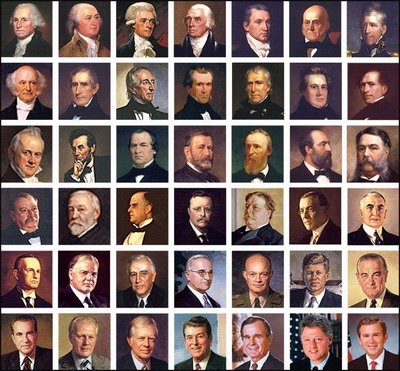
Relax, Americans: The President Will Be A Good Man…Whoever He Is.

The good guys.

The degree of anxiety over today’s Presidential election—perhaps more accurate than anxiety is hysteria—is palpable. It is also unnecessary and foolish. I have read the fevered rantings of Andrew Sullivan, who fears Mitt Romney like the Germans feared the invading Russian army at the end of World War II, and the apocalyptic monologues of conservative radio talk show host Mark Levin, who is prone to statements like, “It’s over, that’s all! Do you understand? If Obama wins, this country is never coming back!” I have watched both parties exploit and encourage this kind of irrational fear, and its by-products, predictably, are hate, division and anger. There was a time in America when political adversaries referred to each other as “my honorable opponent.” The candidates were not more honorable then. We were more sensible.

The history of the United States has shown that very few truly bad men have the opportunity to run for President. It makes sense, if you give it a modicum of thought. A Presidential contender must negotiate the perils of life for at least four decades without accumulating damning evidence of disqualifying character traits and malign intent. The candidate must have shown sufficient ability and character to impress those he worked with and owed duties to. Most of all, a potential President must have been able to engender a sufficient amount of trust over more than half of his natural life.

We should not judge political leaders by the same standards as other professionals, because the nature of politics, by definition, is ethically ambiguous. Politics knows only one ethical system: utilitarianism. The practice of governing and making human progress advance in the civic arena rules out absolute principles, and requires delicate calculations of ends and means. This often appears, to non-practitioners, as corruption, and it certainly can become that. Effective, trustworthy leaders are able to avoid the occupational hazard of believing that the ends necessarily justify the means. If they cannot, they will not have the opportunity to be President. Continue reading

Why Nate Silver Is Wrong

Funny, Nate, I don’t see “leadership” anywhere in here…

I have wrestled with whether to write this post for about a month now. I am not in the election predicting business, which is a fool’s game, and this is tangential to ethics at best. On the other hand, leadership and American culture are among the subjects frequently explored here. Nate Silver’s analysis of the Presidential election on his New York Times blog has been at once fascinating and aggravating for me, though it has been a godsend to my nervous friends on the ideological left. Silver has insisted that his statistical analysis of the polls fortells an Obama victory with increasing certainty. Last I looked, his model was showing the election to be all but in the bag for the President, with, Silver calculates, an 86% chance that Romney goes down to defeat.

I don’t question Silver’s figures or formula. He’s a statistics whiz. His mistake is trying to use the tools he has used to great success on the poker table and in the world of sabermetrics to analyze the election of a President of the United States, without acknowledging or understanding the core of the process, or the culture and context in which it occurs. In many elections, most perhaps, his model would work perfectly. This time, it is going to fail. Silver won’t see his failure coming because as brilliant as he is in his chosen field, his demonstrated expertise is in economics and statistics. He really believes, apparently, that American history doesn’t matter, that what Americans think about when they choose a President is irrelevant, and that numbers purify the discussion and remove all the bias and static. He couldn’t be more wrong. Continue reading