The Ethical Fate For Joe Paterno’s Statue

In the wake of the Freeh Report’s revelations regarding the extent of the late Joe Paterno’s involvement in allowing Jerry Sandusky’s child molesting appetites to be sated with Penn State’s  assistance, many are calling for the campus statue honoring the now-disgraced coach to be removed.

I am generally opposed to removing memorials and honors to historical figures according to the popular verdicts of the day, for several reasons. The main one is that every individual who ever achieved something worthy of such honor also was guilty of misconduct that someone could convincingly argue outweighs it on moral or ethical grounds. New facts are uncovered, cultural values shift, and over time, no revered figure is safe from deconstruction. The reverse is also inevitable: if a life can be judged unworthy of honor, subsequent generations may well disagree. The verdict of a community, a culture and an era should be given due weight and respect;  a statue, memorial or monument not only recognizes an individual but also represents the judgment of our predecessors. Leave their judgments alone, and if we disagree with them, try to make ours better. Continue reading →
Liars For President

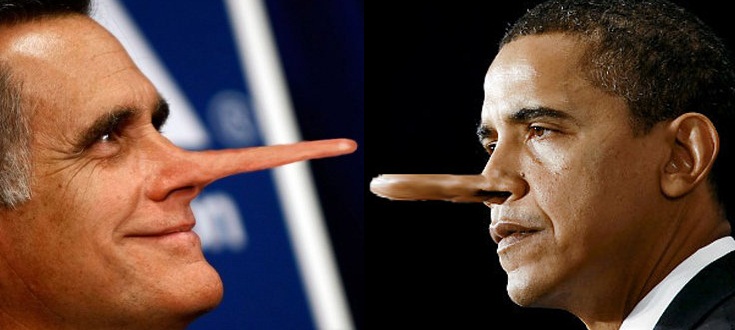
I don’t know about you, but I don’t want a liar as President. I’m not talking about the kind of lies that are periodically unavoidable in leadership and governance, as much as we would like to pretend they are not. I’m talking about “I did not have sexual relations with that woman” type of lies, intentional falsehoods designed to deceive the public for  political advantage with no benefit to the nation or its occupants whatsoever. Unfortunately, we are about to elect a liar as President, because lying in political campaign ads, and particularly negative ads, is sunk deep into the system like an inoperable brain tumor. It is fair to say that every President since George Washington has done it, and thus the public accepts it, and the news media shrugs it off. Continue reading →

Banning the Privacy Bomb

Yes, I think posting this photo is a lousy thing to do to your dog, too.

The stories come out routinely, and the opposing opinions are predictable. A boorish date dumps a woman via arrogant e-mail, which is promptly forwarded to thousands, making him a national laughing stock and pariah. A movie star sends an angry and mean-spirited message to his teenage daughter, who places it in the hands of the celebrity-devouring media…which then use it to savage the star’s reputation.  A Harvard law student takes an e-mail sent by a friend and fellow-student as a follow-up to a contentious discussion about race, and forwards it to minority advocates on campus, who then condemn the “friend” as a racist. A model live-tweets her encounter with the married actor sitting next to her on a flight, as he engages in awkward flirtation. In each case, defenders of the punitive distributor of the embarrassing communication argue that the victim deserved it, while critics of the conduct insist that it is a betrayal of privacy and trust.
We need to decide, as a culture, whether we believe that reasonable expectations of privacy should be respected or not; indeed, whether they should survive or not. Those who endorse, defend and encourage the kind of conduct in these incidents and many more are, whether they realize it or not, fouling the nest of our national culture and community, making not just privacy, but also friendship and intimacy, almost impossible. Continue reading →

In Tennessee, the Tea Party Tries An Anti-Chris Rock

The fine art of whitewashing, brought to you by Tennessee’s tea parties.

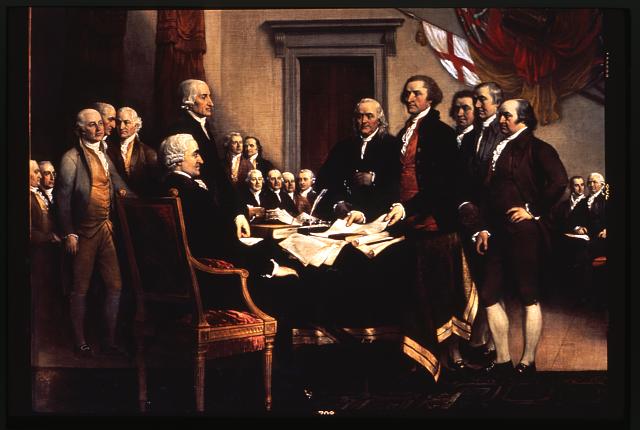
It might have been Chris Rock’s anti-Fourth of July tweet, or perhaps because there hadn’t been enough news stories making tea party members look racist or foolish (though there have), but suddenly Salon and other left-leaning websites started publicizing an 19 month-old press conference by Tennessee tea parties demanding that the Tennessee legislature pass a law that would whitewash American history, particularly as it applies to the Founders. From a report in the Commercial Appeal from January of 2011:

“Hal Rounds, spokesman for the group, recently claimed at news conference that there was ‘an awful lot of made-up criticism about, for instance, the Founders intruding on the Indians or having slaves or being hypocrites in one way or another.’ As a result, the Tea Party organizations argue, there should be ‘no portrayal of minority experience in the history which actually occurred shall obscure the experience or contributions of the Founding Fathers, or the majority of citizens, including those who reached positions of leadership.’ ‘The thing we need to focus on about the Founders is that, given the social structure of their time, they were revolutionaries who brought liberty into a world where it hadn’t existed, to everybody — not all equally instantly — and it was their progress that we need to look at,’ Rounds explained of his interpretation of the legacy of the Founding Fathers.”

There is a lot of useful information to be extracted from this remarkable theory, some with ethics ramifications, and some without. Among the non-ethical conclusions are that… Continue reading →

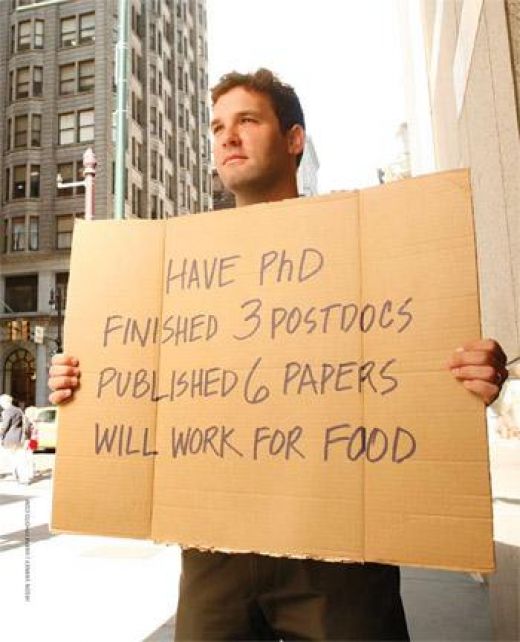
The Difference Between Unemployed Scientists and Unemployed Lawyers

A front page story in today’s Washington Post casts interesting perspective on an Ethics Alarms rumble that broke out here a couple of weeks ago. One of the many websites where underemployed, over-indebted law grads hang out to commiserate—sites with pathetic names like “butidideverythingrightorsoithought”—discovered a post from the days when people were taking Occupy Wall Street seriously, in which I chided a protester whose sign blamed his law school  for his failure to  find a job, without giving due weight to the fact that sitting in a park whining about his plight wasn’t doing him any good either. Suddenly Ethics Alarms experienced an avalanche of indignant and often personally insulting comments introducing me to the strange world of the JD conspiracy theorists, who maintain that law schools engaged in an intentional conspiracy or “scam” to gull naive college grads into believing that a law degree was a sure-thing ticket to Easy Street and six-figure starting salaries.

In the Post’s report, we learn that other advanced degree-holders, namely PhDs in scientific fields, are also unable to find work or toiling in fields unrelated to their degrees. The Post says:

“Traditional academic jobs are scarcer than ever. Once a primary career path, only 14 percent of those with a PhD in biology and the life sciences now land a coveted academic position within five years, according to a 2009 NSF survey. That figure has been steadily declining since the 1970s, said Paula Stephan, an economist at Georgia State University who studies the scientific workforce. The reason: The supply of scientists has grown far faster than the number of academic positions.”

Sounds a lot like the legal market to me! Continue reading →

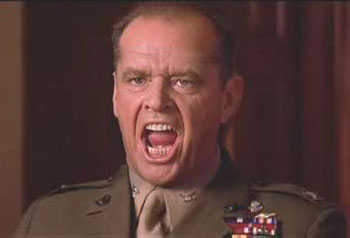
Unethical Column of the Century: CNN’s L.Z. Granderson

OK, maybe I’m exaggerating.

But not much.

L.Z. Granderson’s role model. I’m not kidding.

In a horrifying opinion column, the regular CNN political pundit L.Z. Granderson evoked the virtues of public apathy and unchecked government conduct with warped logic and unethical rationalizations, to make the case that the public should merely shrug off scandals like “Fast and Furious.” I was only able to finish reading it without retching it by imagining Granderson’s motives for writing such mind- and culture-poisoning swill. At least, as an African-American journalist, a liberal and a Obama supporter (I know I repeat myself), he has the self-respect, fairness and integrity not to claim that critics of Attorney General Holder’s Waterloo are being racist. Like the race-baiters, however, he is in denial, and willing to throw principle to the wolves to protect the first African-American Attorney General, though far from the first corrupt and incompetent one.

In a column with the descriptive and idiotic title, “Don’t be nosy about Fast and Furious,” Granderson argues…

“…Times have changed. Yet, not everything is our business. And in the political arena, there are things that should be and need to be kept quiet…..there comes a point where the public’s right to know needs to take a back seat to matters like national security and diplomacy. Heads should roll because of the Fast and Furious debacle. We don’t need every detail of that operation to be made public in order for that to happen. If it were an isolated sting, maybe. But it is at least the third incarnation of a gun-running scheme stretching across two administrations, which means we could be pressing to open Pandora’s Box. We do not want to open Pandora’s Box, not about this and certainly not about a bunch of other potentially scandalous things the federal government has been involved with.” Continue reading →

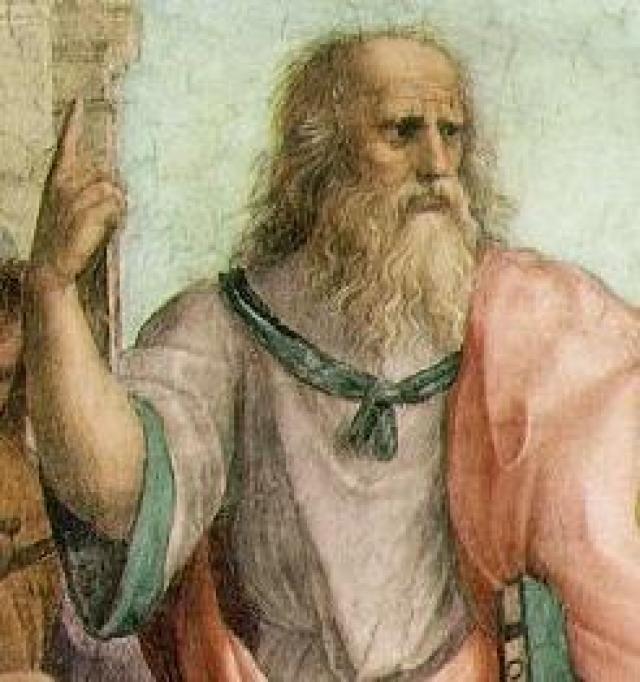
Ethics Dunces: Half of the U.S.A.

“Who’s Plato?”

According to a recent  Pew poll, almost half of the U.S. is still unaware of last week’s landmark Supreme Court decision upholding the Affordable Care Act, limiting Congress’s power to control private choices through reliance on the Commerce Clause of the Constitution, and flagging the Democrat deceit in passing a substantial tax on the middle class while hiding the fact in public and political discourse. 15% of the public must have been watching Fox and CNN the way listeners of Orson Welles “The War of the Worlds” listened to the 1938 radio broadcast, turning the dial before misinformation was clarified. These trusting or lazy souls still think the ACA was over-turned. This is, admittedly, better than thinking the world has been conquered by Martians.

The poll means that as we head into a watershed election that challenges the nation to make hard choices about its future course in tax policy, addressing the debt and deficit, foreign policy, commitment to national defense, entitlement reform, immigration, education, infrastructure renewal, employment, financial regulation, and equally vital matters that could have a decisive impact on America’s success, stability and even survival, one half of the public lack the interest and initiative to  stay current with crucial national developments. Continue reading →

Ethics Quotes of the Day: On Liberty, Freedom, and Democracy

“

“Hurrah for the flag of the free!
May it wave as our standard forever,
The gem of the land and the sea,
The banner of the right.

“Let despots remember the day
When our fathers with mighty endeavor
Proclaimed as they marched to the fray
That by their might and by their right
It waves forever.”

—–John Phillip Sousa, “The Stars and Stripes Forever”

“Democracy is like sex. When it is good, it is very very good. And when its is bad, it is still pretty good.“

—–Anonymous.

“The real democratic American idea is, not that every man shall be on a level with every other man, but that every man shall have liberty to be what God made him, without hindrance.”

—-Henry Ward Beecher, American preacher

“Democracy is moral before it is political.”

—- Louis Brandeis, Supreme Court Justice

“The experience of democracy is like the experience of life itself-always changing, infinite in its variety, sometimes turbulent and all the more valuable for having been tested by adversity.”

—-  Jimmy  Carter

“A constitutional democracy like ours is perhaps the most difficult of man’s social arrangements to manage successfully. Our scheme of society is more dependent than any other form of government on knowledge and wisdom and self-discipline for the achievement of its aims. For our democracy implies the reign of reason on the most extensive scale. The Founders of this Nation were not imbued with the modern cynicism that the only thing that history teaches is that it teaches nothing. They acted on the conviction that the experience of man sheds a good deal of light on his nature. It sheds a good deal of light not merely on the need for effective power if a society is to be at once cohesive and civilized, but also on the need for limitations on the power of governors over the governed.”

—- Felix Frankfurter, Supreme Court Justice

“In contrast to totalitarianism, democracy can face and live with the truth about itself.”

—-Sidney Hook, American philosopher and historian

“America’s experiment with government of the people, by the people, and for the people depends not only on constitutional structure and organization but also on the commitment, person to person, that we make to each other.”

—-Robert Hutchins Continue reading →

Reminder: July 2 Is “Thank Minnesota Day,” and Remember Gettysburg, Too.

Last year on this date, I posted about the injustice of historical memory, and how the heroic exploits of the Maine soldiers on Little Round Top commanded by Col. Joshua Chamberlain on the second day of the Battle of Gettysburg have all but obliterated recognition of the even more remarkable sacrifices made by the First Minnesota Volunteer Regiment that same day, when it took on the suicide mission of blocking a hole in the Union line against a Confederate force that outnumbered it five to one. Those Minnesotans quite possibly saved the United States of America at the price of their lives.

I see that some readers are finding that post today: let me make it easier for everybody. Here is the link. This a day for all of us to honor the heroism of the First Minnesota, and indeed all of the Americans, North and South, who fought for their nation, their states, their ideals and the soul of America in the Pennsylvania town of Gettysburg, on July 2, 1863. Continue reading →

Dan Ariely: Without Ethics, We Are Governed By Psychological Enablers of Cheating and Worse

And it’s nothing to be proud of.

Duke behavioral scientist (or, as he likes to call himself, “behavioral economist”) Dan Ariely, has a new book out. This is a boon for my ethics classes, since I’m sure they are getting a little sick of me quoting the last one, “Predictably Irrational.” His new best seller is “The Honest Truth About Dishonesty,” and Ariely has been making the rounds of NPR and various publications promoting it. Like Malcolm Gladwell (“The Tipping Point”), Ariely writes provocative and easily digested books that seemed to be designed to make you skip the movie on airplane flights; they are not deep, but they are helpful, at promoting self-understanding if nothing else.

I’ve been saving my copy of “The Honest Truth About Dishonesty” for my next trip, but the most valuable thing about it from my perspective is that it validates the importance of developing the skills of ethical analysis. As the author explained in a recent interview, when most human beings ( Ariely pegs the percentage at a depressing 98%—and one of the two missing percentage points are people who cheat no matter what! ) human beings let their gut determine whether they are going to cheat or not, they will make their choice according to a potpourri of rationalizions and quirky psychological factors that have little to do with right and wrong.

Among the useful observations he made in his recent interview with journalist Gary Belsky: Continue reading →