Ethics Quiz: The Bank, the Addict, and the Broken Egg

There was a little software problem when Bank of America acquired LaSalle Bank and the two were transferring account data. As a result, LaSalle depositor Ronald Page found that he could make unlimited ATM cash overdraft withdrawals, even though he had only $300 in his checking account.  This tempting state of affairs lasted for seventeen days, and then from December 1, 2008 to May 31, 2009, Page gambled like a man on fire.  Unfortunately for Page and Bank of America—but fortunately for several casinos—Page is a gambling addict. He withdrew, and gambled away, $1,543,104.00

Now the U.S. Attorney’s Office in Detroit says he is seeking to send him to jail for 15 months  after he pleaded guilty to charges of theft of bank funds. He is also going to be required to pay back the money, with interest, guaranteeing poverty for life.

Your Ethics Alarms Ethics Quiz question:

Is this fair? Continue reading →

Ethics Quote of the Week: Washington Sports Writer Sally Jenkins

“Overreaching by government is far more harmful than any of the alleged offenses. It has poured more poison into the system than is contained in any needle.”

—-Sally Jenkins, writing in the Washington Post sports pages about the Roger Clemens prosecution.

Elsewhere in her column, Jenkins writes:

“Someone in authority at the Justice Department should have said to the federal investigators who pursued Clemens since 2007 on perjury charges, “You don’t have the evidence that can win a conviction.” The government never had a case, and knew it didn’t have a case (or at least should have), and brought the case anyway.”

Bringing a case when a prosecutor doesn’t have sufficient evidence is the epitome of unethical prosecution, and the Clemens case certainly qualifies. I can’t write much about this now, because I am preparing to give an ethics seminar to Washington D.C. government attorneys about legal ethics in government practice. I always find the government attorneys to be extraordinarily informed regarding ethical standards, and to have excellent ethical instincts. I will be talking about the Clemens case, and the Ted Stevens prosecution that went so horribly wrong, and the Fast and Furious investigation, in which a Federal Prosecutor announced his intention to take the Fifth Amendment if he was called before Congress. I will be talking about a lot of things.

There is obviously a problem.

___________________________

Spark: Ron Sarro

Source: Washington Post

Graphic: The Cell Phone Junkie

Ethics Alarms attempts to give proper attribution and credit to all sources of facts, analysis and other assistance that go into its blog posts. If you are aware of one I missed, or believe your own work was used in any way without proper attribution, please contact me, Jack Marshall, at  jamproethics@verizon.net.

Don’t Blame Nixon

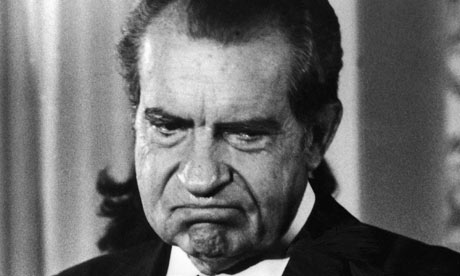
They can’t lay this one off on you, Dick.

I know it is much the vogue in Washington these days for leaders to blame previous leaders for persistent problems rather than to accept accountability and responsibility for not successfully solving them. Trendy though this attitude may be, however, Washington Post columnist Kathleen Parker’s column assigning fault for the U.S. public’s growing and frightening distrust of government institutions to Richard Nixon and the Watergate scandal shows its folly. It flies in the face of history and fairness, and lets literally thousands of subsequent leaders, elected officials, journalists, pundits and assorted knaves and hypocrites off scot-free.

Parker writes,

“Beyond the obvious, Nixon and the Watergate episode did great, perhaps irreparable, harm to the American spirit. A generation already traumatized by a war that ended up killing 58,000 of its brothers, boyfriends, husbands and fathers lost any remaining innocence, as well as trust in authority and faith in governmental institutions. The flag our forefathers raised on the moral high ground looked suddenly shabby and soiled. When even the president of the United States was willing to burglarize the American people, there was no one left to trust”

Oh, nonsense. The Watergate scandal, by the end, was one of the American system’s finest hours. The system worked, and worked on live television for all to see. A brave judge, John Sirica, showed integrity and grit in refusing to cave in to Presidential intimidation, ordering Nixon to turn over the tapes that ultimately proved his guilt. Senators and House members of both parties handled a complex inquiry diligently and well, with ethics heroes emerging on the Republican side, in individuals like Sen. Howard Baker, and the Democratic side, with the inspiring Senator Sam Irwin and others. When Nixon decided to fire the Special Prosecutor, Archibald Cox, who was getting too close to the truth, his own Cabinet member, Attorney General Eliot Richardson, resigned rather than do Nixon’s dirty work. Ultimately, Republicans and Democrats alike on the House Judiciary Committee voted for impeachment, forcing Nixon to resign. Yes, Tricky Dick was unethical and untrustworthy, but Americans had known that—and called him Tricky Dick— for decades. Then as now, too many Americans decided that “policies” trumped character, so they elected a man whose flawed values and integrity was a matter of public record—twice. Nonetheless, when he and his minions violated the law and threatened the principles of democracy, the vital institutions of the House, the Senate, the judiciary and the press showed their strength and virtue. Nixon was corrupt, not the Presidency, not the government. Continue reading →

Silver Lining To A Homicide

Ah, those school memories!

In South Dakota,  73-year-old Carl Ericsson rang an old high school classmate’s doorbell in January and shot him dead.

Why? Norman Johnson had forced his killer to wear a jock strap on his head in a high school locker room when they were both boys almost 60 years ago. Ericsson hadn’t seen or talk to Johnson in decades, but the humiliation apparently festered. A successful family man now in retirement, Ericsson had battled emotional illness in recent years, and suddenly decided to settle the score of an old grudge.

This was a senseless death and a tragedy that scars two families. Still, I think the tale of how a victim of bullying suddenly got horrible revenge on his tormenter six decades later is s story that should be told early and often in the schools.

It may make some would-be bullies think twice before that atomic wedgie, the embarrassing photo, or the mean Facebook post.

And Mitt?

Watch out.

[NOTE: when this article was first posted, the end portion of the ABC story I linked to above and below was inadvertently copied into it after my last line. That was unintentional. Since I am both a lousy speller, a lousy typist and a computer maladroit, I sometimes copy a portion of the story I am basing a post upon into the body of the post, for easy reference, and occasionally to cut and paste names like “Ericsson” that I just know I’m going to misspell at least once. When I do that, I usually remember to delete it. And when I don’t usually Tim Levier catches it before now. My apologies to ABC, the AP, and you.]

___________________________________________

Pointer: Fark

Facts and Graphic: ABC

Is Watching A President’s Speech A Civic Duty?

It certainly was regarded as one once. Back in the ancient days when there were just three TV networks and no cable, Americans didn’t even complain that all three would be broadcasting Presidential addresses at once, causing them to miss “Sugarfoot,” “McHale’s Navy,” or “The Gale Storm Show.” Ratings for Presidential speeches have been steadily declining, however, since the advent of cable and satellite TV, and the perpetual campaign mode of recent Presidencies has played a role as well.

I am a American Presidency enthusiast, as if you couldn’t tell, and I feel guilty about skipping President Obama’s address on the economy last night, as I feel guilty every time I re-arrange my sock drawer when POTUS speaks to the nation. That’s been my habit for a long, long time. Yes, I never miss inaugural addresses, and I always watch the State of the Union speech, though that commitment is on life support. The rest? If there is a genuine and immediate crisis, an announcement of war or something similarly earth-shattering, I’ll be in the TV audience. Addresses like last night’s, however—-vaguely political speeches calculated to bolster support, spin bad news or bash the opposition—-those I just can’t tolerate, and haven’t for decades. Continue reading →

Armstrong’s Unmasking: Better Late Than Never

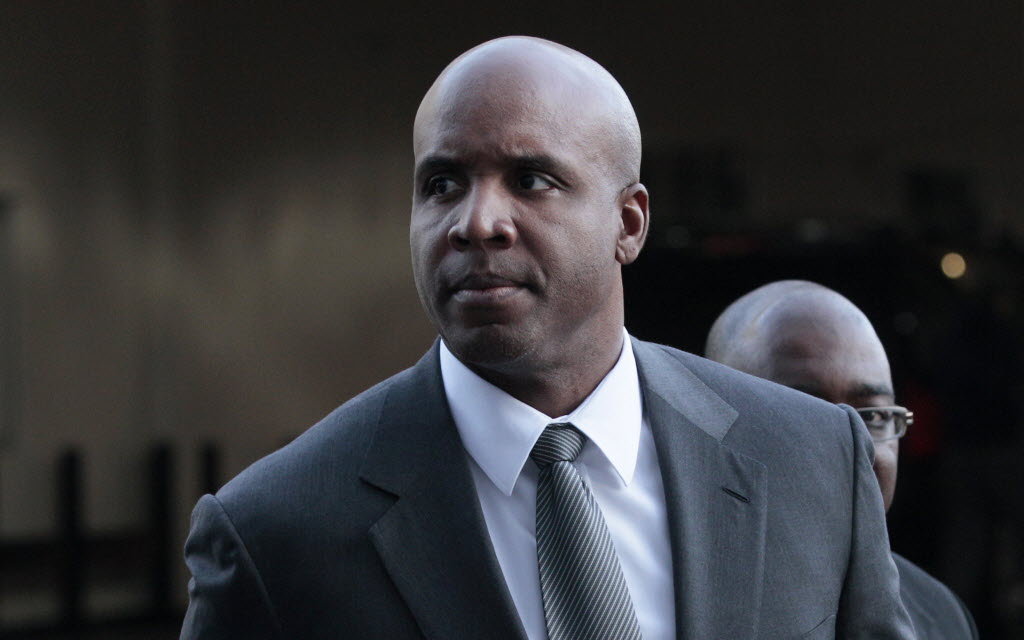
Don’t worry, Barry; Lance should be joining you soon.

Well, I guess I  have to hand it to Lance Armstrong, a bit like Ozzie Guillen when he praised Fidel Castro for surviving his dictatorship against all odds. The evidence, circumstantial and otherwise, that Armstrong is a  prohibited drug cheater ( like most successful cyclists) has been mounting for over a decade, and yet he has managed to hold on to much of his prestige and iconic status. Meanwhile, retired baseball slugger Barry Bonds has been reviled, condemned, prosecuted and vilified, by me among many others, for presumed illicit performing enhancing drug use in his sport that is backed by very similar kinds of evidence that  incriminate Armstrong. Yet while Bonds faces the humiliation of being rejected for election to baseball’s Hall of Fame next year when he becomes eligible, despite being the sport’s all-time career home run leader, Armstrong was preparing to race again to cheering throngs  in an upcoming iron man triathlon.

Then came the news, yesterday, that the U.S. Anti-Doping Agency has brought formal doping charges against him.  No one should underestimate Armstrong’s skill in wiggling off the hook, but this really should settle the issue of whether he is a hero or a manipulative charlatan. He is the latter. Whether he was a good but weak man trapped in a lie, or a sociopathic con man and cheat can be investigated by biographers and sportswriter, and psychologists. The harm that will be done when his false heroism is irrefutably exposed, however, will be the same no matter how Armstrong came about causing it.  His sport will be permanently tarnished beyond recovery. Scores of children and teens will be disillusioned, betrayed into a cynicism about role models and human nature that should only descend later in life. Worst of all,. his example will stand for some as proof that cheating pays. Armstrong, whatever happens to him, will be rich, like Barry Bonds, even if he is disgraced. He will, as my father liked to say, cry all the way to the bank. Continue reading →

Ethics Hero: Jeffrey Warren

You’ve probably heard or read the story by now.

Wait! Maybe he’s Cherokee!

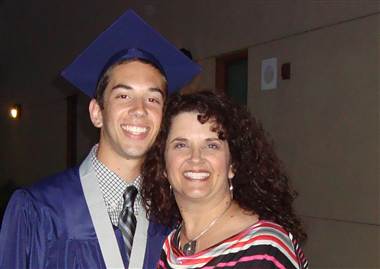
17-year-old Jeffrey Warren rose to accept the $1,000 college scholarship awarded by the local Martin Luther King Senior Citizens Club during seniors night at Martin Luther King High School in Riverside, California, and provoked both laughter and awkward gasps. He was obviously white—as white as Elizabeth Warren—and the scholarship for intended for black students, though Warren didn’t know that when he applied.

Later, Warren decided to give back the money. His family said they didn’t want the African-American women who gave out the award to be foiled in their attempt to help young black scholars, and that it was the right thing to do. I would say that it was a right thing to do, and showed exemplary kindness, compassion, empathy, generosity, charity and altruism. Jeffrey had every right to accept the money. The Club’s requirements were vague, and did not make it clear that he was not eligible when he applied. If he and his parents had wanted to make a political and philosophical statement about the hypocrisy of a race-based scholarship in the name of Martin Luther King, this was an ideal opportunity, and an argument could be made that this would have been the “right” thing to do as well, if not “righter.” Continue reading →

The Importance of American Culture

Pericles delivering his famous funeral oration

By necessity, Ethics Alarms often ventures into the realm of culture, because ethics defines a culture as surely as culture determines ethical standards. This, unfortunately, make politics unavoidable as well, because politics are the means by which laws, primary tools of culture as well as the products of it, get made.

In The New Criterion, Roger Kimball has written a thoughtful essay about the current stakes in America as our culture evolves. He discusses politics and Pericles, and makes his own orientation (classic conservative) clear, and proudly clear at that. It is also an essay with great relevance to ethics. I recommend it highly. Here are some excerpts. The link to the whole article is at the end. Continue reading →

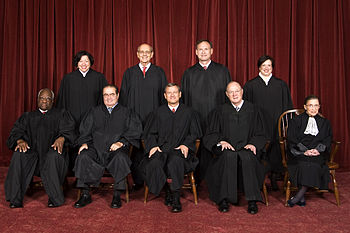
Supreme Court Integrity and the Useless Times-CBS Poll

If you dislike these people,but haven’t read their actual opinions, don’t know their names and are basing your opinion on what other people say, I don’t care what you think, and neither should anyone else.

I suppose there may be could be some uses for the recent New York Times-CBS poll measuring public attitudes about the Supreme Court. It could be used to launch, for example, a discussion about how little the public understands about the Court and how it operates. It might prompt a discussion about the recklessness of the two parties, which regularly attack the integrity of the Court every time it arrives at a decision that one of them doesn’t like. It might even prompt a refresher course on what went on during the 2000 Florida vote recount, and why that case required the Supreme Court to play a unique role that had nothing to do with helping George Bush “steal the election.” All of these would require an unformed and responsible newsmedia. however, so what the poll is prompting instead  misleading debates among talking heads about what the Court needs to do differently.

The Supreme Court needs to do nothing at all differently. Continue reading →

Graduation Ethics: the Cheering Mom and the Jerk’s Advantage

Stipulated: for police to arrest proud South Carolina mother Shannon Cooper for loudly cheering during her daughter’s high school graduation over the weekend  was excessive, unreasonable, and stupid.  The graduation crowd  had been asked to hold their cheering until all students’ names had been called, and warned relatives of the graduates that they would be removed from the facility if they disobeyed the rule. As some parents inevitably do at every graduation, Cooper ignored the reasonable request, but this time, the defiant parent paid a steep price. Police charged her with disorderly conduct and placed her in a detention center.

Let me also make this clear, however: Cooper behaved like a selfish jerk. She is being showered with sympathy now, cast as Innocent Parent Abused For Being Proud of Her Baby, but that’s not who she is. She is the theater audience member who ignores the request to turn off her cell phone, and disrupts the actors and the audience when it rings, and the movie audience member who chats loudly during the show. She is the pet owner who doesn’t clean up after her Great Dane at the dog park. She is the able-bodied shopper who parks in  a handicapped parking space to run into the store “for just a minute.” She is the person who breaks into line, who brings 30 items to the “15 items only” checkout station, who takes more than her share of free food at events. She is, in short, the kind of person who doesn’t believe reasonable rules apply to her, and who constantly challenges the rest of us to “make a big deal” out of relatively minor demonstrations of contempt for everyone she comes into contact with. Continue reading →