Dr. Z’s Tips to Avoid Unethical Influences in the Workplace and in Life

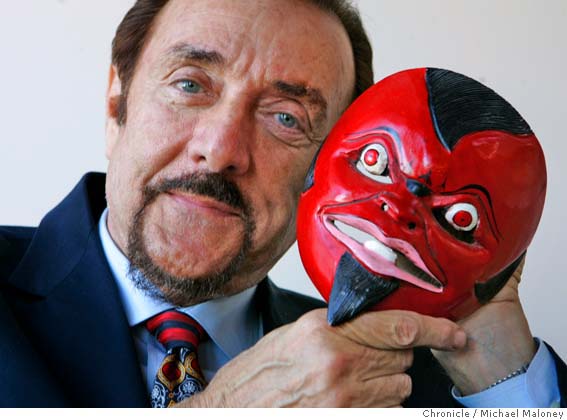
The wise and provocative "Dr. Z" (on the left)

I’m giving ethics seminars to lawyers and accountants today at a non-profit conference in Washington, D.C. While I’m gone, I thought you might want to think about one of the topics I’ll be talking about, the problem of avoiding unethical influences and being co-opted by an unethical culture. What follows are some of the principles advocated by psychologist  Philip Zimbardo, “Dr. Z” to his students, who is best known for devising the infamous Stanford Prison Experiment (it was even made into a movie), that demonstrated to a frightening degree how ethical individuals could engage in horrendous acts when placed in the right (or wrong) environment. Zimbardo has studied, taught and written about this phenomenon extensively, and I find his advice bracing and wise, as well as fodder for debate and discussion. Here it is: Continue reading

Integrity Test For The Left

So...how many progressives and Democrats agree with Voltaire? I wonder.

It should be obvious by now that the furious indignation leveled at Rush Limbaugh for his denigrating rhetoric against activist Sandra Fluke has been expropriated by those who want to limit free speech to their own standards of what constitutes acceptable discourse….and opinion. This has made itself evident both by the strained efforts of eager Limbaugh boycotters to distinguish his use of misogynistic words and the same or worse language used by friendly boors and misogynists against conservative targets. There is a distinction: Rush was engaging in illogical below-the-belt bullying of a barely-public figure for the offense of disagreeing with him, while Bill Maher, for example, was just showing his contempt and disrespect for women generally, which is what anyone who uses the terms “twat” and “cunt,” as he did, is doing. The argument that this ethical divide is so great that it justifies boycotts on one side and complete apathy—or even appreciation!—on the other is unsustainable, which is why Limbaugh’s statement that the organized campaign to take him off the air is not based on the Fluke affair at all. “They’re not even really offended by what happened,” he said. “This is just an opportunity to execute a plan they’ve had in their drawer since 2009.” Continue reading

Comment of the Day: “Ethics Quiz: Holder’s ‘Brainwash’ Comment”

"You want 'consensus'? I'll give you consensus, Pilgrim..."

Penn, who has been on a roll lately, has another Comment of the Day regarding the prospects of a cultural shift in public attitudes toward guns in America. I’ll have some thoughts afterwards, but right now, here is Penn COTD on the post, Ethics Quiz: Holder’s “Brainwash” Comment:

“I’m seeing a problem here that’s as insoluble as “what to do with the homeless.”  It comes up again and again: defending the right to bear arms against teaching non-violence — okay, that’s simplistic, but I think you know what I mean. Since arguments on both sides have been validated, their proponents feel duty-bound to reiterate them.

“Granted, consensus is a no-go in our culture. You win or you lose: compromise is a dirty word, and a win/win situation, while given lip service as a goal (e.g. good sportsmanship), is not an acceptable outcome.  Thus neither argument, in theory or in practice, takes a step further in solving in the short-term the problem of what to do with an increasingly violent society (schools, families, criminals, celebrities, etc.), a society embedded in an ever-shrinking, increasingly threatening world. Thinking that these guns/no guns arguments have some pragmatic use keeps us, so to speak, backward. Continue reading

Introducing “The Hollinger Awards”…and the First Recipient, Susan Cole

The Original Hollinger

Every year, the Darwin Awards amuse us, in a blackly humorous way, with tales of people who improve the gene pool by getting themselves killed through acts of stunning stupidity, often seasoned by exquisite irony. To take a random example from 2011, Phil Contos was participating in a helmet-less high-speed motorcycle ride when he crashed and suffered fatal brain injuries. His brother was quoted as saying that Phil would do it again, too—and I’m sure he would.

A story out of Denver made me realize that faulty or entirely absent ethics alarms work in a similar way to ensure that the most shamelessly unethical among us get their just desserts. Such individuals are so lacking in comprehension of what is wrong with their conduct that they can’t resist publicizing it, thereby revealing themselves as blights on their communities and workplaces, and attracting appropriate treatment in response. Searching for an appropriate name for the ethics version of the Darwin Awards, I was irresistably drawn to Jeremy Hollinger, the Mobile, Alabama special ed teacher who last year mocked his challenged fourth graders on Facebook, and, for good measure, posted a photo of himself wearing one of his student’s protective helmets and making a moronic face. (Or, come to think of it, maybe that’s Jeremy’s normal face.) Thus I am dubbing the new distinction The Hollinger, and give the very first one to Susan Cole. Continue reading

Ethics Quiz: Holder’s “Brainwash” Comment

"You WILL feel differently about guns!"

The death of founder Andrew Breitbart hasn’t slowed down his website’s ability to dig up provocative and embarrassing videos one bit. Its latest is a bit of off-putting rhetoric from Eric Holder, when he was the Clinton Administration U.S. attorney for Washington, D.C., telling a D.C. audience that the long-term solution to gun control is to “brainwash” the  public into opposing firearms. Holder said…

“What we need to do is change the way in which people think about guns, especially young people, and make it something that’s not cool, that it’s not acceptable, it’s not hip to carry a gun anymore, in the way in which we’ve changed our attitudes about cigarettes.”

He went on to outline steps that could be taken to “really brainwash people into thinking about guns in a vastly different way.”

Seeing this as a major “gotcha” for the embattled Attorney General, who is already facing growing criticism both for his oversight (or lack of it) of the Fast and Furious gun-smuggling fiasco and his evasive testimony about it before Congress, conservative critics are jumping on the 1995 statement to bolster calls for Holder’s resignation.

Your Ethics Quiz today: Is it fair to criticize a U.S. Attorney General’s statement that he wants to “brainwash” the  public into rejecting a core Constitutional right, when the statement is more than 15 years old, and was made while he was in a different job? Continue reading

No, Center For Public Integrity, New Jersey Obviously Is NOT the “Least Corruptible State, ” and Stop Confusing Compliance and Ethics

Sorry, Tony! Overnight, New Jersey became uncorruptible. Time to move to Washington, D.C.

The Center for Public Integrity got what it wanted yesterday, which was headlines about its extensive new study of public ethics laws in the U.S. In order to get its cherished publicity, the Center added to the public’s confusion about what corruption is, what ethics is, and how one discourages one while iencouraging the other in our various governments. They released results that graded the 50 states according to “corruptibility”, and found that New Jersey was the least corruptible of all.  I hope the Center’s officials and scholars are happy with their PR, but if they have a shred of integrity and common sense, they should be ashamed of themselves. Continue reading

Mike Daisey Follow-up: Behold! The Classic Response of the Self-Righteous and Unethical!

Mike Daisey in China. Or, standing in front of a big poster. What difference does it make which, really?

Soon after I posted my article about Mike Daisey’s representation of fabricated events and facts as truth in his January feature on NPR, the actor/activist posted this dismissive explanation on his own blog.  It is Dan Rather’s Memogate excuse taken to the next level, the epitome of self-justification of the unapologetic zealot who believes that all is fair in the battle against (what he regards as) evil, employing a full battery of rationalizations for unethical conduct:

1) Daisey’s lies don’t matter, because they were used to expose a real problem (a.k.a “the ends justify the means”); Continue reading

Ethics Dunces: 29 Wisconsin Judges

Yes the gavel's fuzzy, but then so is the judgment of the person on the other end of it.

There is something seriously wrong with the ethical culture of the judiciary in Wisconsin. I suppose this was already obvious, as it is definitely a bad sign when two members of the state Supreme Court accused each other of physical attacks. Nonetheless, the news that 29 of Wisconsin’s sitting judges placed their names on the recall petition for Gov. Scott Walker would seem to settle any remaining doubts.

Is doing this a strict, slam-dunk, violation of the Wisconsin Code of Judicial conduct? No, probably not. It is in a gray area of the Code. Judicial ethics codes prohibit judges from becoming involved in political contests, but a recall petition a judge signs as a private individual (Personally and professionally, I don’t think it is possible for a judge to sign a petition as “a private individual”) don’t fit neatly into the definition of political activity. Other states, such as New York and New Mexico, have allowed judges to sign nominating petitions for candidates on the theory that it is the equivalent of voting, the right to which judges do not give up by ascending the bench.

Still, the judicial codes don’t exactly give a ringing endorsement to this kind of activity, and I would say the better interpretation is that the ethical rules preclude it. The ABA’s Model Judicial Code, for example, says… Continue reading

Ethics Corrupters on The Web: Symptoms of a Cheating Culture

I encountered this charming example of high school cheating advice quite by accident. There is a stunning amount of this kind of thing on the web, and perhaps what is most impressive about it is the matter-of-fact way it is received. This example was posted on a Facebook page, and the few posters who registered objections to it as cheating were ridiculed. mocked and insulted by the rest as prudes, fools, judgmental ass-holes, “holier-than thou” bitches, and worse. One commenter couldn’t understand why this would  even be called cheating. “Nobody’s copying any  exam answers!”, he asked, puzzled.

The trick here reminds me of a response I got from a lawyer in an ethics seminar, as I was discussing a hypothetical in which an attorney had promised to review a non-profit client’s by-laws that had to be included in a crucial grant submission. Continue reading

Comment of the Day: Anti-Bullying Mis-steps: The Perils of Changing Cultural Norms (Part 2)

From Penn, excellent and valuable insight on “The Hunger Games” controversy, going into relevant issues and facts that my post did not. Here is his Comment of the Day on the post, Anti-Bullying Mis-steps: The Perils of Changing Cultural Norms (Part 2):

“The purpose of this argument scares the hell out of me. As one press-screener’s review had it, and as the trailers make clear, “The Hunger Games” tells the story of a televised fight to the death between(sic) a group of youngsters in which only one can survive.” If I believed there were any merit to the MPAA system, yes, R is what it should be. [“This Film is Not Yet Rated” is the movie to see on this subject.] Continue reading