Ethics Corrupters on The Web: Symptoms of a Cheating Culture

I encountered this charming example of high school cheating advice quite by accident. There is a stunning amount of this kind of thing on the web, and perhaps what is most impressive about it is the matter-of-fact way it is received. This example was posted on a Facebook page, and the few posters who registered objections to it as cheating were ridiculed. mocked and insulted by the rest as prudes, fools, judgmental ass-holes, “holier-than thou” bitches, and worse. One commenter couldn’t understand why this would  even be called cheating. “Nobody’s copying any  exam answers!”, he asked, puzzled.

The trick here reminds me of a response I got from a lawyer in an ethics seminar, as I was discussing a hypothetical in which an attorney had promised to review a non-profit client’s by-laws that had to be included in a crucial grant submission. Continue reading

Comment of the Day: Anti-Bullying Mis-steps: The Perils of Changing Cultural Norms (Part 2)

From Penn, excellent and valuable insight on “The Hunger Games” controversy, going into relevant issues and facts that my post did not. Here is his Comment of the Day on the post, Anti-Bullying Mis-steps: The Perils of Changing Cultural Norms (Part 2):

“The purpose of this argument scares the hell out of me. As one press-screener’s review had it, and as the trailers make clear, “The Hunger Games” tells the story of a televised fight to the death between(sic) a group of youngsters in which only one can survive.” If I believed there were any merit to the MPAA system, yes, R is what it should be. [“This Film is Not Yet Rated” is the movie to see on this subject.] Continue reading

Revisiting the Tragedy of the Dead Child in the Locked Car

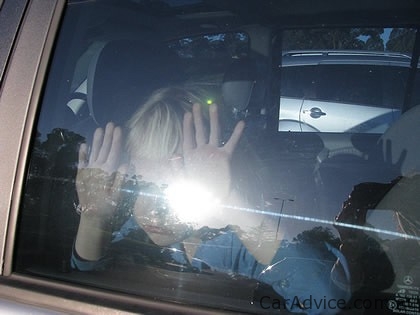
Almost two years ago, I wrote about Washington Post feature writer Gene Weingarten’s provocative and sensitive 2009 exploration of the tragic cases in which a distracted parent leaves a small child in an over-heated car. The issue, now as then, is how society should treat such parents, who are without exception crushed with remorse and guilt, their lives and psyches permanently scarred. Weingarten’s original piece, which won him a 2010 Pulitzer, did not take a position on how such parents should be treated by the criminal justice system. In today’s Washington Post, he does.

Weingarten writes:

“The parents are a continuing danger to no one, nor could anybody sanely argue that fear of prison is even a minuscule factor in preventing this. So we are left with the nebulous notion of punishing, for punishment’s sake alone, an act of accidental negligence that by its nature subjects the doer to a lifetime of agony so profound that it is unfathomable to anyone who has not lived it. Prosecution is not, in my view, warranted.”

Weingarten is thoughtful, analytical, reasonable, compassionate and fair. He is also, in this case, dead wrong. Continue reading

Anti-Bullying Mis-steps: The Perils of Changing Cultural Norms (Part 2)

If "Hunger Games" should be able to bypass the ratings because kids can learn from it, then why shouldn't a film like "A Clockwork Orange," a better film, should also get a pass?

When society decides makes altering attitudes about any conduct a priority,an immediate danger is that it will destroy other societal safe-guards and damage other valid cultural norms in its tunnel-vision.

“Hunger Games,” a film about the consequences of bullying based on a best-selling novel, is about to hit theaters with an R rating, meaning that teens, the prime target of the nation’s anti-bullying effort, can’t see the film without their parents’ permission. Katy Butler, a young bullying victim, has led a national effort to get the film’s ratings reversed. Predictably, politicians have jumped on the bandwagon.

“Over 13 million American youths will be bullied over the course of this year alone, making it the most common form of violence experienced by young people in our nation,” begins a letter from Rep. Mike Honda (D.- Calif.) to his colleagues, in support of Butler’s campaign. “We cannot hope to control this epidemic … without discussing tough issues publicly and bringing them to the forefront of the consciousness of the American public.”

“YES! RIGHT ON! OF COURSE!” Except that what Butler and Honda are proposing essentially undermines the entire purpose of movie ratings, and if their efforts succeed, there is no way anyone will be able to argue that the system has a shred of integrity at all. Continue reading

Anti-Bullying Mis-steps: The Perils of Changing Cultural Norms (Part I)

It's a simple rule, really: if they call you a jerk, thy're bullies; if you call them jerks, you're a hero.

The efforts to reduce bullying in schools has already shown the dangers inherent in using the heavy hand and and often empty skull of government authority to adjust social norms. The laudable goal has already led schools to impose their wills where it emphatically does not belong: in the private interactions and communications among student over the internet. This week, HHS Secretary Kathleen Sebelius provided another example of the perils of the government trying to impose a social taboo where it didn’t exist before.

Sebelius was a guest of the Stuart-Hobson Middle School in Washington, D.C., whose students were shown  a new anti-bullying video from the Cartoon Network that among its messages urged children not to call people names like “stupid,” “fat,” and “jerk.”  Immediately after the screening,  CNN’s Don Lemon moderated a panel discussion of the issues raised by “Stop Bullying: Speak Up.”

“What do you think is the best advice for people who are going into watching this film and anyone who is watching?” Lemon asked.

Sebelius answered, in part: “I think, very important, is for kids to understand how powerful you really are. You might feel like you’re not big enough, not strong enough, not–don’t have enough tools. But just saying, ‘Stop it! You know, you’re being a jerk!’–walk away, get away from this person can make a huge amount of difference.” Continue reading

Greg Smith’s Urgent Ethics Alarm

“Today is my last day at Goldman Sachs. After almost 12 years at the firm — first as a summer intern while at Stanford, then in New York for 10 years, and now in London — I believe I have worked here long enough to understand the trajectory of its culture, its people and its identity. And I can honestly say that the environment now is as toxic and destructive as I have ever seen it”

This, says Greg Smith, is how the leadership of Goldman Sachs sees its clients.

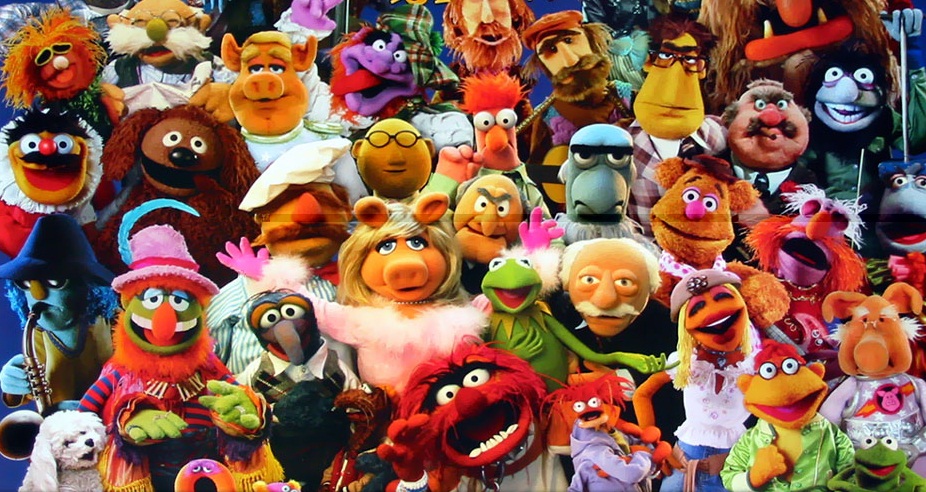
With that, Goldman Sach’s executive Greg Smith began his remarkable op-ed in the New York Times, sending his former employers into crisis mode, panicking investors, and setting the financial, political and journalistic worlds buzzing. Obviously, it was an exposé about ethics as much as anything else.  Smith described a corporation-wide breach of trust with clients, a culture in which leadership openly derided those the company pledged to serve as “muppets,” and apparently, sheep to be sheared:

“It makes me ill how callously people talk about ripping their clients off… I don’t know of any illegal behavior, but will people push the envelope and pitch lucrative and complicated products to clients even if they are not the simplest investments or the ones most directly aligned with the client’s goals? Absolutely. Every day, in fact.”

Smith cites a breakdown in leadership, resulting in a corruption of values: Continue reading

The Process Can Be Ugly, And Sure Was This Time, But This Is How Cultural Ethics Standards Change

Greta was the tipping point.

The Rush Limbaugh-Sandra Fluke Ethics Train Wreck is over at last, but unlike with many such debacles, something positive occurred. I believe that an emphatic cultural standard was established that calling a woman—any woman, famous or not, liberal or conservative—a derogatory term designed purely to denigrate her by denigrating her gender will not be considered acceptable in political, quasi-political or arguably-political commentary henceforward. If such rhetoric occurs in a comic or entertainment context, no politician or elected official can appear to endorse the individual who utters the offensive words.

I’m not arguing right now whether this is a good or a bad development, but merely that it happened, and that it is a real change. For this to happen, a conservative radio talk show host had to use the terms “slut’ and “prostitute” to make the botched satirical point that a feminist law student activist who argued that free contraceptives were a woman’s right was the equivalent of women who wanted to be “paid for sex.” If pundits and bloggers had merely declared this statement uncivil and cruel, nothing more would have happened, and the incident would have been quickly forgotten. But sensing political points to be scored in an election year, and with the added incentive of being handed what was seen as powerful ammunition to attempt a frontal attack against a detested partisan critic, Democrats,  progressives, feminists, activists, Obama strategists and left-biased journalists decided to cast the Limbaugh’s poor judgment in extreme terms. Continue reading

Unethical Quote of the Week: “Brad”

“How much did all these hacks get paid to do this? What a waste of money. Are they bothering somebody? Leave them alone. They obviously want to be together, and who are we to say that they shouldn’t? How much did this judge and all the hacks get paid to issue this decision? Somewhere, somehow this waste has to stop.”

“Brad,” a commenter on NECN.com’s story about Lisa Lavole, a former teacher who was out of jail on parole after three years for the offense of having sex with her 15-year old student and running away with him. She was taken back into custody when the same student, now 18, was discovered hiding in her closet. One of the conditions of her parole was that she had to stay away from her former victim.

Lisa Lavole, doing her Norman Bates imitation

While perusing the comments to news stories often gives me more insight into the state of our culture’s ethics than reading the stories themselves, there is always the downside that many comments make me want to chuck ethics as a futile and pointless career choice and begin honest work as a bookie or a pimp. “Brad’s” comment is a case in point.

It would be difficult to pack more flawed ethical reasoning and rationalizations into a mere 60 words. The woman was hired to teach, and instead used her authority, age and power to entice a child into a sexual relationship, and then take him away from his parents and his home. By the most charitable interpretation she is a sexual predator and a rapist, as well as the betrayer of the community’s trust. Of course part of her punishment involves keeping her away from her victim, whose mind and emotions she had damaged and warped. To Brad, however, it is a “waste of money” to enforce legitimate laws, protect children from predatory adults, and make certain that at very least adults who prey on the children in their charge don’t benefit from it. She turned a child into a sex object and lover, and Brad thinks it’s a waste of time and money for society to make certain that she can’t keep reaping the benefits of her crime after her prison sentence. Continue reading

The Ethics Verdict on the Homeless Hotspot Project

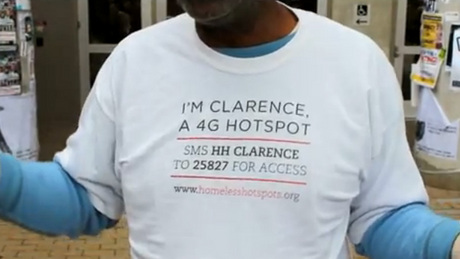
BBH Labs, the innovation unit of the international marketing agency BBH, hired members of the Austin, Texas homeless population to walk around carrying mobile Wi-Fi devices, offering high-speed Internet access in exchange for donations. Thirteen volunteers from a homeless shelter were hooked up to the devices, given business cards and put in shirts with messages that designated them as human connections. “I’m Rudolph, a 4G Hotspot” read the label on the homeless man on the New York Post’s front page with the lead, “HOT BUMS!

The Walking Hotspots—now there’s a new horror series for AMC when they run out of zombies— were told to go to the most densely packed areas of the South by Southwest high-tech festival in Austin, Texas, where the technology trend-devouring conventioners often overwhelm the cellular networks with their smart phones. Attendees were told they could go up to a Homeless Hotspot and log on to his 4G network using the number on his T-shirt. A two-dollar contribution to the homeless man was the suggested payment for 15 minutes of service. BBH Labs paid  the wired-up homeless $20 a day, and they were also able to keep whatever customers donated.

What BBH called its “charitable  experiment” ended yesterday with the conference, and with all participants seemingly thrilled. The “Homeless Hotspot” gimmick got nationwide publicity, thirteen homeless men made some money, and conference participants got great connectivity…so why were so many people upset? Continue reading

“The Good Wife” Ethics Addendum: Why Misrepresenting the Legal Profession’s Standards Does Real Harm

Sure, it was a comedy, but how many people believe that Jim Carrey's compulsively lying lawyer was not that far from the truth?

A comment from reader Penn on my post about “The Good Wife’s” recent misrepresentation of legal ethics standards got me thinking, and what it got me thinking was that I was too easy on the show.

Penn asked why I waste my time watching programs that raise my blood pressure, and there are two answers. The first is what I wrote back: it’s not a bad show; in the past it has been a very good one, even from the legal ethics perspective. I have used several scenarios from episodes in seminars.

The second answer, which I didn’t mention in my response to Penn, is the more important one, however. Good show or not, millions of Americans get their information about the legal profession from the portrayal of lawyers and law on TV and in movies. From these fictional sources, they think they know that most lawyers are liars, that they allow their clients to lie, that they put witnesses on the stand who they know will lie under oath. The public thinks that lawyers abuse the law, don’t earn their fees, don’t give a damn about their clients (unless they are sleeping with them), switch sides routinely and confuse juries to release serial killers on more victims. Continue reading