An Ethical Holiday

I’m going to concentrate on trying to make the beginning of the holiday water-slide (which always starts on November 23, my wedding anniversary—this is our 31st, as I was married when I was 13) as memorable as possible, so unless something earth-shattering occurs, Ethics Alarms will be at status quo until sometime tomorrow. In the meantime, I want to wish all of you a very happy Thanksgiving.

Like many holidays, Thanksgiving is firmly rooted in ethics. One doesn’t have to be religious to acknowledge the fact that we have much to be grateful for, even in difficult times personally, nationally, and culturally. Gratitude is closely linked to modesty, humility and proportion in the hierarchy of values. American tradition urges us never to be satisfied with things as they are, but we should always be humbled by the fact that there are so many ways things could be far worse. There is no better time to begin a personal tradition of kindness and generosity toward others to last the year, or a lifetime.

In Southwest Washington, D.C., a section of town plagued with poverty, crime and violence, convenience store owner Ephrame Kassayegave out 375 turkeys as gifts to the community, in thanks and recognition of their loyalty. He said he was grateful for his patrons, and wanted to show it. That’s what Thanksgiving should mean, and that’s why it isn’t just a way-station between Halloween and Christmas. If nothing else, we all have each other in our families, communities, nation and world to make our lives richer, and if one day on the calendar helps remind us of that when we are feeling angry, anxious, envious and sad, it’s a day well spent. Life’s worth the trouble. Pass it on.
Have a wonderful Thanksgiving, everybody.

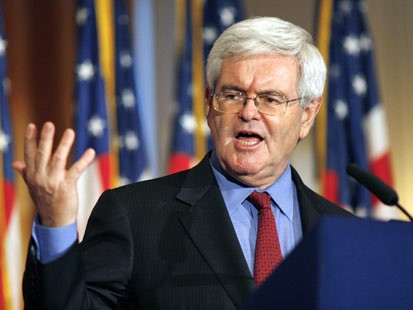
Ethical Quote of the Month: Newt Gingrich

The Good Newt (newtus virtuous), once believe to be extinct, was sighted in D.C.

“I do not believe that the people of the United States are going to take people who have been here a quarter century, who have children and grandchildren, who are members of the community, who may have done something 25 years ago, separate them from their families, and expel them. I do believe if you’ve been here recently and have no ties to the U.S., we should deport you. I do believe we should control the border. I do believe we should have very severe penalties for employers… I don’t see how  the party that says it’s the party of the family is going to adopt an immigration policy which destroys families that have been here a quarter century. And I’m prepared to take the heat for saying, let’s be humane in enforcing the law without giving them citizenship but by finding a way to create legality so that they are not separated from their families.”

—-GOP Presidential hopeful Newt Gingrich, telling CNN debate moderator Wolf “Blitz” Blitzer his approach to illegal immigration, and spitting into the wind of Tea Party and and conservative Republican ideology on the subject.

Continue reading →

Margaret Ann Haring Would Have Sent Elliot To Guantanamo Bay

Quick...call 911!

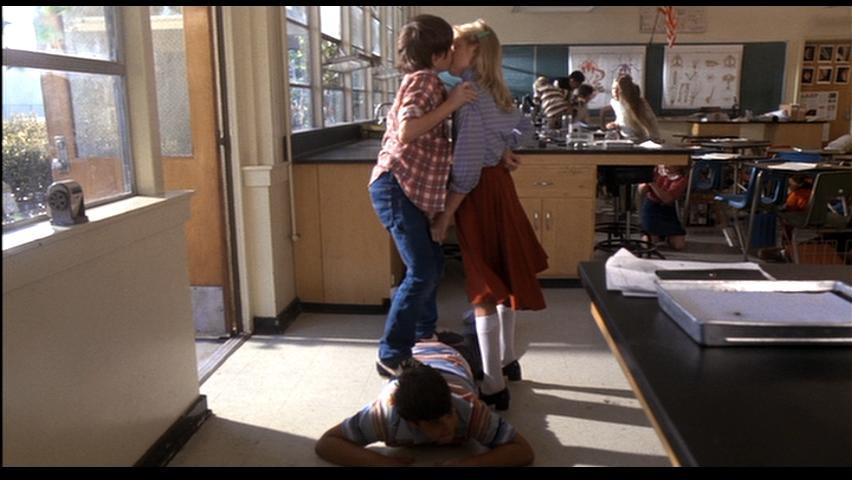
Luckily, when Elliot had that weird mind-link thing with E.T. while the little alien was watching “The Quiet Man” on TV, and not only let all the frogs loose in his biology class but planted a major league lipper on a pre-teen classmate played by Erika Eleniak (later to prove Elliot’s exquisite taste by becoming a “Baywatch” pin-up) when the Duke smooched Maureen O’Hara, it was before the days of “no-tolerance” policies, and Ms. Haring wasn’t his teacher.

Not so lucky was the female student in a real life elementary school, who impulsively kissed a boy during a physical education class at Orange River Elementary School in Fort Myers, Florida. Haring saw her student’s vicious sexual assault, and called child welfare officials, who, rather than telling her she was out of her frickin’ mind, directed her to contact the sheriff. The school then reported the pre-teen moment of passion as a possible sex crime, according to the Lee County Sheriff’s Office. Continue reading →

November 22, 1963—The Dawn of American Distrust

In November of 1963, the American public’s trust in its government stood at over 75%. The previous President had been a revered general who guided the Allied forces to victory over Japan and Germany. We were united against a sinister, common enemy, world Communism, led by a shoe-banging dictator who promised to bury us. The new President was a young, glamorous and inspiring man of wit and vision, whose signature policy initiatives embraced American exceptionalism and virtue—the Peace Corps, space exploration. Even in a city with more JFK foes than fans, the President and his wife drove through the streets of Dallas in an open limousine. And on a bright and beautiful fall day, two rifle shots blew John F. Kennedy’s brains out.

Today, 48 years later, public trust in the government is below 15%, an all-time low. Protesters are in dozens of American cities, challenging the foundations of American progress and success. Large numbers of the public believe that the U.S. Supreme Court assisted in a successful plot to steal a presidential election, and that a U.S. President planned the attacks on the World Trade Center and the Pentagon in 2001; that the CIA invented AIDS to kill African-Americans; that Barack Obama’s presidency is illegal; and, of course, that there was a massive government cover-up of a conspiracy to assassinate Kennedy, a conspiracy that might well have involved his successor, Lyndon Johnson.

It is the lack of trust, more than any single factor, that feeds the ruinous hate and partisanship that has made American government impotent at the worst possible time, with crises intentional, domestic and spiritual surrounding us. Continue reading →

“Walking Dead” Ethics

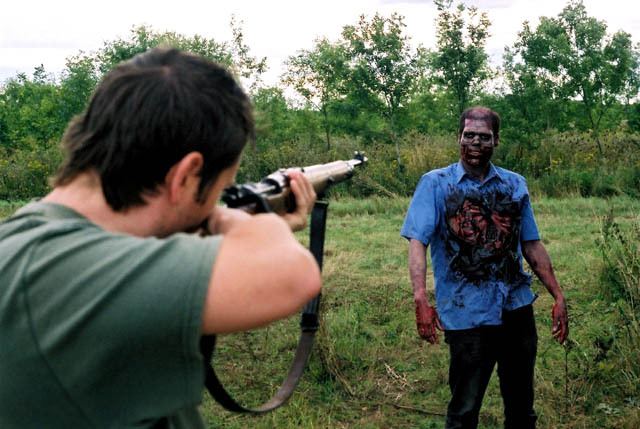
American Movie Classics’ excellent, if harrowing, zombie apocalypse drama “the Walking Dead” finally raised the ethical issue looming like a zombie Woolly Mammoth over all zombie films: Is it ethical to kill zombies? Are they still human beings?

Nobody seriously disputes that killing a zombie who is about to eat you or your compatriots is self-defense, justifying deadly force. But what about the common practice in every George Romero-inspired zombie epic: shooting the shambling things (or the sprinting variety, as featured in the re-make of “Dawn of the Dead”) on sight—in the head, naturally? Is it murder? Euthanasia?

The issue was raised in this Sunday’s episode of “The Walking Dead,” as it was revealed that the prickly doctor who presides over the remote farm where our zombie-fleeing heroes are currently taking refuge keeps a batch of captive “walkers,” including his rotting wife, locked in a barn. He feeds them chickens, which are presumably finger-lickin’ good. The doctor regards zombie killing as an atrocity, the equivalent of killing a sick person. “They are humans,” he says. Continue reading →

The Selfish, the Irresponsible and the Cowardly, Pushing the US to Fiscal Disaster

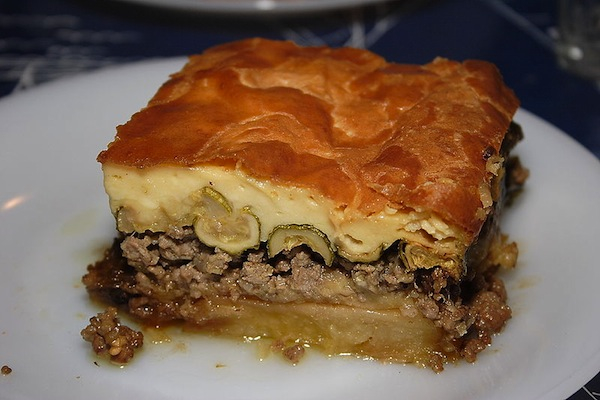
Greek food, America! Better get used to it, becuase we'll have to swallow what the Greeks are swallowing we can't find some leaders with courage.

Failure is now all but ensured by the so-called Super Committee, a gimmick designed by our leadership-averse President and his pathetically inept legislative counterparts in Congress (both parties, now) to provide themselves with bi-partisan political cover when they again ducked their obligation to solve the nation’s fiscal mess. For those of you who, like me, have wondered how Greece and Italy could reach their current miserable status when the fiscal disaster now facing them was obvious years ago, the answer is plain. They tolerated a fatal combination of selfish interest groups, pampered and lazy voters, and elected leaders who distorted, dithered and ducked their duties, until it was too late. And that is exactly what happening here.

There is no need to waste invective on the committee itself, which is beneath contempt. What they have come to was predictable, and I, along with many others, predicted it. But the predictions still did not have to come true, if, for example, these hostages to toxic ideologies really cared about the country as much as keeping the power to ruin it, or if President Obama hadn’t calculated that his best chances of re-election would be to let the committee founder with him being able to claim no role in its betrayal. rather than to do his job—leading–and try to make sure it succeeded at the risk of failing himself…again.

Betrayal is the word that I use, and that is what it is. Continue reading →

Wild Card Ethics and Cultural Expectations

Bad ideas are contagious, especially popular ones.

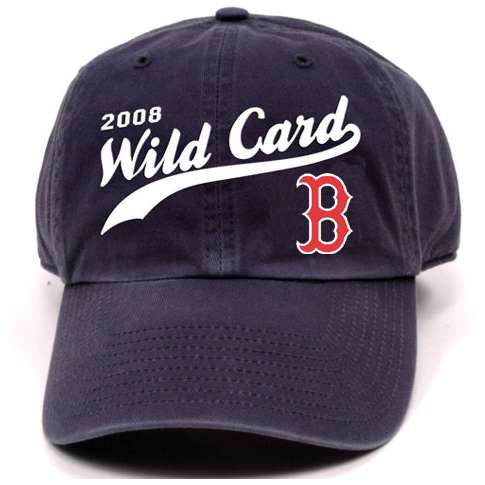
Major League Baseball just expanded the number of teams that qualify for post-season glory from eight to ten. Yes, there are ethical calculations involved in this, whether baseball cares or not. Supposedly, questions of fairness were part of the reason for the change, though I doubt it—in pro sports, the engine of change is always profit. And whether the change results in more fairness or less depends on what you consider fair—or perhaps whether you are sleeping intents in various U.S. cities.

Sports is such a big part of our cultural consciousness that what the National Pastime calls fair and just cannot help but influence cultural standards. Before 1969, there were two leagues of eight, then ten, Major League teams, and the two teams with the best records in each league met in the World Series. It was a simple meritocracy, with just 10% of the teams being allowed to advance after the regular season. Oh, there was always complaining about how the rich Yankees got into the Series more often than not, while the Senators, Phillies, Astros and A’s never did, but nobody camped out in the middle of Manhattan to protest baseball talent disparity. If you lived in one of the smaller Major League cities you just scaled back expectations, that’s all. And if, by some miracle, you won, then victory was all the sweeter, because you had bucked the odds by being harder working, stronger, better. Continue reading →

Bad Jack’s New Gig

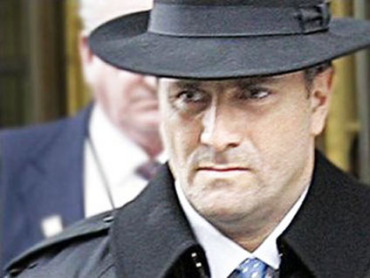
Would you trust this man?

My NPR segment was live, and predictably shorter than the star of the day, disgraced lobbyist Jack Abramoff, who was there, also predictably, to talk about ethics. Isn’t it interesting that when businessmen, lawyers, investment gurus and politicians get caught and go to jail, they always manage to have very profitable epiphanies that make them ethics experts just in time to give them a book or speaking tour deal, since their original lines of work are no longer an option?

Do I believe these changes of heart and values are real? Not for a second. Continue reading →

Ethics Quote of the Week: Charlie Chaplin

I’m heading to New York City shortly, and will make an effort to check out first hand the state of Occupy Wall Street. The nationwide protest seems to be waning in both intensity and public support, despite some hopeful, futile voices (like the New York Times editorial page) who persist in claiming that its message is “important.”

I’m not denying that it could be. At this point, however, it is in danger of redefining itself as (or, in my case, confirming the diagnosis) a self-indulgent, expensive mess that never succeeded or even tried to articulate its goals clearly enough to avoid overtaken by the worst side-effects of such protests: violence, damage to property, threats to safety, and harm to innocent bystanders. Yesterday, for example, having failed to disrupt the operations of Wall Street, the New York contingent decided to disrupt the subway system—the mode of transportation overwhelmingly used by “the 99%.”

Stupid.

Words and clear thinking are not only helpful, but an obligation for those seeking social change.  As an example of how words can inspire, I offer this, the speech that Charlie Chaplin wrote and delivered at the end of his film, “The Great Dictator.” I am far from four-square with Chaplin’s politics, but he knew how to craft an inspiring rally to change—exactly what the “Occupy” should have done. Then, at least, we would recall it for what it aspired to, rather than all the annoyance and cynicism it launched. Here is a link to an editorially enhanced version of the scene and here is the text: Continue reading →

Flashback: “Law, Citizenship, and the Right to be a Jackass”

Wrong country, same gesture.

[The principal in this tale from a post early in Ethics Alarms’ existence just dicsovered it, and sent some additional detail in a comment.  I am fairly certain that almost nobody read the original post, and I had completely forgotten about it myself. Its central point is still valid, however, and since it involves  an ethics conflict that has frequently re-appeared here—the duty to respect law enforcement officials versus the right not to, and the proper handling of a citizen who is rude, abusive, or worse—I thought I’d revive it.

Much thanks is due to David Hackbart for his considerate comment.]

Three springs ago on the streets of Pittsburgh, David Hackbart was starting to parallel park when a car pulled up behind him. Don’t you hate that? Hackbart did too, and presented his flip-off finger to the anonymous driver in silent protest. “Don’t flip him off!” came a shouted edict from someone outside his car, and Hackbart, not in the mood for officious intermeddling, gave the anonymous civility referee The Finger as well. Continue reading →