Illinois’s Death Penalty Ban: Defensible Decision, Indefensible Reasoning

Justice.

Illinois Gov. Pat Quinn  signed legislation abolishing capital punishment in the state and commuted the sentences of the 15 inmates still on death row to life in prison without parole.

I disagree with the decision, and have stated my reasons for not abolishing the death penalty here and here. Never mind: this is a topic on which ethical and reasonable people can disagree with honor. But if one is going to abolish an important law enforcement tool, the official justification for it ought to be coherent and persuasive, and not just facile rhetoric. That, unfortunately, is what Gov. Quinn gave us.

Here is the relevant segment of Quinn’s statement after signing the bill into law during a private ceremony: Continue reading →

The Missing Ethics Alarm: Spending Other People’s Money

How did I get HERE??

I confess: I honestly don’t understand this problem. From the first time I had an expense account, it never occurred to me to use it for my own pleasure. If I had to eat out on the road, I picked an inexpensive restaurant. I didn’t charge hotel room movies to my employer—he wasn’t sending me there to be entertained. I flew coach, and paid for any personal long-distance calls. Why? Because it wasn’t my money. I was a fundraiser for a non-profit, and I knew that whatever the donors were giving money for, it wasn’t for me.

It became apparent over the years that few of my colleagues or bosses saw it that way, when it came to their own expenses, and that elected officials and corporate officers not only readily use other people’s money extravagantly, but also that few people object when they do. The conduct is clearly irresponsible and unfair; I would call it dishonest. But those in high positions seem to regard it as their right. Continue reading →

The NPR Ethics Train Wreck

Ethics train wreck scholars take note: when an organization’s image and existence is based on multiple lies, an ETW is inevitable.

Oh NO! It's another Ethics Train Wreck!

National Public Radio is now in the middle of a massive, six-months long ethics train wreck that began with the hypocritical firing of Juan Williams on a trumped-up ethics violation. The disaster exposes the culture of dishonesty and entitlement at the heart of NPR, and by extension, the Corporation for Public Broadcasting. To the extent that their supporters blame anyone else, it is evidence of denial. This is a train wreck, however, and the ethics violators drawn into the wreckage are many: Continue reading →

Quiz: Which Law Enforcement Fiasco Was More Unethical?

It’s Quiz Time!

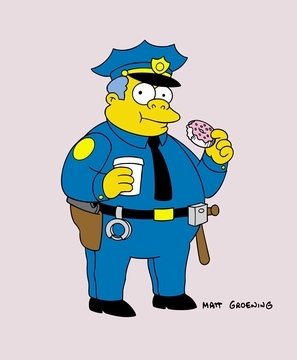
Chief Wiggum would be an upgrade.

Today’s topic: Why the public doesn’t trust the law enforcement system. Here are two horrible and true, tales of AWOL ethics involving law enforcement in New York and Tennessee. Which is more unforgivable, A or B?

A. Brooklyn, NY: The Perpetual Warrant

What is the fair limit of “the police made  an honest mistake”? Let’s say the police have a warrant to search your house, and come to your door because they got the address wrong—and it’s a mistake. At least they didn’t break down the door in the middle of the night. OK, mistakes happen. Then they come again, because they got your address in error again. Annoying, but they seem embarrassed: they aren’t trying to harass you.

And then they arrive 48 more times. Continue reading →

Don’t Knock “The Code of the West”!

A commenter just nominated the Republicans in the Montana State Legislature for “Incompetent Elected Official” status because they have proposed “The Code of the West” as  Montana’s State Code.

Nomination rejected. I don’t want to argue about whether a state needs a State Code, although it seems a lot more useful and constructive than state birds, state songs and state pies. I also don’t feel like debating the political correctness attacks on the potential use of the Code of the West by Native American activists, who apparently think the Code glorifies cowboys and insults Indians (Oh, all right: the complaint is nonsense. Valid ideals are not sullied by the misdeeds of those who espoused them.) But I like the cowboy codes, all of them. One is already on the site. I might not choose the same ten tenets of the unwritten Code of the West that is being debated in Montana, but the Code of the West is a perfectly good statement of ethical principles, and any state that embraces it should be praised, not embroiled in a lot of political posturing. Continue reading →

Comment of the Day: “Facebook Wars II”

Though not strictly an ethics comment, Mary’s theory about why school administrators are engaging in so much ethically dubious conduct is provocative and has the ring of truth. Here is her Comment of the Day, on the post “Facebook Wars II: More School Abuse of Power and Privacy“:

“A number of years ago, while extracting myself from a bad relationship, a therapist friend told me that the more healed and “normal” I became, the more outrageous and pathological my ex-partner’s behavior would be, in a psychological attempt to pull me back into the relationship.

“I sometimes think the same thing applies to social relationships and organizations. As they lose their relevancy and people withdraw and move on to new social structures, those invested in the old organizations thrash wildly to maintain an ever crumbling status quo. Continue reading →

Facebook Wars II: More School Abuse of Power and Privacy

"Hello? ACLU? Anybody there?"

In January, Ethics Alarms weighed in on reports from Illinois and New York about students being disciplined by their high schools for postings on Facebook about the sexual proclivities of female students in the community. The ethics verdict: the schools were abusing their power and the students’ privacy:

“When did schools suddenly acquire disciplinary control over what students do when they aren’t at school? There is no question that the websites involved were inappropriate, disrespectful, cruel and hurtful, just as the rumors and insults included in high school graffiti were, in those glorious days before the internet. Students so abused need to complain to parents, and parents need to talk to the parents of the offending students, and if they can’t or won’t address the problem, then the courts or law enforcement may need to become involved.”

The rationale offered by the schools at the time was that the students had violated rules against cyber-bullying, that ever-vague plague, although there is no more legitimate authority for a school to decree what a student can say about another student on a personal website than there is for a school to restrict what a kid can say at the dinner table.

Naturally, when an institution exceeds the natural limit on its authority, there is nothing to keep it from even more egregious abuse. Thus two Georgia students were just suspended and one another was expelled for negative Facebook postings about a teacher. Continue reading →

Ethics Quote of the Week: Ex-Con John Collins

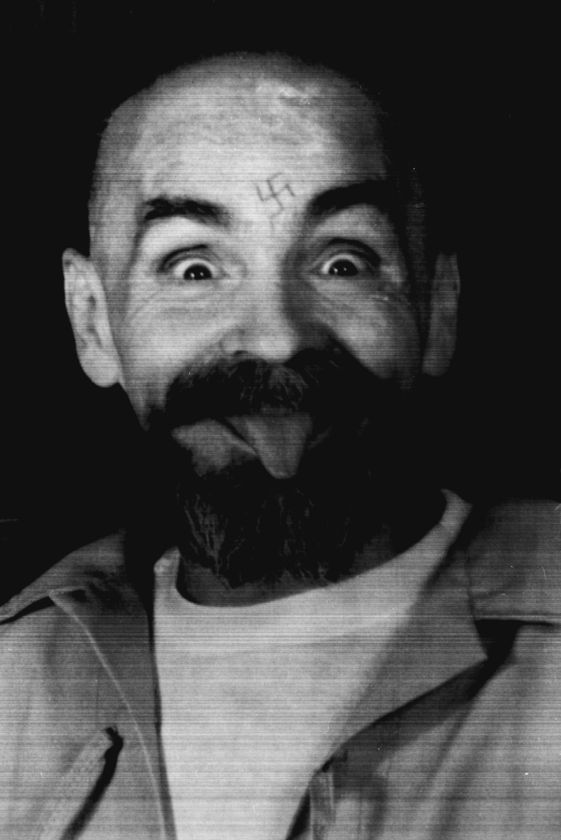
Charlie made a different kind of mistake, too!

“We’re people, we’re not monsters. We’ve just made a different type of mistake than someone else.”

— 34-year-old John Collins, who announced his support for a provision being pushed forward by the Seattle Office For Human Rights, which believes that convicted criminals should be made a protected class.

Collins sure made a different kind of mistake, all right. He served four years in prison for drugging and raping his estranged wife. Continue reading →

Announcing: The Incompetent Elected Official of the Month

"What, me legislate?"

With this post, Ethics Alarms announces a new continuing category for ethics infamy: Incompetent Elected Officials.

We tend to focus on corruption, dishonesty, conflicts of interest and lies when identifying unethical public officials, but it is the wildly incompetent of the breed who might carry the most ethics baggage of all. An incompetent elected official not only is irresponsible for taking on leadership that he or she is unable to deliver due to a lack of brains, skill, experience or judgment, but also keeps a more deserving and able individual from a distinguished position that needs him, jeopardizes the public, and undermines trust in the government generally. The public’s ethics are also implicated by the incompetent official’s ascension to power, as the truly inept can usually be identified with a modicum of diligence and care. Incompetent and irresponsible officials require the assistance of incompetent and irresponsible voters.

Thus incompetent elected officials warrant special attention. And the first incompetent elected official to be honored as the Ethics Alarms Incompetent Elected Official of the Month is….Alabama Republican State Senator Gerald Allen! Continue reading →

The Prince, The Sex Offender, and the Ethics of Friendship

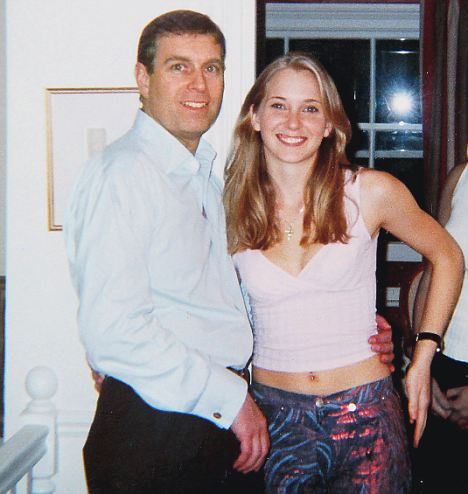
Prince Andrew with one of his friend's victims in 2001

The ethics of friendship is complicated.

President Bush claimed to be friends with Vladimir Putin. F.D.R. once said that Josef Stalin was his friend. President Obama was famously friendly with dubious characters like Rev. Wright and William Ayres.

History is full of heroes and near-heroes who had infamous friends, though the extent of the often friendship is difficult to know. Sammy Davis, Jr. and Elvis were supposedly buddies with Richard Nixon. Bill and Hillary Clinton were close friends with Dick Morris. Wyatt Earp was a life-long friend of “Doc” Holliday; Andrew Jackson may have been friends with pirate Jean Lafitte, who helped him win the Battle of New Orleans. We simultaneously celebrate loyal friends, and yet we also judge people by the company they keep. Should we condemn individuals who have friends with serious character flaws or a history of unsavory acts? Or should we admire them for sticking with their friends when everyone else is turning against them? Continue reading →