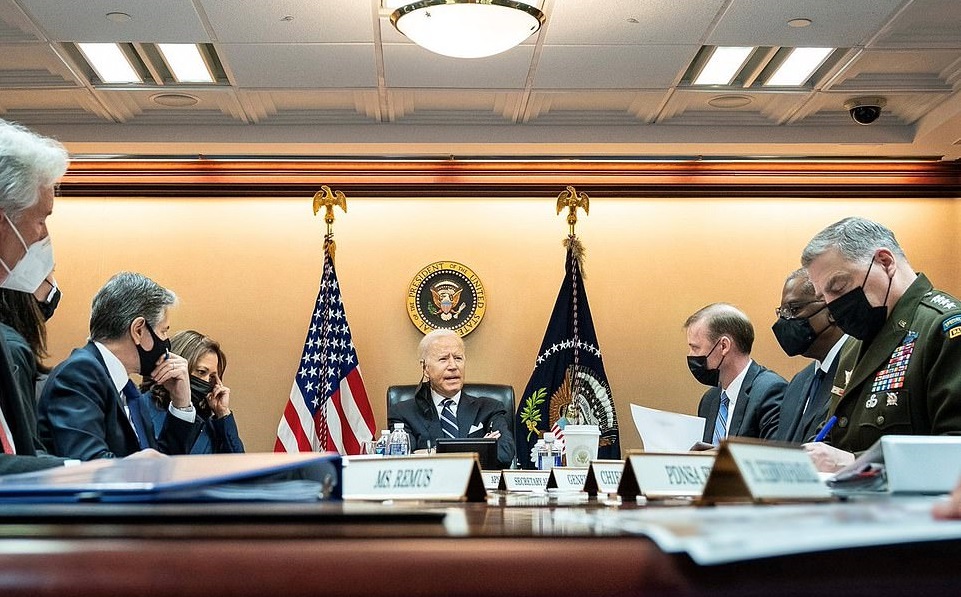
Ethics And Leadership Failure On Afghanistan, Part I: In And Out

I’m not a foreign policy expert. (Is anyone a foreign policy expert?) so Ethics Alarms will go light on what “should” have been done by the U.S. in Afghanistan. The one thing I am unalterably convinced of now, as I was in 2001, is that the U.S. had to take strong military action against the Taliban after it aided and abetted Osama bin Laden. No nation can just shrug off a fatal, ambush attack on its citizens with a finger wag and a stern, “Now don’t do that again, or you’ll be sorry!”

Obviously staying twenty years in the pseudo-nation was way, way too long, expensive and costly in American lives, but dreaded mission creep set in. My approach after 9/11—and I think that of several past Presidents, including Eisenhower and Truman—would have been to strike hard, make sure as many military and government officials as possible were among the dead, accept the civilian casualties as unavoidable, and make sure that a properly frightening death toll—ten times what we lost on 9/11, perhaps, 30,000?—made the necessary point: “Don’t mess with the United States of America.” Once that message was delivered, get out. Colin Powell’s too often quoted nostrum that if you broke a country you were obligated to fix it should not have applied. Afghanistan was already broken; it was and remains a chaotic mess of warlords and medieval thinking supported by the heroin trade. Nobody can “fix” it. However, the Taliban was bad, and worst of all it oppressed women, so all of a sudden our objective became an ethical one, not retaliation but reform.

Continue reading

Ethics Hero Emeritus: Rose Valland (1898-1980)

Rose-Valland

The remarkable 2008 documentary “The Rape of Europa” tells the story of the Nazi plundering of fine art across Europe. It is full of many accounts of heroism, none more impressive than that of Rose Villand, a meek-looking librarian out of central casting, who is as perfect and example of how ordinary people can rise to extraordinary levels of courage and innovation in times of crisis.

Rose Valland was born in Saint-Étienne-de-Saint-Geoirs, France on November 1, 1898. She earned two degrees in the arts from the École des Beaux-Arts in Lyon and also studied at the École des Beaux-Arts in Paris, then added degrees in art history from both the École du Louvre and the Sorbonne. Her academic credentials, however, did not immediately advance her career, as Valland began work at the Jeu de Paume Museum in Paris as an unpaid volunteer.

In October 1940, during the Occupation of Paris, the Nazis commandeered the Jeu de Paume Museum and converted it into the headquarters of the Einsatzstab Reichsleiter Rosenberg, or ERR, the Nazi art looting organization created by frustrated artist Adolf Hitler. There The Nazis stored paintings and other works of art stolen from private French collectors and dealers, including thousands of works taken from Jewish-owned galleries. The museum’s collaborating curator, Andre Dézarrois, fell ill in the summer of 1941, and in a stroke of fate for civilization, Valland became the de facto director of the museum. Jacques Jaujard, Director of the French National Museums including the Louvre, gave Valland a daunting assignment: she was to use her post in the museum to spy on the Nazi art theft operation.

The Germans, as explained in “The Rape of Europa,” took scant notice of the “little mouse” of a woman who kept her head down, seldom spoke, and appeared to follow orders. They didn’t even realize that she spoke German, but under their noses she was acquiring crucial information from the conversations of drivers, guards, and packers relating to the looted art treasures…60,000 of them. Villand witnessed the frequent shopping trips of Nazi Reichsmarshal Hermann Goering as he made more than twenty separate visits to the Jeu de Paume to select works of art for Hitler’s planned Führermuseum in Linz, Austria, and his own personal collection. Possessing a remarkable memory for details, she recorded her discoveries regarding the movements, names of the victims, number of pieces and where they were going, names of the agents responsible for transfers, names of the carriers, brands of the boxes, numbers and dates of convoys,as well as the names of the artists and the dimensions of the pieces that passed before her. She relayed the information to Jaujard and the French Resistance while keeping her own meticulous records. She warned the Resistance of convoys containing important artworks so that they would be spared, all while knowing that she would be executed as a spy if her activities were discovered by the Nazis—and at least twice, they nearly caught her.

Continue reading

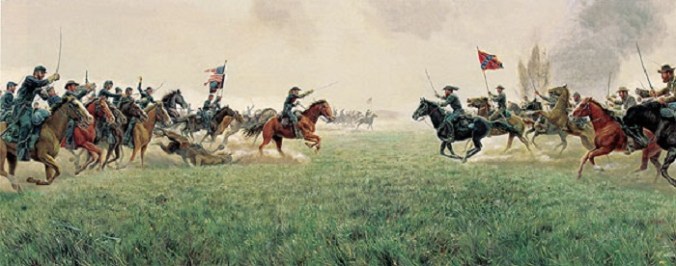
The Comment Of The Day Trifecta Continues, With P.M. Lawrence’s Further Observations On Custer’s Clash With J.E.B. Stuart in “July 3: Pickett’s Charge, Custer’s First Stand, Ethics And Leadership”…

Ethics Alarms has readers all over the globe and several regular non-American commenters as well. Their perceptions are always interesting and sometimes enlightening in ways the USA-steeped commentariat here would be challenged to duplicate. P.M. Lawrence is one of our esteemed foreign correspondents, and in this Comment of the Day on my post on the epic events of July 3, 1863 in a little shoe-making town in Pennsylvania…

As I mentioned in comments to earlier posts on this topic at this site, it is entirely possible that Lee planned Pickett’s Charge to work in conjunction with the attack on the rear. This follows from precedents in military history, of which Lee would have been well aware from his experience as an instructor. In particular, Gettysburg was an “encounter battle”, brought about by a less than planned encounter; when that happens, the major risk is that whoever withdraws first suffers a terrible pursuit of the sort Napoleon showed the world – so both try to fight it out, following the logic of game theory’s “prisoner’s dilemma”, “tragedy of the commons”, or “money auction”. (At least Lee was able to fight long and hard enough to thwart that worst possible outcome, and he may well have known that and been trying for that at the time, at least once victory was unlikely.)

Back to the precedents: Lee may well have modeled his tactics (not strategy) on Oudenarde, which was also an encounter battle; when that started, Marlborough realised his predicament early on and detached a Dutch flying column to march around the fighting to attack the French reinforcements in flank hours later, before those could reach and feed the fight that Marlborough was also feeding all along (in Grant’s phrase), a feeding which Marlborough had to do to keep everything in play until the Dutch blow fell.

However, to the best of my knowledge Lee never claimed later that he had been trying to do this, even though the similarities to precedents are striking.

By the way, U.S. culture has so changed its concepts and terminology that “honor” does not mean what honour now means in British English or other European languages, or what it meant in the U.S.A. of that era. I would venture to suggest that U.S.A.-ians do not now have access to this concept at all, what with language now steering them to a different concept entirely. Think how you could now access the old meaning of “gay”, if you even wished to. It’s the sort of thing Orwell brought out in “1984”. (Hint: police lying to suspects is not honourable – and anyone who argues otherwise is invoking different concepts, which is the point I am trying to highlight.)

Also by the way, it is an old precept that “the secret of military discipline is that the soldiers should be more scared of the sergeants than of the enemy”, which may have been at work here. It may be found in the writings of Montaigne and of Frederick the Great, with “officers” substituting for “sergeants” (the term “officers” also covers N.C.O.s in many continental European languages).

Morning Ethics Warm-Up, 7/2/2021: Remembering The Epic Second Day Of The Battle Of Gettysburg

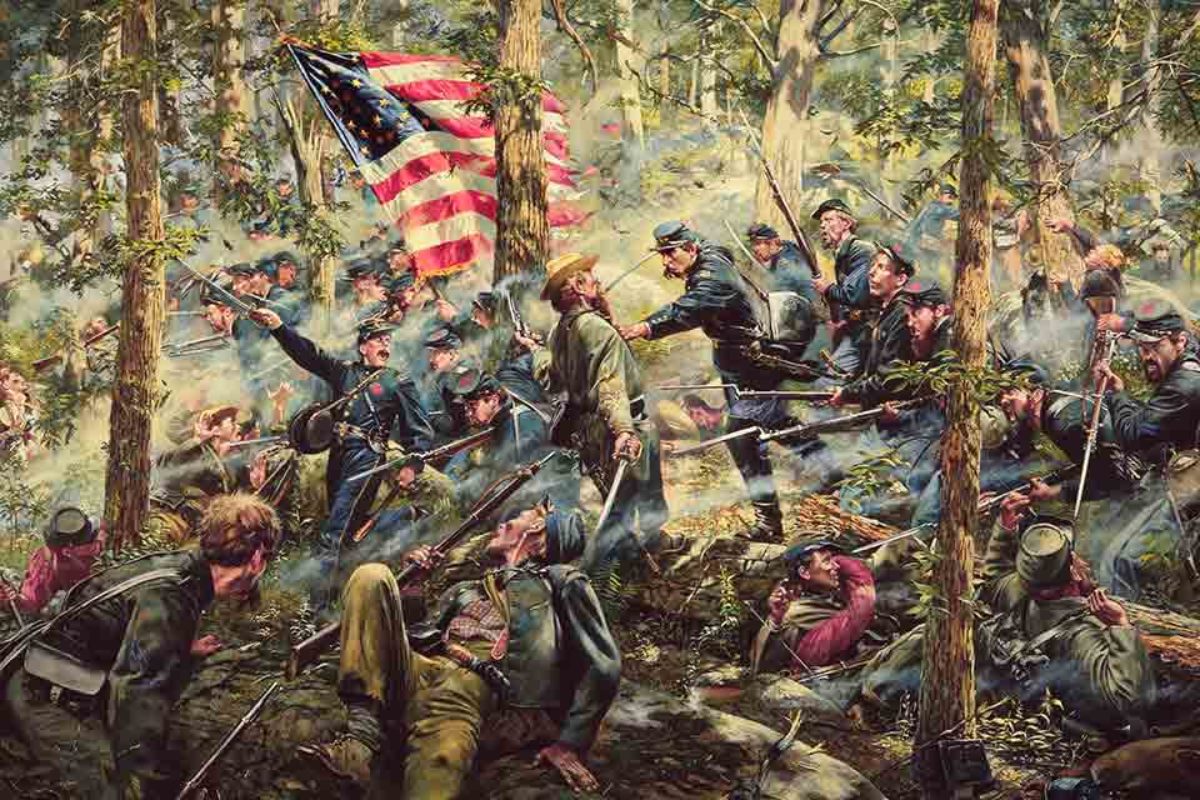
Little Round Top

On July 2, 1863, during the second day of the Battle of Gettysburg with the fate of the Union and the United States hanging in the balance, Confederate General Robert E. Lee’s Army of Northern Virginia tried to break through the line of General George G. Meade’s Army of the Potomac at Cemetery Ridge, Culp’s Hill and Little Round Top. More than once that day, only luck and chaos prevented July 2 from marking the end of the nation as we know it, and from preserving slavery at least a little longer.

All accounts of the battle on July 2 are full of the word “confusion.” Robert E. Lee ordered Lieutenant General James Longstreet to attack by moving his troops up the Federal left flank while General A.P. Hill’s corps threatened the center of the Union line. If coordinated properly, General George Gordon Meade wouldn’t be able to move his troops to reinforce the Union left, where Lee instructed Lieutenant General Richard S. Ewell to make diversionary attacks and launch an all-out assault if possible. Lee’s plan, if successful, would force the Union army to surrender the positions it held on the high ground south of Gettysburg after the first day of the battle, and the entire Civil War might have been won by the South in a day.

Continue reading

Encore: “How Did I Not Know This About D-Day?”

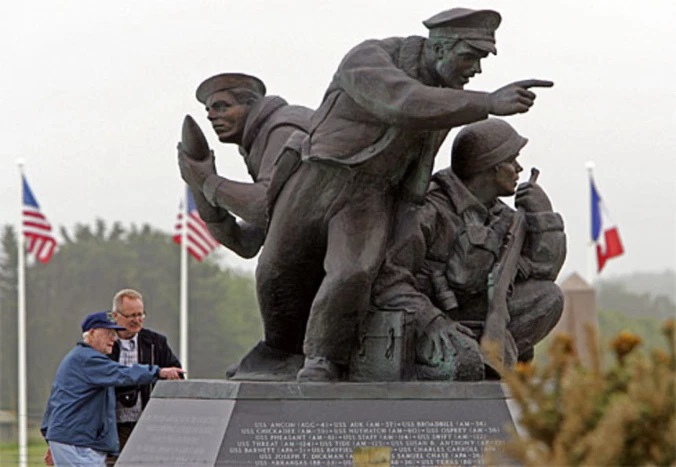
navy-memorial-normandy

On Veteran’s Day two years ago, I posted this after being stunned by learning new details about the June 6, 1944 invasion of Normandy. Since that time I have been on the lookout for attempts to publicize and inform the public about a crucial aspect of battle for Omaha Beach that have been completely ignored in most media accounts. There have not been many. So it seems like a good idea this June 6 to post the story again.

***

After all these many years of reading about and watching movies and TV shows about D-Day, June 6, 1944,  I discovered how the US Navy saved the invasion and maybe the world only yesterday, thanks to stumbling upon a 2009 documentary on the Smithsonian channel.

If you recall the way the story is told in “The Longest Day” and other accounts, US troops were pinned down by horrific fire from the German defenses on Omaha beach until Gen. Norman Cota (Robert Mitchum in the movie) rallied them to move forward, and by persistence his infantry troops ultimately broke through. Yet it was US destroyers off shore that turned the tide of the battle at Omaha, an element that isn’t shown in “The Longest Day” at all.

Though it was not part of the plan, the captains of the Navy destroyers decided to come in to within 800 yards of the beach and use their big guns at (for them) point blank range to pound the German artillery, machine gun nests and sharpshooters. The barrage essentially wiped them out, allowing Cota’s troops to get up and over without being slaughtered. I’ve never seen that explained or depicted in any film, and according to the Smithsonian’s video, apparently was part of the story that had been inexplicably neglected. No monument to the US Navy commemorating its contributions on 6/6/44 was erected at Normandy until 2009.

Here’s the relevant part of account from the  Naval History website on “Operation Neptune,” the Navy counterpart to Operation Overlord:

Continue reading

TGIF Open Forum!

Pointing at the sky

Well, I’m thankful it’s Friday, at least: what an awful week, culminating in an inexplicably sleepless night. Oh—that’s two out of the three things I’ve received reader complaints about in the last few days—yes, EA has a complaint desk: my occasional use of CAPS, bolding and italics for tone and emphasis, and the inclusion of “personal stuff.” The third is that I reply to comments too much, or so some critics think.

Now, hoping to prompt a complaint that I shouldn’t taint the purity of an open forum by mentioning a topic, I’ll point out this, since I’m going back to bed and may not be in any shape to get back here for a long time: today’s headlines about the U.S. government finally admitting that it has no idea what a lot of the UFOs are is infuriating. THAT’s something that Congress should investigate; not the potential flying saucers themselves, but how the policy of lying to the public about them, calling them swamp gas, domestic aircraft and hallucinations and generally gaslighting the American people, was allowed to continue for decades. Who approved that? Who allowed it to continue? What news organizations assisted in the cover-up? Is there any wonder that the public doesn’t trust our institutions, and that conspiracy theories abound? This was a conspiracy, one that the military and every President from Ike to Trump—that’s twelve!— allowed to continue. Give Joe some credit on this one.

Now feel free to ignore me , and write about the ethics issues you want to.

And if I decide to comment on it, I will.

Memorial Day Ethics Warm-Up, 5/31/2021…

It will be interesting to see if the news media discusses the Tulsa Race Massacre of 1921 any more this May 31 than it has in the past. Discussing this horrible mass murder of blacks in Oklahoma over Memorial Day weekend has always been seen as sufficiently tasteless that the story has suffered the equivalent of a historical airbrushing. When did you first learn about it? I didn’t encounter the episode in elementary school, high school, college or law school. I was 50, and furiously researching the life of Clarence Darrow so I could churn out a one man show (that was already in rehearsal) after Leslie Nielsen pulled the rights we had paid for on the Darrow show performed on Broadway by Henry Fonda. I was looking for the context of Darrow’s epic closing argument in the Sweet case (1925), in which he referenced examples of white mob violence against blacks. That was my introduction to the tragedy. How was this possible? I was and am a voracious consumer of American history, movies, and television. Yet the facts of the Tulsa Race Massacre never entered my consciousness.

Here’s one useful resource…there are many others available online. A brief summary: After World War I, Tulsa’s African American community was notable for its affluence. The Greenwood District was known as “Black Wall Street.” But on May 30, 1921, an incident between a white woman and a black man on an elevator—nobody knows exactly what happened—was reported in the Tulsa newspapers as an attempted rape. The young African-American, Dick Rowland, had been arrested, and members of the community believed that he might be lynched. When an angry white mob gathered in front of the courthouse, a group of over 70 back men, some of them World War I veterans with weapons, confronted them. A gun went off in a struggled, and chaos descended on Greenwood. A white mob of thousands overran the Greenwood District, shooting unarmed black citizens in the streets. It burned an area of some 35 city blocks, and more than 1,200 houses, numerous businesses, a school, a hospital and a dozen churches. It is estimated that 300 people were killed in the rampage, though official counts at the time were much lower. 300 is the same death toll as the 1871 Chicago fire. I knew about that tragedy by the time I was 8.

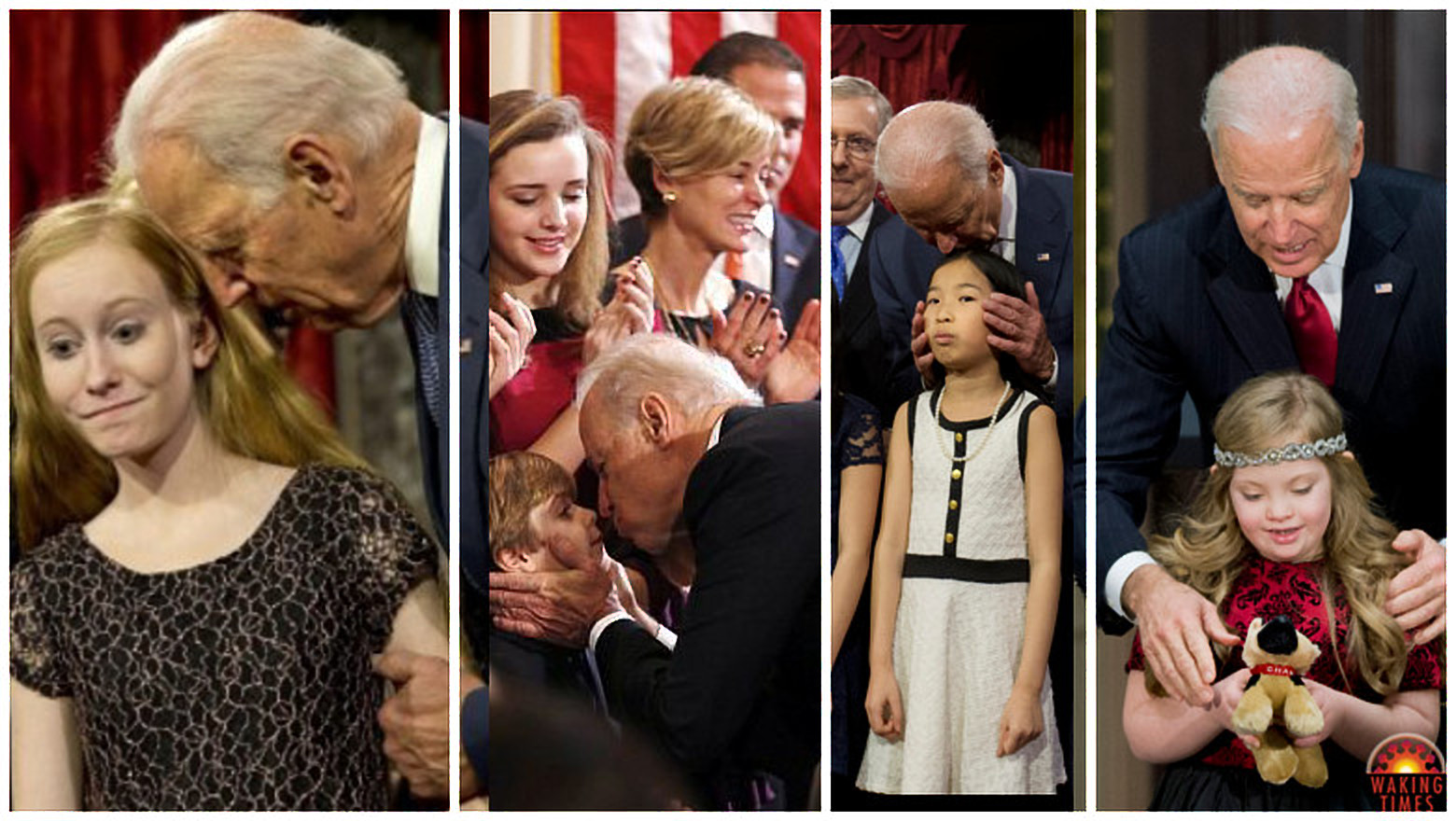
1. IIPTDXTTNMIAFB! That’s short for “Imagine if President Trump did X that the news media is accepting from Biden…”, introduced here. The current example: during a speech at Joint Base Langley-Eustis in Langley,Virginia two days ago, President Biden began spontaneously complimenting a pre-teen girl who had joined her parents and two older brothers on the stage after her mother had introduced Biden to the crowd. Biden said, inappropriately and creepily, “ I love those barrettes in your hair, man. I tell you what, look at her. She looks like she’s 19 years old sitting there like a little lady with her legs crossed.” Republicans pounced, as the MSM cliche goes whenever Democrats are legitimately criticized. The episode was barely mentioned by the media dedicated to propping up Biden—that is, almost all of it—at all. IIPTDXTTNMIAFB…and President Trump didn’t even have a photographically preserved series of encounters like this:

Creepy-Joe-Biden-President

2. AHHHH! It’s a virus ! Get a gun!!! The headline on the front page of the NYT website yesterday read, “Pandemic Fuels Surge in U.S. Gun Sales ‘Unlike Anything We’ve Ever Seen.'” Incredible. People bought guns for the first time because rioting was going on all over the country, and in many places the police were doing little or nothing to stop it. Buildings were burning and being looted; citizens were being threatened. Who gets a gun to fight a pandemic? (There was never any threat of the kind of civic breakdown from the virus like that portrayed in the movie “Contagion.” Toilet paper riots?)

The degree to which the Times—the “paper of record’!—continues to distort reality to mislead the public and warp public opinion is astounding. Later in the same article, the Times said, “While gun sales have been climbing for decades — they often spike in election years and after high-profile crimes — Americans have been on an unusual, prolonged buying spree fueled by the coronavirus pandemic, the protests last summer and the fears they both stoked.”

Continue reading

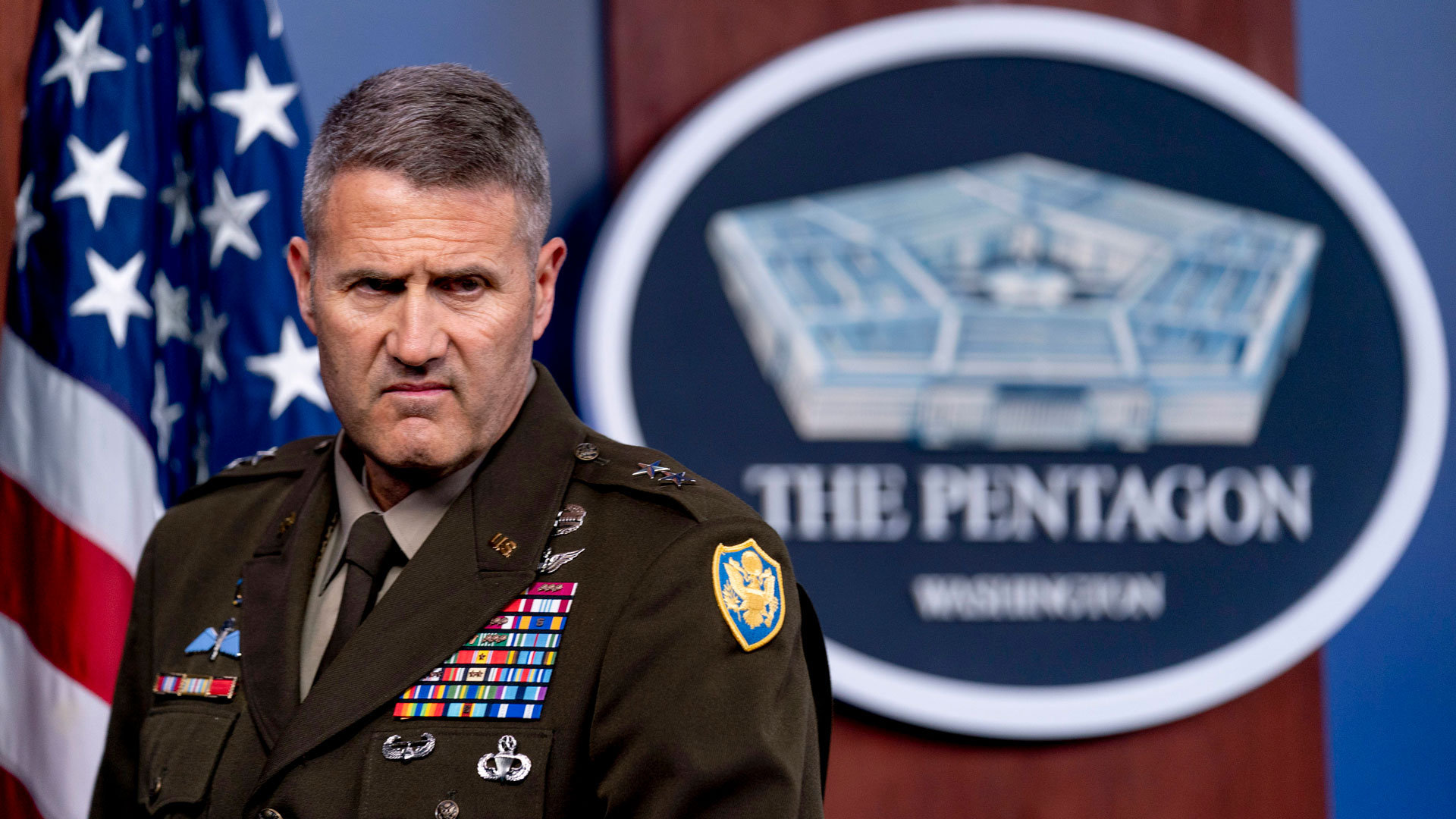
Ethics Nightcap, 5/12/2021: More Cheney Fallout, An Influencer Drops Her Mask, And The Generals Just Wrote Us A Letter…

1. Speaking of fitness: Once again flaunting his flat learning curve, Donald Trump thought it was necessary to say “Nyah nyah nyah!” to Liz Cheney after she was stripped of her GOP leadership post in the House. He wrote, “Liz Cheney is a bitter, horrible human being I watched her yesterday and realized how bad she is for the Republican Party. She has no personality or anything good having to do with politics or our country. She is a warmonger whose family stupidly pushed us into the never-ending Middle East disaster, draining our wealth and depleting our great military, the worst decision in our country’s history. I look forward to soon watching her as a paid contributor on CNN or MSDNC!”

Surprisingly, he didn’t call her homely or say she smelled bad.

I can think of no previous ex-President who would engage in such public taunting. It serves no purpose, other than pettiness, and appeals only to others with similar infantile instincts. It’s unpresidential, unstatesmanlike, and ugly. Moreover, what Cheney’s family has done is only relevant to those with dubious logic skills.

2. Another “social influencer” shows she’s unworthy of influencing anybody. Rachel Hollis is another one of those social media-created mutants, a woman of no special talent or expertise who blundered into wealth because so many Americans are searching for a guru in this age of declining religion and online hucksters. A high-school grad, Hollis became a social media star in March 2015, when an Instagram photo of her celebrating her stretch marks went viral with more than ten million views. She capitalized on that with a motivational book called “Girl, Wash Your Face,” celebrating female self-reliance. It was a best-seller, and she built on that with a YouTube channel containing motivational videos.

As in a Greek tragedy, she has been brought down by hubris. She really began to believe she was special. In truth, social influencers are just today’s televangelists.

Continue reading

Sunday Morning Ethics Warm-Up, 4/25/21: “Genocide,” Crisis” And “Honeymoon”

John-Tenniel-Humpty-Dumpty

The good news is that I’m back at the keyboard, though at a ridiculous hour. The bad news is that I’m here because I’m out of pain-killers, and my mouth is killing me. [UPDATE: I started this post at 3 am, couldn’t continue, and now it’s after noon. I’m clearly a weenie. I’m pretty sure my father endured worse pain than I am dealing with all through his life and repeatedly after his foot got blown up in the war, and he never complained once…]

Yesterday marks a great moment in ethics, and my plan was to mention it on time. On that date, April 24 in 1863, Francis Lieber, a Prussian immigrant whose three sons served in the Civil War, created what became General Orders No. 100. Reflecting his many writings on the topic, it was a code of conduct for Federal soldiers and officers when dealing with Confederate prisoners and civilians. The code was subsequently borrowed or adapted by many European nations, including influencing the Geneva Convention. Unique when it was written, Lieber’s code was the product of a committee of four generals and Lieber, who were tasked by Union General Halleck to draft rules of ethical combat. The the 157 articles established regulations and standards for the treatment of prisoners, exchanges, flags of truce, and much more. The document was written almost entirely by Lieber, and there was nothing like it.

1. President Biden does the ethical thing that President after President didn’t have the guts to do…He finally authorized referring to the Ottoman Empire’s Armenian genocide as “genocide.”

Good. Any President since 1916 (that’s Woodrow Wilson through Trump) could have made official the historical reality, but keeping our Turkish allies happy by enabling their long denial was deemed more pragmatic. Of course what the Ottoman Empire did to its Armenians was genocide. An estimated 800,000 to 1.2 million Armenian men, women, children, elderly and ill Armenians were marched to the Syrian desert in 1915 and 1916, with many thousands killed on the way. There they were placed in concentration camps. After another wave of massacres in 1916, only 200,000 of those deported survived. Many of these were forcibly converted to Islam and integrated into Muslim households. Still more massacres and ethnic cleansings of Armenian survivors were carried out by the Turkish nationalist movement after World War I. Naturally, the Armenians’ property was confiscated in the process. The genocide reduced the Armenian population of the Ottoman Empire by an estimated 90%

2. And yet, ironically, the same administration refuses to use the word “crisis” to describe the current illegal immigration mess at the Mexican border, a crisis entirely created by Biden’s implicit invitation to aliens to break our laws and eventually benefit from doing so. Thus Politico, part of the Left’s propaganda and disinformation apparatus, sent out a memo to staff telling them not to use the term “crisis,” and to “avoid referring to the present situation as a crisis, although we may quote others using that language while providing context. While the sharp increase in the arrival of unaccompanied minors is a problem for border officials, a political challenge for the Biden administration and a dire situation for many migrants who make the journey, it does not fit the dictionary definition of a crisis. If using the word ‘crisis,’ we need to ask of what and to whom.”

The situation indeed fits the dictionary definition of “crisis.” Politico also doesn’t seem to be troubled at all that it and every other news source referred to a similar but far less massive wave of children showing up at the border when Trump was President as a “crisis.”

Continue reading

Saturday Morning Ethics Warm-Up, 4/17/2021: No Good, Good, Good, No Good, and Good

Some baseball ethics notes in italics, since a lot of you don’t care:

  • The Institute for Diversity and Ethics in Sport (TIDES) issued Major League Baseball an overall grade of C+ , with a B+ for racial hiring and a C for gender hiring. (There was nothing about competency and qualifications hiring, for some reason.) The report also praised MLB’s decision to pull the All-Star Game from Atlanta, proving that the organization is a partisan political group using “diversity” as a prop. Baseball should pay no attention to TIDES whatsoever. It is the Southern Poverty Law Center of sports.
  • There was a wonderful example of why baseball needs robo-umps in Wednesday’s game between the Red Sox and the Twins in Minneapolis. At a critical moment in a tie game with the bases loaded for the Twins, Sox pitcher Matt Andriese struck out the last Twins batter for out number three, ending the threat. The umpire, however, said the ball had been fouled into the dirt before bouncing into the Boston catcher’s mitt. The video showed that the bat had missed the ball by several inches, and no foul had occurred. When Red Sox manager Alex Cora came out to protest, the home plate umpire, also the crew chief said, “There’s no way I’ll be over-ruled on that call.” What he apparently meant was that the other three umpires would back him up even though he was obviously wrong, and after briefly caucusing, that’s what they did. Cora was thrown out of the game. Luckily for the umpires, Andriese struck the batter out with next pitch, so the mistake and cover-up didn’t matter. Moral luck!
  • Also Twins related: Twins shortstop Andrelton Simmons issued an articulate tweet about why he was declining to be vaccinated like his teammates, after considering the risks. He tested positive 24 hours later. Also moral luck!

1. NOW you’re telling us???. At 6:57 pm on April 15, I stumbled across this:

Continue reading