The Ethics Scandal Is No Longer About Brian Williams. It’s About NBC, And Journalism

"Uh, do you think we should say something to Brian?"

“Uh, do you think we should say something to Brian?”

Yesterday Brian Williams announced that he was removing himself temporarily as anchor of the NBC nightly news broadcast, as NBC revealed that it was conducting an independent investigation, which certainly sounds like eyewash to me (and others.) The ethics issue, however, has expanded rapidly to the point where Williams’ fate—and at this point, I think he’s doomed—is almost incidental to the larger broadcast and news media ethics issues involved.

Maureen Dowd and others have revealed that NBC executives had been well aware that Williams was, to put it kindly in Dowd’s terms, “inflating his resume” and yet declined to stop it. In other words…

…they were aware he was lying to the public, which means that

…they were aware that he lies in public, which meant that

…their face, voice, anchor and head of their news division was a liar, indeed perhaps even a pathological liar, meaning that

…Williams was unquestionably  untrustworthy, and

…a constant risk to misinform the audience, and

…they still didn’t remove him because his ratings were good and he was making money for the company.

Continue reading

Ethics Dunce: Mediate’s Matt Wilstein

logo-nbcnews

It’s so discouraging. What chance has Ethics Alarms to help people learn the art of sound ethical analysis and problem-solving when the web is teeming with prolific ethics dunces like Matt Wilstein?

On Mediaite, which is supposed to specialize in news media commentary, analysis and criticism, staff writer Wilstein has delivered an archetype of atrocious ethics reasoning, packaged as a rationalization-fest to save Brian Williams’ imperiled job. It’s called Why NBC Shouldn’t Even Think About Firing Brian Williams, and the title is the most ethical thing about it. After all, it fairly and openly informs anyone tempted to read this trash that the writer is addled. It’s bad enough to argue that NBC News shouldn’t fire the man who is its public face after he proves that he cannot be trusted to convey facts accurately, but to argue that a network shouldn’t even consider ridding itself of such a public relations and professional disaster requires a naive, cynical and illogical view of business, the media (Wilstein’s field!) ethics and life.  Anyone reading such a headline is duly warned not only not to read what follows, but to avoid any website that would allow such an author to pollute its pages and its readers’ minds.

Here are Wilstein’s reasons NBC should not fire Williams, and I’m not making this up:

1. His ratings have been good. (A non-ethical consideration)

2. He’s funny. That’s right: Viewers won’t care if they can’t believe the head of your news division and anchorman, as long as he’s amusing.

3. “Besides his “Slow Jam the News” segments and edited rap songs on Jimmy Fallon’s show, Williams has also leant his talents to other NBC properties by hosting Saturday Night Live and appearing on 30 Rock.” Translation: Versatility is what you look for in a journalist, not integrity or competence at reporting.

4. NBC has had to replace other key personnel lately, like David Gregory. In other words, convenience trumps trust. Or perhaps Wilstein is making the dubious argument that you shouldn’t replace your car’s defective engine right after you re-lined the brakes. It’s hard to tell.

5. Lots of people want to fire Williams, but lots of people want to fire most news anchors. Wilstein really writes this. He is arguing that 70% of his own website’s readers wanting to fire Williams for serious professional misconduct is meaningless because so many people want to fire other anchors for other reasons.

6. Maintaining  a network’s integrity alone is not sufficient reason to fire your news anchor. Well, I guess in today’s journalistic environment, where integrity means nothing, he has a point.

7. Here’s the jaw-dropper: Continue reading

Case Study In “When Ethics Fail, Law Takes Over”: Harvard’s Prof-Student Romance Ban

Harvard_yard_winter_2009j

Harvard used to just say “it’s wrong,” but left it up to the faculty’s ethics in the school’s infinite faith in its own superior virtue. My Freshman Humanities professor, poet William Alfred, was married to a former student. As is usually the case in this matter, ethics alone often wasn’t enough to restrain the lust of  many aging, prestigious, powerful professors facing a veritable cornucopia of luscious, young, ambitious co-eds they could court using brains, worldly wiles, charm and the promise of good grades. Now the profs have more to bolster their self-control…from the New York Times:

Harvard University has adopted a ban on professors having sexual or romantic relationships with undergraduate students, joining a small but growing number of universities prohibiting such relationships. The move comes as the Obama administration investigates the handling of accusations of sexual assault at dozens of colleges, including Harvard.

The ban clarifies an earlier policy that labeled sexual and romantic relationships between professors and the students they teach as inappropriate, but did not explicitly prohibit professors from having relationships with students they did not teach.

Harvard said in a statement released Thursday that the change was made after a panel reviewing the institution’s policy on Title IX, the federal law prohibiting sex discrimination in education, determined that the university’s existing policy language on “relationships of unequal status did not explicitly reflect the faculty’s expectations of what constituted an appropriate relationship between undergraduate students and faculty members.” It said the committee revised the policy “to include a clear prohibition to better accord with these expectations…Besides banning sexual and romantic relationships between professors and all undergraduates, the policy also bans such relationships between teaching staff, such as graduate students, and the students who fall under their supervision or evaluation.

Good. Long overdue.

This is also an excellent use of Harvard’s status and leadership, as the oldest and most famous institution of higher learning. Other universities will now suddenly be responsible as well.

Gee, do you think Harvard took my advice?

Nahhh.

CNN’s Pippification Of Kate Bolduan

Pipp and kate

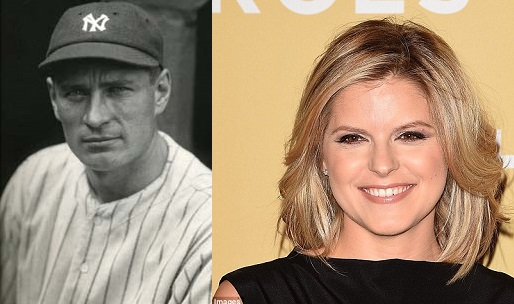
CNN’s New Day  original co-host Kate Bolduan finally went on maternity leave in September after a long-on air pregnancy, and was replaced by stand-in Alisyn Camerota, long a feature on the Fox News Channel. Camerota’s  teaming with Chris Cuomo and Michaela Pereira saw New Day finally move ahead in the ratings over MSNBC’s Morning Joe, and now Bolduan, still home being a full-time mommy, is out, and Camerata has her job.  Bolduan, when she returns, will have another, less prestigious assignment.

Is this fair?

Kate was Pippified. Continue reading

Ethics Alarms Mailbag: Is Arguing In The Alternative Unethical?

No, it isn’t, but I understand why it might  seem that way.

 “I didn’t do it, no one saw me do it, and you can’t prove anything!”

“I didn’t do it, no one saw me do it, and you can’t prove anything!”

An email from ethics issue scout Fred calls my attention to the case of  transgendered female Leyth O. Jamal, 23, who filed a sexual discrimination suit in September claiming that managers at a Saks store in Houston  referred to her as a man, made her to use the men’s restroom and pressured her to dress as a man despite being aware of her transgender identity. She also claimed a male colleague repeatedly asked her whether she was a prostitute in front of customers and colleagues, and threatened her. Saks fired Jamal after she brought a complaint to the Equal Employment Opportunity Commission.

In federal court this week, Saks withdrew its Dec. 29, 2014, court filing asserting that transgender workers are not covered by the gender discrimination ban in Title VII of the Civil Rights Act of 1964. The company  still denies that it discriminated, and has made statements about how it “believes that all persons are protected against sex discrimination under Title VII” of the Civil Rights Act of 1964, which prohibits discrimination by employers on the basis of race, color, religion, sex or national origin. It had argued, however that the plaintiff had based her case not on sex discrimination but on the issue of gender identity and transgender status, which Saks believed fell outside of Title VII’s mandate.

Now Saks is only disputing that there was any discrimination, not that such discrimination was legal. The question posed to me: does this U-turn this look bad for Saks? Is it cynical and unethical? How can you simultaneously argue that what the client alleges isn’t actionable because there’s no law against discriminating against someone for gender identity, and that you didn’t discriminate on that basis, or any basis, anyway? Continue reading

Bias Check

Confirmation bias

Detecting and overcoming one’s own biases is one of the most important features of being ethical. “Bias makes you stupid,” after all, and stupidity can make you unethical. As the author of an ethics blog, this is of special concern to me, as I am constantly making choices that bias could seriously affect. Some of those choices include what issues and events have ethics components, which are most important to publicize, how should the ethical issues be analyzed, what conclusions are fair and reasonable, even how long a particular post should be, what authorities and references should be included, and what style—scholarly? humorous? bemused? indignant? outraged?—will best illustrate a point.

As regular readers here know, I can be harsh, often too harsh, when a commenter dismisses my commentary as partisan or ideologically motivated. First of all, it isn’t, and I resent the accusation. Second, it’s a cheap shot, essentially attacking my motives, objectivity and integrity rather than presenting substantive arguments. Third, it is a simpleminded approach to the world in general, and democracy in particular, and life, presuming that “there are two kinds of people,” and one type is always wrong, while the other type is always right. There is nobody I agree with all the time, and I am far from alone in that trait. People who agree with the same people all the time are not really thinking. They are just taking the easy route of picking sides, and letting others think for them.

Obviously, my approach to controversies, problems and ethical analysis are influenced by thousands of factors, including my parents,  my upbringing,  where I have lived,  teachers, friends, and family members, experiences, books, plays, movies and popular culture, interests  and passions (like leadership, American history, and baseball), what I’m good or successful at and I’m not, and so much else. These are not biases: once such influences mold your way of looking at the world and passing through life, they are, in fact, who you are. I’m comfortable with who I am. I just don’t want biases making me me stupider than I am.

Thus I am always interested in trying to identify where I stand on a the ideological scale. Some of my conservative friends think I’m liberal; all of my liberal friends think I’m conservative. Two sides again: I am confident that it is their place on the scale that leads to those perceptions. Today I encountered another test that supposedly divides liberals and conservatives sharply.  It comes from political scientist and philosopher James Burnham’s  1964 book “The Suicide of the West.” Burnham was one of those radical leftists who did a complete reversal in middle age and became an influential conservative theorist. You are asked to agree or disagree with these 39 statements, and the result reveals your ideological bent.

Here are the questions: Continue reading

Late Deflategate Update: Patriots Owner Robert Kraft Does A Full Corleone

Tom Hagen

Ruthless mob “Godfather” Michael Corleone had lied  to the fictional Congressional committee investigating organized crime. The smoking gun witness who had cut a deal to destroy Michael’s fake stance as a persecuted patriot and honest businessman had just been intimidated into recanting, seeing his older brother sitting with his targets and knowing that if he betrays the Family, his brother’s head would end up in his bed. So lies and corruption have triumphed, and as the scene from “Godfather Part II” fades, Michael Corleone’s lawyer, Tom Hagen, is shouting over the gavel and the crowd noise, to the disgusted and defeated Committee chair,

“SENATOR! SENATOR! This committee owes an apology, this committee owes an apology — an apology Senator!”

This memorable scene was immediately what my mind was jerked back to when I read New England Patriots’ owner Robert Kraft’s defiant statement regarding his team’s latest cheating scandal, in the section where he said…

“If the Wells investigation is not able to definitively determine that our organization tampered with the air pressure in the footballs, I would expect and hope that the League would apologize to our entire team and in particular, Coach Belichick and Tom Brady for what they have had to endure this past week. I am disappointed in the way this entire matter has been handled and reported upon. We expect hard facts as opposed to circumstantial leaked evidence to drive the conclusion of this investigation.”

I see now from a brief Googling of “Tom Hagen Robert Kraft” that I was not alone, and no wonder. Kraft’s guys have stonewalled, denied, mocked, deflected, tap-danced, and allowed loyal ethics-challenged sportswriters, bloggers and fans to block for them.  Belichick and Brady almost certainly have covered their tracks sufficiently to avoid their just desserts, and Kraft is demanding an apology when it is he who should be apologizing—to the NFL, to opposing teams, to New England, to Boston, and to the fans, for allowing a corrupt and unethical culture to flourish under his ownership. Has any criminal, having avoided conviction because he or she could not be found guilty beyond a reasonable doubt, had the chutzpah to demand an apology from the prosecution? Did Casey Anthony  or O.J., as despicable as they are, dare to rub society’s nose in their triumph like that? Continue reading

STUPIDITY SATURDAY Bonus: The Deflategate Deniers, Excusers, Rationalizers and Corrupters

dumb football fan

[This post took so long to write that I am posting it on Sunday. Pretty stupid.]

Every few months an ethics story erupts that convinces me that I’m wasting my time. I started writing about ethics online in disgust over the Clinton-Lewinsky scandal, which revealed to me that no politicians, few journalists and a tiny minority of the public understood the difference between, right, wrong, and a desperate rationalization. I was aghast at the vigorously nodding heads on talk shows when some ethically-challenged dolt would say that “everyone lies about sex” (so it’s okay), or that because other leaders may have had illicit sex, that made it acceptable, or that Clinton deserved special dispensation because he was an effective and popular President, or that he and Lewinsky were consenting adults, or that personal conduct was irrelevant to the job, or that other Presidents had done worse. These were all just lazy, poorly reasoned and culturally corrupting rationalizations, but nobody except a derided few seemed to know it.

So I’ve been writing about these and other ethics issues, including rationalizations, for about 15 years, and nevertheless, when something like the Patriots cheating scandal arises, I hear the same unethical, ignorant crap, as if nothing has changed. And, of course, nothing has. All I can hope to do, in conjunction with others who don’t want to see society devolve into a Hobbesian Hell, is to try to convince enough rational people that we can, by constantly explaining, arguing, and pointing the way, just keep things as barely endurably corrupt as they are now.

I got depressed just writing that last sentence.

The issue regarding the New England Patriots giving their quarterback an edge by cheating—deflating the balls so he could throw more accurately–isn’t controversial or hard to understand. If the team broke a rule that relates to sportsmanship, the fairness of the competition and the integrity of the result, and it is hard to see how it didn’t, then the NFL should punish the team severely. [ The NFL, true to its black heart, has made it clear that its investigation will not allow a resolution of this until after the Super Bowl, meaning that it hopes the controversy will deflate. I’m sure it could resolve all questions and identify the accountable parties faster if it wanted to—it doesn’t want to.] To do otherwise essentially endorses cheating. Moreover, since the team involved has a head coach who has made it clear that he is willing to cheat (having been caught before), that coach must be held accountable for the unethical culture he has nurtured whether he was directly involved in this particular episode or not. This is truly Ethics 101, Management 101, Culture 101, Sports 101—let’s just call it “101.” Yet so many, from the elite among sportswriters to the public that devotes an obscene amount of their passion, time and money to following football just don’t get it. Continue reading

The Special Needs Student, the Compassionate Teacher and the “Awww!” Factor (UPDATED)

Debra Fisher

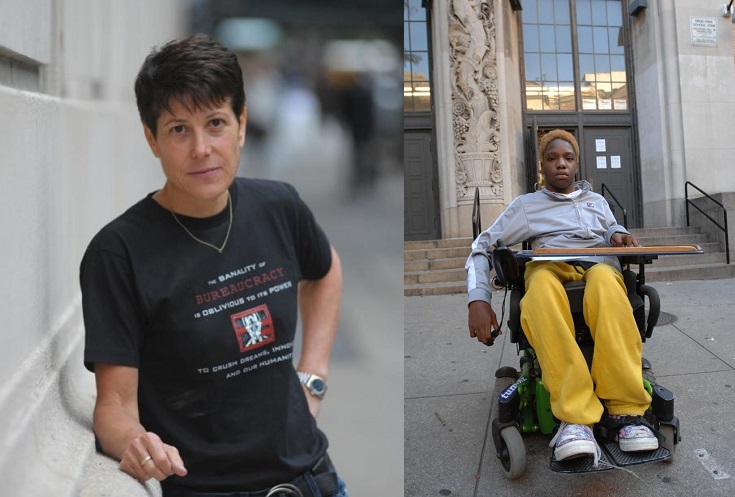
Regular readers here are familiar with the “Ick Factor,” the common phenomenon where a situation that causes an emotional response of revulsion, disgust or fear is labelled unethical when there is nothing unethical about it. Many kinds of conduct are icky, but still on the right side of ethics, if only one can put aside the gag reflex. The reverse of the Ick Factor is the less common “Awww!” Factor, where particular conduct seems loving, caring and nice, but is in fact unethical in one or more respects. Such is the case of New York City special needs teacher Debra Fisher.

In October, Fisher was suspended when e-mails were discovered on the school computer system showing that she had been spending school time raising funds for a special project on behalf of Aaron Phillip, a thirteen year old special needs student who is an aspiring animator with his own blog. The project’s goal was to raise $15,000 for a nonprofit devoted to developing Aaron’s talent, an organization called “This Ability Not Disability” founded and administered by Fisher.

Awww!

The problem was that while her efforts on behalf of the student were supported by the school, Fisher, an occupational therapist at Public School 333 with nine years of service, did not have permission to perform them during school hours. Thus she was suspended for six weeks. Now she is suing the school system for back pay, telling reporters, “I’m just trying to fight for what I believe is right.”

If she believes she is right, then she shouldn’t be working at the school at all, because she is in fact dead wrong.

But awfully nice. Continue reading

The Sixth Annual Ethics Alarms Awards: The Worst of Ethics 2014 (Part 3)

ellen-selfie

2014 Conflicts of Interest of the Year

  • Conflicted Elected Official: Philadelphia State Senator LeAnna Washington. This is always an entertaining category. Washington was convicted of using her tax-payer financed staff to organize a yearly campaign fundraiser around her birthday party. When one staffer complained that this was illegal, she reportedly replied, according to his grand jury testimony:

“I am the fucking senator, I do what the fuck I want, and ain’t nobody going to change me. I have been doing it like this for 17 years. So stop trying to change me.”

  • Conflicted Journalist: CNN sent Jay Carney, fresh off his assignment as President Obama’s official spokesman, defender and spinmeister, to cover his ex-boss’s speech.
  • Conflicted  “Non-partisan” Watchdog: CREW. The Center For Responsibility and Ethics in Washington and its chief, Melanie Sloan, finally came clean (after falsely claiming non-profit status as a non-partisan organization for years) by making David Brock, head of the openly partisan, foaming-at-the-mouth anti-Republican media watchdog Media Matters its Chairman of the Board, essentially merging the two groups.
  • Appearance of Impropriety Award: Rep. Steve Scalise (R-La), Republican Whip. It is not certain yet whether Scalise knowingly spoke to a group of white supremacists in 20o2, inadvertently spoke to the group, or just spoke to another group meeting in the same venue before the David Duke-affiliated group of racists started comparing sheets. It isn’t even clear that Scalise knows, but everyone should agree that it looks awful no matter how you categorize it, making the fiasco a classic appearance of impropriety situation. If the Republicans were smart, they would dump him.

Unethical Attire of the Year

Offensive shirt

This.

Unethical Political Candidate of the Year

Wisconsin Democratic gubernatorial candidate Mary Burke, whose campaign materials were largely plagiarized from the materials other candidates.

Ethically Clueless Voters of the Year

New York’s 11th Congressional District, which contains Staten Island and parts of Brooklyn. These alert and ethical citizens sent back to Washington thuggish and crooked Rep. Michael Grimm (R), then facing a 20-count indictment by federal authorities for fraud, federal tax evasion, and perjury, having earlier distinguished himself by threatening to kill a reporter and being recorded doing so.

  Unethical Advertising of the Year

Lawyer Division:

Public Service Announcement Division:

TV Program Division:

The Discovery Channel’s campaign for “Eaten Alive!” which did not, in fact, feature anyone being “eaten alive,” or at all.

Private Sector Product Division:

Halos. Or perhaps this is the Child Abuse Division:

Political Campaign Division:

Wendy Davis, Democratic candidate for Texas Governor, offered an ad attacking her wheelchair- bound opponent that 1) appealed to bias against the disabled 2) misrepresented the duties of a state attorney general 3) misrepresented the facts of the cases the ad referred to and  4)  deceived the public regarding the ethical duties of lawyers, which Davis, a lawyer, presumably understands. Continue reading