Helpful Civility Hint For Newspaper Editors: Don’t Tell The President of The U.S. To “Shove It”

Classic song, catch phrase, unethical headline.

Classic song, catch phrase, unethical headline.

In a classic example of the stark difference in world views between the so-called “conservative media” and the mainstream (a.k.a. Left-biased) news media, the firing of a Chattanooga newspaper editor for an editorial headline telling President Obama to  “shove it”is either being held up as proof that the President’s allies are censoring the news and trying to drive objective journalists out of their jobs, or being ignored as a local story with no larger implications.

The story has larger implications, and they are these: Continue reading

“Lookism” And The Plight of the Borgata Babes

"Uh...Desiree? We need to talk..."

“Uh…Desiree? We need to talk…”

Atlantic City’s Borgata Hotel Casino & Spa calls its waitresses the “Borgata Babes,” and makes its hiring decisions accordingly. The cocktail waitresses’ job description requires part fashion model, part beverage server, part hostess, and entirely eye candy for the male of the species.  When the casino  hires a new BB, it weighs her. If her poundage increases by more than 7 percent, the casino reserves the right to suspend her until she’s back in flirting trim.

Anyone could see this lawsuit coming a mile away, and sure enough, twenty-two newly-portly babes lost a lawsuit against the casino in which they claimed sexual discrimination. (There are no male equivalents to the Borgata Babes, just the usual ugly, flabby male waiters and bartenders.) New Jersey judge Nelson Johnson ruled last week that the Babes are paid sex objects, and that the Borgata’s requirements were legal because the women were aware of them and accepted them as a condition of their employment. Johnson wrote, “Plaintiffs cannot shed the label ‘babe’; they embraced it when they went to work for the Borgata.”

Slate, in writing about the case, sees the ruling as an endorsement of weight discrimination that could spread like the flu, putting corpulent women and men on the breadlines. ” Says Slate:

[T]he ruling also raises questions about the role of babes in workplaces across the country. It’s conventional wisdom that male gamblers will keep pulling away at the slots as long as they’re lubricated by strong drinks served up by babely women. But wouldn’t some female patrons prefer to be served be hunky pieces of man candy? And couldn’t most workplaces argue that its jobs are better performed by babes, regardless of the venue? Is it OK to require that strippers be babes? Casino waitresses? How about investment bankers?”

Now there’s a slippery slope argument if I ever saw one. While it is true that physical attractiveness can be an employment asset in virtually any job—note #2 on fired TV reporter Shea Allen’s “confessions”— there are some jobs for which it is the primary, or at least a substantial and thus legitimate requirement. Strippers, of course. Fashion models. Cheerleaders. Actresses. Personal trainers. Fox newsreaders. Hooters girls, and pretty obviously, Borgata Babes. To say that a business can’t make a decision to have fantasy sex objects as part of its appeal is an excessive use of political correctness grafted to state power. Essentially, the suing Babes are arguing that they can pull a bait and switch—use their well-toned beauty to get hired, agree to maintain the high standard of visual perfection that they presented to their employer, then go to pot and sue if their employer objects. Beauty is an asset in the workplace and a tangible one: the pressure on the culture to behave as if that asset doesn’t exist (the pejorative labeling of a preference for the lovely over the hideous as “lookism” is the weapon of choice) and to prohibit employers from ever hiring on that basis in jobs where it is a substantial and relevant qualification is as unfair to the fit and comely as requiring an investment banker to look like Kate Upton.

Since the law will require, and should require, clear standards, there will need to be a legislative determination of what kind of jobs for men or women can justify termination when their occupants become unsightly. The law should also, however, permit a job applicant’s appearance to provide a legitimate and legal edge when all other qualifications are equal even when the job itself does not have any beauty or fitness requirements. I do not deny that this is an ethical and emotional minefield, implicating age and race bias, and that there are some contentious battles to be fought. I do deny that the Borgata Hotel Casino & Spa is the place to fight one.

One place where the appearance discrimination battle does need to be fought is Iowa, where the case I wrote about earlier, in which a hen-pecked dentist sought to fire his attractive and competent assistant because he found her “irresistible” and his wife was jealous, had the same ridiculous resolution last week. Yet another Iowa court ruled that her impeccable appearance was a legal justification to can her. That’s as outrageous as firing a dental assistant because she’s put on a few pounds, but being a “babe”—or not—should be irrelevant to one’s skill in flossing teeth.

It does give some hope to the ex-casino waitresses. I hear they are hiring unsexy dental assistants in Iowa.

_____________________________________

Facts: Time

Sources: Slate, UPI

Graphic: YouTube (Yikes!)
Ethics Quiz: The Braless, Blogging Reporter

Too much information?

Too much information?

Shea Allen, an investigative reporter for WAAY-TV, a Huntsville, Alabama, ABC affiliate,  was fired from her job despite what had been considered sterling work because of a post she made on her personal blog.

Titled “Confessions of a Red Headed Reporter,” it was a light-hearted list of, she thought, minor quirks and trivial transgressions.

The fateful list:

1. I’ve gone bra-less during a live broadcast and no one was the wiser.
2. My best sources are the ones who secretly have a crush on me.
3. I am better live when I have no script and no idea what I’m talking about.
4. I’ve mastered the ability to contort my body into a position that makes me appear much skinner in front of the camera than I actually am.
5. I hate the right side of my face.
6. I’m frightened of old people and I refuse to do stories involving them or the places they reside.
7. Happy, fluffy, rainbow stories about good things make me depressed.
8. I’ve taken naps in the news car.
9. If you ramble and I deem you unnecessary for my story, I’ll stop recording but let you think otherwise.
10. I’ve stolen mail and then put it back. (maybe)

Your Ethics Alarms Ethics Quiz:

Was it fair for the station to fire her? Continue reading

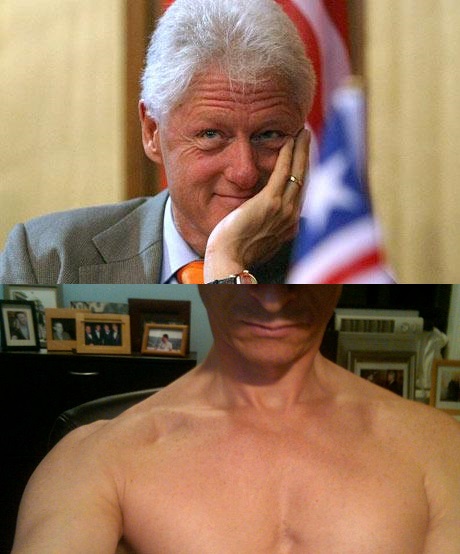
Let’s Be Clear: President Clinton’s Conduct Was WORSE Than Anthony Weiner’s

This won’t make some people happy, but it is true.

Who's more unethical? It's no contest.

Who’s more unethical? It’s no contest.

I always feel like Michael Corleone at times like these: just when I think I am finally through with having to point out the miserable ethics record of Bill Clinton, he (or his shameless supporters) puuuull me back …

The New York Post is reporting that…

“Bill and Hillary Clinton are angry with efforts by mayoral hopeful Anthony Weiner and his campaign to compare his Internet sexcapades — and his wife Huma Abedin’s incredible forgiveness — to the Clintons’ notorious White House saga…’The Clintons are upset with the comparisons that the Weiners seem to be encouraging — that Huma is ‘standing by her man’ the way Hillary did with Bill, which is not what she in fact did,’ said a top state Democrat…’The Clintons are pissed off that Weiner’s campaign is saying that Huma is just like Hillary,’’ said the source. “How dare they compare Huma with Hillary? Hillary was the first lady. Hillary was a senator. She was secretary of state.'”

My reaction to this?

Good!

Karma’s a bitch. Continue reading

More Evidence That Nobody Gives A Damn

If you can’t rely on quality control and professionalism at a major league baseball park, then the end is nigh.

At San Francisco’s AT&T Park Wednesday night, the batter’s box was apparently drawn by a drunk groundskeeper, and looked like this….

Bad field


…when it’s supposed to look like this, which is to say, with straight lines:

Batters box


Nobody noticed…not the players, not the umpires, not the managers. Oh, the broadcasters mentioned it, but even though the chalk did not meet the regulation requirements, no effort was made to put it right. On The Blaze, which picked up the story from Yahoo Sports, the baseball-dense commenters’ general response was “Who cares?”  Yeah, keep that attitude up, bozos, it’s probably how you do your job too.

Fans pay from $45 to $100 bucks a ticket for games at big league baseball stadiums, and the clubs rake in many millions of dollars. A batter’s box like that is the equivalent of a new Lexus with a rattle, a 5-star restaurant that never can serve a souffle before it falls, a public school teacher who says “ain’t,” nurses who don’t wash their hands and a Congress that can’t pass a budget. It’s unprofessional. It’s an insult to the consumers. It demonstrates incompetence, laziness, poor training and bad management. And if we tolerate it, the attitude will spread and get worse.

Yes, it’s “only” the chalk lines of a batter’s box. But that’s not the way they are supposed to be, and “professional” is supposed to mean that the way things are supposed to be is the way they will be.

Does anyone in this country know that any more?

________________________________

Sources: The Blaze, Yahoo!


Food Network Thought Crimes

[Now that is a headline I never conceived of having to use.]

"Love your cooking, Paula, but that joke you laughed at in 1996 means that you're racist scum. Rot in Hell."

“Love your cooking, Paula, but that joke you laughed at in 1996 means that you’re racist scum. Rot in Hell.”

Paula Deen, Southern cuisine star of the Food Network, has been fired because of the public uproar after she admitted in a law suit deposition that she had, on occasion and in the past, used the term “nigger” and tolerated racist jokes. This outburst of honesty (she was under oath at the time) apparently justifies social network hatred being directed her way in waves, and Jake Tapper, on CNN (WHY do I keep watching CNN?) conducting an inquisition this afternoon in which he asked third parties whether formerly using “the N-word” means Deen is a racist.

I don’t give two hoots about Paula Deen or her career. I watch the Food Network about as often as I watch MSNBC or YES.  She has always seemed more than a little bit silly and dim to me, and the reasons for her popularity elude me. But if there are many Americans who grew up in the South when Deen did who never used “nigger” and who never laughed at a racist joke, I’ll be shocked. That isn’t a “everybody does it” excuse. That is a “stop condemning people who reflected their narrow culture until they gained some perspective and wisdom” explanation. My father grew up in Kentucky in the 20’s and 30’s. Do I think he would have answered a deposition the same way Deen did? I sure do, and if one percent of those attacking Deen now possess sufficient integrity, honesty and essential fairness to be worthy of licking my Dad’s combat boots, I’ll be even more shocked. Dad is hardly the only admirable individual who spoke this way in his younger years. During his successful campaign for the U.S. Senate in Virginia, former Democratic Senator and war hero (and my classmate) Jim Webb bravely admitted that he had also used “nigger” when he was younger, and that crucifying his Republican opponent, George Allen, for similar, long-past indiscretions was unfair. He was right about Allen, and his  defense applies to Deen as well. Continue reading

The Deadliest Rationalization Of All?

woodys excuse

All rationalizations can be deadly and have been. History and human nature teach us, however, that “Woody’s Excuse,” #22 on the Ethics Alarms Rationalization list, can hold its own with any of them when it comes to tallying up pain, ruined lives, and death. This is “The heart wants what the heart wants,” the comedian, actor and acclaimed director’s personal pass for his seducing and marrying a girl who was, in essence, his adopted daughter.

Today the Washington Post carries the grim final act of a story so terrible that it crosses into the realm of black humor. A veteran Labor Department lawyer, married, with an impeccable record, was found dead in his cell after being arrested and charged with violently attacking a co-worker with whom he had become infatuated. The story is full of weird U-turns of phrase; for example, the judge called the lawyer, charged last week with first-degree burglary while armed and third-degree sexual assault relating to the June 5 attack, a “wonderful person in most respects”—-that is, “most respects” beside the implications of his breaking into a woman’s home, punching her in the face (or spraying her with mace,) then trying to incapacitate  her with a stun gun, handcuffing her hands behind her back and knocking her to the floor. The victim was so badly injured that a plate had to be surgically implanted in her face.

Other than that, Judge, you’re right: he was a hell of a guy. Continue reading

Self-Webshaming At Dunkin’ Donuts

(Watch this after you’ve read the post. Kind of like dessert..)

The ethical considerations one should review when pondering whether to engage in webshaming nicely evaporate when the subject has chosen, though unwittingly, to webshame herself. Thus Ethics Alarms has no qualms about presenting for your consideration, revulsion, and rejection if she ever applies for a job from you, one Taylor Chapman, a 27-year-old woman who lives in the vicinity of Fort Lauderdale. She eagerly and proudly posted to her Facebook page the phone-video above, of her abusing an impeccable Dunkin’ Donuts employee, annoying a customer, and making serial statements with signature significance—no decent human being would utter even one of these appalling comments in public unless suffering from a brain trauma or extreme intoxication.

Chapman was angry because she and her friends had not received a receipt along with their large drive-thru order, and angrily (and abusively, based on Chapman’s manner, but we can only guess) demanded to receive their order free of charge, as Dunkin’ Donuts now promises as part of a service pledge. The employee handling the order apparently did not know how to proceed, and told the group that they would have to come by the store and see her manager the next day.

[An aside: That’s not good customer service, DD. If you make a guarantee that is supposed to mean anything, you have an obligation to train employees how to deliver on it. Telling customers who have not received the promised service that they have to come back to the establishment another day to receive what they are owed is unreasonable and a bait-and switch. I would have said to forget it. I would have written a letter. I would not have done what Chapman did, and I don’t know anyone who would.]

What Chapman did was to return the next day and demand her free order, tossing obscenities at the extraordinarily polite and unflappable employee (his name is Abid Adar, and you should send him flowers) on duty while she recorded the encounter as if it were a health department sting. Continue reading

“Hello, Hello, Hello…Hello!” An Ethics Dunce Trio: Newspaper, Sportswriter, President

the-three-stooges

I have a lot of catching up to do with ethics issue backed up as far as the eye can see, so I will try to deal efficiently with the three Ethics Dunces that confronted me this morning:

Ethics Dunce #1 : The Washington Post Continue reading

Ethics and “Casey At The Bat”

casey-at-the-bat-1888-granger

Today is the 125th anniversary of the publication of “Casey at the Bat,” arguably the most popular and famous of American poems, the creation of humorist Ernest L. Thayer in 1888.

The poem carries many  lessons relevant to ethics and life within its tale of the hometown hero who fails spectacularly just when heroics are most needed and anticipated, such as…

  • Don’t promise what you cannot be sure of delivering.
  • Good faith failure isn’t unethical, a sin or a crime, but it still carries with it the need for someone to accept responsibility for it.
  • The focus of disaster is always on the last individual who might have prevented it, but that is neither fair nor logical. The Mudville Nine lost the game, not Casey.
  • Expecting miracles, last-minute rescues, heroic intervention and infallible rescuers is foolish and irresponsible.
  • Respect your adversaries, for your own sake as well as theirs.
  • “Pride goeth before a fall.”

Today, however, I am struck by how neatly the poem reminds us that in baseball there is no spin, no rock to hide under and no Fifth Amendment to claim. When a player fails, or makes a mistake, or misbehaves, it is usually all out on the field, watched in person by thousands, seen on TV by millions, and recorded forever. There is usually no way to deny or hide responsibility, and indeed part of the professionalism of baseball is accepting that, facing the media and the public, and saying, “That was on me. I failed. I’ll do better next time.”

Most of the time, that’s all the crowd asks after failure. Honesty and accountability.

As long as Casey doesn’t keep striking out, that is.

Here’s the poem, recited by the now-forgotten Bob Hope sidekick Jerry Colonna, he of the rolling eyes:

________________________________________

Spark: Craig Calcaterra

Graphic: Fine Art America