Comment Of The Day: Unethical Website Of The Month, “March For Our Lives” Edition: Change.Org [#1]
Here is JP’s Comment of the Day on the post, Unethical Website Of The Month, “March For Our Lives” Edition: Change.Org:
I have largely been silent on the issue this time around. I have seen nothing that contributes to the debate and thought I had nothing to add since the Vegas incident. Mostly, if someone asks, I just refer them to my earlier points on why banning bump stocks and strengthening the Brady Law not will not change anything. However, it seems today my more liberal and conservative friends have been posting quite a bit on the subject and I thought now might be a good time to tackle the issue again by looking at problems on both sides and finding a solution.
First, let’s start with some of the conservative talking points.
- “If someone is determined to hurt people and commit a felony, what’s to say that they won’t break a law to get their hands on a gun to do it?”
This may be true, but it is doesn’t move the dialogue forward and is often used deceptively. It is basically saying that since criminals don’t obey laws, anyway, why have a law? By this logic, we could apply the following to Trump’s desire to build a wall. Walls have not proven to be effective in stopping people wanting to come in, so why build a wall? I don’t understand why conservatives who use this logic don’t apply it elsewhere. Laws are largely there as deterrents. People will not do something because it is against the law regardless of how pointless they see it (I guess this is why I always get stuck behind that Kia doing 65 on the interstate). A psychologist found that most of the population is motivated to do things by one of two factors: sympathy and empathy. or law and order (I think this sums up the current gun debate).
Second,
- “Cars kill more people than guns do, yet we don’t ban cars.”
This is a strawman argument, and not even good one. Cars are highly regulated, require an age limit, require a permit of sorts, a registration, require training and safety ((things the left claim to want for guns) and are designed for transportation, not to kill. They can and have been used to kill people, but that is not their primary purpose. In fact, it is a gross misuse of their purpose. The argument falls further apart because while you have a right to a gun, you do not have a right to own a car. The government could decide to remove all cars (for whatever reason); this is an apples to oranges comparison.
Third, Continue reading
Preface: On The Comments Of The Day Regarding “Unethical Website Of The Month, “March For Our Lives” Edition: Change.Org”
The recent post on the incredibly annoying Change.Org petition backing the “March For Our Lives’ sparked two epic Comments of the Day. I am gratified. That idiotic petition was signed by one of my favorite people alive, and this both inspired the post and made me depressed even before my left-wing Facebook friends started making one terrible argument after another in defense of the thing. (Not a word from the signee. I have a feeling she was so moved by her two teenagers, even though she knows better. I hope that is the excuse. Creeping dementia would be the only other explanation.)
This is a strange issue: the ethics really orbit around tangential matters rather than the alleged controversy itself. The Second Amendment isn’t going anywhere, no matter how loud the screams are or how many demonstrations there are. As is often noted on Ethics Alarms, I am not interested in abstract ethics without real life consequences; indeed, ethical formulas that only work in theory aren’t ethical. To me, the ethics issues following the Parkland shooting are,
- The cynical exploitation of the children by the Left
- The equally cynical, and unwise, hesitation to hold them accountable for their worse excesses in rhetoric
- The recycling of bad statistics and demonstrably (and demonstrated) bad arguments that have been used before to mislead and frighten the public, and
- The unethical cheerleading for the anti-gun position by the news media and pundits.
- The unusually vivid disconnect between the actual facts of the Parkland shooting and the measures being “demanded” in its wake.
The fake controversy—Should the United States allow law-abiding citizens to arm themselves with reasonably state-of-the-art firearms for whatever lawful purposes they decide are necessary and to the extent those citizens feel necessary?—isn’t on the table. This is the United States of America, and that question was answered long, long ago. As long as it is the United States of America, the answer will be the same. Those sufficiently unwilling to accept that fact really are well-advised to consider Australia. I don’t say this as a “Love it or Leave it” rebuke. I’m sorry such people don’t like the basic values and culture of the country, but I would have a similar suggestion for a friend who is determined to keep protesting that the U.S. should make its national language Danish, except, of course, then I would recommend repatriation to Denmark.
The two comments will follow now in successive posts without further musings by me…
The Brutal Ethics Truth About “7 Brutal Truths That Will Make Your Life Better If You Accept Them”
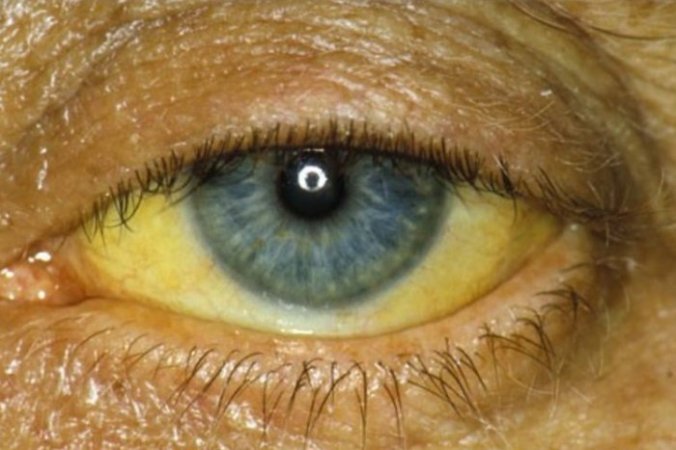
All looks yellow to the jaundiced eye.
Conservative writer John Hawkins published a post called “7 Brutal Truths That Will Make Your Life Better If You Accept Them.”
If I were as cynical as he is, I might say that a better title would be “How to Rationalize Being a Jerk,” but I’m not.
However, his post does demand some ethical perspective. Most, though not all, of his truths are really constructs to justify unethical conduct. Let’s examine them:
1. The average person cares more about what he eats for lunch than whether you live or die.
Maybe, and so what? That doesn’t mean that you should emulate them. To begin with, there is no “average person.” There are individual people, good, bad and in-between. Hawkins writes,
“You tell the average person that doesn’t know you very well that you have a fatal disease and he’ll say, “I’m so sorry to hear that.” Then he’ll forget about it in five minutes while he debates with his friends whether they’re going to Chili’s or the Mexican restaurant down the street. What that means is that everything you want out of life, you better prepare to earn without getting a lot of favors on the way. If you fall, you have to be the one to pick yourself up off the ground, brush yourself off and get your life back on track. You care. They don’t. So it’s up to you.”
But the a stranger doesn’t always react that way. Sometimes he gives you his kidney. Hawkins is supplying an excuse to be callous based on a Golden Rule Distortion: “Do Unto Others As They Would Do Unto You.” Don’t listen to him. Care about other people, and don’t hesitate to ask for help. People are better than you think: they will surprise you. In the meantime, it is your job to be as good as you would like them to be.
2. Life is not and will never be fair
I’ve written about this recently: fairness is a vague and broad concept in ethics. Life isn’t “fair” because life is often random, and nobody is tending the fairness meter. Systems either are fair or are not depending on your point of view. The mainstream conservative view about fairness is that one should play the cards one is dealt and stop complaining about it. It’s facile, though not without some truth: it is better to spend time trying to overcome obstacles than to bitch about them. On the other hand, each of us has an obligation to make the world better for those who follow us. Genuine unfairness, in systems, institutions, the culture and society, should be exposed, attacked, and fixed if possible. Hawkins’ approach would have left the U.S. with slavery, second class citizenship for women, Jim Crow, straight-only marriages, age discrimination, brutal monopolies and unchecked consumer fraud. His #2 is a license to be callous.
3. Most people are shallow
What an elitist and ignorant thing to say. If one has spent any time talking to and getting to know a wide range of people, it becomes clear that the opposite is the case. Again, assuming that most people are shallow provides Hawkins with an excuse to ignore them, or treat them with contempt. Most people will tend to behave as if they are shallow because they are rushed, stressed, distracted and focused on short-term exigencies. Give them time to think, a reason to consider a topic carefully, and the respect they deserve, and frequently unexpected depths will reveal themselves. “Most people are shallow” is a crippling bias for anyone to adopt. Expect the best of people: you will often be disappointed, perhaps, but you will also allow validations of your faith in humanity to bloom.
Writes Hawkins:
“So, use the shallowness of other people to your advantage. Learn to dress like a successful person. Pay attention to how you look. Find ways to give off the appearance that you are doing well. Don’t be a phony—be you, but also take advantage of the fact that a superficial appearance will be the reality to most people.”
Let’s see: pretend to be a successful person, but don’t be a phony; be you, but try to fool people by not revealing who you are. What?
People don’t assume that people who dress well, speak well, have manners and behave in a civilized fashion are successful because they are shallow. They assume that because they have learned from experience that certain traits both aid success and result from it. Hawkins is the one revealing shallowness. Continue reading
Morning Ethics Warm-Up, 3/25/18: “March For Our Lives” Hangover Edition

Good Morning!
1 Exploitation carnage. I feel so sorry for David Hogg. No teenaged male so obviously locked into the arrogation asshole stage of the maturation process, should be exposed to public scrutiny like this. His intemperate and foolish rhetoric will haunt him for the rest of his life. He will either be humiliated when his brain cells kick in, or he will develop into a full-fledged monster. What if he wants to go in a different direction in his life and career? I wouldn’t hire him. Who would? He’s restricted to left-wing activists until he changes his name or does a high-profile mea culpa and goes on a reinvention tour. Celebrity, as Paul Petersen has spent his life trying to teach us, is disastrous for kids; never mind: the cynical, ruthless partisan operatives who made Hogg into their weapon and shield don’t care about him, just the momentary political advantages he represents. When he is chewed up and spit out, as he certainly will be, they will have forgotten his name.
2. A half-Fick sighting! A (she says) transgender woman who calls herself “Lauren” on Twitter claimed to be drugging attendees of a conservative conference in Phoenix, Arizona yesterday, tweeting
“I love my job at the phoenix convention center starbucks and i love slipping my spare estradiol pills in the coffee of anyone wearing a #WesternConservativeConference lanyard.”
Estradiol is an estrogen steroid, prescribed for biological males transitioning to womanhood. Of course, this could be a lie. It could be a false flag tweet from a conservative who wants to make transgender activists look vicious and unprincipled. “Lauren” maybe Ben Stein. “Lauren” may be a dog. Even if the tweet is true, Lauren is only a half-Fick (an Ethics Alarms designation for someone who is open and proud regarding their unethical conduct) because she doesn’t have the guts to identify herself….although she probably revealed enough to be apprehended and charged. How many transitioning males could be working at the Phoenix Convention Center Starbucks?3. The double standards exposed. From Professor Turley:
Former FBI deputy director Andrew McCabe penned an op-ed for The Washington Post to contest the allegation of his “lack of candor” with federal investigators. I have been writing (here and here and here) on the contrast between the treatment of McCabe and former national security adviser Michael Flynn. McCabe has been erroneously portrayed as “losing his pension” but has not been charged. Flynn was charged and accepted a plea deal under 18 U.S.C. 1001 for making a false statement to investigators. Now McCabe is raising virtually the same defense that did not work for Flynn: that there was a lot going on and he was “confused and distracted.”
In a fair world, I want to see people like Michael Flynn charged with lying to law enforcement officials. I want to see Martha Stewart and Scooter Libby charged too. I think lying to investigators should be a crime; it drives me crazy that on just about every procedural on TV, we constantly see officers come back to those they have interviewed and the subjects always say, “OK, I wasn’t being truthful. I was there.’ The nice cops or FBI agents never charge them. They should. Continue reading
Big Data Ethics: The Facebook-Cambridge Analytica Affair

This is supposedly the big ethics story of the past ten days. There are ethics elements involved, but the main ethics stories are how the facts are being spun to try to make this yet another example of sinister doings by the Trump campaign, and how incredibly incompetent and naive social media users are.
In 2016, the Trump presidential campaign paid about $6 million to a firm called Cambridge Analytica to put together a voter database with profiles to allow targeted messaging. Global Science Research was hired by the firm, and reportedly paid Facebook to post a personality quiz and an app that 270,000 Facebook users ultimately consented to. The app allowed the firm to harvest personal likes, attitudes and preferences from 50 million Americans through access to the consenting users Facebook friends. Originally we were told that Cambridge Analytica had used all of that data to target voters during the 2016 presidential election, but that claim seems increasingly dubious. The Trump campaign ended its relationship with the firm well before the election.
Facebook claims it was lied to, and has now banned the firm, which could be fairly classified as misdirection. Facebook, as it has done before on its own, permitted its platform to be used to gather psychological profiles on its users without full disclosure regarding what the data would be used for. Now Facebook stock is plunging in the U.S., Facebook advertisers are leaving, some users are leaving too, and Congress wants hearings.
What’s going on here?
- If, in fact, Facebook was deceived into allowing the quiz, that was unethical. Gathering data through such means is not illegal, however, and the ethics of Big Data gathering and analytics are murky at best. The legal profession, for example, has no clear regulation of it or guidance from bar associations.
Facebook did not inform users whose data had been harvested, and that could violate laws in Britain and some states.
- The tenor of much of the news reporting and punditry, however, has been pure fear-mongering and hyperbole. That Cambridge Analytica was evil is presumed, I gather, from the fact that Steve Bannon was one of the founders. The New York Times in various articles described the data gathering as an invasion of “private information,” which is an inflammatory and misleading description, and described “misuse” of the information, as if such use isn’t routine in 21st Century commercial marketing. Here’s the Times, for example,
“The researcher hired by Cambridge Analytica, Alexandr Kogan, told Facebook and his app’s users that he was collecting information for academic purposes, not for a political data firm owned by a wealthy conservative. Facebook did nothing to verify how the information was being used.”
Ah…if it’s for a firm owned by a wealthy conservative, that makes the data gathering sinister, I guess.
- It is unethical not to let people know why their preferences are being requested, and how they might be used, except that a strong argument could be raised that anyone who didn’t know they were creating a Big Data-base for Facebook is too naive to be allowed on the web without a leash. Facebook isn’t free: providing data is one of the ways users pay for it. There has certainly been plenty of publicity about this, and it’s not just Facebook. Google, Amazon, Twitter: this is what these companies do.
If it were possible to feel sorry for Mark Zuckerberg (it isn’t) one could conclude that the massive backlash he is receiving is contrived and unfair.
- The episode is also being called a “breach,” as if there was hacking, or information was stolen.
There was no “breach.” Continue reading
Morning Ethics Warm-Up, 3/24/18: Ethics Musings While Not Marching [UPDATED]
A Good Saturday Morning To All!
[If you had a speech impediment and lisped your “s’s”, would you choose this song as your only solo among the repertoire of your singing group? Why didn’t Karen tell her bother? This has mystified me for decades…]
1 It’s irrational and pointless fury day in D.C. Today hundreds of thousands of intellectually dishonest, ignorant or purely emotional citizens will be doing the equivalent of screaming at the sky to call for “something” to be done about gun violence., because “think of the children.” Yes, I think that’s a fair characterization.
Given the chance to suggest actual measures that would stop the equivalent of the Parkland shooting, one of my usually rational but currently virtue-signalling-to beat-the-band friends really made this pathetic argument in response to a Facebook post that was a shorter, gentler version of what I just posted on Ethics Alarms: ‘Where is your empathy? Would you feel this way if your son had been killed in the Parkland shooting?”
Can you believe that? “How would you feel if you were so emotionally ruined, angry and despairing that you couldn’t think straight?” Why, I believe that I would be so emotionally ruined, angry and despairing that I couldn’t think straight—and thus useless to any serious and objective public policy discussion. As I told my friend, when “Why can’t you be irrationally and emotionally biased like the rest of us?” is your reflex rebuttal, you’ve got nothin.
2. Related: YouTube is banning gun instructional videos. This a part of a growing trend in the online platform world to attempt to constrict information and discourse according to ideology and partisan preferences. There is no more justification for banning how-to videos about guns than there is for banning how-to videos for chain-saws. The social media companies are going to have to be regulated as common carriers, or the right of free speech and access to information will be slowly strangled by these left-wing, high-tech, useful idiots.
3. From the ” Tragic Misunderstandings of the Cognitive Dissonance Scale” files. Lindsay Lohan is the new spokesperson for Lawyer.com. What, O.J. wasn’t available? Continue reading
Unethical Website Of The Month, “March For Our Lives” Edition: Change.Org
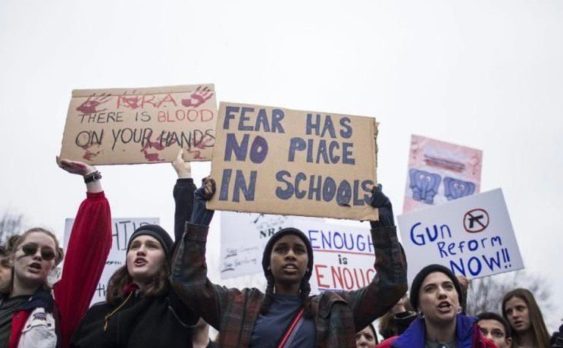
This page, the petition for gun control to “save our children” is what earns the “honor.” I see many Facebook friends, many on whom are genuinely gifted intellectually, surrendering to emotion and signing this junk, as junk it is. The petition neatly encapsulates the serial intellectual dishonestly, misleading rhetoric and appeal to emotion that we will see bloviated all over the National Mall this weekend: I guess that has some value for historical purposes. Otherwise, it is an engine of ignorance designed to either attract the ignorant, make the less ignorant more so, or deceive.
Let’s look at this mess, shall we?
In the tragic wake of the seventeen lives brutally cut short in Florida, politicians are telling us that now is not the time to talk about guns. March For Our Lives believes the time is now. Created by, inspired by, and led by students across the country, we will no longer risk our lives waiting for someone else to take action to stop the epidemic of mass school shootings that has become all too familiar.
Nobody is saying that “now is not the time to talk about guns.” Who has said that? The statement is straw man. Agreed: now is a good time to talk about anything: guns, pangolins, acne, cabbages and kings. We have a First Amendment as well as a Second, something those Other Civilized Nations that are always being extolled in the gun debate don’t have.
Created by, inspired by, and led by students across the country, we …
Not to be pedantic, but a serious petition should be written by someone who can speak the language. Signers are created by students? It’s bad enough that they are being led by students, who are after all, students. They do not know enough, either through knowledge or experience, to be seriously participating in a complex policy debate, much less leading it. “We, the undersigned adults who are duty-bound to be teaching and leading our rising generation, are allowing them to dictate to us.” Good plan. How can anyone sign such a petition and not hide their head under a bag?
…will no longer risk our lives waiting for someone else to take action to stop the epidemic of mass school shootings that has become all too familiar.
This is pure appeal to emotion rather than reality. The existence of the right to own guns no more “risks lives” than the existence of anything else that is dangerous when misused. There are 10.6 deaths per 100,000 U.S. citizens due to guns according to latest statistics, including those of suicides and those killed by law enforcement. Three times that many die in alcohol-related automobile accidents. Nobody argues that we risk our lives because “someone” hasn’t taken “action” (aka, “do something,” “make it go away” “make us feel safe when nobody in a free society is ever safe”, aka. “ban and confiscate guns.”) regarding that risk we accept as part of living in a free society that includes jackasses, fools and criminals, and that’s just one of many.
There is no “epidemic” of school shootings. Students in school are safe; if they don’t feel safe, it’s because of fear -mongering from activists and the news media.
“We support the right of law-abiding Americans to keep and bear arms, as set forth in the United States Constitution.”
No, you obviously don’t. This is a pure lie (or inexcusable stupidity.) A movement called “Never Again” is either lying in its title by implying that any public policy, laws or regulations will guarantee no more gun deaths, in schools or anywhere else, or it is telling us its real purpose in the name, while lying about the movement’s real intent.
Many, many, if not most mass shooters were “law-abiding” until they started shooting. This statement either endorses pre-crime measures, profiling citizens to decide if they are a risk to eventually abuse gun rights—unconstitutional—is magical thinking, or is, again, a lie. The statement—and while it is always a fine time to talk about guns, it is never a fine time to resuscitate this zombie tautology that the NRA has been knocking down for decades—is self-rebutting. Laws only affect law-abiding people, as long as they obey laws. Restrictive gun laws are violated by criminals, because they don’t obey laws. Nobody has ever explained how a law will not infringe “ the right of law-abiding Americans to keep and bear arms” while somehow keeping the same kinds of arms out of the hands of those who are not law-abiding. This is because it’s impossible.
“But with that right comes responsibility.”
As an ethicist, I object to a cynical use of the language of ethics to deceive, which is what this is. If the topic is responsibility, then we are talking about law-abiding citizens again, as well as ethical ones. They usually don’t use guns irresponsibly, or if they do (like killing themselves), such irresponsible use is not addressed by the measures proposed here. If I am a law-abiding citizen, I won’t be more likely to abuse my gun ownership whether I have had a background check or not. Irresponsible gun ownership includes not keeping guns where children—you know, citizens the age of the people “leading” those who sign the petition—can find them and hurt themselves and others. It includes not learning how to use a gun safely and appropriately. This petition isn’t about promoting responsible gun ownership. It’s about replacing the right to own guns responsibly with the right to own sling-shots.
We call on all the adults in Congress elected to represent us, to pass legislation that will protect and save children from gun violence.
There it is: “Think of the children!” A pure, unadulterated, inexcusable appeal to emotion over facts and reason. Continue reading
Baseball’s Intrusive Domestic Abuse Policy

Last year I wrote about Major League Baseball’s domestic abuse policy, which is, pardon the pun, bats. Here is another example.
Red Sox knckcle-baller Steven Wright has been suspended for 15 games under the MLB-MLBPA Joint Domestic Violence, Sexual Assault and Child Abuse Policy. Fifteen games is a lot: that’s three starts for a starting pitcher like Wright, and almost 10% of a player’s salary. Wright’s salary is about a million dollars for the upcoming season, and unlike an established star, he isn’t a multi-millionaire. Losing about a hundred grand will hurt, and not just him, but his whole family.
The suspension relates to a mid-December incident in Tennessee in which Wright was arrested and charged with domestic assault and prevention of a 911 call. Wright was not charged with physical abuse to his wife or any other household members; this was apparently “verbal abuse”—the pitcher’s conduct was so emotional and threatening that his wife was frightened. A plea deal has the charges on the road to being discharged if Wright does not commit any infractions in the next year. He has told reporters that he and his wife are being counseled.
Never mind: Baseball Commissioner Rob Manfred suspended him anyway, under this policy: Continue reading
Comment Of The Day: “Morning Ethics Warm-Up, 3/22/18: Nanoo Nanoo, And The Oxford Comma”[Item #3]
Observations:
1. I love it when I am out of the office all day and return to find that my desperately rushed post in the morning spawned multiple donnybrooks.
2. If this were baseball, Mrs. Q would be leading the Ethics Alarms League in batting average. Her Comment of the Day/Comments average leads the pack.
3. This quote…
“If someone were to ask me “what do you want most from our society today?” I’d answer, to have people mind their own business, not assume I’m needing a leg up, and honor those who honor family, faith, and free thought.”
…is as smart, powerful and profound a statement as any that have appeared on Ethics Alarms in nine years.
Here is Mrs. Q’s Comment of the Day on #3 in the post, Morning Ethics Warm-Up, 3/22/18: Nanoo Nanoo, And The Oxford Comma:
How do we as a society make things more fair for a variety of minorities, based on a history of unnecessary biases?
I don’t think it’s possible to make everything equal for everyone forever and always. It’s a nice idea but I’m called to remember the book “The Lathe of Heaven” where the therapist manipulates his patient into “making the world a better place” with disastrous results. For example in trying to solve overpopulation, millions die. In another, an attempt at solving racism turns everyone grey.
The song by Tears for Fears, “Everybody Wants to Rule the World” highlights another dilemma in attempting to make things as we wish:
“All for freedom and for pleasure
Nothing ever lasts forever”There is simply no way to obliterate prejudice. There will always be poor folks, enslaved folks, downtrodden folks, and people who get treated like crap for one reason or another. Obviously this doesn’t mean we stop caring or making effort to be kinder people, which includes examining institutional racism, homophobia, etc. However any “peace” we make won’t last in the next generation or the one after that because some other disparity will always present itself. This is the way of life and the evidence of history from the Egyptians to the Jews to women today being trafficked. So how do we balance the scales for minorities here in the US? Continue reading


Here is the second of two Comments of the Day regarding the post-Parkland gun control freak-out, authored by recent addition to the commenter ranks, OhThatGuy, on the post, Unethical Website Of The Month, “March For Our Lives” Edition: Change.Org.
(The first is here.)
The real issue, at least from my perspective, isn’t guns and gun control. Yes, this is one of the big emotional triggers right now, has been for years, and will continue to be so as long as there exists a gulf between those who enjoy the rights and benefits granted by the 2nd Amendment and those who do not.
The underlying concern to me is the lack of independent thought. While this is somewhat excusable in kids, it’s not in what are supposed to be adults. Displays such as the walkouts and marches are nothing more than peer pressure or what I call the Bandwagon Principle or Bandwagon Effect– doing something simply because others (in my peer group) are doing the same thing without any actual thought put into the decision. I see this on a daily basis – I teach juniors and seniors in high school.
Growing up, my parents, especially my father, were as near as I can remember, completely objective about things. There were no passionate appeals to emotion regarding the hot topics of the day. I was encouraged to read and form my own opinions about things as none were supplied to me from Mom and Dad. We (my friends and I) read the two newspapers available each day as well as Time, Newsweek, and other publications. This was in the early to mid 80’s so we weren’t subject to the cacophony of modern media but were as well informed about current events as most teens could be. The short version is, if I was to have a publicly stated opinion about something, I’d better have some idea what I was talking about and some facts to back it up. Any discussion of an issue that started with “I feel that…” or “They need to do SOMETHING!” wouldn’t have lasted very long. I don’t remember ever being told anything about what to think on a subject or even led to a conclusion to fit what my parents thought I should think. It simply wasn’t how they operated. Continue reading →