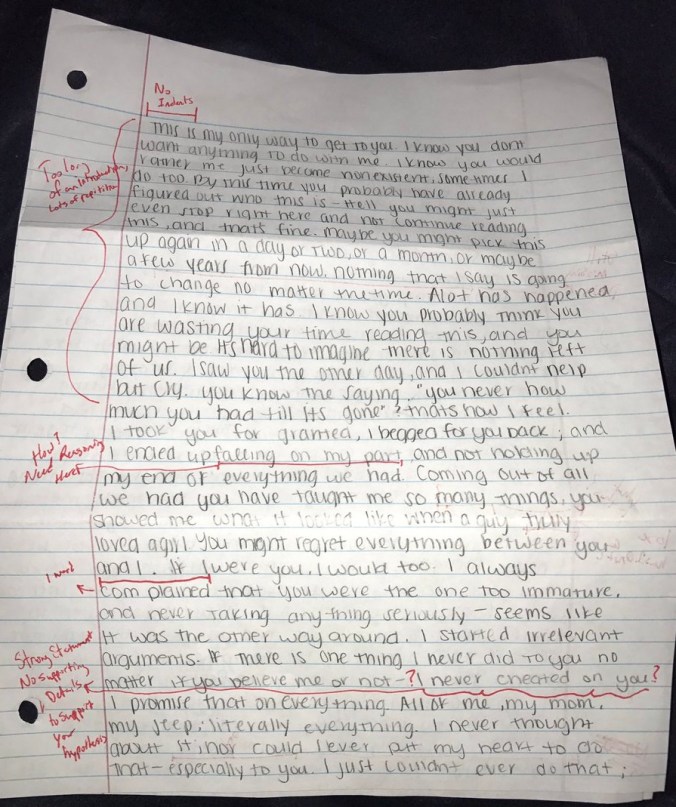
University of Central Florida student Nick Lutz set out to humiliate his ex-girlfriend after she sent him a letter (above) apologizing after their breakup, so he graded it like a school paper, and instead of keeping the exchange private and between them as a responsible, decent, fair adult would, he tweeted it to the world, where predictably, since the Twitterverse is populated by a lot of people like Nick, it went viral, with hundreds of thousands of like-minded jerks “liking” it.
Nick is, at this stage of his life, a toxic creep without properly functioning ethics alarms. However, his school had no legitimate interest in this matter. Yet it placed him on two semesters of suspension and probation as punishment for this entirely non-school related conduct. (No, the badly treated ex- is not a student.) UCF sent Nick two letters, the first stating that he may have violated the law (no, he didn’t), while the second stated that he had violated the university’s student rules of conduct regarding disruption and cyber-bullying.
Baloney. Read the rules; I did. Even though the rules are unenforceably broad, they wouldn’t apply to his conduct: Continue reading →
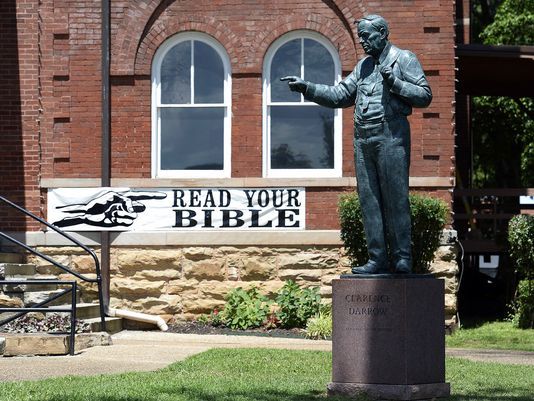
Apparently about a third of the population of Tennessee still doesn’t buy Darwin’s Theory of Evolution (according to a 2015 Pew Research Center study) so it should not be too much of a surprise that in Dayton, Tennessee, site of the famous 1925 Scopes Trial, a newly erected statue of Clarence Darrow in front of the historic red brick courthouse where the trial took place was met with some protests. At a County Commission meeting in the town, resident Ruth Ann Wilson suggested that bronze Darrow might unleash a plague or a curse. “I rise in opposition to this atheist statue, all right?” she said. “This is very serious, folks.”
No, that isn’t serious, but the persistence of ignorance both generally and about the issues battled over in 1925 are. Another resident, Brad Putt, is quoted by the New York Times as saying, “People around here know that if you have a court case, you have to have two sides,” referring to the fact that there has been a Williams Jennings Bryan statue standing in front of the courthouse since 2005. “You can’t have Optimus Prime unless you have Megatron. You’ve got to have a yin to the yang.” Well, that’s not quite right either, depending on what Bryan and Darrow symbolize. If the idea is to have the most famous opposing counsel in U.S. legal history facing off, okay, that’s fair. If he is saying, as I think he is, that science and religion must counter and balance each other, that’s nonsense. Continue reading →
There were many good reasons to oppose Jeff Sessions as President Trump’ nominee to be the next Attorney General. One, which I focused on, was that his nomination foolishly fed into the Democratic slur that Trump and the Republicans were racists. Sessions had been successfully tarred decades ago based on some racially-insensitive comments he had made, and even though tangible evidence of any racial bias was thin, it was foolish for Trump to court a controversy when there were plenty of equally or more qualified candidates. Another reason was that Sessions had been an early supporter of Trump’s candidacy for the GOP nomination, which is signature significance for stupidity, poor judgment or recklessness. Take your pick.
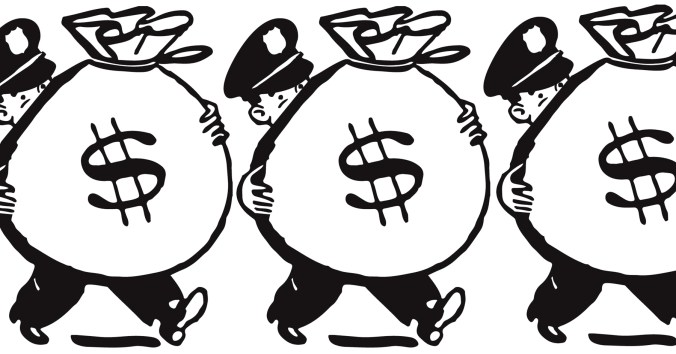
Now Sessions has announced, while speaking at a National District Attorneys Association conference, that the Justice Department will issue new directives to increase the federal government’s use of civil asset forfeiture, an unethical, Constitutionally dubious practice that needs to be cut back or eliminated.
“[W]e hope to issue this week a new directive on asset forfeiture—especially for drug traffickers,” Sessions said. “With care and professionalism, we plan to develop policies to increase forfeitures. No criminal should be allowed to keep the proceeds of their crime. Adoptive forfeitures are appropriate as is sharing with our partners.”
Utah’s Republican Senator Mike Lee expressed alarm at Sessions’ announcement yesterday, saying in a statment, “As Justice Thomas has previously said, there are serious constitutional concerns regarding modern civil asset forfeiture practices. The Department has an obligation to consider due process constraints in crafting its civil asset forfeiture policies.” Justice Clarence Thomas’ had written in his dissent in an asset forfeiture case last month that forfeiture operations “frequently target the poor and other groups least able to defend their interests in forfeiture proceedings.” Continue reading →
Every day, Ethics Alarms head scout Fred sends me multiple suggestions for posts from he finds heaven-know-where. Even when I can’t fit them in, they often serve as references and always are enlightening.
1. I suspect this belongs in the Polarized Nation of Assholes files: For two years, since he returned from service combat zones in Iraq and Afghanistan, Lieutenant Commander Joshua Corney, has kept his promise to salute his fallen comrades in arms by playing a recording of Taps every evening before 8:00 p.m on his five-acre property in Glen Rock, Pennsylvania. It takes 57 seconds. It does not exceed volume limits. My dog barks longer that that every night after midnight when we put him out. Nonetheless, some of Corney’s neighbors have filed objections with the borough. Now Glen Rock, which allows church bells to ring, among other sounds, ordered Corney to limit the playing of taps to Sundays and what it termed “flag holidays.” Each violation of the borough’s order would bring a criminal fine of 300 dollars. But the borough’s enforcement action involves two big constitutional no-nos: the heckler’s veto and content-based censorship. The borough is relying on a nuisance ordinance that prohibits sound that “annoys or disturbs” others, and just one individual annoyed by the somber Civil War era bugle solo is enough to deliver a “heckler’s veto.’
“If a “heckler” could shut down anyone who said or played something that annoyed or offended them by complaining to government officials, freedom of speech would be no more. For more than 75 years, it has been black letter First Amendment law that the government cannot censor speech simply because it is not universally appreciated.
Moreover, the borough cannot use its vague nuisance ordinance to single out only Lt. Commander Corney’s musical expression for censorship from the range of sounds that are part of the borough’s regular sonic landscape. The borough has not ordered Lt. Commander Corney to lower the volume of taps or claimed he has violated a noise-level ordinance.
And it could not claim such a violation because the recording neither exceeds any established noise levels nor is it as loud as many other sounds the borough tolerates — including many sounds that do not communicate a message, like lawnmowers, leaf blowers, chainsaws, and vehicles. Censoring clearly protected expression, like taps, for being too loud, while allowing louder sounds that carry no constitutionally protected message turns the First Amendment on its head.”
Bingo. It is in cases like these that the American Civil Liberties Union shows how essential its role is in protecting the freedoms here that are so frequently under attack.
2. I was surprised when I learned some time ago that undercover police officers used to routinely have sexual relations with prostitutes before arresting them (homosexuals too, when they werebeing persecuted and prosecuted). Just two months ago, Michigan became the last state in the U.S. to make it illegal for police officers to have sexual intercourse with prostitutes in the course of an under-cover (or covers) sting. Now Alaska wants to go an additional step, banning “sexual contact” with “sex workers” entirely. This could be mere touching or kissing. Advocates of Alaska’s House Bill 73 and Senate Bill 112 argue that police catching sex workers in the act by engaging with them sexually is a human rights violation, and Amnesty International has made an official statement supporting that claim: “Such conduct is an abuse of authority and in some instances amounts to rape and/or entrapment.” Police, quite logically, point out that the bill would make successful undercover investigations impossible, which is, of course, the whole idea.
“[The prostitutes] ask one simple question: ‘Touch my breast.’ OK, I’m out of the car. Done. And the case is over,” Anchorage Police Department Deputy Chief Sean Case told the Alaska Dispatch News in a hypothetical example. “If we make that act (of touching) a misdemeanor, we have absolutely no way of getting involved in that type of arrest.”
Ethics Alarms is anti-prostitution. As with recreational drug use and probably polygamy, prostitution, which harms families and the young women and men exploited and abused to support it, is almost certainly on the road to legalization. Government won’t protect vital society ethics norms, but it will order you to buy health insurance because it’s for your own good. Continue reading →
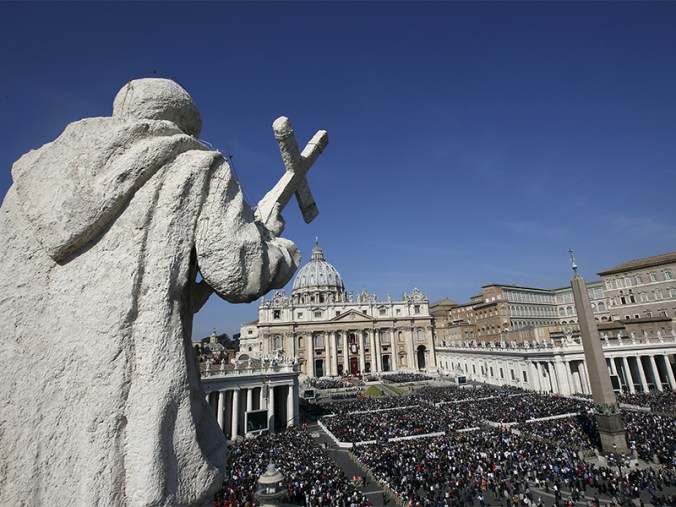
The original Ethics Alarms post, one of two this month implicitly critical of the Catholic Church, has spawned several remarkable and thoughtful discussions, as well as so many candidates for Comment of The Day that any choice among them is somewhat arbitrary. In the case of Ryan Harkins, I’m not even certain this is the best of his comments on the post, so many excellent ones did I have to choose from. Thus I urge readers to read the entire array, which, I regret to say, is impressive and educational even though it does not include my old friend Patrice, Catholic, theologian, and Church employee who has commented here frequently in the past.
I decided to pair two of Ryan’s comments, the first an overview providing context for my original post’s topic, the Church’s insistence that that the bread and wafers used in Communion include gluten. The second, a response to a series of queries from another commenter, delves into an eternal ethics debate topic, the nexus between God and ethics.
Where to begin? The challenge of trying to explain some of the odder details of the Catholic faith is that many of those details don’t make sense without the context of the faith as a whole. So please forgive me if I seem to natter on about tangential matters.
So, let’s begin with a few definitions to make discussion a little easier. A Sacrament is a visible sign, established by Jesus himself, through which God conveys grace upon mankind. A Sacrament is composed of two parts, one spiritual and one material. The reason it possess both qualities is because Sacraments are designed for us, and a human person is a body/spirit composite. We are not purely material beings, nor are we ghosts in a shell. We are not a complete person without our bodies. Now, to have a sign that is purely spiritual would neglect the physical aspect of our existence. To have a sign that is purely physical would neglect the spiritual dimension of our existence.
The Eucharist is one of the Seven Sacraments of the Catholic Church. Catholics really, truly believe Jesus was serious when he said repeatedly, “Amen, amen, I say to you, unless you eat the flesh of the Son of Man and drink his blood, you will not have eternal life.” When at the Last Supper, he blesses bread and wine and says, “Take this and eat. This is my body, given for you” and “This is the cup of my blood, which will be shed for you and for many for the forgiveness of sins”, Catholics believe that yes, Jesus truly held himself in his hands and gave himself to his apostles to consume. So the Eucharist is the Real Presence of Jesus, the fullness of his body, blood, soul, and divinity. When a priest says Mass and confects the Eucharist, Catholics believe that the bread and wine on the altar are transsubstantiated into Jesus. The accidents of bread and wine remain (so yes, consuming Jesus is problematic for anyone who has issues with the accidents of bread and wine), but the substance is entirely Jesus. The smallest drop from the chalice and the tiniest crumb of the loaf contains the fullness of Jesus.
Okay, so a Sacrament has a spiritual and a physical dimension, and the Eucharist obviously uses bread and wine for the physical dimension. Why bread and wine? In just reference to food and drink, we understand the Eucharist as a meal, and historically the greatest communal activity is the sharing together of a meal. In earliest Christianity, the Eucharistic celebration was in the context of the agape feasts, which eventually St. Paul instructed to tone down because people would become drunk and riotous at these feasts. The point, though, is that eating together is sign of communion (which is in part why the Eucharist is also called Communion). Jesus had prayed that “they may all be one, Father, as I am in you and you are in me,” and the Eucharist is the Sacrament Jesus instituted to make that possible. By consuming Jesus himself, we bring him into ourselves and are in turn incorporated into him. (You are what you eat, right?) Continue reading →
I am on record as believing that lawyers who intentionally assist their clients in burying unconscionable, unenforceable or unfair terms in standard contracts, usually in fine print, are unethical, and engaging in a professional violation of the Rules of Professional Conduct. I’ve offered several seminar hypotheticals on the topic to make my point, and have never encountered a lawyer who had a good defense for the practice. Usually the best they can come up with is “everybody does it” or “but it’s legal!” Of course, the bar associations are on their side, not mine, because, well, everybody does it. That’s a proverbial can of worms the bar associations don’t have the guts or integrity to open. What else could it be but unethical, however, when a client company says, “Make sure you bury this provision saying that they have no recourse if we cheat them in the fine print!” and the lawyer says, “But that’s unenforceable!” and the client says, “Yeah, but they won’t read it before signing, and when we point out that they did agree to it, maybe it will scare them off,” and the lawyer shrugs and says, “Whatever you say! It’s your contract”?
WiFi companies are especially egregious in this regard. As an effort to show itself as above the field and avoiding the unethical industry practice, a British WiFi company, Purple, ran a social science experiment, inserting language in its standard contract that obligated consumers to clean toilets at festivals and clear sewer blockages. 22,000 people signed up anyway. The contract stated–in fine print—that its signatories would be legally required to perform 1000 hours of community service, including, but not limited to, “cleaning toilets at festivals, scraping chewing gum off the streets” and “manually relieving sewer blockages.”
The gag clause was inserted in the company’s terms and conditions for a period of two weeks, “to illustrate the lack of consumer awareness of what they are signing up to when they access free WiFi .” Purple also offered a prize to anyone who actually read the terms and conditions, and found the “community service clause.” Only one person won it. Continue reading →
Ethics Alarms has dealt with this issue multiple times: an employee violates policy by intervening to prevent a crime or serious injury, and is fired for it. In 2009, a bank teller named Jim Nicholson turned Batman and foiled a bank robbery, then was fired.. A would-be robber had pushed a black backpack across the bank counter to Nicholson and demanded money. The teller threw the bag to the floor, lunged toward the man and demanded to see a weapon. The robber sprinted for the door with Nicholson in pursuit. Eventually Bat-Teller knocked the man to the ground and held him until the police arrived.
The bank had to fire him. The episode could have gone wrong many ways, some resulting in bank customers and employees being injured or killed. Law enforcement repeatedly cautions against such conduct, and the bank’s policies were clear.
In other cases, no-tolerance makes no sense, as no-tolerance often does. In 2012, Ryan Young, then working in the meat department of a Safeway grocery store in Del Rey Oaks, California, witnessed a man beating a pregnant woman, apparently his girlfriend. Young told the man to stop, but when he continued with his assault, shoving and kicking her, Young jumped over his counter, pushed the thug away, and ended the attack.
Safeway fired him. So what would it have had Young do, stand there and wag his finger? This crossed into duty to rescue territory. Young did the right thing, and rather than blindly following a policy that didn’t fit the facts, Safeway should have realized that an exception was called for.. (Eventually public opinion and bad publicity forced Safeway to re-hire the hero). A similar scenario involved a lifeguard who violated his employer’s policy by saving a drowning man off a beach adjacent to the property where he was stationed. Jeff Ellis Management, an Orlando, Florida-based company, fired 21-year-old Tomas Lopez for daring to save a life pro bono, and was similarly pilloried by public opinion. Two lifeguards quit in support of Lopez, and he was also eventually offered his job back. Lopez told Jeff Ellis Management to get bent, or words to that effect. Continue reading →
1. President Trump is upset about an ABC-Washington Post pollthat among other things indicates that 70% of those polled believe that he has acted “un-Presidential” since being elected. Several analysts have suggested that pollsters have slanted their polling pools toward Democrats (remember the election?), but my question regarding this poll is, “What the hell is the matter with the other 30%?”
How in the world could anyone conscious argue that Trump is “Presidential,” other than on the rather technical basis that since he’s President, what he does is by definition Presidential? It would be mighty nice if an aide, a Cabinet member, a daughter, a White House chef or someone would explain this to him, but I’m convinced: he doesn’t get it, he won’t get it, and what weve seen is what we’ll continue to get.
2. ALERT! The forgoing was written after I was fooled by a fake news site, aided and abetted by Instapundit, which either was also fooled or linked to the site as its own joke. Thanks to reader Tom Adams for being more alert than I was and quickly flagging this.
And by the way, screw them. I’m taking off the link, and I will probably give the site an Unethical Website designation. The only hint that the site is a hoax site is the other stories (“GOP Adopts Christie’s Sad, Bewildered Face As New Party Mascot”), but I read dozens of stories every day, and if i stopped to check all the other boxed and highlighted pieces I would never have time to do my job. There is nothing on the home page designating the site as satirical. Unethical.
I apologize to anyone I led astray. Somebody alert Instapundit. I’m not speaking to it. Here was the original post…
That said and mournfully accepted, he won, he’s President, and the fevered efforts to somehow turn back time (I would not be surprised to see a new Bon Jovi Direct TV ad on the subject) by “the resistance,” the Democrats and the news media are profoundly anti-democratic. This is what Jake Tapper was alluding last week with his tongue stuck so firmly in his cheek that it almost broke through his face. “The conspiracy goes much deeper than anyone expected,” Jake Tapper said on his news segment “The Lead.” “We’re talking tens of millions of people involved in this secret plot to make sure Hillary didn’t make it into the White House and to prop up Donald Trump as the winner….It’s far more sinister than we thought.”
Yes, some conservative websites and others took Tapper’s pointed gag seriously. This tells us…
…how little trust CNN has left with many Americans..
…how dumb a lot of conservatives are…
…why broadcast news hosts and reporters, even fair and clever ones like Tapper, should avoid sarcasm, satire, or facetious statements, and stick to the facts.
…Jake Tapper should get away from CNN before its toxic culture ruins his reputation. Continue reading →
When we last heard from photographer David Slater, the U.S. Copyright Office had rejected his claim that he owned the copyright for the famous series of selfies presumably taken unintentionally by a Celebes crested macaque. In 2011, Slater spent several days following and photographing a troop of macaques in Sulawesi, Indonesia, and the selfies were a lucky bi-product that quickly became a web sensation. Slater had asserted ownership over the photos, and had demanded that various on-line users, such as Wikipedia, either take them down or pay him as the copyright holder. The ruling of the Copyright Office was based on the theory that Slater had not taken the photo, so he was not the creator, and animals couldn’t own copyrights, so the photos were in the public domain.
Pop Ethics Quiz: Would it have been unethical had Slater simply released the photos without revealing that the selfies had been the lucky result of an accident, snapped by the monkey while it was messing around with his equipment?
About the Copyright Office’s ruling: I’m dubious. Slater owned the equipment, and had the sense to preserve the photos. A decision that if a photo is taken accidentally by a non-human or an act of God, the photographer who owns the equipment gets the copyright would have been fair. Zapruder owned the film that inadvertently caught President Kennedy having his forehead shot off, and it made him rich. Slater’s claim just goes a step further: Zapruder left the street to buy a hotdog, put his camera on on a trash can and asked a friend to “watch it,” and a dog turned the camera on, catching the grisly scene. So Zapruder doesn’t own the film anymore? Does that make sense to you?
Well, that was the ruling anyway. Then things got really ridiculous. Slater included the monkey selfies in a book, and People for the Ethical Treatment of Animals (PETA) brought a law suit against Slater on behalf of the monkey,which PETA claims is named Naruto, and asked that PETA be appointed to administer proceeds from the photos for the benefit of Naruto and other crested macaques in the reserve on Sulawesi. So PETA would suddenly be the de facto copyright holder. Continue reading →
This Comment of the Day is atypical, but I want to highlight it.
It’s doesn’t really matter what the original exchange was that prompted it, or who the other commenter was. What matters to me is that a respected, smart, articulate member of the colloquy here felt denigrated and mistreated, and that her experience as a commenter was diminished as a result. There may even have been a misunderstanding involved; right now that is not my concern either.
I allow the discourse to get very intense here at times, and I will continue to. Lines are crossed—civility, insults, epithets, outbursts, personal attacks, mockery, blatant contempt–I cross them myself on occasion. Those who thrive here are remarkable, I have found, in taking rhetorical punches to the jaw and the gut and bouncing back without rancor or reduction in passion.
Nonetheless, the Golden Rule should never be too far out of mind on an ethics site. We can all make our points without being gratuitously nasty and mean. Stinging slapdowns can be fun–I enjoy them, though I save my worst for especially annoying visitors who I don’t care to have return—but they need to be kept to a minimum. Sincere, thoughtful, honest and perceptive commenters like Mrs. Q should never feel the way this post indicates that an exchange made her feel. Ethics Alarms is designed to be challenging and contentious, but not hostile. She hasn’t commented since this was filed; I hope that she has just been busy, because Mrs. Q has been a unique and wonderful asset since she first dropped in a few months ago.
The level of disrespect you have shown me, with the snark & unwillingness to do the research yourself, tells anyone reading that there is something inside you that is either terribly unhappy or unhealthy. I cannot in good conscience continue to deal with someone who is so vengeful. You’ve proven you’re incapable of responding in a civil manner towards me when I have not insulted you in any similar way. It’s been a pattern & if you & I were in person I’d simply walk away & pray for you.
My disability makes my time precious & my family comes before internet commenting. That you would make fun of my need to prioritize my family over responding online says so much more about you than me.
I was planning on answering your questions but your last little dig is my last straw. I’m sure you’ll say I’m weak or not answering you b/c I’m scared or stupid or a TERF or whatever disparaging term you can think of & that’s fine. I won’t be goaded into your games. Continue reading →