The Last Word On The “Hamilton” Cast’s Harassment Of Mike Pence

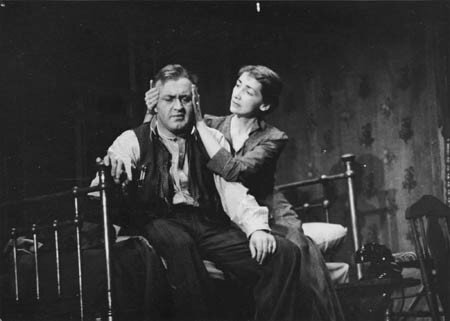
death-of-a-slaesman

In the end, after several posts and a large number of comments about this incident, I am convinced that, more than anything, it shows how little the American public, even well-educated, culturally-engaged members of the public, and even participants in the entertainment profession understand and respect the importance of live theater.

This, at least, is no surprise. The New York Times recently reported that a survey had revealed that symphony orchestras no longer are viable without charity: fewer and fewer, mostly aging, patrons bother to attend concerts any more. Live theater is heading down the same path, probably irreversibly. Theater will never hit rock bottom, of course; it will always be possible to put on a show like Judy and Mickey, and live theater can exist as long as there is a single talented performer, a street corner, and a crowd. But theater is dying as something relevant to society, and that is a tragedy. Each generation goes to live theater events less and less. I have not seen the up-dated figures, but in the Nineties a study showed that Americans under 30 were more likely to have called a phone psychic at least once in the past year than to have attended a single live theater performance in their entire existence on earth.

The role of theater in society has  been extolled by Aristotle and social critics through the centuries as a unique and important community activity in which citizens of all social strata engage in the ancient ritual of sitting together in a darkened theater, and not only experience the events being portrayed on stage but experience it communally, hearing and feeling the reaction of others. Now that social force has receded to the vanishing point. A vacuum has taken its place. Movies seldom explore serious issues any more, and younger audiences have increasingly retreated to watching films online, and often alone. The potentially life-altering experience that is being lost is hard to describe when someone hasn’t experienced it. The power of the medium to communicate ideas and concepts vividly and to change minds and lives is unmatched, and unmatchable. I have seen it. I have experienced it. I have even helped make it happen.

The department store mogul Bernard Gimbel attended an early performance of Arthur Miller’s “Death of a Salesman” on Broadway in 1949. The plight of Willy Loman, an aging traveling salesman being pressured out of the only employment he had ever known, so shattered Gimbel’s world view that he couldn’t sleep. The next day, he called his managers together and told them and all of his stores that no over-age employee was to be fired. Alfred C. Fuller of the Fuller Brush company asked Miller to dinner to seek his guidance on how to  keep his Fuller Brush salesmen from quitting. That’s power. That’s wonderful. We should want influential people, elected officials, business owners, policy-makers, bankers, investors and corporate executives to see that kind of theater. In today’s New York Times, Ben Brantley, the Times drama critic, explains…
Continue reading →

Ethics Dunce Collective: The American Music Awards

I can make this uncharacteristically short. Just re-read the post on John Oliver’s nasty full-show, post-election anti-Trump rant, and substitute “American Music Awards.” Also worth reviewing is the list of rationalizations used to justify Oliver, which I posted here, especially since so many of them are also being trotted out to excuse the ambushing of Mile Pence when he dared to exercise his right to enjoy “Hamilton” on Broadway without being personally called out and attacked by the cast.

It can be argued that the American Music Awards’ insults to the duly and lawfully elected POTUS—who has yet to do anything as President— last night were even worse than Oliver’s disrespectful ad hominem barrage. At least Oliver, a skilled satirist, was occasionally amusing. The two AMA hosts from Saturday Night Live were juvenile, desperate and amateurish, counting on their Trump-hating demographic for laughs they didn’t earn. If we ever see a more inept impression of Donald Trump than Jay Pharoah’s, be it in four years or a century, I’ll be shocked. Worst of all, however, was Gigi Hadid’s unfunny, mean and hypocritical imitation of Melania Trump, for the crime of existing.  The principle, just for application to Republican First Ladies, now, is apparently that having an accent  makes you ridiculous and an idiot.

If anyone, anywhere, on a live television show had dared to do such a grotesque mockery of Michelle Obama when she was the incoming First Lady, they would have been tarred a boor, a racist, and a virtual traitor.

I wonder which of the rationalizations will be used to defend Hadid? Whatever they are, the real defense is just this, the same that is being used to defend “Hamilton”: We hate these people, and they don’t deserve to be treated fairly.

Got it.

One clarification: Green Day is a political band, and their decision to shout No Trump / No KKK” during their performance of the catchy and tuneful  “Bang Bang” is as fair as it was predictable…also moronic, but what do you expect? It’s a band.

My Ethics Hero: Some Guy In The Harris Teeter Meat Section

I was doing some quick shopping yesterday at a large Harris Teeter supermarket in Alexandria, Virginia. My list from my wife included an option—always a doorway to a shopping confidence crisis—between a whole chicken, a small marinated chicken, or two large chicken breasts. I had decided on the marinated bird, but couldn’t find them where they usually were, and was more or less frozen, like the “hosts” in “Westworld” get when Anthony Hopkins wants them quiet, staring where I expected them to be.

“I’m going to buy one of them, the question is, which one?” a jaunty, relaxed voice close behind me said. At that moment I realized I had been staring at turkeys (I wasn’t there to buy one), and I turned around, not startled but curious, to face a broadly smiling, handsome, bearded African-American man about my age, probably a little younger.

“Isn’t it a little early?” I asked, smiling back. Being habitually disorganized, I am typically shopping  for everything the day before Thanksgiving.

“Oh, no, not for me!” he said, laughing. And he told me that he was going to cook up one or more turkeys for his church on Sunday. We talked about the ways he cooked his turkeys; he preferred to smoke them. He was also a grilling specialist. He took out his phone and showed me pictures of his specialty, ribs. We talked about his favorite recipes, and his church, his family, and its Thanksgiving plans, as I told him about mine. I mentioned that my wife was our traditional Thanksgiving chef, and that got the discussion turned around to marriage. We both have been married a long time, and he took me by the shoulders and talked intensely about commitment in relationships.

I had a twenty-minute conversation with this delightful stranger, just standing by the meat section. Finally, I announced  that I had to finish my assignment, and wished him wonderful holidays. I offered him my hand and introduced myself; he shook it firmly, and gave his name in return. Then we spontaneously hugged each other, which I never do, being from Boston and trained to be reticent in such intimacies, he flashed that terrific smile, and we parted.

My encounter with this exuberant gentleman suddenly made me feel good about life, my community, the country and the human race as I had not for a very long time. I think we’ll be all right. All that had happened was that a stranger just reached out and began a conversation about something two people shared, showing openness, kindness, human interest and trust, and a connection was made. That’s all it takes.

I start conversations with strangers a lot; it was something my father did. He was better at it than I am, and my friend in the Harris Teeter meat section is obviously a grandmaster. But as the holidays approach, and I keep reading these essays about families boycotting each other because of Trump-Clinton divides, it is so obvious that my dad and my turkey buddy are the wise ones.  We’re all just human beings together on a short and unpredictable trip: we should  just focus on that, and reach out.  Why is it so hard? Continue reading →

Social Media Ethics Conundrum: What Is The Fair, Objective, Rational Response To This?

double-standard

A libertarian website, curious as to how objectively Twitter enforces its standards, registered a complaint about the tweet on the left, and receiving the circled response, sent the tweet on the right, with Twitter responding to a complaint by banning the account.

How should fair, ethical people respond to this?

I do not see the website’s investigation, or this post, for that matter, as partisan or ideologically slanted in any way. A major social media platform used by government agencies, the President Elect, journalists, pundits, and news organizations as well as celebrities, scholars and average members of the public, has a duty commensurate with its power and influence. It can be politically biased and manipulative of public opinion, it can tilt its content to reflect particular interests, policies, cultural attitudes and agendas, but it is unethical for it to do so, particularly when it claims it does not do so.

This is smoking gun proof that Twitter is biased, censoring what it doesn’t like from people and groups it doesn’t like while allowing identical tweets from people and groups it feels an alliance to. It is a double standard. Now what?

Should fair, ethical people continue to use an organization that abuses its influence and trust like that? I use twitter, though only to send out links to Ethics Alarms posts. Am I ethically obligated to stop doing that? Should a non-left biased counterpart to Twitter take away half its business? Well, as we have learned from Fox News vs. the left-leaning mainstream media, competing media entities with off-setting biases still won’t supply what is needed, which is fair, trustworthy and reliable reporting. Continue reading →

Introducing Rationalization #63. Irrelevant Civility and #64 A. Bluto’s Mistake

The most infuriating comment threads on Ethics Alarms are those in which one or more intelligent readers are desperately tying to dispute the indisputable ethics breach, and finding no substantive ethical argument because there are none, desperately throw one rationalization after another against the metaphorical wall to see if they’ll stick. They don’t of, course.

Occasionally, however, there is a benefit to the exercise: in their furious effort to find an legitimate argument while hunting through the rationalization dumpster, one of the protesters uncovers one that the Ethics Alarms Rationalization List had thus far missed. So it is with one of the most rationalization-choked exchanges ever to break-out on this site, the debate over the cast of “Hamilton” crossing multiple ethics lines, thick red ones, to exploit the  opportunity for political grandstanding occasioned by Vice-President Elect Mike Peck engaging in the benign and supportive act of attending their show. (The posts on this episode are here and here.) Not only was a new rationalization revealed—#63, Irrelevant Civility or “But I was nice about it!”—but my thinking about that one revealed that I had also missed another one, distinct but related, #63A, Bluto’s Mistake or “I said I was sorry!”

The total number of rationalizations on the list now stands at 80.

Rationalization 63. Irrelevant Civility or “But I was nice about it!” Continue reading →

Ethics Hero: Stevie Van Zandt

van-zandt

There is at least one liberal, Donald Trump-hating celebrity performer who has the integrity to insist that wrongful conduct is still wrongful regardless of the target.

Bruce Springstein guitarist Stevie Van Zandt, an inductee to the Rock and Roll Hall of Fame (and a memorable actor on “The Sopranos”), used a series of tweets to criticize the cast of the musical “Hamilton” for targeting Vice-President Elect Mike Pence  from the stage when Pence was in the show’s audience. Van Zandt wrote:

“Lin-Manuel is a genius. He has created the greatest play since West Side Story. He is also a role model. This sets a terrible precedent…When artists perform the venue becomes your home. The audience are your guests. It is nothing short of the same bullying tactic[s] we rightly have criticized Trump for in the past. It’s taking unfair advantage of someone who thought they were a protected guest in your home…There never has been a more outspoken politically active artist than me. Everyone who is sane disagrees with [Pence’s] policies…He was their guest. You protect your guests. Don’t embarrass them.”

Boy, just wait, Stevie: now you’ll get all the good progressives explaining to you that Pence had it coming, that he doesn’t deserve to be treated like a guest, that these vile Republicans should be treated like they will treat others, that these are not ordinary times, that ethics is a luxury we can’t afford right now, that the cast was nice about it (actually, I just saw the video, and they weren’t nice at all; they were strident and  confrontational), that everybody does it, that the ends justified the means, on and on. Just check the “Hamilton” defenders’ excuses on the threads here and here.

Van Zandt is 100% correct, of course, and courageous to oppose the approved unethical cant from the Left.  Unfortunately, most of his ideological mates have decided that standards of decency, respect, fairness and professionalism were suspended by an election result they disagreed with.

“Hamilton” Ethics Follow-Up: Somewhere In The Multi-Verse, I Am In The Audience At “Hamilton” When The Cast Decides To Abuse Its Position And The Audience’s Trust By Harassing Mike Pence, And This Happens…

hamilton-logo

Luckily, I had been tipped off by a friend in the production regarding what had been planned.

As Brandon Victor Dixon stepped forward and called out Pence, thanking him for attending, and then began his planned statement with “We hope you will hear us out. We, sir…,“ I stood up from my seat in the center of the fourth row, orchestra. I have a very loud voice. I said,

“Excuse me, Mr. Burr, is the show over? Or is this part of the performance?”

“It’s not part of the show, no…now, Mr. Pence…”

“That means we all can leave, right? We aren’t all being held captive while you lecture us, just Mike Pence? Is that what’s happening?”

“Well..I…Yes, yes, you are free to leave. This statement is for the Vice-President Elect. Now, if you’d let me finish…”

“Was he aware that you were going to single him out like this? If not, does that mean that every other audience member that buys a ticket to “Hamilton”—great show, by the way, though I only caught about half the words—should be ready to be singled out and told how to do their jobs by you actors? Are you pleased when you’re grocery shopping or at Home Depot or going to see a movie when the staff there recognizes you and  singles you out and tells you how to perform while everyone else stares and listens? I know that Alec Baldwin and Sean Penn take swings at people who do thing like that in the street…”

“No, this is for the Vice-President Elect only! Now if you’d just sit down…”

“I thought you said I could go!”

“You can go! Get lost! We’re trying to speak to the Vice-President elect…”
Continue reading →

Mike Pence Goes To “Hamilton”

(Psst...PLAYING political leaders doesn't actually give you any special insight into political leadership...)

(Psst…PLAYING political leaders doesn’t actually give you any special insight into political leadership…)

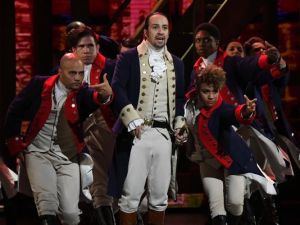
As a performance of the mega-hit Broadway musical “Hamilton” ended, the actor who played Aaron Burr, Brandon Victor Dixon, singled out Vice-President Elect Mike Pence, who was among the audience.

He thanked him for attending and then began a scripted lecture, or rather,  an ambush:

“We hope you will hear us out. We, sir — we — are the diverse America who are alarmed and anxious that your new administration will not protect us, our planet, our children, our parents, or defend us and uphold our inalienable rights. We truly hope that this show has inspired you to uphold our American values and to work on behalf of all of us.”

The rest of the audience, many of whom had booed Pence when he arrived to see the show, cheered. Of course they did. They would have probably cheered if Dixon threw a tomato at Pence too.

I have no patience with this. I was an artistic director of a professional theater company in the D.C. area for 20 years. If this happened at my theater, I would fire the actor and apologize to the audience member and the audience itself. This is unprofessional, unfair and unethical in many ways: Continue reading →

Comment Of The Day: “The Democrats’ Petition To Overturn The Election”

William Plumer---the first faithless elector. Jerk.

William Plumer—the first faithless elector. Jerk.

The effort of many Democrats to reveal their party as one rapidly evolving into an anti-democratic one that will try to take and hold power by divisive, coercive, and extra-legal means continues, so this Comment of the Day is not stale, fortunately, though I am four days late posting it. The discussion regarding the Ethics Alarms post about the Change.org petition to persuade state electors to try to reverse the results of the election was enlightening, and complaining about the Electoral College continue. Much of that is just unethical citizenship seasoned by ignorance. This post, unlike most of the others, made an articulate, measured case that provided useful information. Here is Jim Nevertrump‘s Comment of the Day–I’ll be back briefly for a final comment—on the post, “The Democrats’ Petition To Overturn The Election”

We are at a critical juncture. The choice as to the next leader of the most powerful nation in history could well spell disaster for our collective future, for the future of the globe and the human race. Devastation awaits humanity from either of two crises – we can foreseeably suffer nuclear annihilation on the one hand, or broad environmental decimation on the other. A misstep here is one that we cannot chance. With a miscalculation once made, there’s no recovery. Beyond those two vital dangers, there are enormous questions pertaining to life and death, health and disease, wealth and destitution, power and servitude, crime and punishment. All these are on short fuses, and a wrong turn will inflict suffering on a great many.

On the question of anointing the next president, the book is not closed. The Constitution challenges us to take a good hard look. Continue reading →

Ethics Zugswang And The Vicissitudes Of Moral Luck: The Rutgers Prof’s Scary Tweet

Careless tweets matter...

Careless tweets matter…

Rutgers University lecturer Kevin Allred tweeted,

“Will the 2nd amendment be as cool when i buy a gun and start shooting at random white people or no…?”

The University had him arrested and sent to Bellevue mental hospital for a psychiatric evaluation.

His defenders, and of course Allred, say that his tweet was just a rhetorical question to make a point. The University says that he left them no choice, or no good ones, anyway.

They both are right. This is what comes of being in Ethics Zugswang, when one is thrust into  a position where no course of action is fully responsible, fair, and ethical.

The university decided that it could not responsibly assume that the tweet was benign and not a threat. What if the school did nothing, and Allred then  took high ground and became Charles Whitman 2016? Having him arrested, however, looks unfair and like a punitive reaction to free speech. There was literally no course the university could take that was completely ethical. Rutgers sacrificed its  teacher’s dignity for the safety of the students and to protect the institution’s liability.

The other alternatives—talking to him, shrugging it off as a poorly considered social media gaffe—placed the fate of the school and perhaps many students at the mercy of moral luck. These would seem like reasonable  decisions only if the moral luck dice did not come up snake eyes. Allred didn’t say “if” I buy a gun, he said when. He added race to the equation, and there are a lot of people who seem to be losing their grip in the wake of the election. What were the odds that he meant what he wrote? 100 to 1? 1000 to 1? 5000 to 1? Is it worth the remote chance that this was a warning of an impending catastrophe not to take the safe route, and have him arrested and examined? Is it worth gambling with students’ lives? Continue reading →