Indeed He Deserved All Of It, But Denny Hastert’s Sentencing Hearing Was A Legal And Ethical Travesty

Hastert sentencing

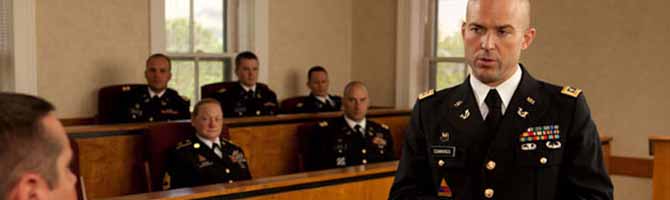
“I am deeply ashamed to be standing here,” former Speaker of the House Dennis Hastert  told a judge yesterday at his sentencing hearing.  “I know why I am here … I mistreated some of the athletes that I coached.”

Wait…what? That’s not why Hastert was in court at all. He was before a judge for one reason: he violated banking laws and lied to the F.B.I.. The fact that he was a sexual predator and molested members of the wrestling team he coached many years ago is not the reason he was in court. It couldn’t be. The statute of limitations on all of those crimes, horrible crimes all, had expired. Hastert couldn’t be charged, tried or convicted of any of them.

I don’t understand why this hasn’t been the focus of the coverage of Hastert’s ordeal yesterday. Why did the judge think it was appropriate to “angrily” lecture him about his crimes that in the eyes of the law he must be considered innocent of by the legal system, because he cannot be found guilty of these crimes any more?

“‘If Denny Hastert could do it, anyone could do it,'” U.S. District Judge Thomas M. Durkin said. “Nothing is more stunning than to have the words ‘serial child molester’ and ‘speaker of the House’ in the same sentence.” Well, that’s very interesting, Judge. If  the late Ted Kennedy had been before you to be sentenced for, say, just a wild hypothetical, a drunk driving charge, would you lecture him about letting Mary Jo Kopechne drown in his car?

I may have missed it, but when O.J. Simpson was sentenced for burglary, I don’t recall the judge asking him to confess to murdering Nicole and Ron…did that happen?

Earlier this month, the judge and prosecutors allowed the trial to become a proxy trial for a crime that wasn’t on the docket, with prosecutors hammering at graphic details about the sex-abuse, describing how Hastert would sit in a recliner in the locker room with a direct view of the showers. The victims, prosecutors said, were boys between 14 and 17. Hastert was in his 20s and 30s. This is relevant to the charges against Hastert how, exactly? Answer: They aren’t. Continue reading →
No, Of Course You Don’t End Friendships Over Support For Donald Trump…

cat and mouse

Donald Trump derangement has induced Slate’s Isaac Chotiner to pen one of the least self-aware and ethically tone deaf pieces within memory. In a post taking issue with New York Times columnist Peter Wehner’s  recent column arguing that political differences should not sever friendships and other  personal relationships, he argued that while Wehner’s principle was usually sound, it should not apply when the source of discourse is Donald Trump. He writes:

“Of course friendships should survive some political differences: I have friends who think differently than I do about everything from proper tax rates to abortion regulations. But having a friend who supports a blatantly (and proudly) bigoted candidate is categorically different. Everyone might have a different line about what issue to take some sort of moral stand on, but Trump has stepped over pretty much all of them.”

If Chotiner wants to choose his friends like that, he is free to do so. This is the attitude that is tearing apart the traditional connective tissue that makes America a unique and productive society, however, and he is promoting it.  It is also the demonization impulse, now being fed by zealots in both political parties and activists in every field, crusade and issue. This is the ultimate slippery slope. Hate your neighbor, if he doesn’t think like you do. Chotiner is embracing partyism, intolerance and, ironically, bigotry, exactly what he says makes Trump supporters unworthy of human companionship. Continue reading →

Ethics Dunce: Miami Marlins Manager Don Mattingly

stabbed-in-the-back

When new Miami Marlins manager Don Mattingly chose Barry Bonds as his batting coach, it was considered a bold move. Bonds, after all, is simultaneously baseball’s all-time home run champion, holding both the single season and career records, and its biggest cheat, having achieved both records while being secretly, illegally and unethically assisted by steroids. In addition to knowing how to cheat, Bonds undeniably knows how to hit (he was a great hitter before he decided to mutate himself), so this was a chance at redemption for Barry, as well as an opportunity to soften some of the sports media antipathy toward his conduct and character which has so far kept him out of the MLB Hall of Fame.

Asked this week how Barry Bonds was doing as batting coach, Mattingly replied,

“Him getting used to the coaching part of it is a work in progress from a standpoint of the amount of time and the preparation. You see [assistant hitting coach Frankie Menichino] still doing a lot of the prep work. Barry is still getting into the routine of the ugly side of coaching — being here at 1, and studying video, and studying on the plane and you don’t get a chance to watch movies, and things like that. It just depends how good you want to be as a coach. If you want to be a really good coach, you’ve got to do the work.”

Translation: “So far, Barry’s been lazy and isn’t doing his job. His assistant is doing it for him. The job requires a lot of hard, tedious work, and Barry hasn’t shown that he’s willing to do it. At this point, he not a good coach.”

Ethics foul. Mattingly was a fool to hire Bonds, and MLB is wrong to let this sport-wide ethics corrupter set foot in a clubhouse. Bonds is a living, breathing advertisement for the proposition that cheating pays, and should not be trusted not to promote that proposition to young players. Having hired Bonds, however, Mattingly still is obligated to treat him fairly and professionally.

It is not fair and professional to make a negative job review public by communicating it to the news media. Mattingly gave a critique of Bonds’ performance that should have passed from him to Bonds, and only from him to Bonds, in private. Attacking Bonds—and it was an attack, if a passive aggressive one—in the press is unfair, irresponsible, disrespectful, a betrayal of trust, and also cowardly.

Mattingly’s job is called “manager,” and this is atrocious, unethical management. He owes Bonds an apology, and if I were Marlins management, I would be thinking very hard about whether Don Mattingly is qualified for his job.


Comment of the Day (2): “Ethics Hero: Dallas District Attorney Craig Watkins”

jag

The celebration here of Dallas DA Craig Watkins’ installment of an open file policy to ensure that crucial evidence that might exonerate a criminal defendant doesn’t get “inadvertently” left out of the material shared with defense counsel prompted this comment from one of the Ethics Alarms resident Marine vet, THE Bill:

“I’ve always wondered why the civilian courts haven’t adopted the military practice of having both the prosecutor and the defense council in the same office under the same command as they do in JAG. It would seem that this would eliminate the US versus THEM mindset.”

I responded…

“It’s because of loyalty and trust, Bill. The adversarial relationship and the appearance of such assures the accused that the two lawyers aren’t colluding against the defendant, and attorney-client confidentiality is surely at risk if there is not physical distance. That’s why in law firms a lawyer with a client who might be adverse to another lawyer’s client in the same firm has to be screened from substantive contact with the other lawyer.”

(I will note here that the last section about screening is an over-simplification of a very complex and confusing issue, as when and if screening is permitted varies state to state, and in many cases still isn’t enough to deal with an unwaivable conflict of interest.)

texagg04 then added the following discussion of the cultural differences between the military and civilian America, and how this informs the differences between the ways the respective systems deal with criminal prosecutions.

This is an appropriate place to salute tex, who is among the most prolific, serious and vital Ethics Alarms commentators. As his comments are often in an advocacy or adversarial mode rather than an expository one, his percentage of  officially recognize commentary excellence is less than it should be considering the consistent quality and frequency of his participation here. He has long made Ethics Alarms better and sharper, if perhaps scarier for first time swimmers in these waters, since thanks to tex (and others), the tide is swift and merciless.

I hope he realizes how much I value  and appreciate his thoughtful and vigorous contributions.

Here is texagg04’s Comment of the Day on the post, “Ethics Hero: Dallas District Attorney Craig Watkins.”

There is a presumption given the weight of military Commissions combined with the added weight of the Oaths of Office, that barring any obvious corruption, the officers in charge are not corrupted. Whereas in the civilian world, the presumption that so much burden lies on the state and the accused’s innocence until proven guilty, that even a hint of amiability between defense and prosecution is enough to worry about corruption. Continue reading →

Comment of the Day (1): “Unethical Quote Of The Week: Chelsea Clinton”

guns4

Over the weekend, J. E. Houghton contributed this excellent comment, spurred by Chelsea Clinton’s semi-incoherent declaration that seemed to admit that her mother was determined to reduce the Second Amendment right to bear arms to a nullity.

I apologize to J.E. for posting it as a main post later than I intended, though I am now glad I did. Chelsea’s inartful utterance confirmed what anyone paying attention already knows, but that is still a small minority of the public: the only way  anti-gun politicians can achieve the progressive nirvana alluded to by their rhetoric where there is no gun violence except when the government inflicts it is to make self-defense unavailable to the average American. It is important to emphasize what is wrong—as in unethical, undemocratic, unconstitutional, anti-autonomy and totalitarian—about this seductive and sinister position, and as attention on topics here tends to be fleeting, it’s good to have the topic exposed for another week.

Here is J. E. Houghton’s Comment of the Day on the post, Unethical Quote Of The Week: Chelsea Clinton.

 I have been interested in the 2nd Amendment debate for over a quarter of a century. In the early days, I honestly believed that there were good points on both sides of a reasonable debate both consistent with the idea that the 2nd Amendment is a fundamental individual civil liberty.

At some point in time, I concluded that there was a certain faction of political thinking that had no interest in an honest debate at all. But rather, this political faction was in fact a political elite that feared the political power of the American people and especially their potential “last ditch” power of armed insurrection if things got too far gone.

Continue reading →

UPDATE: Kelly Ripa, Ethics Corrupter, Makes My Ethics Alarm Explode

explosion

When last we visited Kelly Ripa, erstwhile star of ABC’s “Kelly and Michael Live!,” she was engaging in a wildcat strike against her employer, her staff and her audience because she had her pert little nose out of joint over her co-star being snapped up to host “Good Morning America” without her blessing. Her hissy-fit ended today, and she delivered a scripted announcement to begin her show.

To say it was awful is an insult to the word “awful.” The statement not only displays unethical values, it celebrates them. Let me provide the text here—I honestly got so agitated watching the video that I had to turn it off, as I was awash with disgust—with my ethics commentary in bold. I will color it “vomit,” however, because that’s what Ripa’s arrogant, smug,  unethical grand-standing deserves. Continue reading →

Debbie Wasserman Schultz’s Authentic Frontier Gibberish In Defense Of Hillary

Gabby Johnson for head of the DNC!

Gabby Johnson for head of the DNC!

I am going to add “authentic frontier gibberish” (or AFG ) to the Ethics Alarms glossary of special terms. It comes, of course, from a memorable moment in “Blazing Saddles,” but on Ethics Alarms it is usually used to describe either intentional or incompetent blather from politicians or others attempting to confuse the public, duck a question, or mislead everyone. It is deliberate communication malpractice, with the motive of not communicating but pretending to.

Seldom will you encounter a more ringing example of AFG than the foregoing. Democratic National Committee Chair Debbie Wasserman Schultz, a master at AFG,  was asked by Fox News’ Chris Wallace why she called the FBI’s investigation of Hillary Clinton’s possible national security violations in her handling of official e-mails “ludicrous.”

Here was her response… Continue reading →

A Federal Court Reinstates Tom Brady’s Suspension For Cheating

Good.

What Brady doesn't get: When people think you cheated, the smirk is does as much damage as the conduct.

What Brady doesn’t get: When people think you cheated, the smirk is does as much damage as the conduct.

The U.S. Court of Appeals for the Second Circuit appeals court reinstated the NFL’s four-game suspension of New England Patriots quarterback Tom Brady yesterday. This overturned last year’s ruling by U.S. District Judge Richard M. Berman, who had nullified the league’s suspension of the superstar quarterback. The three-judge panel of the appeals court wrote…

“We hold that the Commissioner properly exercised his broad discretion under the collective bargaining agreement and that his procedural rulings were properly grounded in that agreement and did not deprive Brady of fundamental fairness.”

It is important to note that the Court only ruled on whether NFL Commissioner Roger Goodell had the power to suspend Brady and did not violate the player’s rights as a players union member by doing so. The NFL’s current deal with the players gives Goodell the kind of power Major League Baseball gave to its first commissioner after the 1919 Black Sox Scandal, when gamblers fixed the World Series. Goodell, like Landis, can use his discretion to punish a player for “conduct detrimental” to the game and the NFL. They did this because a disturbing number of NFL players were getting headlines for doing things that don’t comport with what the public expects of its paid heroes, like sucker-punching women, shooting people, getting in bar fights, and engaging in assorted felonies. The game also has a very successful coach, Brady’s coach, in fact, who has made it very clear that he will cheat whenever he can get away with it..

I’m not going to rehash the “Deflategate” incident: I wrote enough about it when it occurred. Nobody knows for certain if Tom Brady in fact did conspire with Patriots employees to cheat when his team was behind in a crucial play-off game, but we know this: Continue reading →

Fairness Quandary In Britain: What To Do With A Dog That Ate His Master?

No photo of Buster is available, but this is a Staffordshire Bull Terrier, and if this image  fills you with fear and revulsion, you're an idiot, at least when it comes to dogs.

No photo of Buster is available, but this is a Staffordshire Bull Terrier, and if this image fills you with fear and revulsion, you’re dangerously ignorant, at least when it comes to dogs.

In Waterloo, England last September, a Staffordshire Bull Terrier named Buster (or Butch…he apparently answered to both names, much in the way I answer to my wife when she calls me “Jack” or “You Idiot”…) found himself in a situation reminiscent of the infamous 1972 Andes plane crash that forced its survivors to resort to cannibalism. His master died suddenly, leaving the dog trapped in the apartment without access to sustenance. After an undetermined amount of time and increasing desperation, Buster  decided “Oh, the hell with it” and ate a sufficient amount of his best friend to stay alive..

I know—“Ick.” Buster may well have felt the same way. Once police had made the grisly discovery, however, Buster found himself in big trouble even though he was was in an emaciated state that suggested that he didn’t do this for fun. The police claimed he was a danger to the community, and the deceased’s family made it clear that it wanted Buster to be put down. Dog lovers and animal rights groups insisted that Buster was a victim of circumstance and that absent evidence that he had plotted to convert his live master into a feast, there was no precedent for blaming the victim in such a case.

After all, those passengers who survived in the Andes by eating the bodies of their less-fortunate companions were not executed. They appeared on talk shows.

Why the different attitude? Well, let’s see: Continue reading →

Ethics Hero: Dallas District Attorney Craig Watkins

Craig Watkins, a D.A. who understands his ethical priorities.

Craig Watkins, a D.A. who understands his ethical priorities.

In Law School, I had the honor of being instructed in the superb Georgetown Law Center Criminal Justice Clinic, by far the single best course of any kind I participated in at any level of my formal education. Our mentor in prosecutor ethics was Seymour Glanzer, the man who, as an Assistant U.S. Attorney, cut the deal with Nixon’s White House Counsel John Dean that cracked open the Watergate scandal.

Sy had one mantra he repeated to the clinic students often, trying the beat it into our heads forever: the prosecutor must be the center of justice and ethics for the criminal system. Defense attorneys have to defend the accused whether they are guilty or not, but prosecutors are charged with achieving justice, not convictions. “If you don’t have sufficient legal and reliable evidence to convict a defendant of a crime, or have any doubts about that client’s guilt, drop the case,” he told us.

His principles do not hold sway among many, perhaps even most prosecutors, to the shame of the criminal justice system. Too many see their duty as convicting as many accused as possible, putting the law-abiding public at ease by closing cases and filling prisons. Over-zealousness, sometimes to the extremes of withholding exculpatory evidence from defense attorneys while placing questionable eye-witnesses and unreliable experts on the stand under oath, is rampant in district attorney offices across the country.

The worst of the worst may have been Dallas. Vanessa Potkin, chief counsel of The Innocence Project at Cardozo Law School, argues that “no other county in the country beats Dallas. It’s a county that beats out most states in the country.”

It’s an indication of a system that needs reform, she says, with  “staggering numbers of the innocent put in prison.” That is why the recent steps taken by new Dallas District Attorney Craig Watkins are so important, and so necessary. Continue reading →