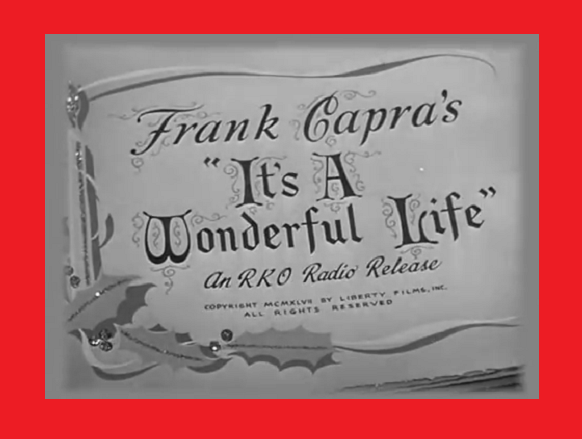
The Ethics Alarms 2021 Christmas Eve Edition Of The Complete “It’s A Wonderful Life” Ethics Guide!

Wonderful Life2

2021 Introduction

I haven’t seen the film yet this holiday season, but I did listen to the radio version, also starring James Stewart and Donna Reed last night. It’s not much of a substitute. As it was with last year, this movie’s intended message needs to be considered and taken to heart in 2021. Frank Capra, the movie’s director ,designed the film to explain why it’s a wonderful country we live in. It may be that more and more vocal and powerful people want to send the opposite message today than ever before.

The fascinating and moving documentary “Five Came Back” (on Netflix) has been shown several times in the Marshall house this year. It tells the story of how five of Hollywood’s greatest directors, William Wyler, George Stevens, John Ford, John Huston and Frank Capra were recruited by the Pentagon to document World War II, some of their efforts to be used as propaganda, some as a record of remarkable time. All five directors were profoundly changed by what they saw, and Capra was no exception. He went into the war as perhaps America’s most popular film director, creator of upbeat movies celebrating common Americans doing extraordinary things, the nation’s families, the power of love and American exceptionalism. They called his movies “Capra Corn,” and the description fit such classics as “Mr. Smith Goes To Washington,” “Meet John Doe,” and other critical and box office hits. Following World War II and his experience overseas, Capra no longer felt as upbeat about life and human nature, though he remained a passionate patriot. Like the returning soldiers found the culture changed and his emotions raw. Families whose loved one had died or returned with disabling wounds struggled to believe that their sacrifices were justified. The atom bombs that ended the war also opened up a dangerous new era of paranoia and fear.

Capra and his director compatriots in the war effort decided to start a new production company, driven by directors rather than soulless studio moguls.  “It’s A Wonderful Life,” a far more complex and often dark story than the pre-war Capra creations, was chosen to be the first project of the new Liberty Pictures. Based on an idea by author Philip Van Doren Stern, it was the story of a good man who becomes bitter and disillusioned when his plans and aspirations become derailed by the random surprises of life.  Unable to get his short story published, Stern had sent it to friends as a 21-page Christmas card. Film producer David Hempstead read it, and bought the movie rights for Capra’s company. The story was just what America needed, Capra reasoned, to restore its belief that what the nation had accomplished was worth the pain, loss and sacrifice, and that the nation itself had led a “wonderful life” despite many mistakes and missteps. The new film could restore the nation’s flagging optimism, pride and hope.

Capra immediately thought of actor and now war hero James Stewart to play protagonist George Bailey. Three years of flying bombing raids against the Nazis in the US Air Force had left the the 37-year-old suffering from post traumatic stress syndrome, and like his non-celebrity comrades in arms, Stewart returned home in 1945 to find that everything had changed: his contract with MGM had run out, his agent had retired, and other stars had taken his place. Stewart signed on with the ambitious project, hoping neither of them lost their  touch.

As production proceeded in 1946, the cast and crew felt they were making an important movie. Bedford Falls became one of the largest American film sets ever created to that point at four acres, with 75 fake stores and buildings, a three-block main street, and 20 full-grown oak trees. To avoid the traditional problem of fake-looking snow, the special effects department invented a new and more realistic process. (I wish it was used more often: fake snow drives me crazy in movies.)

Stewart, who was still suffering from the effects of the war and at times was close to quitting. In the scene where George, in a roadside bar, desperate and defeated, is praying to a God he doesn’t believe in. He rubs a trembling hand against his mouth, and starts to cry. The gesture wasn’t in the script, or requested by Capra. It was real.

Stewart explained years later,

“I felt the loneliness, the hopelessness of people who had nowhere to turn, and my eyes filled with tears. I broke down sobbing. That was not planned at all.”

Stewart felt George Bailey was his career’s best performance (it is) and Capra believed he had made his best film. “I thought it was the greatest film I ever made,” he said later. “Better yet, I thought it was the greatest film anybody ever made.”

It may be, but it started out as a catastrophic flop. The movie lost money and its failure killed Capra’s production company. His directing career never recovered, and what he believed was his greatest work was forgotten for decades. Republic Pictures, which owned the film’s copyright, didn’t bother to renew the rights in 1974. It was essentially free to local television channels, and they began showing it constantly.

Quality and genius have a way of defeating critics. Capra was right, Stewart was right, the cast and crew were right. It is a classic; more than that, it is a movie that can change lives. The story accomplishes just what Capra intended it to accomplish. In a New York Times piece about the movie by a self-professed cynic, Wendell Jamieson wrote about seeing the movie for the first time as teen in a classroom showing, and confessed,

It’s something I felt while watching the film all those years ago, but was too embarrassed to reveal….That last scene, when Harry comes back from the war and says, “To my big brother, George, the richest man in town”? Well, as I sat in that classroom, despite the dreary view of the parking lot; despite the moronic Uncle Billy; despite the too-perfect wife, Mary; and all of George’s lost opportunities, I felt a tingling chill around my neck and behind my ears. Fifteen years old and imagining myself an angry young man, I got all choked up. And I still do.

Yeah, me too. But the reason isn’t that its a manipulative, sentimental ending, though that was what contemporary critics complained about. The reason is that Harry’s toast states a life truth that too many of us go through our own lives missing. What makes our lives successful (or not), and what makes makes our existence meaningful is not how much money we accumulate, or how much power we wield, or how famous we are. What matters is how we affect the lives of those who share our lives, and whether we leave our neighborhood, communities, associations and nation better or worse than it would have been “if we had never been born.”

It’s a tough lesson, and some of us, perhaps most, never learn it. “It’s A Wonderful Life,” though it shows how one man finally got  the message using Heaven, alternate reality, angels and fantasy to do articulate it, can be a powerful ethics tool.

1. “If It’s About Ethics, God Must Be Involved”

Continue reading →

Hark! It’s The Christmas Eve Open Forum!

Merry Christmas, everyone! 

I can’t wait to see what ethical gifts you ethics angels leave under our metaphorical tree!

And Now, A Christmas Eve IIPTDXTTNMIAFB Video!

[You watch this at your own risk, and if you go blind or your brain melts, you were warned.]

I was wishing and hoping that YouTube would post this, because yesterday it was only available on platforms that WordPress won’t embed. And behold! There it was this morning. Yet another Christmas miracle!

I blush to admit that I have a lot of experience with this kind of earnest, faux-cheery performing: I’ve performed, choreographed and directed such junk myself. Never in the past 30 years, and never with performers in their thirties, however. Kids were best: they can get away with it. This “Up With People” -style horror was annoying when it was in vogue, but now it can only be justified as camp. To see middle-aged adults like this is excruciating, or should be. (I couldn’t last the full 2+ minutes. I just couldn’t)

I also note:

Continue reading →

Needed: A Civil Substitute For “Oh, Bullshit!” To Describe Kamala Harris’s Excuses

I know Ethics Alarms has covered this before ( like yesterday’s compendium, #4), but it’s “Popeye” territory: there’s only so much I can stand. Or “stands.”

Several sources are quoting (Ugh! Yecchh! Ptui!) Hillary Clinton’s assertion that poor Kamala Harris is being unfairly criticized because of her gender. You know, like Hillary was. ( I actually typed that without breaking up laughing. It’s a Christmas miracle!) The losing Presidential candidate responsible for the most incompetent campaign in U.S. political history said,

“There is a double standard; it’s sadly alive and well,” Clinton told the newspaper. “A lot of what is being used to judge her, just like it was to judge me, or the women who ran in 2020, or everybody else, is really colored by that.”

Harris, meanwhile, has been reportedly whining to staff and confidantes about how none of the previous 48 Vice-Presidents were covered as negatively as she, nor so insulted by critics. So now we know that on top of her other throbbing deficiencies, Kamala Harris don’t know much about history, to quote Sam Cooke. Continue reading →

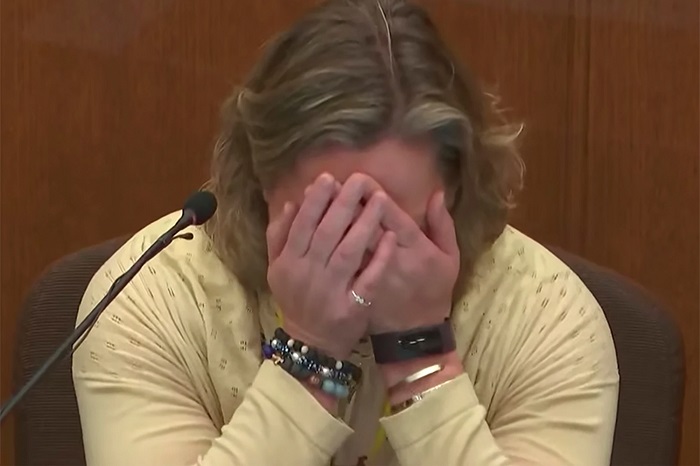
The Kim Potter Verdict

Kim_Potter

After four days of deliberations, a Minnesota jury found former police officer Kim Potter guilty of first-degree manslaughter and second-degree manslaughter in connection with the April 11th shooting death of Daunte Wright.

Bodycam footage of his arrest showed Wright, who was being detained after a traffic stop due to an outstanding warrant, struggling with police. He managed to evade them got back into the car. He appeared to be attempting flee in his vehicle. Potter could be heard saying, “I’ll tase you,” followed a few seconds later by, “Taser, taser, taser!” Potter then shot Wright with her gun. She immediately said, “Oh, shit, I just shot him.” Officers attempted CPR, but Wright was pronounced dead at the scene.

Neither the prosecution nor the defense seemed to question that Potter had made a terrible mistake in the heat of the confrontation. Based on the Minnesota first degree manslaughter law, I see no way Potter could have been convicted of that crime:

Continue reading →

Ethics Resuscitation,12/23/21: Lift, Spirits, LIFT!

Boy, has today ever been a rotten prelude to Christmas! There’s nothing like feeling like Bob Cratchit and Scrooge at the same time….Hit it, Judy!

Yeah, easy for YOU to say…

1. Admittedly, it’s hard to be unusually unethical on a phony show like “Paranormal Experiences,” but I was fascinated to see how actual news footage of a dog rescue would be tied into the show’s theme. A dog was viewed by a crowd at New York’s East River as it desperately dog-paddled for land, then panicked and began swimming in circles. A police officer dived into the freezing (and filthy) water and grabbed the dog by the collar, getting bitten in the face and hand in the process, to tow the canine to safety as the crowd cheered him on. How was this “paranormal”?

As one onlooker explained it, the officer was a water rescue specialist, and the crowd had gathered for a ceremony honoring him. It couldn’t be a mere coincidence that a drowning dog just happened to turn up during that ceremony for that officer, could it? No, something supernatural was afoot! Such a coincidence can’t happen by itself!

Yes, it can, and does, every day, many, many times, you moron. A TV episode like this makes the public stupid and superstitious, which makes them easy to manipulate and con. Given enough time and random events, anything that can happen will happen, and the proclivity to see portents and miracles in standard chaos-driven events undermines life competence.

Where do you think the term “lucky dog” came from?

Continue reading →

Hillary’s Unethical Lawyer Has An Unethical Plan To Keep The House Democratic

Machiavelli

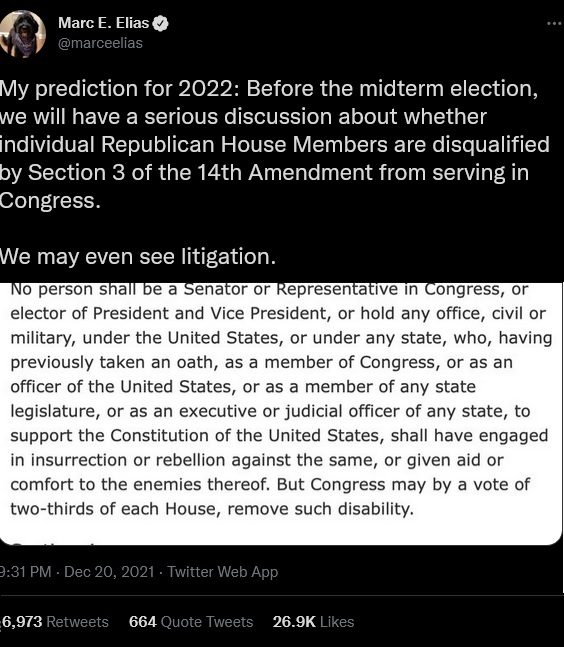
It is increasingly looking like Marc Elias, the chief lawyer architect of the Hillary Clinton campaign’s efforts to manufacture baseless suspicion that Donald Trump and his campaign “colluded” with the Russians to tilt the 2016 election, may face legal and ethical consequences for his role. We shall see: the investigation’s results are still being analyzed. Meanwhile, Elias is unrepentant and still devising ways to assist his favorite political party ( he has been often called the most prominent Democratic attorney in America ) with strategies for which “dubious” is a compliment.

Behold this tweet by Elias from this week:

Elias tweet

Continue reading →

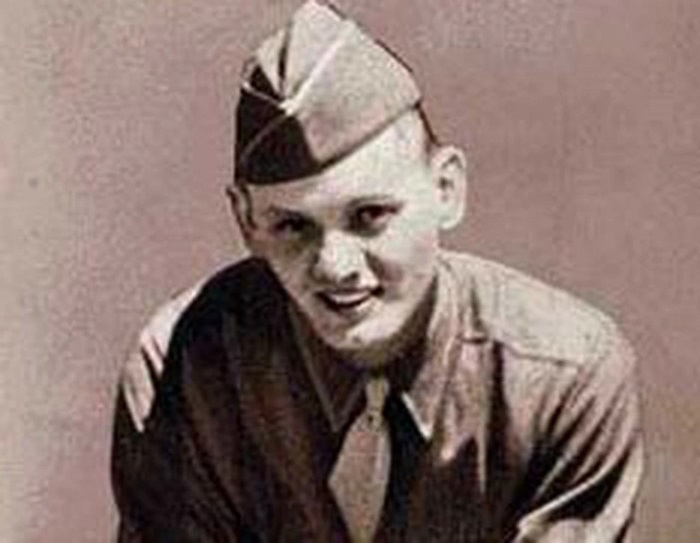
‘Making An Example’ Ethics: The Condemnation Of Eddie Slovik

Eddie Slovik

Last year, when I noted this story in the December 23 warm-up, I was asked if there would be more on the topic. Here is more. It deserves it.

During World War II, U.S. Army Pvt. Eddie Slovik was tried for desertion. On this date in 1944 he was found guilty in his court martial and condemned to death by firing squad. It was the first such sentence against a U.S. Army soldier since the Civil War, and Slovik was the only soldier executed for desertion in World War II. In the intervening years between then and now, his death has become a point of ethical controversy, never resolved, and generally debated before the public from an emotional rather than an ethical, legal or even a military perspective.

I was first told the story of Eddie Slovik by my father, a decorated army veteran and officer during the war. A fervent admirer of General Eisenhower, he still disagreed with Ike’s much criticized decision to allow Slovik’s execution by firing squad to go forward. Dad was not supportive of the command principle of using a particularly blatant example of a crime to send a message to others considering similar conduct, and having had several Eddie Sloviks to contend with under his command, he did not like the resolution of the Slovik dilemma.

I argued the point with him many times over the years. “The question isn’t whether it was fair for Slovik to have been shot,” I told him. “It was. The question is whether many more deserters should have been shot as well.”

Private Eddie Slovik was a draftee, and not a good bet to be a good soldier. He had been classified 4-F because he had spend time in prison for a felony (grand theft auto), but was deemed draftable as the Allied war effort required quantity even more than quality as the conflict dragged on. He was trained to be a rifleman, though Slovik claimed that he hated guns.

In August of 1944, the Army shipped Slovik to France to fight with the 28th Infantry Division, which had suffered massive casualties. When he experienced being under heavy fire for the first time, Slovik concluded that he would not make it in combat. Though the current trend is to say that he and a friend “got lost,” it seems more likely that they were hiding before they turned themselves in to the Canadian military police. The Canadians returned the two to the Americans after about a month and a half.

Slovik asked the company commander if “getting lost” again would be considered desertion. Despite being warned that it would be, he went AWOL, then the next day turned himself in at a nearby field kitchen. He handed the cook this statement:

Continue reading →

It’s An IIPTDXTTNMIAFB Video!

I would have posted this Tik-Tok video earlier, but WordPress will only embed YouTube, and it took a while for that platform to keep down its gorge and include this offal. It has IIPTDXTTNMIAFB (“Imagine if President Trump did X that the news media is accepting from Biden.”) written all over it.

This desperate pro-vaccination PSA seems to have cornered the adjective “cringeworthy,” and teens are using that description as much as adults. The “Joe Byron” reference has to do with another viral video by the YouTube channel SideTalk, which features a bunch of weirdos from Coney Island referring to the President by that name.

Oh. How…clever. Apparently the target audience for a video featuring the Jonas Brothers acting like 10-year-olds are insulted that such an appeal would be regarded as persuasive, and recognize condescending pandering when they see it. The non-target audience is wondering what the President of the United States is doing lowering the stature his office by appearing with these clowns.

Now, just imagine the media reaction if Trump had been the guy with the camera instead of “Byron.” Look who this reality show phony gets to deal with a life and death catastrophe like a pandemic! Norms! Norms! Well, some norms really shouldn’t ever be destroyed…like the norm that Presidents don’t toss away their dignity on the likes of the Jonas Brothers.

___________________

Source: Rolling Stone

Rationalizer Of The Year: Drunk Driver Perla Aguilar

(I was hoping to get Sidney Wang out one more time before New Years…)

Perla Aguilar, 27, was arrested for DUI in Oklahoma, and had an excuse she apparently thought would clear everything up. Slurring her words as she spoke, Perla explained to the arresting officers that she should be in the clear because she “does this all the time.”

Continue reading →