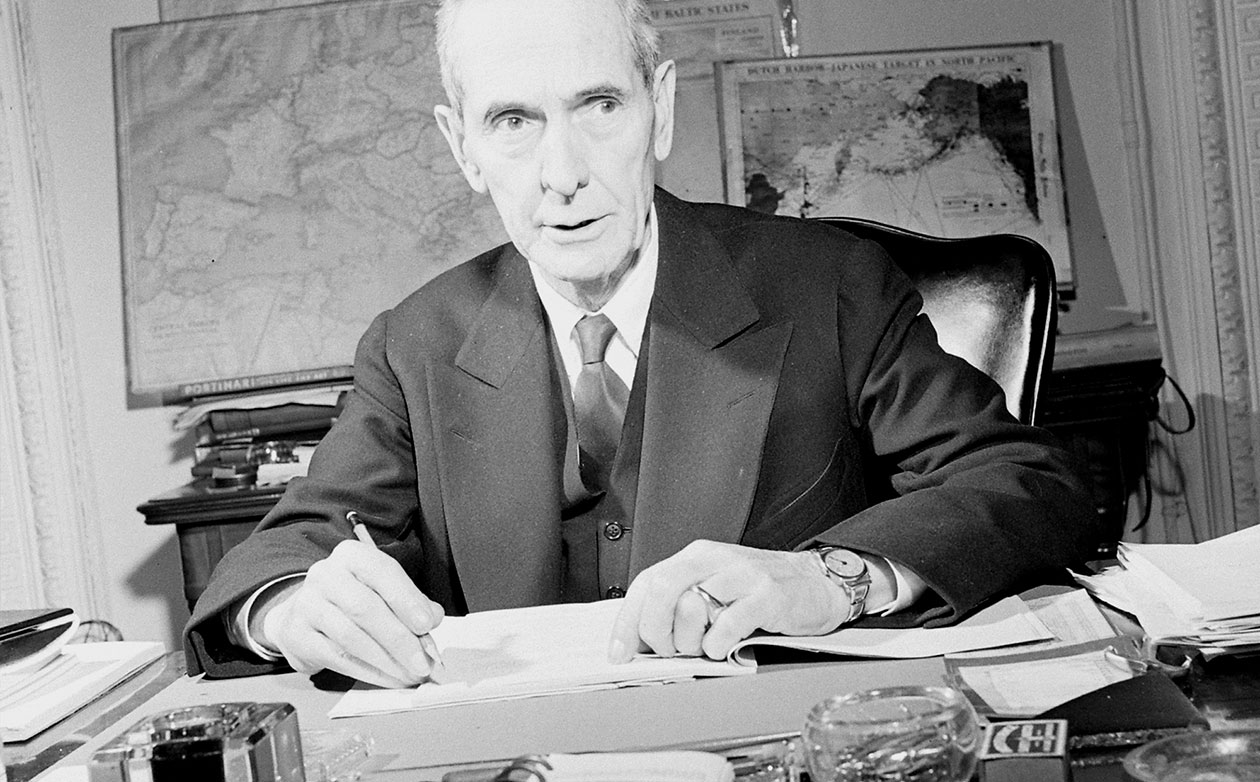
FDR’s State Department And The WWII Obstruction Of Jewish Refugees

breckinridge-long

Guest post by E2

[Introduction: I was pleased to see this addition today’s Open Forum by E2. I have seen “American Holocaust: Deceit and Indifference,” and intended to eventually do a post about this terrible episode in U.S. history. I was especially thrilled to see the references to Breckenridge Long (above). I have long considered building a page here of American ethics villains through the years, and Long deserves to be on it.]

***

I spent 90 excruciating minutes a couple of weeks ago watching “American Holocaust: Deceit and Indifference”– a PBS documentary which unlike other PBS productions actually tries to relate an unvarnished truth. It is a devastating piece, and oddly, seems to disappear and then reappear on Amazon.

I knew a fair amount about all this from my history reading, but this was much more. It has real photographic documentation (e.g., a photo of a document about Jewish immigration to the US, with a handwritten note: “Ignore… [signed] FDR”); and a detailed photograph of the State Department’s Breckenridge Long’s advisory to US consulates worldwide about ways in which they could delay Jews’ emigration to the US between 1940 and 1944 – not coincidentally when 6 million died at the hands of the Nazis.

Slavery, our original sin, is not the topic here. And yes, we denigrated and mistreated the Irish, Italian and Chinese immigrants, but at least they were allowed to come here and had a chance to live. Not so for the Jews in Germany and Eastern Europe when the Final Solution arrived. The horrible truth is that it was not a primary cultural or bias problem among the general population that condemned so many innocent Jews including children to death, but a persistent and sinister State Department policy.
Continue reading →

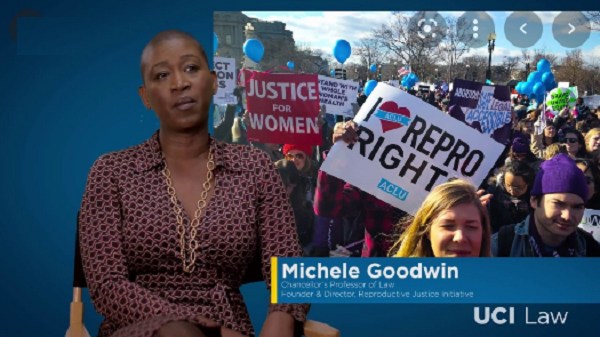
Ethics Villain: University Of California Prof. Michele Goodwin

Goodwin

Why does Ethics Alarms rate Professor Goodwin an Ethics Villain rather than the more common, and usually forgivable, status of Ethics Dunce? It is because in her op-ed for the New York Times, “I Was Raped by My Father. An Abortion Saved My Life,” she deliberately misrepresents the law and ethics of the abortion issue while using her status as a law professor to mislead readers. She also presents an argument that is purely an appeal to emotion, though as a scholar and teacher she is professionally obligated not to advance a position without basing it in reason and fact.

There is nothing unethical or inappropriate about Goodwin advancing a pro-abortion position if she does so honestly. She is obviously committed on the issue as the founding director of the U.C.I. Law Center for Biotechnology and Global Health Policy and its Reproductive Justice Initiative, and the author of “Policing the Womb: Invisible Women and the Criminalization of Motherhood.” Terrific: make your case, Professor! I have an open mind; I look forward to reading it. You obviously have the skill, background, experience and erudition to be enlightening and persuasive on the topic.

But Goodwin doesn’t make a legal case, an ethical case, a moral case or even a logical one in her op-ed. Doing any of those require acknowledging counter arguments and rebutting them with facts and analysis. Instead, her essay goes straight for the heartstrings and viscera, bypassing the brain entirely.

Goodwin was raped by her father when she was 12, you see. How horrible. She courts our sympathy, and, not inappropriately, receives it. However, she never makes the case that a young woman’s (or girl’s) misfortunes, however severe, justify taking the life of another human being.

Continue reading →

What Is The Ethical Response To Marcus Lamb’s Ironic Death?

Lamb

Marcus Lamb, the evangelical founder of the Texas-based Christian television network Daystar, died on November 30. In an example of extreme cosmic irony/justice/retribution/satire, the cause was a virulent case of infection from the Wuhan virus. The previously healthy (though he had diabetes) 64-year-old was unvaccinated, and indeed was a vocal antivaxxer. Lamb, his wife (they were a Jim and Tammy-style team) and other Daystar broadcasters have been opposing the pandemic vaccines, presumably influencing many of the more than 108 million households the network reaches via cable TV providers to do likelwise On May 10, for example, the Lambs claimed that the vaccines “killed your immune system.”

“We want to warn you, we want to help you, we want to give you an alternative,” Lamb said. The alternatives he recommended were ivermectin, budesonide and hydroxychloroquine, all drugs that have not been proven to be effective or safe in the treatment of the virus, and, naturally, prayer.

Well, as Old Lodgeskins memorably says in “Little Big Man,” “Sometimes the magic works, sometimes it doesn’t.”

Continue reading →

Open Forum!

Abyss

The previous open forum, in the midst of Thanksgiving weekend, was a bit of a dud (though EA applauds those intrepid, dieting readers who posted), so I’m hoping for a rebound. This is especially true because I’m swamped all of a sudden with more ethics stories than I can cover with the thoroughness they deserve. And this morning’s paper added to the crisis with six new issues or revealed angles on old ones that need coverage.

See what you can do. I’ll be grateful.

Evening Ethics Exploration, 12/2/21: It’s Enron Day!

enron-logo5b45d

Yes, December 2 is the day Enron, one of the great corporate scams of all time, declared bankruptcy. On this date in 2001, the saga of the Enron Corporation began to unfold, and what an ugly story it was.

Formed in 1985 as the merger of two gas companies, Enron prospered under chairman and CEO Kenneth Lay to rise as high as number seven on Fortune’s Top 500 U.S. companies. By 2000, the company was employing 21,000 people and claimed revenue of $111 billion. But rumors of shady dealings caused Enron’s stock price to plummet, and by November 30, 2001, it was worth 26 cents a share. Lay sold off his Enron stock, while encouraging Enron employees to buy more shares, ssuring them that the company was on the rebound. Nice. Employees’ retirement savings accounts were wiped out, and by the end of the year, Enron’s collapse had cost investors billions of dollars, put 5,600 out of and rendered almost $2.1 billion in pension plans worthless.

Somewhere in my office I have a copy of an Enron employee ethics handbook with a touching introduction by Ken Lay about the company’s commitment to integrity, honesty, and transparency.

1. Bye! I was just in Shirlington Center in Arlington faced with time to kill as a service station fixed a tire. I was about to wander into a new establishment called “Damn Good Burgers,” but there was a prominent “Black Lives Matter” sticker on the door, so I went elsewhere. I don’t care about the politics of businesses or their owners, as long as they deliver what they advertise at reasonably good quality and prices. But if they require me to tacitly endorse a racist, violent, anti-American movement led by Marxists, they can bite me. If your business is going to engage in cheap virtue signaling, it better be actual virtue.

2.’This is the tragedy of Woke Hysteria. Won’t you help with a tax deductible to help people like this?‘ “The Ethicist” (in the New York Times Magazine) got a tortured inquiry from a young woman called “Name Withheld By Request.”

When my father died, I inherited a large trust fund and sole ownership of a family business. I was young and woefully unprepared, so I put my inheritance on the back burner and lived my life as if I was financially “normal.” However, since the pandemic, my portfolio has hit a new high. I am utterly distraught. I feel that I should have never gotten so wealthy when people are suffering so much.

I’ve been seriously considering giving a large portion away, but the more I talk to people, the more I realize that to give away large sums of money responsibly and ethically turns my life into a job that I never wanted. I don’t want my father’s money to become my life, my career or the most significant thing about me, even though I know that I benefit from it. I have privileges with it, it gives me options and frankly I could not afford to live in a big city without it.

My questions are these: How much money is it ethical to keep, and how much would it be ethical to give away? What is the best way to decide who should receive the money? And how much time and responsibility and rewriting of my life do I owe this gift that often feels like a burden?

Continue reading →

Ethics Alarms To NYT Columnist Ross Douthat: “Exactly!” (Corrected)

Abortion monument

I’m still working on the Ethics Alarms prescription for an ethical national policy regarding abortion. The briefs and oral arguments in the Dobbs v. Jackson Women’s Health Organization case now before the U.S. Supreme Court are useful, but I received a special assist this morning from Times columnist Ross Douthat, who presented a full page, marvelously thorough and ethically spot-on analysis of the issue in an essay titled, “The Case Against Abortion.”

I wish I had written it, but I am grateful that he did. He deserves to have it read thoroughly by all, but some especially apt sections shout out for special mention:

  • “At the core of our legal system, you will find a promise that human beings should be protected from lethal violence. That promise is made in different ways by the Constitution and the Declaration of Independence; it’s there in English common law, the Ten Commandments and the Universal Declaration of Human Rights. We dispute how the promise should be enforced, what penalties should be involved if it is broken and what crimes might deprive someone of the right to life. But the existence of the basic right, and a fundamental duty not to kill, is pretty close to bedrock.

    “There is no way to seriously deny that abortion is a form of killing.”

    And that must be the starting point for any policy debate.

Continue reading →

Comment Of The Day: “Is It Too Late To Call It “The Wuhan Virus” Or Better Yet, ‘The China Virus’?”

China Lied

Too strong?

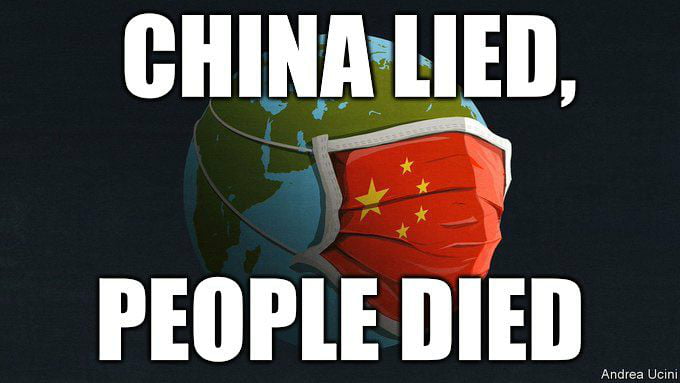
Extradimensional Cephalopod, as is his (it’s?) wont, chose to approach the question of what to call the pandemic virus (I am unalterably devoted to calling it what it is, as a deadly pathogen that developed in China and allowed to infect the world BY China “the Wuhan virus” in order to ensure that accountability, blame, and, if possible, liability attaches now and forever) by seeking an ethical process that has applications in other contexts. Below is his Comment of the Day on the post, “Is It Too Late To Call It “The Wuhan Virus” Or Better Yet, “The China Virus”?

Recent news has reinforced the unavoidable conclusion that China is a corrupting influence on the world and it culture. Disney, which like so many, indeed most—all?—major corporations has no ethical principles it is willing to lose profits from hewing to if at all possible, censored an episode of “The Simpsons” that satirized the nation and its government. Disney eliminated the episode from the package it sold to Chinese media. Let’s be clear: this means that Disney is assisting China in government censorship of creative expression arising in Disney’s own nation, and also assisting China’s totalitarians in controlling the minds of its population. I regard the “Covid” cover word being used to avoid connecting this regime with the disaster its habits created to be a similar form of complicity.

Now here’s “the Squid”: I’ll be back ever so briefly when he’s finished:

*** Continue reading →

Ethics And Those Wacky Cuomo Boys, 2: Andrew And His Book

Chris’s scandal may be more embarrassing, but Andrew’s latest problem may be more expensive.

In July 2020, then-New York Governor Cuomo, riding high in the public eye, asked the state ethics panel for permission to write a book about his leadership during the pandemic.

I must interject here that such books are virtually always unethical, often in multiple ways. I say “virtually” because there really may be some instance, buried deeply in the sands of time, when a book written while a popular elected official (or a First Lady) was in office and published with that official’s name as the author was really written by the official in his or her spare time, wasn’t just a government-funded campaign and propaganda tool, and also didn’t provide a way for supporters both individual and corporate to launder contributions. Maybe, but I doubt it.

For one thing, if an elected official spends any time at all writing a book during his or her work day, he or she is getting paid by taxpayers to do work that primarily benefits the official. Books are hard. Books take time. Trust me on this, I’ve co-written one, and would have five more (I have the titles and outlines!) out there if I could get out of my own way. But my time is my own: I don’t bill clients for writing this blog, and any time I spend writing a book is time I don’t get paid for. Governors, like Presidents, are paid to be on-duty every waking hour.

Continue reading →

December 1 Ethics Considerations: Five Big Ethics Stories That I Should Write More On…

Dad1

Yikes. There are several items below—in fact, all of them— that I would like to devote whole posts to, but far more in my In-Box that I have to devote whole posts to. For some reason, the ethics issues dam has burst in the last few days.

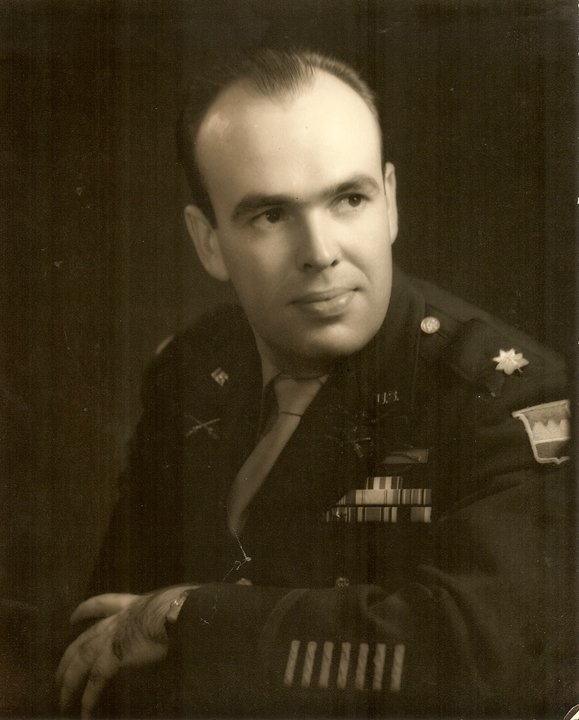
That’s my father above, who died on this date in 2009. I’ve been thinking about him a lot today.

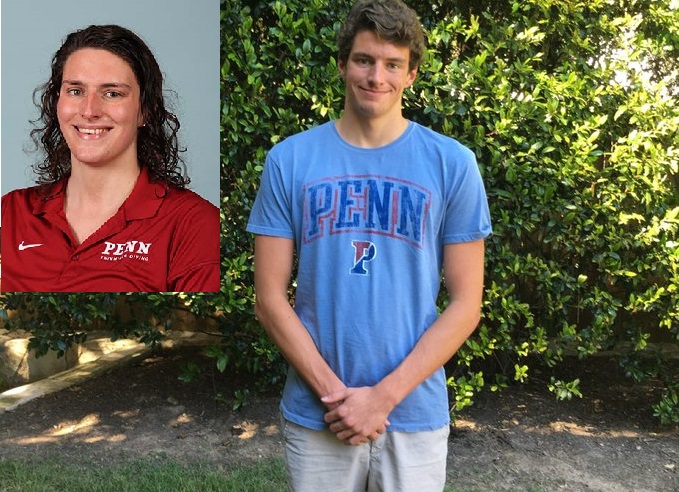
1. There should be no controversy over this: it is wrong, unfair, and absurd for Lia, formerly “Will,” Thomas to compete as a female swimmer in collegiate competitions. Here is the transitioned, now female, former University of Pennsylvania’s men’s swim team star (for three years). His “after” photo is on the left. Oddly, his various treatments and operations have left him a better swimmer as a side effect! Well, that’s not quite right, but she’s dominating the women’s meets, as against Columbia University last month when she won a pair of gold medals in the 200 free and 100 free with margins of 5.4 seconds and 1.3 seconds.

That photo on the left is virtually the only shot of Lia now: I can’t find any full body shots since she transitioned into a championship competitor. Hmmmmm...

Lia Before

If female swimmers who haven’t had the boost of going through male puberty don’t have the guts to protest this, then they deserve what happens. That goes for the female athletes in every other sport as well, and their parents, and their coaches, and the feminist weenies who are allowing women’s sports to be destroyed by their unwillingness to appear “unwoke.”

No question, excluding trans, ex-males from gender-segregated sporting events is a hardship for the new women. I’m sympathetic. I am. But it makes no sense ethically or logically to allow the special problems of a tiny minority to harm the vast majority of female athletes.

Continue reading →

Ethics Hero: Twitter

twitter4

Ethics Alarms has honored some unlikely people as Ethics Heroes—Bill Clinton, Bill Maher, and Terry McAuliffe, for example. Twitter nabbing the distinction may be a record for cognitive dissonance, though. It is an unethical company, with a platform that does more damage than good. And yet…

Twitter announced that it was expanding its private information policy to forbid posting the ” media of private individuals without the permission of the person(s) depicted.“

Good.

Not that this policy is remotely possible to enforce; it isn’t. “When we are notified by individuals depicted, or by an authorized representative, that they did not consent to having their private image or video shared, we will remove it,” Twitter explains. “This policy is not applicable to media featuring public figures or individuals when media and accompanying tweet text are shared in the public interest or add value to public discourse.”

Yes, the policy goes well beyond any legal restrictions: that’s what makes it ethical rather than compliant. What is ethically admirable about the rule is that it calls attention to an ethical violation so common that few think it is a violation at all. When I allow a friend to take a photo of me, that is consent for that friend to make and have a copy of my likeness. It is not consent for my likeness to be circulated to the world on social media, included in facial recognition databases, be manipulated digitally to embarrass or humiliate me, or any other purpose. No law will help me claim that I did not consent to circulation of my likeness, which is why Naked Teachers have a problem. The law assumes that such use can and should be anticipated when I let myself be photographed. That, however, is a legal fiction. I have seen, online, photos of me when I wasn’t aware that I was in the picture. I hate photos of me.

Continue reading →