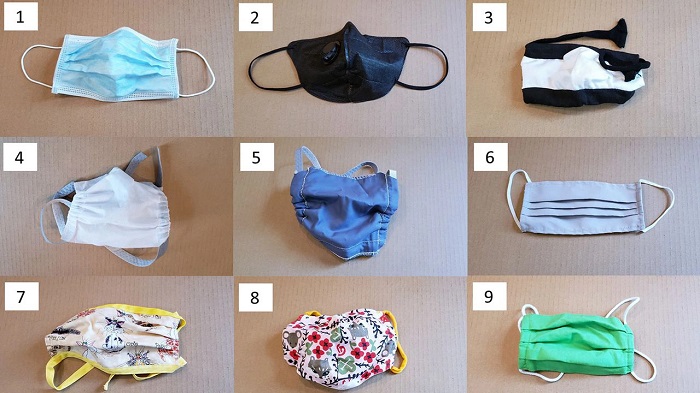
On Masks, I Get The Message…

face-masks-chart

The New York Times has been a primary offender in fearmongering and hyping the pandemic, while trying to bolster the efforts of power-abusing mayors and governors to make life miserable for the public in order to show they are “doing something.” Thus when the Times published this article, with the sub-head, “The accumulating research may be imperfect, and it’s still evolving, but the takeaway is simple. Right now, masks are necessary to slow the pandemic,” I assumed that I would read an unequivocal, full-throated, air-tight brief for mask-wearing.

Well, it wasn’t. In fact, there is so much equivocation and doubt in the article, which announces itself as pro-mask, that it reinforces the conclusion that the case for masks is being overstated, which is to say dishonestly reported. The takeaway is “simple” if one is inclined to blindly follow orders without good reason. I’m not.

The thing is rife with red flags. “May be imperfect” is a euphemism for “it might turn out that this is all wrong.” “It’s still evolving” is another dodge. One section of the article is headed, “Over time, recommendations on masks have changed. That’s how science works.” Wait, aren’t we always being told that challenging conventional scientific “consensus” is being a science denier? Skepticism is just a caution that what is being pronounced as the absolute answer isn’t as certain as its advocates claim. Here, the Times is saying that science being proved wrong is “how science works.” This is obviously a procrustean standard at best. “Believe what we say, because we are scientists, but when it turns out we were wrong, that just proves how trustworthy we are.”
Continue reading →

An Ethics Alarms Reader Challenge: Is Time’s Up A Scam, Or Is It Doing What It Is Supposed To Be Doing?

times-up

This is really a journalism ethics matter. On November 28, The New York Post announced that Time’s Up, the #MeToo inspired Hollywood organization, had misused and wasted its funds. Yesterday there was a follow-up piece, headlined, “The Sad tale of Time’s Up and Hollywood’s failed activism.”

Taken together, the two articles are contradictory, confusing and raise as many questions about the reporters’ competence as they do about Time’s Up. If there is anyone who can decipher this mess, please do. I have a headache.

Following the fall of Harvey Weinstein and the vigor of the resulting #MeToo movement, the Time’s Up organization was formally launched on January 1, 2018. At that year’s Golden Globes a few days later, Meryl Streep, Laura Dern, Emma Watson, Michelle Williams and others arrived on the red carpet with women’s rights activists in tow. Oprah Winfrey gave an impassioned speech on the broadcast, saying, “I want all the girls watching here and now to know that a new day is on the horizon! . . . The time when nobody ever has to say ‘me too’ again!” Her speech sparked talk of her running for President.

#MeToo has become a rueful joke with the blind endorsement of Joe Biden, sexual harasser and accused workplace sexual assault purveyor, by most of its most prominent advocates. Time’s Up, however, includes a 501(c)3 non-profit organization, and has formal and legal obligations, not just ethical ones. The Time’s Up organization consists of the Time’s Up Foundation and Time’s Up Now Inc., a 501(c)6. There is also a Time’s Up Legal Defense Fund.

I defy anyone to make sense out of the two Post articles. To begin with, why does it only discuss the figures for 2018? 2020 is almost over; surely 2019 figures are available. Were they better? Aren’t the most recent years the most important ones? The articles say that in its first year of operation, Time’s Up spent just $312,000 of the more than $3 million it raised on sexual misconduct victims’ legal bills. It then points out that Charity watchdog groups such as Charity Navigator recommend that non-profits spend 75% of their revenues on their mission and no more than 25% on administration. “Time’s Up spent 38% on salaries alone,” it says. But Charity Navigator only “watches” charities, and those guidelines only apply to 501(c)3 organizations like the Times Up Foundation.

Continue reading →

Ethics Dunces: Apparently 30% Of Democratic Voters

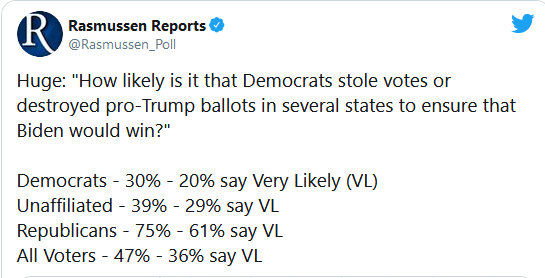
Rasmussen Tweet

We must begin with the fact that polls of all kinds have the approximate credibility of palm readers. Rasmussen, however (and Gallup) disgraced itself rather less than its competitors in measuring the election trends before November. The verdict of Ethics Dunces would still hold if the percentage was 20%, 10% or 100%, however. The polling results above were published on November 20; maybe fewer people are convinced now that the election was stolen, since the various challenges filed in court have been failing. The statistics above still prompt these observations:

1. If Democrats think that their party steals elections, making it a threat to Democracy, why do those Democrats continue to identify with a party that cheats? The only explanation can be that they do not support Democracy, and believe that their will should be imposed on their fellow citizens by illegal means, They are totalitarians by philosophy and nature.

Continue reading →

The Vanderbilt Female Kicker Ethics Mess

Fuller

I’m not even sure what to call the display of dishonesty and posturing that unfolded over the weekend at Vanderbilt. Disrespect for the game and intelligence of fans? Lack of integrity? Incompetence? Dishonesty? Shameless exploitation? Patronizing and insulting women? I’m not sure, but whatever it is, it was all unethical.

Let’s look at the components of this ethics mess (it’s not coherent enough or significant enough to qualify as an ethics train wreck):

1. Derek Miller, the coach of Vanderbilt’s football team, had all of his kickers turn up positive for the Wuhan virus, on game week, so allegedly in desperation, he made Vanderbilt women’s soccer goalie Sarah Fuller the first woman to play in a Power Five conference football game by handing her the job of kicker. She had never kicked a football in a game in her life.

Nobody, literally nobody, believes that there weren’t many members of the team, and maybe all of them, that would have been a better bet to rely upon than Fuller. The team was 0-7 before the game against Missouri—and 0-8 after it, by the humiliating score of 41-0—and the attempt to appeal to campus feminists and woke alumni seems like a desperation move by Coach Miller to save his job. Of course, that meant sacrificing the team’s interests for his own, which is unethical management. Whatever hismotive, it didn’t work: he was fired the next day. In his farewell statement, Miller referenced coaching and mentoring “hundreds” of young men and “one courageous female.” From Tuesday through Saturday afternoon.

2. Sure enough, the coach’s cynical use of Fuller got massive publicity, all positive. Since the team never scored or got within range of a field goal, Fuller got to kick the ball exactly once, to begin the second half. She delivered a 30 yard squibber that gave Missouri the ball on its 35 yard line. The pathetic kick went only 20 yards in the air and rolled another ten before the Missouri team saved face for her by jumping on the ball before it went out of bounds and drew a penalty.

For that performance, the SEC named Fuller the special teams “Player of the Week.” As Kamala Harris has proved, in 2020 a woman can be regarded as a standout by simply showing up. Performance doesn’t matter, just chromosomes.

3. Then Fuller revealed that she had the audacity and bad taste to lecture her team mates for a day on the right way to play football.

Continue reading →

Morning Ethics Warm-Up, 12/1/2020: Satchel Paige Edition

Satchel

Why Satchel Paige? The legendary Negro Leagues pitcher and member of baseball’s Hall of Fame once said, “How old would you be if you didn’t know how old you was?” Satchel wasn’t fooling: having played most of his career when blacks were blocked from the Major Leagues, Paige was still good enough at 42 to join the 1948 Cleveland Indians as a relief pitcher, and was effective enough to be contender for Rookie of the Year. Then he became the oldest pitcher to start a Major League game, shutting out the Boston Red Sox for three innings at the age of 59.

In my case, the answer to Paige’s question would be about 18, or perhaps 10. Surely not the age my arithmetic tells me, which is depressing and a little frightening. Every December first since 2009 has been a day with bad connotations: I found my father dead in his favorite chair that year, when I checked to see if he was going to have dinner with me as we had planned. This year there are two. Well, Dad soldiered on to have 19 more productive and mostly happy years after he reached my age, and he was being treated for cancer by than, and I’m not. There aren’t many ways I can top my father, but at least that’s gives me something to shoot for.

1. Wow. You don’t get to see such naked bias and hate just put out there in the media like this very often…Just think: a Washington Post editor okayed this article attacking the White House Christmas decorations and using them to excoriate Melania Trump for existing. How petty and ugly can a writer be and still get published? I guess it depends on whether or not your target is the Trumps.

The “money quote”: “[T]he defenders of Melania have always insisted on comparing her to her predecessor, Michelle Obama, and it became hard to believe that “elegant” was a code word for anything other than “White.” Melania is “elegant” because she represented a very specific kind of White femininity: silent, lovely, delicately fingering the ornaments that her staff had assembled.” The author is Monica Hesse, the Post’s gender writer. She is a biased, vicious, jerk. It is so obvious that Melania Trump could design Michelle Obama’s White House decorations and Michelle could secretly design the Trumps’, and Hesse would pronounce what she thought was Michelle’s inclusive and brilliant, and would condemn what she thought Melania created.

You know, pretty much the way her paper covered the Obama and Trump administrations.

Continue reading →

Clarence Darrow’s Reflections On His 61st Birthday

picture-of-a-birthday-cake-with-lots-of-candles

On April 18, 1918, a group of Clarence Darrow’s friends and admirers gave him a testimonial dinner in celebration of his 61st birthday. Why 61? I have no idea. Today I hit the life milestone that my father refereed to as “entering the yellow zone,” and I admit, I’m a bit shaken by this development. In my head, I am forever 18. I don’t want to face the fact that I am running out of time to do so many of the things I should have done and wanted to do.

I decided to again read Darrow’s speech, apparently extemporaneous for the most part, on his thoughts at reaching the age of 61, which in 1918 was actuarially older than I am now. It’s pure Darrow, with many of the themes he echoed in his courtroom oratory, along with musings about ethics, God and the cosmos, and some heavy self-deception. Darrow said, for example, that he was “inherently modest.” Right. Maybe it was a laugh line.

Darrow mind fascinates me, as frequent readers here know. I enjoy his thoughts about age and life, and hope you will too.

Now here’s Darrow…

I have always yearned for peace, but have lived a life of war. I do not know why, excepting that it is the law of my being. I have lived a life in front trenches, looking for trouble.

If I had known just what I was to run into here I would have worn a gas mask. A man is never painted as he is. One is either better or worse than the picture that is drawn. This is the first time that I have felt that I was worse. No one ever gave me a dinner like this before, and I really do not know how my friends happened to take into their heads to do it this time. I am sure it has been pleasant, although in spots more or less embarrassing; still on the whole I prefer the embarrassments incident to this dinner, rather than the ones I often get.

Like most others who reach the modest age of sixty-one, I have hardly noticed it. Still this morning for the first time in more than twenty yeas I felt a twinge of rheumatism, a gentle reminder on this birthday that I am no longer a “spring chicken.” On the whole the years have passed rapidly. Some of them, it is true, have dragged, but mainly they have hurried as if anxious to finish the job as soon as they possibly could. So quickly have they sped that I hardly realize that so many have been checked off, in fact I have scarcely thought about it as they went by.

I have been congratulated a good many times today, no doubt on the fact that I am so nearly done with it all. One scarcely feels as they go along that they are getting–well older. Of course I know my intellect is just as good as it ever was; I am sure of that. Everyone tells me that I am looking younger. I had my hair cut about a month ago; a friend remarked, “It makes you look ten years younger,” so I had it cut again. Perhaps I shall keep on getting it cut. Of course, one more or less doubts the truthfulness of thee old friends, when they say you are getting younger, but at the same time you try to believe them and do not contradict.

Continue reading →

Comment Of The Day: “The Pandemic Creates A Classic And Difficult Ethics Conflict, But The Resolution Is Clear, Part II: The Amazing Vanishing Johns Hopkins Study”

Coronavirus_H

If Ethics Alarms has ever had more useful, substantive and valuable Comment of the Day than what Rich in Ct submitted in response to “The Pandemic Creates A Classic And Difficult Ethics Conflict, But The Resolution Is Clear, Part II: The Amazing Vanishing Johns Hopkins Study,” I can’t recall it. I’m going to dispense with my usual introductory remarks to let Rich take over. From here on it’s all him.

***

So I watched Dr. Briand’s webinar; it’s only 40 minutes if anyone else wishes to. (Disclaimer, I am not a medical nor public health professional, but neither is Dr. Briand).

I am not convinced by her analysis. I checked her original data sources, and found serious issues. Dr. Briand states that there is no evidence in the data that COVID is causing “excessive deaths”, but a chart I developed from the same data shows hundreds of thousands more deaths in 2020 compared to prior years. While COVID may not be the immediate cause of all these deaths, it appears to be a significant contributing factor.

The first chart in the PDF of the article about her work shows that the relative ages of people who died are consistent week to week from before and through the pandemic. I don’t take any issue with that conclusion. She states in the webinar there is an average of roughly 60K deaths week-to-week; this average seems reasonable.

However, this chart is misleading; while the percentage week-to-week is not changing, the total numbers of deaths do change considerably week-to-week, as I will show in a chart of my own developed from the same data.

Continue reading →

Ethics Hero: Sportswriter Jason Whitlock

Often where we find an Ethics Hero, there is an Ethics Dunce that helped to reveal him. That’s certainly the situation here. In this case, the Ethics Dunce is Shannon Sharpe, the NFL Hall of Fame tight end turned sports commentator, like Whitlock, an African-American.

According to reports, Dallas Cowboys head coach Mike McCarthy set out to inspire his team with a locker-room stunt stolen from the old prop comic “Gallagher” (whose charms, I admit, always eluded me). McCarthy produced a sledgehammer at a team meeting and smashed numerous watermelons, each with a point. NFL Network reporter Tom Pelissero described the scene after the Cowboys won the game (See? It worked!):

“Mike McCarthy gets up and says, ‘Guys, I want to apologize. I don’t think I did a good enough job emphasizing our objectives for the week’ — one of which was to hammer the ball out of [Minnesota running back] Dalvin Cook’s hands. At that point McCarthy pulls out a sledgehammer, not a prop, a full sledgehammer you could knock a wall down with, and someone rolls in a bunch of watermelons.Each one has a different objective written on it McCarthy reads the objective — BAM! — smashes the watermelon. He goes down the row doing this. The players are roaring, McCarthy’s pants are soaked. He finally gets to the watermelon with Dalvin Cook’s picture on it, DeMarcus Lawrence jumps up and goes, ‘I’ve got to get that one.”[McCarthy] hands the sledgehammer to Lawrence, and he smashes that watermelon.”

Continue reading →

Rainy Monday Ethics, 11/30/2020: Statues, Dogs And Lies

Also getting me down, Karen Carpenter songs. As with great movies with O.J. Simpson or Gig Young in them, these are hard to enjoy now, at least for me. One of the most lovely natural voices in pop music history was silenced by the pernicious disease of anorexia, exacerbated by, among others, her brother, her family, and music industry executives, who made Carpenter so self-conscious about her weight and appearance that she slowly starved herself to death before her 33rd birthday. I wish I could hear her sing—and I will do that a lot in the days approaching Christmas—without thinking about that, but I can’t.

1. Proposition: any nation’s historical figures who had the impact on those nations that Margaret Thatcher did in Great Britain over a significant period of time deserve to be memorialized with statues, absent some cataclysmic disqualifying act, like Richard Nixon’s Watergate scandal. Even in Nixon’s case, I would support a public memorial to such a historically influential figure.

In the English town of Grantham, where Thatcher grew up, an 11-foot pedestal awaits the arrival next year of a large statue of “the Iron Lady.” Apparently many in Britain, and a large proportion of Gratham’s working class residents, disapprove of Thatcher’s conservative politics and policies, and thus oppose the statue, which will be in immediate danger of toppling the minute it is erected.

Morons. One doesn’t have to personally agree with a historical figure’s position or even admire her to appreciate the impact that figure had. The criteria for memorializing prominent citizens should center on whether future generations need to know who they were and what they did, not whether their achievements and conduct are approved of according to often fleeting political, social and cultural values. Charles Moore, who wrote an authorized biography of Mrs. Thatcher, says, “It’s obvious there should be statues to Britain’s first woman prime minister. But…but…George Floyd! The New York Times’ article on the controversy says that statue toppling has become a world-wide phenomenon since the death of George Floyd. Now that makes sense: one of Great Britain’s most successful and important leaders should be robbed of her legitimate honors because a rogue cop accidentally contributed to the death of a black criminal in Minnesota.

Continue reading →

KABOOM! The Fake U.S. Wuhan Virus Statistics

Apparently the statistics we have been hammered over the head with for months, that have been used to frighten American, close schools, and manipulate Presidential elections, are pure, unadulterated kaka, and, more amazing still, health professionals have known this all along.

KABOOM!

Here is a quote casually thrown into an October Newsweek article about Joe Biden’s attempts to argue the President Trump’s policies have killed people (the bolding is mine):

Biden’s claim doesn’t acknowledge that the U.S. counts coronavirus deaths differently from other countries. Indeed, we are counting deaths differently than we have for any other disease. “The case definition is very simplistic,” Dr. Ngozi Ezike, director of Illinois Department of Public Health, explains. “It means, at the time of death, it was a COVID positive diagnosis. That means, that if you were in hospice and had already been given a few weeks to live, and then you also were found to have COVID, that would be counted as a COVID death. It means, technically even if you died of [a] clear alternative cause, but you had COVID at the same time, it’s still listed as a COVID death.”

Believe it or not, it gets worse. I, and many others, have long suspected that the Wuhan virus death totals were inflated this way, for reasons ranging to incompetence and laziness to greed and a deliberate intention to deceive the public. But here was the next brain-bomb (again, the emphasis is mine):

Continue reading →