From A Proud Abortion Defender, An Inconvenient Truth….

Snake eating its tail

A New York lawyer named Janice Mac Avoy gifted the Washington Post with an op-ed that was supposed to be a powerful brief for abortion. Viewing it as someone who is deeply conflicted about the ethics of abortion, which is to say, someone who is objective and who didn’t make up his mind first and then look for rationalizations to support that position, I recognized it as a perfect example of why abortion advocates still haven’t made a strong enough case for me, and perhaps why they can’t.

I am still surprised, somehow, when lawyers, like Mac Avoy, display poor reasoning skills. I shouldn’t be, I know: I’ve known plenty of dumb lawyers, even rich and successful dumb lawyers. I suppose I am hostage to the mythology of law school, that professors take students whose “minds are much,’ to quote Professor Kingsfield, and transform those minds into whirring computers of emotion- and bias- free rationality. Unfortunately, mush in, mush out tends to be reality.

Mac Avoy places her own mind in the mush column immediately, with her title “I’m a successful lawyer and mother, because I had an abortion.” This shows her adoption of the classic logical fallacy Post hoc ergo propter hoc, or “After this, thus because of this.” The statement is factually nonsense, and her column takes off from there.

Some highlights:

1. She writes…

“In spring 1981, I knew I wanted to be a lawyer. I was about to become the first person in my family to graduate from high school. I had a scholarship to college, and I planned to go on to law school. I was determined to break a cycle of poverty and teenage pregnancy that had shaped the lives of the previous three generations of women in my family — all mothers by age 18. Then, just before graduation, I learned I was pregnant. Knowing that I wasn’t ready to be a mother, I had a friend drive me to a Planned Parenthood clinic, where I had an abortion.”

Pop quiz: What crucial piece of information is glossed over, indeed strangely omitted, from that account? Mac Avoy “was determined to break a cycle of poverty and teenage pregnancy” —so determined and laser focused on the life goal that she suddenly woke up pregnant! How did that happen? Apparently, despite her representation to the contrary, she was not sufficiently determined that she was willing to refuse  to engage in the exact and only conduct that could foil her intent, and that she knew could foil her intent.

I’m not arguing that a teenage mistake of judgment should derail a life, but I am pointing out that to ignore that personal conduct, as Mac Avoy does, and pretend that pregnancy in every case is some unavoidable random tragedy like a rape or incest, is self-serving and intellectually dishonest, and like most pro-abortion rhetoric, avoids the key issues that make abortion a difficult ethical problem.

2. She writes… Continue reading

Comment of the Day (1), on Surrogate Ethics: “The Strange Case Of The Unwanted Triplet”

surrogate-motherIt’s very thoughtful of Ethics Alarms readers to provide such high level content so I have a chance of completing the 2015 Ethics Alarms Awards before March. I am awash in potential Comments of the Day all of a sudden, and this is the first of nesting COTDs, both inspired by the recent post on the surrogate with gestating triplets who is blocking the attempt of the biological father to abort Eenie, Meenie, or Miney, he doesn’t care which.

New commenter J. Jonah Jameson—presumably not really Peter Parker’s employer—submitted a helpful personal story that puts much of that drama in perspective. Here is his Comment of the Day on the post, The Strange Case Of The Unwanted Triplet:

I am the biological father of a child born of a surrogate mother. I’m sure ResurrectedToday is correct that the father fully knew that there was a chance of triplets. But the surrogate knew the same thing, and I’m almost 100% certain that she agreed in advance that she would have an abortion if the father requested it. (If not, then there are a lot of lawyers, doctors and other professionals who did not do their job.) Either she changed her mind, or she never really intended to abide by that agreement.

I can say a few things about my own experience:

1. There were a lot of people involved in the process: me, the surrogate, the donor, the three lawyers representing us, the doctors, and the psychologists and social workers at the lawyers’ and doctors’ offices. In almost every conversation that I had with any of these people, the subject of multiple births was discussed. Everybody involved understood clearly that there was a very high possibility of twins, triplets or even more.

Continue reading

The Strange Case Of The Unwanted Triplet

I want to hear the ethical analysis of this messy situation from abortion advocates/apologists/activists/feminists. In fact, I can hardly wait.

Melissa Cook is a surrogate mother whom a man paid $33,000 to have  his child by in vitro fertilization, using his sperm and the eggs of a 20-year-old donor. The 47-year-old California woman was implanted with three embryos, a not infrequent approach, but when all three developed normally and apparently healthily,  the birth father began to freak out. He didn’t want three kids, only two at most, and directed Cook to have one aborted. When she refused, he began threatening her  with threats of financial penalties if she did not comply with his demands that she undergo a one-third abortion. Continue reading

The Seventh Annual Ethics Alarms Awards: The Best of Ethics 2015, Part I

Sweet Briar montage

Welcome to the Seventh Annual Ethics Alarms Awards, our blog’s retrospective of the best and worst in ethics over the past year, 2015.

It was a rotten year in ethics again, it’s fair to say, and Ethics Alarms, which by its nature and mission must concentrate on episodes that have lessons to convey and cautionary tales to consider probably made it seem even more rotten that it was. Even with that admission, I didn’t come close to covering the field. My scouts, who I will honor anon, sent me many more wonderfully disturbing news stories than I could post on, and there were many more beyond them. I did not write about the drug company CEO, for example, who suddenly raised the price of an anti-AIDS drug to obscene levels, in part, it seems, to keep an investment fraud scheme afloat. (He’ll get his prize anyway.)

What was really best about 2o15 on Ethics Alarms was the commentary. I always envisioned the site as a cyber-symposium where interested, articulate and analytical readers could discuss current events and issues in an ethics context. Every year since the blog was launched has brought us closer to that goal. Commenters come and go, unfortunately (I take it personally when they go, which is silly), but the quality of commentary continues to be outstanding. It is also gratifying to check posts from 2010 and see such stalwarts who check in still, like Tim Levier, Neil Dorr, Julian Hung, Michael R, and King Kool.  There are a few blogs that have as consistently substantive, passionate and informative commenters as Ethics Alarms, but not many. Very frequently the comments materially enhance and expand on the original post. That was my hope and objective. Thank you.

The Best of Ethics 2015 is going to be a bit more self-congratulatory this year, beginning with the very first category. Among other virtues, this approach has the advantage of closing the gap in volume between the Best and the Worst, which last year was depressing. I’m also going to post the awards in more installments, to help me get them out faster. With that said….

Here are the 2015 Ethics Alarms Awards

For the Best in Ethics:

Most Encouraging Sign That Enough People Pay Attention For Ethics Alarms To Occasionally Have Some Impact…

The Sweet Briar College Rescue. In March, I read the shocking story of how Sweet Briar College, a remarkable and storied all-women’s college in Virginia, had been closed by a craven and duplicitous board that never informed alums or students that such action was imminent. I responded with a tough post titled “The Sweet Briar Betrayal,” and some passionate alumnae determined to fight for the school’s survival used it to inform others about the issues involved and to build support. Through the ensuing months before the school’s ultimate reversal of the closing and the triumph of its supporters, I was honored to exchange many e-mails with Sweet Briar grads, and gratified by their insistence that Ethics Alarms played a significant role in turning the tide. You can follow the saga in my posts, here.

Ethics Heroes Of The Year

Dog Train

Eugene and Corky Bostick, Dog Train Proprietors. OK, maybe this is just my favorite Ethics Hero story of the year, about two retired seniors who decided to adopt old  dogs abandoned on their property to die, and came up with the wacky idea of giving them regular rides on a ‘dog train” of their own design.

Ethical Mayor Of The Year

Thomas F. Williams. When the Ferguson-driven attacks on police as racist killers was at its peak (though it’s not far from that peak now) the mayor of Norwood, Ohio, Thomas F. Williams, did exactly the opposite of New York Mayor Bill de Blasio in response to activist attacks on the integrity of his police department. He released a letter supporting his police department without qualification. At the time, I criticized him for his simultaneously attacking activists as “race-baiters.” In the perspective of the year past, I hereby withdraw that criticism.

Most Ethical Celebrity

Actor Tom Selleck. In a terrible year for this category, Selleck wins for bravely pushing his TV show “Blue Bloods” into politically incorrect territory, examining issues like racial profiling and police shootings with surprising even-handedness. The show also has maintained its openly Catholic, pro-religion perspective. Yes, this is a redundant award, as “Blue Bloods” is also a winner, but the alternative in this horrific year when an unethical celebrity is threatening to be a major party’s nominee for the presidency is not to give the award at all.

Most Ethical Talk Show Host

Stephen Colbert, who, while maintaining most of his progressive bias from his previous Comedy Central show as the successor to David Letterman, set a high standard of fairness and civility, notably when he admonished his knee-jerk liberal audience for booing  Senator Ted Cruz

Sportsman of the Year

CC Sabathia

New York Yankee pitcher C.C. Sabathia, who courageously checked himself into rehab for alcohol abuse just as baseball’s play-offs were beginning, saying in part,

“Being an adult means being accountable. Being a baseball player means that others look up to you. I want my kids — and others who may have become fans of mine over the years — to know that I am not too big of a man to ask for help. I want to hold my head up high, have a full heart and be the type of person again that I can be proud of. And that’s exactly what I am going to do.”

Runner-up: MLB Commissioner Rob Manfred, who dismissed the ethically-addled arguments of Pete Rose fans to reject his appeal to be have his lifetime ban for gambling lifted.  For those who wonder why football never seems to figure in this category: You’ve got to be kidding.

Ethics Movie of the Year

SpotlightTIFF2015

“Spotlight”

Runner-up: “Concussion”

Most Ethical Corporation

Tesla Motors, the anti-GM, which recalled all of its models with a particular seatbelt because one belt had failed and they couldn’t determine why. Continue reading

Fetuses In Landfills: “Ick” or Unethical?

"Rest in Peace, my potential son"

“Rest in Peace, my potential son”

From the a press release from Ohio’s Attorney General, Mike DeWine:

(COLUMBUS, Ohio)—Ohio Attorney General Mike DeWine today announced that his office has concluded its investigation into the alleged sale of fetal tissue by Planned Parenthood affiliates. While the investigation did not find any indication that fetal tissue was sold by Planned Parenthood affiliates in Ohio, the investigation did reveal that that aborted fetuses from Planned Parenthood facilities are ultimately disposed of in landfill sites.

…Mike DeWine directed his Charitable Law Section to investigate whether Planned Parenthood affiliates … were violating Ohio law by selling fetal tissue…in violation of Ohio Revised Code 2919.14….The investigation showed that the disposal methods documented by the Planned Parenthood affiliates violate Ohio Administrative Code 3701-47-05, adopted in 1975, which requires that a “fetus shall be disposed of in a humane manner.” Specifically:

  • All three Ohio Planned Parenthood affiliates have sent fetal remains to companies which disposed of the fetuses in landfills.
  • Additionally, the Planned Parenthood facility in Bedford Heights stated it uses only one company for disposal. However, that company stated to investigators it does not accept fetal remains for disposal as a corporate policy.

Interesting! Continue reading

Ethics Quote Of The Day: Blogger Ed Morrissey

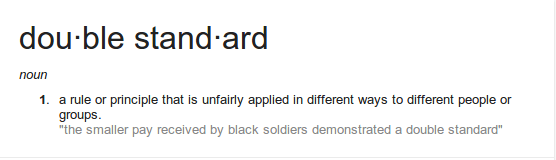
Double standard“So let’s get this straight. When a lunatic shoots up a Family Research Council office, it has nothing to do with its political opposition. When an abortionist [ Kermit Gosnell ] runs loose because public officials are too intimidated to enforce the laws that do exist, it has nothing to do with political support for abortion. But when a lunatic shoots up an abortion clinic, it’s the fault of millions of Americans who oppose abortion, and who argue peacefully for limits on the practice and better oversight of those who operate in the industry?

“Even when “police have not yet identified a clear motive for the shooting”?

“The shootings in a clinic and the deaths of two people are horrific acts that everyone with a lick of sense and humanity abhors. But what the Washington Post and pro-abortion advocates are conducting in its wake is an attack on free speech and the political process, not to mention the unconscionable smearing of millions of Americans. It’s disgusting, manipulative, exploitative, and un-American.”

—–Conservative blogger Ed Morrisey, in his post, WaPo: Let’s hold free speech guilty for the acts of a lunatic, shall we?

Yes, it’s disgusting, manipulative, exploitative, and un-American—see yesterday’s Ethics Alarms post regarding how the manipulative part works—but it is also one of the clearest and most undeniable examples of mainstream media bias and of how journalists actively adopt and advance even the most blatantly dishonest Democratic Party talking points. (To be fair, they are almost all Democrats, and most of them aren’t very bright, so they often believe this stuff).

For “the Washington Post” in Morrissey’s quote, read The New York Times, CNN, “Meet the Press” and almost every major news media source. All I want from progressives and Democrats is an admission that this slanted distortion of journalism is wrong—bad for the democracy, bad for the civic literacy of citizens, bad for society. That’s all! What I get, even from otherwise fair and rational readers of Ethics Alarms, is rationalizations and denial, aping the protests of the journalists themselves. Morrissey is a very restrained and circumspect writer, but he’s obviously angry. So am I. The point is, so should be every American regardless of political bent who cares about the truth.

Other conservative writers have been in grand form on the politicization of Robert Dear’s murder spree. Here’s the always razor-sharp James Taranto, of the Wall Street Journal: Continue reading

Your Ethics Alarms Cognitive Dissonance Guide To The Planned Parenthood Shooter Spin Game


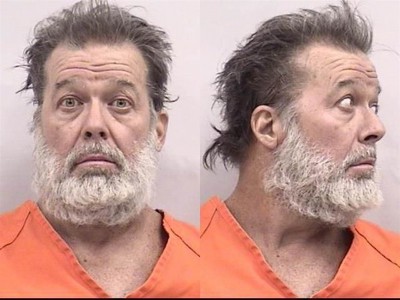
Robert Dear

Cognitive DissonanceTo the left is a simplified version of Leon Festinger’s Cognitive Dissonance Scale. Most of the people and institutions who use the scale to mislead and manipulate public opinion neither know this diagram nor have heard of Dr. Festinger, but it is what they are employing in the daily wars to win ideological political converts by distorting the significance of current events.

Robert Dear’s as yet unexplained shooting rampage within a Colorado Springs Planned Parenthood facility has immediately created an opportunity for cognitive dissonance manipulation. Festinger’s research showed that our minds will always try to resolve dissonance when something with a high, or positive score—say, “Free Speech,” appears to be closely associated with something else that is low on the scale, such as “hateful speech.” How the dissonance is resolved will depend on the scores of the two dissonant objects or beliefs.

If you want the public to decide that something it approves of is less worthy of approval, attaching it to something the public believes is reprehensible will do the job by creating cognitive dissonance and pulling the well-regarded object down the scale. If you want the public to move its opinion of a person, organization or concept from negative territory into positive, identifying someone or something the public regards far more negatively who opposes the person, organization or concept will tend to move the object of the negative entity’s opposition upward on the scale. In these situations, the mind seeks distance from the reviled entity. I hate broccoli; I learn that Donald Trump hates broccoli; I don’t want to have anything in common with Donald Trump. Pass the broccoli, please.

The latter is the process repeatedly applied by the protesters of police shootings when African Americans are the victims. The public correctly opposes abuse of power and wrongful violence by law enforcement officials; it is far below the mid-point on the scale. It also a opposes criminal activity and resisting legitimate law enforcement. With rare exceptions, every black victim of a questionable police shooting was engaging in or had engaged in criminal activity, and had resisted arrest. These have been criminals, but because the alleged misconduct of the police is far lower on the scale than the criminal activity involved, the criminal victims are propelled by cognitive dissonance into the scale’s positive territory. (The media assists the process by publicizing the most benign images of the victims they can find. The most frequently used photo of Laquan McDonald, who was executed by a Chicago cop, shows him in his high school graduation gown, for example. The cop didn’t shoot a criminal who refused to stop when ordered to, he shot a smiling young man with a bright future. The police officer is thus a monster; the victim a martyr and a hero.)

Now let’s look at the current use of cognitive dissonance in the wake of the shooting by Robert Dear. Continue reading

The Unlikely Ethics Dunce, And Why Nobody Pays Attention To Ethicists And I Don’t Blame Them

Wait, how can the nation's most famous ethicist be an Ethics Dunce? It's not easy...

Wait, how can the nation’s most famous ethicist be an Ethics Dunce? It’s not easy…

Ethicists have managed to make ethics nearly invisible in our cultural debates, and nearly useless as a decision-making tool, when it ought to be the most useful tool of all. They accomplished this over centuries of work, making the discipline of ethics abstruse, elitist, abstract, and worse of all, boring. Nobody should be bored with ethics, hence my statement, “Ethics isn’t boring, ethicists are.” Once ethics was pigeon-holed in the realm of philosophy, however (it belongs with “crucial life skills” and “critical thinking”) and philosophy became associated with scholarship, advanced degrees and academia, the jig was up.

The problem is that academic ethicists teach and write about abstract ethics, and life is not abstract. Their quest is for one formula to determine right from wrong, and life and human beings are more complicated than any one formula can encompass. When I started this blog, I got a lot of grad students writing me who demanded to know whether I was a Utilitarian,  Kantian Deontologist, a follower of Natural Law Ethics,  a Virtue Ethicist or a devotee of Stakeholder theory. My answer was “all of the above and none of them.” All of these and more are useful tools of analysis, but none work all the time, and the amount of words loaded into jargon to explain and debate the nuances of any of them render them all useless except for  writing scholarly papers.

The ethics that the public learns, as a result, are what pop culture and society teach them, and most of that isn’t ethics at all. For example, in the cable series “The Affair,” a well-educated older man was advising a young woman, the mistress in the affair, about how to think about the illicit relationship that broke up he lover’s marriage. Wise and thoughtful, he described his own adulterous affair, and then said, “What you did wasn’t wrong. You didn’t kill anybody. You didn’t break any laws.  Don’t be so hard on yourself.”  There is no ethics in that statement. Itis just employs two popular and facile rationalizations (#4. Marion Barry’s Misdirection, or “If it isn’t illegal, it’s ethical,” and #22, the worst of all, #22. The Comparative Virtue Excuse: “There are worse things.”) with another lurking but unspoken one, the Cheater’s Special, #23. Woody’s Excuse: “The heart wants what the heart wants,’ underlying the whole scene.

That’s ethics, I would guess, to about 90% of the population. Scary. This is, however, where ethicists have taken us. They could be so important to the culture, if they would get their heads out of their asinine models and explain ethical principles that are relevant to real lives in a manner that doesn’t make normal people become hostile to the subject.

This brings us to Peter Singer, Princeton’s acclaimed professor of bioethics who has been called the most influential ethicist alive. It is admittedly faint praise, but probably correct. Continue reading

A Bobby Jindal Critic Asks, “Would I Be Uncivil If I Were To Suggest That Somebody Punch This Man Right In His Dick?” Why Yes, I Believe You Would…

By all means, this should be our model for political discourse...

By all means, this should be our model for political discourse…

Gov. Bobby Jindal, desperately trying to stay relevant in the Republican race to be the party nominee in 2016, weighed in on the Oregon community college shooting with an extensive blog post that shows, if nothing else, that the Fifties live. It’s pretty awful, designating as “root causes” of the violence such Oldies but Stupidees as “glorifying violence” in popular culture (Actually, this one is closer  to 1650), movies, TV shows, music (Run, Tipper! This is your chance!) the decline of religion ( “…we flaunt the laws of God and common decency”—I think you mean “flout” there, Bobby), the decline of the family…you know the list. The problem with Jindal’s rant—other than its exaggerations, poor writing and hysterical tone— is that taking any single event and attributing it to generic causes is demagoguery, and as intellectually dishonest as  blaming the NRA every time someone is murdered with a gun.

The Huffington Post, mocking Jindal’s eminently mockable screed, asked “What about gun violence?” as if Jindal left out the one obvious “root cause.” Is it really necessary to point out that gun violence is responsible for gun violence? But that’s anti-gun code for guns, you see. Guns are responsible for the shootings. Take the evil guns away, and nobody dies! That this facile and deceitful dead end reasoning is so accepted among progressives and liberals that it is considered an obvious truth is depressing, but I digress.

Jindal is also depressing, since the only remedy for violent movies, TV shows and video games is censorship of one kind or another, and you know what the Right will do if it gets that started: TV couples will again be sleeping in twin beds like Rob and Laura Petrie by edict. His lack of logic is depressing too—how does someone like this get elected a governor?—when he attributes alleged conditions like “the family is a mess” to a rampage by someone who might have been raised like Opie Taylor but whose mind just snapped, as they have a tendency to do. Again, a single incident has specific causes. Jindal’s main argument is exactly as exploitative and dishonest as using the Oregon shooting to lobby for gun regulations that wouldn’t have stopped the shooting. Continue reading

“Who Are You Calling A Nut?” And Other Ethics Issues In The Community College Shooting Aftermath (Continued)

I apologize for the length of this two-part entry, but the preponderance of fact- and reasoning-free anti-gun hysteria in the wake of the Oregon shooting has even exceeded Sandy Hook levels, a development I didn’t think was possible. An emotional national reaction to such a tragedy is fine, and natural, as long as it doesn’t stampede policy-makers and make the public dumber and more ignorant than they already are regarding basic rights, the reasons for them, and the limits of law and government. This post and its earlier installment are offered to catalogue, in part, the ethics carnage, and perhaps to save some readers time when they are confronted with a usually sane friend or family member who begins ranting about how “ridiculous” it is that this “problem” hasn’t been “solved” and how it’s all the fault of the NRA and bribed politicians, because if Australia can do it, why can’t we? In my experience, however, the angry anti-gun zealots—yes, you can still be a zealot and talk about “common sense solutions” if they are either not sensible or not solutions—don’t want to hear facts or reason. People have died, guns are bad, and why can’t we stop it? The same people also tend to think we can stop prejudice, poverty, risk, inequality, war, and the effects of mankind living on the planet. They also rank “Imagine” among the most profound songs ever written.

Sigh.

Here are the rest of the points:

V. Another Facebook friend published this chart…

wholechart

…and said that it showed that “states with fewer gun regulations had frequent gun related murders than those with more regulations. It doesn’t show that. It shows, for example, that Vermont, Maine and North Dakota have few regulations and low gun murder rates. I know him well–he’s an honest man. But he saw what he wanted to see, not what was actually on the chart. Meanwhile, everyone “liked” his post.

VI. I know I’ve made this observation before, but it still drives me crazy. I just had another argument over it with my sister, and she hung up on me. Obama and the hoard leaps on this shooting to once again lobby for “common sense” gun controls that most agree wouldn’t have stopped this shooting. There is , I would say, an obvious, ethical and logical disconnect there. If the measures being sought would not have stopped this shooting, why all the angry, “blood on your hands,” “how long will this go on” rhetoric? The clear and misleading message is that the shooting would have or might have been stopped if only, if only, but when the substantive recommendations are listed they have little or nothing to do with the incident itself. Why do smart people tolerate this? The shooter’s father–who, by the way, shares at least as much culpability for the Oregon shooting as anyone, and a lot more than the NRA, gave an interview in which he blamed the shooting on the fact that the law allowed his son to acquire 13 guns: Continue reading