The Third Annual Ethics Alarms Awards: The BEST of Ethics 2011

Why is the The Best in Ethics 2011 only about 33% the size of the “Worst”?

This troubles me. My objective is not to be negative. The problem, I think, is that ethical conduct is still much more common than unethical conduct, and it is usually less controversial to identify: most of the time, good ethics is self-explanatory. All of us learn more from mistakes and misdeeds, our own and those of others, than we do from meeting societal standards. Most of what Ethics Alarms does is to try to identify unethical conduct, what was wrong with it, why it happened, and how we can discourage it.

Which is all well and good, but I still would like to make 2012’s Ethics Alarms  more positive year than this one, if possible. Help me, will you, find more topics involving good ethics, so next year’s Best list can hold its own with the Worst.

Here are the 2011 Ethics Alarms Awards for the Best in Ethics:

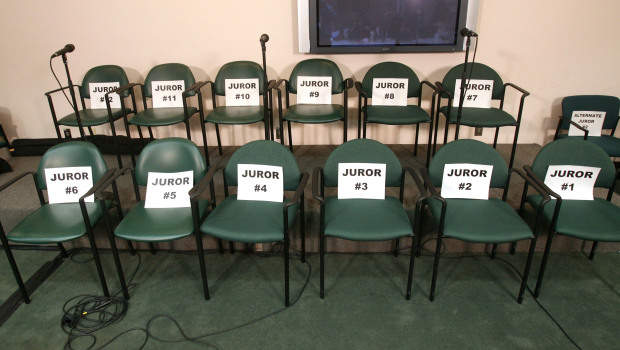
Most Important Ethical Act of the Year: Acquitting Casey Anthony. The Florida jury charged with deciding if Casey Anthony murdered her daughter faced the ire of a lynch mob-minded public that wanted the unsympathetic Anthony convicted, based on suspicious conduct and a dubious explanation,  but the evidence just wasn’t there. Thus the courageous twelve upheld the American values of fairness, objectivity, and justice under the law. It is interesting that the most ethical act of the year also sparked some of the most unethical arguments of the year, by too many citizens who benefit from our nation’s ideals without comprehending them. Continue reading
Unethical Quote of the Week: Rep. Ron Paul

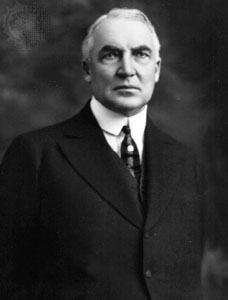
Warren G. Harding, the patron saint of "Nobody's perfect!" presidencies.

“I don’t think anybody in the world has been perfect on management, everybody that’s ever worked for them. So, yes…  it’s a flaw. But I think it’s a human flaw… I admit that I’m an imperfect person and didn’t monitor that as well.”

–GOP presidential candidate Ron Paul, responding to ABC’s Jake Tapper’s question about whether his accountability for racially inflammatory statements made in his name in newsletters published by him 20 years ago raise legitimate doubts about his management abilities.

Anyone who’s read this blog much knows what I think of the “nobody’s perfect” excuse for misconduct. To be precise in this case:

1. Nobody said you weren’t human, Ron. Humanity is a rather low bar for a presidential candidate, don’t you think?

2. There is a lot of territory between “perfect” and “letting people write racist and homophobic content under your name in a for-profit newsletter.” For example, the rest of the Republican field is as far from perfect as one could imagine, yet none of them have done that.

3. People who fail to fulfill core management functions when they oversee a project are imperfect, flawed and human, and also called “inattentive and incompetent leaders.” Imperfect, flawed and human individuals can be good and effective Presidents of the United States. Inattentive and incompetent leaders, however, cannot.

Philidelphia’s Conflicted, Shameless, Greedy—But Law-Abiding!— City Council

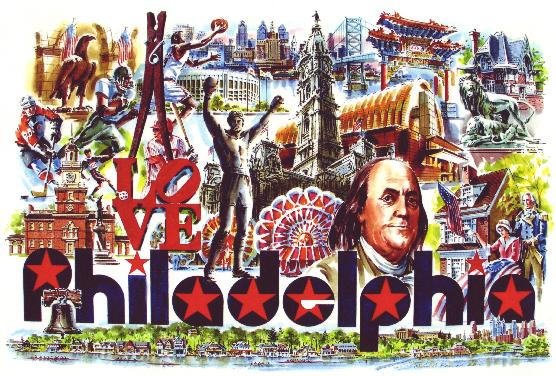
In the City of Brotherly Love, why shouldn't the City Council show a little love to itself--and its members' bank accounts?

Philadelphia, a city that like all cities these days is reeling under budget deficits, contemplating harsh cuts in city services and programs and raising taxes, is receiving a cruel lesson in the limits of public-mindedness by elected officials when the price is right.

Philadelphia City Councilwoman Marian Tasco retired yesterday, collected $478,057 in pension payments, and then plans to return to work after she is sworn-in on Monday to serve her seventh term. Register of Wills Ronald Donatucci retired Dec. 23 and will also return to work on Monday. He collected $366,797.

Why are they doing this? Because they can. Because it’s a lot of money. Because nobody can stop them. In Tasco’s case, because her irresponsible, disengaged, foolish constituency voted her into office despite ample warning that this is what she had planned. Continue reading

Spin, Rationalizations and Denial From the Ron Paul Faithful: An Ethics Lesson

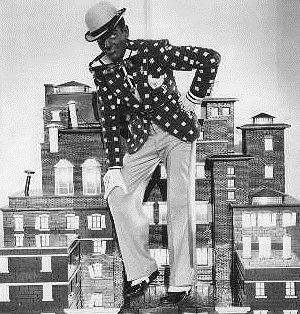
What does Fred Astaire in blackface have to do with Ron Paul? Not much.

There are a lot of reasons to regard Rep. Ron Paul, currently facing what should be his last hurrah in the idiosyncratic Iowa Caucuses, as the model for politics and leadership as we wish it could be. He says what he means. He doesn’t pander. He isn’t afraid of uncomfortable truths. He has integrity. This explains why the supporters of the one true libertarian in the U.S. Congress seem ready to fight to the end to preserve his presidential candidacy, though its long-term prospects are about the same as those of Frosty being elected President of Hell. They are, as a result, providing the rest of us with a textbook example of how loyalty and dedication can spawn intellectual dishonesty, cause otherwise good and intelligent people to substitute rationalizations for reason, and lead to corruption. How did all those idealistic young lawyers end up in jail supporting the plots of Richard Nixon?  Why did otherwise honest and ethical Democrats, elected officials and feminists twist their principles into pretzels to defend Bill Clinton’s using White House staff as a personal dating bar and lying about it under oath?  This is how. When you believe that a leader is good, then affirmative proof of flaws that disqualify him for leadership must be justified and explained away. It often isn’t even a conscious decision: this is cognitive dissonance at its strongest. The results, however, are the same as intentional deception.

Over at The Daily Caller, Wesley Messamore, who is Editor in Chief of the HumbleLibertarian.com, has registered an impassioned and angry defense against Paul critics who, like me, regard the content of his newsletters from the Eighties and Nineties an automatic disqualification for Paul as a presidential nominee. I don’t mean to pick on Messamore: his arguments are typical of Paul defenders; he’s no worse than the rest. His article, however, neatly covers all the unethical tactics Paul’s followers have had to embrace to convince themselves that their hero hasn’t failed the leadership test.

Here they are: Continue reading

The Drunk, the Bar and the Missing ID

I’ve been considering starting a continuing category for unethical law suits, but what interests me about this story is that it coincides with a sudden flurry of new comments on the Shannon Stone post. That concerned the man who fell to his death at a Texas Rangers game last summer after lunging to catch a foul ball for his son. My post argued that when someone does something unequivocally reckless and foolish that leads to his injury and death,  it may be legally advantageous to sue third parties for not anticipating the situation and providing prophylactic safety measures, but is unethical to do so.

It was not one of my more popular posts.

This story, from South Carolina, raises a similar issue. Paraplegic Chelsea Hess is suing Jock’s Sports Grill  because the bartender failed to check her ID and didn’t determine whether she was already intoxicated when, at the age of 20 (in 2009), she drank, drove, and crashed her car, causing her current condition. Hess is also suing the state Department of Transportation, saying the agency failed to properly maintain the shoulder of the road where her car crashed. Continue reading

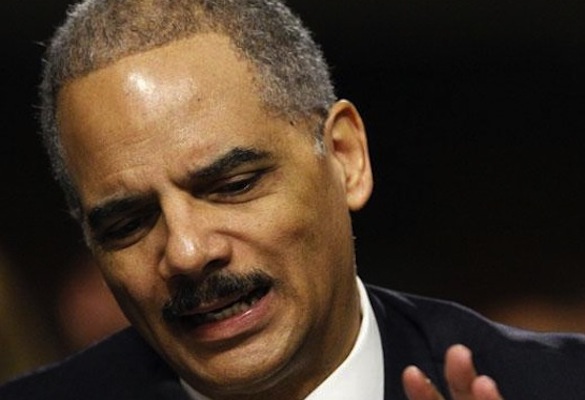
Unethical Quote of the Month: Attorney General Eric Holder

“This is a way to get at the president because of the way I can be identified with him, both due to the nature of our relationship and, you know, the fact that we’re both African-American.”

—-Attorney General Eric Holder, explaining what he believes to be the motives of “extreme factions” in their efforts to hold him accountable for the Justice Department’s “Fast and Furious” debacle in an interview with the New York Times.

That's right, Eric. It's not because you've been a pathetic Attorney General---heck, aren't they all?

Ah, the race card! What a versatile, powerful weapon in the arsenal of public figures under scrutiny, criticism and attack who happen to be African-American! How comforting it must be to know that when it gets really difficult, even impossible, to talk your way out of a mess of your own making, there us always this last ditch, accountability-ducking tactic that will cause reporters to recoil, accusers to quail, public sympathy to shift, and Al Sharpton and Tavis Smiley to leap to attention. Play the race card! Jesse and Al have made a career doing it. Clarence Thomas, Barry Bonds, Marion Barry, Armstrong Williams, Herman Cain, and so many others resorted to it. Sometimes it works, sometimes it doesn’t, but it’s always worth a try…unless, of course, you have sufficient dignity, honesty and integrity to resist the impulse. Say what you will about Charlie Rangel, and I’ve said plenty, but he never claimed that his ethics problems were due to his race. It’s strange to praise someone for not resorting to dishonest and unconscionable tactics, but so automatic is the race card ploy among prominent African Americans in peril that I think Rangel deserves more credit than I gave him. Continue reading

Punishing Corrupt Companies Without Punishing the People Who Make Them Corrupt

By all means, fine corrupt companies, but we need a new dress code for their management.

From The National Law Journal, December 8:

“The Justice Department has announced that Wachovia Bank N.A., now known as Wells Fargo Bank N.A., will pay $148 million to federal and state agencies after admitting to anti-competitive activity in the municipal bond investments market.”

I understand why the Justice Department, the SEC and other federal agencies fine companies huge amounts for what is essentially criminal conduct, choosing negotiated settlements rather than engaging in time-consuming trials that would cost taxpayers money and risk failing for reasons ranging from investigator error to skillful defense strategy. Nevertheless, the policy encourages rather than discourages unethical conduct by corporate decision-makers. It  does nothing to improve a culture that tends to define a bad business practice as a gamble that doesn’t work, or a scheme that gets discovered. Continue reading

The Murderer and the Governor

When a politician announces that he is taking a "moral stand," watch out.

Guess who has more integrity: Gary Haugen, the convicted double murderer whose scheduled execution in Oregon had been scheduled for next week, or Oregon Governor John Kitzhaber, who blocked his execution?

It’s Haugen. The resident of Oregon’s death row had waived his appeals and was voluntarily submitting to his court-decreed fate when Kitzhaber stepped in, declaring his moral objections to capital punishment. But like many politicians’ objections to that other divisive social policy issue, abortion, Kitzhaber’s supposedly moral stand has more fine print than a gym membership. He didn’t commute Haugen’s sentence, or end the death sentences of the other men who have been condemned. The Governor went half way, essentially staying the executions for the term of his governorship, and pledging to seek reforms of what he called a “broken system” in 2013. Why 2013? It’s after the election, of course. Continue reading

The Fat Kid, the Slippery Slope, and the Cliff

"Bill! They're putting me in foster care! How will you make THAT funny?"

Several recent ethics issues have raised the slippery slope question, which is itself a slippery slope. The rationale for any reasonable principle or act can usually be ratcheted forward in degrees until it becomes malevolent, dangerous or repugnant, including freedom, trust, loyalty, charity and honesty. Thus the easiest argument, at least for the mentally dexterous, that anything is unethical is the dreaded slippery slope.

The simple rebuttal to this is usually “let’s wait and see.” To claim that conduct is unethical for what it might lead to rather than for what it actually does is often, perhaps even usually, based on an unwarranted assumption, or a worst case scenario specifically concocted to foil otherwise unobjectionable conduct. When it is not based on an unwarranted assumption, however, is when proposed conduct or a new policy permitting it shatters a social norm or cultural standard that had previously been considered sacrosanct. In these cases, the slope isn’t merely slippery—which suggests “Be careful where you step next!”—but greased, meaning there is no longer any traction at all to stop a rapid slide to the bottom. A better cliché to use in such cases is “opening the floodgates.” Or perhaps “off a cliff.”

The recent post about the Dartmouth researchers who suggested that all manipulations of graphic images of celebrities be labeled as such is, I would argue, more floodgates than slippery slope. There is no obvious delineation point to stop the principle behind this oppressive constraint on illusion from spreading far beyond its origin. Similarly, the argument being made by the family of the mother with Stage 4 cancer that US Air is ethically obligated to refund the non-refundable tickets they could not use because of her terminal illness has no clear limits or coherent application. Are the refunds required because the mother is terminal? If she goes into remission, would the family be obligated to give the money back? What if she was only paralyzed? If the whole family was squashed by a boulder, would the airline be obligated to refund the money to their next of kin? What if the mother wounded herself terminally in a suicide attempt—would that change US Air’s supposed obligation of compassion? If so, would that mean that if the mother’s Stage 4 breast cancer occurred because she neglected to follow a physician’s recommended treatment, US Air could then refuse to refund the money without being pilloried for it? Sometimes that greased slope carries us into a swamp.

Now from Cleveland comes the story of the 200 lbs. + 8-year-old Cleveland Heights boy who has been taken from his family and placed in foster care because county case workers decided that his mother wasn’t doing enough to control his weight.  Continue reading

A Protest Code of Ethics

I began work on a protest code of ethics a decade ago, periodically putting it aside, then adding to it, subtracting from it, and refining it. I regard the current version as a work in progress still, but the discussion here regarding the “Occupy” movement prompted me to complete this initial final draft, at least. This is the first time it has been published.

It has been a source of continuing amazement to me that there was no such Code had been proposed previously, or none that I could locate. When an activity such as organized protesting, activity that is obviously rich with ethical dangers and the potential for excess, does not have  proposed or established ethical standards of conduct, the reason is usually that nobody wants to be limited by ethical considerations or to be held accountable for misconduct.  I strongly suspect that is the case here. Well, too bad. Now we have proposed standards with which to measure the ethical nature of protests. Whether these 25 principles are the first or the last, or just begin the discussion and inspire something better, is of no import. They open the discussion. It’s time.

The Protest Code of Ethics

A. Guiding principles

All participants in protests and demonstrations should recognize and respect the important role lawful assemblies for the purpose of airing grievances and advocating change and reform have played in the history of the nation and civilization, must strive to uphold the best of that tradition by upholding these ethical principles. A protest without leadership and objectives is only a mob, and a protest without discipline and respect for others is a riot.

B. Public protests
Any protest involving demonstrations or other public conduct… Continue reading