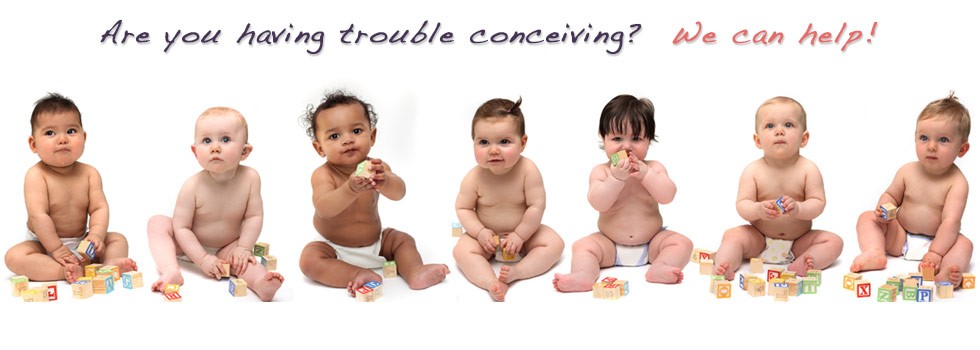
“Fertility Equality”

This ethics topic has been lying around on my office floor—literally—for more than a month now. I have not known what to do with it. The New York Times—it is for occasional articles like this that I subscribe to that habitually unethical paper—published an article in July headlined (in the print version) “The Right To A Baby?” It appeared in its “Thursday Styles” section, which specializes in elite trivia (the other piece on that section’s front page was about tattoo artist and dog groomers who make house calls).

Here is the first part of the article:

While plenty of New Yorkers have formed families by gestational surrogacy, they almost certainly worked with carriers living elsewhere. Because until early April, paying a surrogate to carry a pregnancy was illegal in New York state.

The change to the law, which happened quietly in the midst of the state’s effort to contain the coronavirus, capped a decade-long legislative battle and has laid the groundwork for a broader movement in pursuit of what some activists have termed “fertility equality.”

Still in its infancy, this movement envisions a future when the ability to create a family is no longer determined by one’s wealth, sexuality, gender or biology.

“This is about society extending equality to its final and logical conclusion,” said Ron Poole-Dayan, the founder and executive director of Men Having Babies, a New York nonprofit that helps gay men become fathers through surrogacy. “True equality doesn’t stop at marriage. It recognizes the barriers L.G.B.T.s face in forming families and proposes solutions to overcome these obstacles.”

The movement is led mostly by L.B.G.T.Q. people, but its potential to shift how fertility coverage is paid for could have an impact on straight couples who rely on surrogates too.

Mr. Poole-Dayan and others believe infertility should not be defined as a physical condition but a social one. They argue that people — gay, straight, single, married, male, female — are not infertile because their bodies refuse to cooperate with baby making.

Rather, their specific life circumstances, like being a man with a same-sex partner, have rendered them unable to conceive or carry a child to term without medical intervention. A category of “social infertility” would provide those biologically unable to form families with the legal and medical mechanisms to do so.

“We have this idea that infertility is about failing to become pregnant through intercourse, but this is a very hetero-centric viewpoint,” said Catherine Sakimura, the deputy director and family law director of the National Center for Lesbian Rights. “We must shift our thinking so that the need for assisted reproductive technologies is not a condition, but simply a fact.”

Fertility equality activists are asking, at a minimum, for insurance companies to cover reproductive procedures like sperm retrieval, egg donation and embryo creation for all prospective parents, including gay couples who use surrogates. Ideally, activists would also like to see insurance cover embryo transfers and surrogacy fees. This would include gay men who would transfer benefits directly to their surrogate….

Observations:

  • I see this as an excellent example of how a threshold decision in an ethical analysis of any new idea is whether bias and the automatic prejudice human beings tend to have against any new concept—basically the “Ick Factor”—is making a fair analysis impossible. It’s hard to do; our tendency with such ideas is to think, “That’s ridiculous!” and  stop there. But of course, that was the original majority reaction to many ideas that were revolutionary at one time but that represented the progress of ethics, which is evolutionary by nature and necessity. We always are learning that there are things we thought were right and “natural” that were, in fact, wrong, and that some concepts that society viewed as wrong for centuries were either neutral or benign.

That process is what ethics is. Continue reading
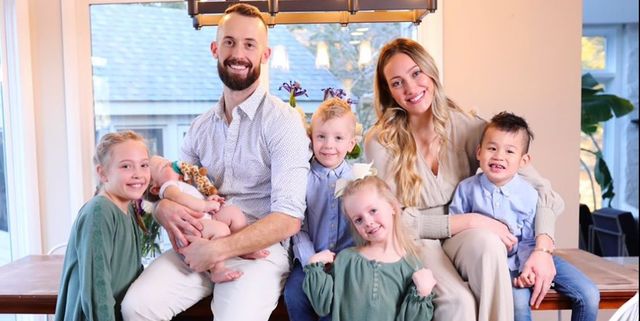
“If Someone Like Myka Stauffer Can Be A Paid ‘Influencer,’ What Does It Take NOT To Be Influential?” And Other Mysteries Of The 21st Century

Quick: guess which kid they “rehomed”….

Here’s a another one: What the hell am I doing wrong?

Myka Stauffer is a so-called “online influencer,” meaning that she has such a huge following on social media that companies pay her to promote their products. Apparently being a social influencer has nothing to do with being smart, wise, ethical or a benefit to society. We know that because such wastes of DNA like the Kardashians are paid influencers—imagine making life decisions based on the recommendations of Kyie Jenner—but at least they have a TV show and have also demonstrated the ability to become rich with no discernible talent whatsoever.  That’s something, at least.

Stauffer is a much bigger mystery. I read a profile of her, and am still flummoxed. She has around 700,000 YouTube followers and 200,000 Instagram followers because…why? Her mother had her when she was 16. “I got to go to some really cool parties [and] I got to go to a bunch of concerts, which is a perk of having younger parents,” she says. Otherwise  her childhood was “basic, regular,”  and she loved everything about it until her mom told  her that her  dad was not her biological father.  “The next day I lost my virginity. I had planned to save myself for marriage. It wasn’t even a question in my mind,” says Stauffer. “When my identity was flipped upside down, everything went out the window.” Then she was grounded for an entire year as punishment, which gave her “lot of opportunity for self-growth.”  Then Stauffer found religion…oh, never mind, you can read the whole banal story here if your sock drawer is in order. Her second husband is a car detailer, and she’s a vegan. And an inexplicably large, gullible audience of infantilized women with empty lives and the brain pans of grackles look to her for guidance about what to wear and buy.

This is the quality of character they now know they can expect: After documenting on YouTube and Instagram her successful efforts to adopt an autistic little boy, she and her husband decided to “rehome” him,  using the term typically reserved for rotten pet owners who decide to get rid of a  dog or cat. It’s a euphemism, of course. What she is doing is giving away her son, because he’s just too much darn trouble if you’re going to get all those Instagram posts and videos out. Continue reading

Sunday Morning Ethics Warm-Up, 3/17/19: March Ethics Madness!

Good morning!

Any week that starts off with John Belushi’s immortal reflections on March just has to be a good week.

1. Connecticut: Judicial ethics and guns. Anti-gun fanatics are cheering this week’s ruling by the Connecticut Supreme Court  reversing  a lower court judge dismissing a lawsuit by the families of victims of the Sandy Hook shooting against Remington Arms Company, allowing the case to proceed. In the 4-3 decision the court  possibly created a path that other mass shooting victims can follow to get around the federal Protection of Lawful Commerce in Arms Act, known as PLCAA, which has protected the manufacturers of the AR-15 assault rifle from lawsuits, thus setting the stage for a sensational “Runaway Jury”-type trial. The court’s reasoning is that the Sandy Hook families should have the opportunity to prove that Remington violated the Connecticut Unfair Trade Practices Act (CUTPA) by marketing what it knew was a weapon designed for military use to civilians. The problem is that the ruling ignores the law, as John Hinderaker explains (but he’s not the only analyst trashing the decision):

“Firearms of all kinds have been ‘designed for military use.’,” he writes. “The 1911, designed by John Browning, was the standard U.S. military pistol for many years and remains one of the most popular pistol designs today. So what? There is no such exception in the Second Amendment…Under the Supremacy Clause, federal law will govern over state law. The Protection of Lawful Commerce in Arms Act is intended to avoid precisely the result reached by the Connecticut Supreme Court. The PLCAA puts firearms manufacturers on the same plane with all others. If their products are not defective–if they do not malfunction–they are not liable. If someone stabs a victim to death with a knife, the victim’s heirs can’t sue the knife manufacturer. It is the same with firearms.”

Hinderaker correctly concludes that significance of the ruling is not that it opens a road for the Second Amendment to be constrained, or for ruinous liability to applied to gun-makers, but that it shows how courts will deliberately ignore the law to reach political goals. Continue reading

Unethical Quote Of The Month: Wheaton College

What prompted this anti-educational, anti-discourse “message to the Wheaton community”?

Ryan Bomberger of the Radiance Foundation gave a presentation entitled “Black Lives Matter In and Out of the Womb” at the evangelical Wheaton College (in Wheaton, Ill.) on November 14. He was the guest of the Wheaton College Republicans. Bomberger’s talk criticized  BLM leadership for announcing its solidarity with Planned Parenthood, the “leading killer of black lives.” Bomberger  is a biracial African American conceived in rape, adopted, and then raised in a mixed-race family. He responded  to the allegations in the letter by saying that Rowley, Waaler, and Shields had demonized him, and said he had been told that only Shields among the three signatories had attended his talk.

“I would think it would be against the college’s mission to intentionally mislead students,” Bomberger wrote in response to the student leaders’ backlash against him.

“I am a person of color, a clarifying fact which you conveniently left out of your letter of denouncement. I was primarily presenting a perspective of those who are never heard, always underrepresented, and are actually unsafe — the unborn,” he said. Continue reading

The Unexposed Ethics Outrage On The Edges Of The Trump Jr. Meeting Controversy

The Sergei Magnitsky Rule of Law Accountability Act  allows the U.S. President to impose visa sanctions and asset freezes on human rights abusers who kill, torture or violate the rights of human rights defenders, as well as government officials responsible for acts of significant corruption. The law and its various amendments that expanded its reach are at the heart of the sanctions currently being enforced against Russia. It was this law, and Russian efforts to blunt its force, that apparently was the real reason that Donald Trump Jr. was induced to meet with an indefinite number of Russians, Russian-Americans, and various individuals “connected” to the Russian government, the list of which is currently expanding like the roster of women allegedly raped by Bill Cosby.

The news media doesn’t seem to feel the Magnitsky Act is anything the public needs to know, perhaps because Donnie Jr. didn’t know much about it, if anything. The stories about his aborted meeting typically mention the Act briefly and without elaboration. They really don’t elaborate on Putin’s retaliation for the Act, which was to stop U.S. adoptions of Russian orphans. (I wrote about this indefensible conduct by Russia at the time, in 2012. The post had a grand total of eight comments. Five years was too long to wait for an update, and I’m sorry. Of course, we are supposed to have responsible and competent professional journalists to keep us informed. )Russia had been one of the primary sources of foreign adoptions by childless U.S. parents before 2012, when the Russian strong man retaliated against loving U.S. parents to show his annoyance with our government and his support of corruption at home.

It’s worse than that, though. The real victims of Putin’s retaliation are his nation’s own, innocent, most vulnerable children. There is virtually no domestic adoption in Russia, because parents can’t afford the children the have. There are lots of orphans though, because parents can give up infants they can’t care for, and the government is quick to remove children it believes are abused or neglected. Unfortunately, once these children are warehoused, there is no way out. The orphanages are underfunded and over-crowded. Once the children “age out,” they are sent to live in hospitals, clinics and other Russian institutions ill-equipped to care for them, and eventually dumped out into the street, where they often are abused or turn to crime. Continue reading

Comment of the Day: “Ethics Hero Emeritus: Edna Gladney (1888-1961)”

edna-gladney

I love when a well-considered comment is entered on an older post. It draws my attention back to topics I may have forgotten about, and as in the case of this Comment of the Day, it reminds me of people and things I really shouldn’t forget.

Rebecca, in her first visit to the comments wars, entered this reaction to the post about Edna Gladney (that’s her on the right above, with Greer Garson, her screen avatar, on the left), an amazing woman who should be better known than she is for her  pioneering work on behalf of orphans and unwed mothers. I suggest that you read the post about Edna first, and then read Rebecca’s Comment of the Day. Here it is:

I just recently saw the TCM movie and was instantly taken by her courage and perseverance, especially since I, too, consider myself a child and family advocate. However, once I read about the historical Gladney, I am saddened that Hollywood thought it necessary to change the storyline to “soften” the blow of Edna’s own illegitimacy. Just goes to show how much was (and still is) wrong with the media. Also goes to show how media perpetuates certain attitudes about our societal issues. For example, even though the movie was retrospect, and even though Gladney may have been successful in removing illegitimate designations on birth certificates, society itself was still hell bent on being judgmental….couldn’t even tell the story like it was for fear it wouldn’t be accepted.

Continue reading

Comment Of The Day (2): “The Strange Case Of The Unwanted Triplet”

infant

Beth’s  thoughtful Comment of the Day is only tangentially a comment on the Ethics Alarms post about the surrogate mother who balked at aborting one third of the triplets she was carrying. It was really a comment on a comment made to the author of the previous Comment of the Day on the same post, as J. Jonah Jameson described his own experience as a father who employed a surrogate. JJJ was asked why he chose the expensive and risky surrogate route rather than adoption. That question inspired Beth’s Comment of the Day.

Here it is; I’ll be back at the end.

“Why didn’t you adopt a child that needed a family?”

As a woman who battled infertility in the past, and have many friends who did the same, along with others who intentionally became single parents, used surrogates, or have or are trying to adopt a baby, let me say that this is the absolute worst question you can ever ask somebody going through this process. As you pointed out, you are not trying to be judgmental, but you should never ask this.

Continue reading

Comment of the Day: “A Single Mother’s Irresponsible Defense of Single Motherhood”

fertility

Coming in on a four month-old post, first time commenter Amanda Bonarrigo’s Comment of the Day describes how she was pushed toward single motherhood by a system that operates in willful ignorance of the personal and societal problems the condition creates. These are some of the best and most enlightening comments that Ethics Alarms receives, when an individual with a personal experience related to the topic of an essay here reveals a relevant personal experience in frank and passionate term.  Opinions are great, but this is the most helpful of all.

Here is Amanda’s Comment of the Day on the post, A Single Mother’s Irresponsible Defense of Single Motherhood:

Continue reading

Here’s A First: Kansas Suspends A Lawyer For Facebook Bullying

It's unethical for a lawyer to play a sad violin over Facebook??? Why yes, it is!

It’s unethical for a lawyer to play a sad violin over Facebook???  Why yes, it is!

Eric Michael Gamble was representing a biological father opposed to the adoption of his daughter, which had been approved by the 18-year-old mother.

After Gamble deposed the young woman, he messaged her on Facebook in a shamelessly manipulative fashion, saying…

‘I wish to offer you some reasons why you should stand up and fight for your daughter. As you know, I am the attorney for [the biological father]. We held your deposition in my office. I wanted to give you the chance to make things right. This may be your last opportunity to be a mom for [the baby]. As I told you after your deposition in my office, it is not too late. You still have a wonderful opportunity to have a real relationship with your daughter if you so choose. I have attached a document for you to consider signing and bringing to court or to my office. It is a revocation of your consent to adopt. If you sign this document there is a very good chance that you will be able to call [the baby] your own and [the baby] will call you her mom. I can’t begin to explain how beautiful and wonderful parenthood is. I have a little girl myself and she is my world just like you are your dad’s world. [The baby] deserves to know her parents. She deserves to know that you love her and care for her as well. Do not let this opportunity pass you by because you will live with this decision the rest of your life and [the baby] will know someday what happened. [The adoptive parents] do not legally have to ever let you see her again after court (although they are probably trying to convince you otherwise with the idea of an ‘open adoption’). The reason why you don’t know about the trial was because they don’t want you there because that doesn’t help [the adoptive parents] case. This is your time to get rid of the guilt and standup and do what is right and what [the baby] deserves. She deserves to have her parents love and care for her. She deserves to know her grandparents and extended family. If she’s adopted, she won’t have that chance. [The biological father] wants to be her dad and to love her. She deserves that. I urge you to print, sign, and notarize this document and bring it to my office before court. Trial is June 27, 2013, at 9:00 a.m. at the Johnson County Courthouse, Division 15. I hope to see you and your father there.’

What’s wrong with this? The legal ethics rules protect unrepresented parties in a matter from exactly this sort of pressure. Rule 4.3, in Kansas and elsewhere, prohibits a lawyer from giving advice to adversaries of his or her client, which statements like “This is your time to get rid of the guilt and standup and do what is right and what [the baby] deserves” clearly are. The rules also require lawyers to treat all participants in the justice system with fairness and respect. That message constitutes neither. Rule 4.4 says that “In representing a client, a lawyer shall not use means that have no substantial purpose other than to embarrass, delay, or burden a third person.” Gamble has a defense, of course: his substantial purpose was to have the adoption dropped like his client wanted, but since he wasn’t supposed to be talking to her anyway (other than to advise her to get a lawyer), that wasn’t going to fly. Rule 8.4, meanwhile, says that a lawyer must not “engage in conduct that is prejudicial to the administration of justice.”

After he lost the case, Gamble reported himself for the Rule 4.3 violation. This is usually a good tactic to encourage lenient treatment, but in this case, it didn’t work. In suspending Gamble for six months, the Kansas Supreme Court seemed to invoke all three of the violated rules, as it wrote,

“…As the hearing panel noted, respondent “attempted to manipulate the biological mother and, as a result, interfered with justice.” Respondent’s conduct “amounted to emotional blackmail” of an unrepresented 18-year-old who was dealing with a process that was already “’emotionally exhausting.'” His “electronic message was designed to embarrass, burden, and create guilt in the mind of the biological mother.” These “bullying tactics directly reflect on [respondent’s] fitness to practice law as an attorney.” Consequently, we hold that the respondent should be suspended for a period of 6 months. A minority of the court would impose a longer period of suspension. We unanimously order a reinstatement hearing under Rule 219.”

And the social media claims another victim.

Addendum: I was remiss, in posting this, not noting that the underlying issue in the lawsuit is a far more serious and complex ethical and legal one than the topic of this post: the matter of unwed mothers putting their new borns up for adoption without the father’s consent or participation. That has been a battle royale on Ethics Alarms twice, and you can review it here.

_________________________

Pointer: ABA Journal

Facts: Legal Profession Blog

Ethics Hero Emeritus: Edna Gladney (1888-1961)

Edna Gladney

I am ashamed to admit that I never heard of Edna Gladney before I chanced upon a late night Turner Movie Classics showing of the 1941 biopic “Blossoms in the Dust,” which earned the great Greer Garson one of her many Academy Award nominations for her portrayal of Gladney (that’s Greer as Edna on the left). I was unaware of Gladney’s amazing life, legacy and contributions to society because 1) I’m not from Texas; 2) it is hard to learn about great people that society forgets about, and 3) feminists aren’t doing their job, perhaps because a strong and indomitable woman whose life was devoted to saving unwanted children rather than preventing their existence doesn’t interest them as much as it should.

Yet Gladney is exactly the kind of woman whose life should inspire young girls today, and young men too, for that matter. Still,  I recently asked 18 randomly chosen friends and acquaintances who Edna Gladney was, and not one of them knew.

And most of them didn’t know who Greer Garson was, either.

Sigh. Continue reading