Why Is A Lying Journalist Not Fit To Practice Law, When A Lying Presidential Candidate Is?

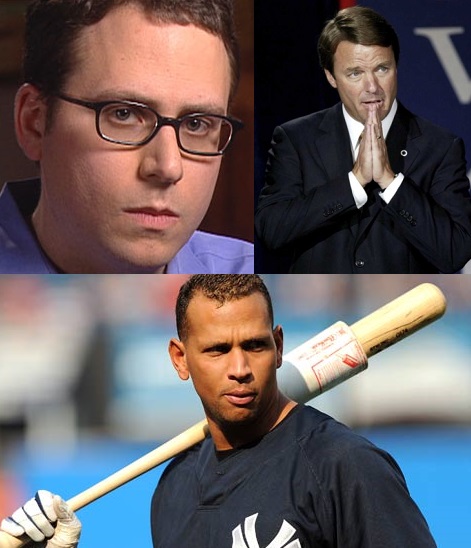
Question: Which two men are fit to practice law? (It's a trick question...)

Question: Which two men are fit to practice law? (It’s a trick question…)

The Wall Street Journal Law Blog muses on an issue that has troubled me for a long time: the fact that the legal profession allows people to keep practicing law whose conduct would have kept them out of the profession had it occurred before they were lawyers.

The reason for the current examination is the apparent inconsistency of disgraced New Republic journalist Stephen Glass continuing to fight and uphill battle (and, I think, doomed) to be admitted to the California bar, while lying scum-of-the-earth John Edwards still has his law license and is opening up a new practice in North Carolina. I wrote about Glass here, and Edwards here.

In the Journal piece, estimable legal ethicist Stephen Gillers opines that the different standards applied to Glass and Edwards are paradoxical,  with the law grads entering the profession being held to more stringent ethical standards  than a veteran attorneys. “If anything, you might say it should be the opposite,” he says.

Especially if the veteran lawyer is a high-profile, national figure who makes every other lawyer want to crawl under a rock… Continue reading

Annals Of The Ethics Incompleteness Theorem: The Snuggle House And “The Dress Code Effect”

Awww! Who could object to a little snuggle?

Awww! Who could object to a little snuggle?

Almost any rule, low or ethical principle can be deconstructed using what I call border anomalies. The first time I was aware of it was as a Harvard freshman in the late Sixties, when all assumptions, good and bad, useful and not, were considered inherently suspect. The college required all students to wear jackets and ties to meals at the student union, and up until my first year, nobody objected. But that fall, my classmates set out to crack the dress code, so they showed up for meals with ties, jackets, and no pants, or wearing belts as ties, or barefoot. (Yes, there were a lot of future lawyers in that class.) Pretty soon Harvard gave up, because litigating what constitutes ties, jackets and “proper dress” became ridiculously time-consuming and made the administration look petty and stupid. Of course, there are good reasons for dress codes—they are called respect, dignity, community and civility—-but never mind: the dress code couldn’t stand against those determined to destroy them by sending them down the slippery slope.

If any rules are to survive to assist society in maintaining important behavioral standards, we have to determine how we want to handle the  effects described by  the Ethics Incompleteness Theory, which holds that even the best rules and laws will be inevitably subjected to anomalous situations on their borders, regarding which strict enforcement will result in absurd or unjust results. The conservative approach to this dilemma is to strictly apply the law, rule or principle anyway, and accept the resulting bad result as a price for having consistent standards. The liberal approach is no better: it demands amending  rules to deal with the anomalies, leading to vague rules with no integrity—and even more anomalies. The best solution, in my view, is to regard the anomalies as exceptions, and to handle them fairly, reasonably and justly using basic principles of ethics, not strictly applying  the rule or law alone while leaving it intact. Continue reading

Ethics Quiz: RFK Jr.’s Despicable, Private Journal

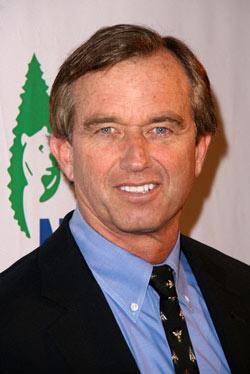
RFK Jr

News value? We already knew that the acorn doesn’t fall far from the tree—did we need to read RFK, Jr.s diary to prove it?

This is a straightforward one. Apparently a New York Post reporter somehow came into possession of Robert F. Kennedy Jr.’s personal journal for 2001. It is, as I imagine President John F. Kennedy’s journal for, say, 1962 would have been, largely a diary about sex, chronicling RFK Jr.’s battles with and evident enjoyment of the family malady, at least on the male side, sex addiction.

The journal is juicy, to say the least, and it also has a tragic side: allegedly Kennedy’s wife Mary discovered and read it shortly before committing suicide last year. RFK Jr. is a radio talk show host, an author, and something of a conspiracy theorist; he also has participated in the shameful and deadly practice of scaremongering regarding vaccines. He is also a Kennedy with a famous father, so in a small bore, minor way, he is sort of a public figure, on the same scale as, oh, let me think…Joey Buttafucco, of Long Island Lolita infamy? Patrick Wayne, the Duke’s B-movie star son? That’s not quite it…something less than Jon Gosselin, Kate’s abused ex-hubby, and more than Daniel Baldwin, the least of the four Baldwin bros.

Your Ethics Alarms Ethics Quiz is this:

Is it ethical for the news media to acquire and publicize the details of a private journal belonging to a minor celebrity with no  relevance to current events? Continue reading

Advice Column Ethics: Amy Dickinson Sounds An Ethics Alarm

"DANGER, Other Woman...DANGER!!!"

“DANGER, Other Woman…DANGER!!!”

Today, syndicated advice columnist Amy Dickinson (“Ask Amy”) answered a query with admirable directness, properly defining the proper  use of ethics alarms for a woman who was puzzled about what to do when the answer should have been obvious. Unfortunately, Amy adopted the letter-writer’s incorrect terminology for an ethics alarm, based on the help-seeking “other woman” in an adulterous relationship writing that her relationship was beginning to feel “icky.”

As we have discussed here many times, “ick” and unethical conduct are not necessarily the same thing.  Humans naturally assume that what is strange or instinctively repugnant is wrong, but that assumption always needs to be tested by sound and objective ethical analysis. The best current example: to heterosexuals, gay sex is “icky,” but that doesn’t make it unethical or wrong. When Amy uses the term “ick-o-meter,’ what she means is “ethics alarm.” Continue reading

Ethics Dunce: Harvard’s Institute of Politics

Thank God Clinton is a Yalie...

Thank God Clinton is a Yalie…

From the Harvard Gazette (Full disclosure: My parents met at Harvard, so I owe Harvard my life, literally. My mother worked in the Harvard administration f0r 25 years, and I (C 1972, American Government), my sister and my father all graduated from the college):

“IOP [ Institute Of Politics] fall visiting fellows include Hilda L. Solis, former U.S. labor secretary (2009-13) and U.S. representative (CA-32nd, D; 2001-09) and Antonio Villaraigosa, two-term mayor of Los Angeles (2005-13). Visiting fellows traditionally meet with student groups; lead discussion groups on topical issues and their experiences in public and political service; and participate in public policy classes.”

Antonio Villaraigosa engaged in exactly the kinds of unethical practices that Harvard is supposed to be training leaders to eschew. He is neither academically distinguished (he flunked the bar four times) nor an appropriate role model, and for Harvard to intentionally expose its students to a repeat ethics violator like Villaraigosa is a breach of trust and responsibility. It is ethically indefensible.

Right now, I am in a state, Virginia, where the Republican governor, Bob McDonnell, has been exposed for accepting unreported gifts. While mayor, Villaraigosa set the record for the largest ethics fine levied in California state history $41,849 — for failing to disclose about $42,ooo in free tickets he received to Los Angeles Lakers games, the finals of “American Idol” and more than two dozen other sports and entertainment events. Accepting gifts and not reporting them provides the slippery slope to bribery, and involves the use of an official position for personal advantage. Continue reading

Gen. Allen, Lockheed, John Edwards, Restraint Bias,and Further Musings on the Petraeus-Broadwell Ethics Train Wreck

Run away!

In no particular order:

  • In a tack that is being duplicated by other commentators on the left, MSNBC’s Rachel Maddow essentially pronounced the scandal as much ado about nothing (Columnist E.J. Dionne dismissively referred to Petraeus’s affair as his “little secret”). See, as long as an incident involves sex, the Left’s default position is that it can’t be that bad. Maddow mocked the actions of Jill Kelley, the woman who Broadwell threatened and who alerted the FBI, saying, “Who contacts the FBI because of threatening e-mails? If I did that, they would have to set up a special division just for me.” Ha ha.  How many of your threatening e-mails credibly suggested that the head of an intelligence agency was having an illicit affair with an unstable wacko, Rachel? Kelley did the responsible, intelligent thing given the possible national security implications. But it’s certainly good to know that you wouldn’t…because it’s only sex, of course.
  • Other pundits are complaining that the FBI became involved when what Petraeus did “wasn’t a crime.”  Yes,  it’s the “It’s legal” rationalization. Why people who can’t comprehend that dangerous, destructive, serious misconduct can occur without breaking any laws are allowed to write newspaper columns, I’ll never understand. Petraeus’s affair was a violation of the ethics rules, in an intelligence agency with major responsibilities in national security. That is serious, inherently dangerous, and easily could have led to security breaches that were illegal. If a leader materially, knowingly and publicly violates an ethics rule, he cannot lead. This is why Petraeus, who understands this, resigned, despite the certainty that the Rachel Maddows of the media would have been happy to shrug off his actions as “no big deal.” because it’s only sex, and “it’s legal.”
  • Kelley still boarded the ethics train wreck, not because of her actions in response to Broadwell’s threat, but in light of the revelation that she was maintaining a hot e-mail relationship with Gen. John R. Allen, the commander of U.S. and NATO troops in Afghanistan. The FBI has uncovered between 20,000 and 30,000 pages of primarily e-mails containing “potentially inappropriate” communication between Allen and Kelley. Wait, what? Between 20,000 and 30,000 pages? What the hell is going on with our generals? This is obsessive, unhealthy behavior, even if he’s just writing her limericks and recipes. Something is serious amiss in the ethical culture of the U.S. military leadership Continue reading

Ethics Train Wreck Watch: The Petraeus-Broadwell Affair

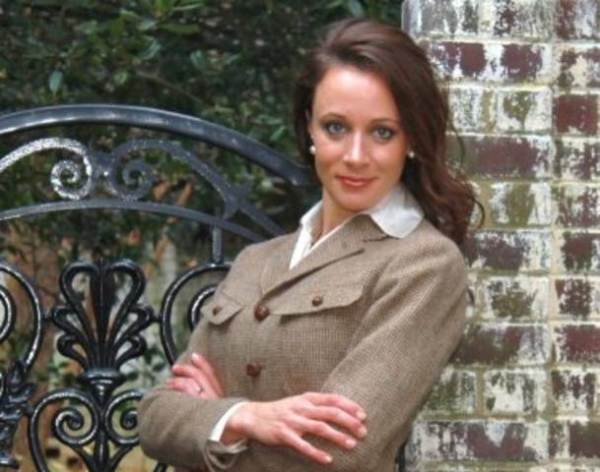
There is too much information awaiting disclosure to do a thorough ethical analysis at this point, but it is already clear beyond question that the David Petraeus-Paula Broadwell scandal is an ethics train wreck, with many more individuals and perhaps institutions involved than the direct participants. Today’s news reports that the adulterous affair prompting the much-respected CIA Director’s sudden resignation was triggered by Broadwell’s  threatening e-mails to another women she suspected of vying for the General’s affections clinches train wreck status. This thing is still rolling.

Other features of the wreck-in-progress: Continue reading

Ethical Quote of the Month: Gen. David Petraeus

“Yesterday afternoon, I went to the White House and asked the President to be allowed, for personal reasons, to resign from my position as D/CIA. After being married for over 37 years, I showed extremely poor judgment by engaging in an extramarital affair. Such behavior is unacceptable, both as a husband and as the leader of an organization such as ours. This afternoon, the President graciously accepted my resignation.”

—-Gen. David H. Petraeus, Director of the Central Intelligence Agency, in a public statement announcing his resignation from that position.

How quaint.

Democrats and Republicans must have felt that they had stumbled into the Way-Back Machine and delivered into England circa. 1904. A high government official resigning over adultery, sex,…”personal misconduct?” How bizarre! Naturally, Sen. Diane Feinstein, who heads the Senate Intelligence Committee,  announced that she would have supported Petraeus if he had chosen to stay. “I wish President Obama had not accepted this resignation, but I understand and respect the decision,” she said in a statement, and described Petraeus’s resignation as an “enormous loss for our nation’s intelligence community and for our country.”

The right way to leave after an affair, apparently, is to try to cover it up, submit to extortion, corrupt others in the process, and only quit when the hideout is surrounded, the hounds are clawing at the door and someone is yelling at you through a bullhorn—you know, like former GOP Sen. John Ensign, who waited two years to resign while his colleagues, like Feinstein, looked the other way. Nobody gets it in Washington—“it” being the ironclad principle that leadership must set the highest example, not the lowest level it can get away with, or the whole system rots below. Nobody, apparently, except the man who just resigned. Continue reading

Ethical and Unethical Adultery Advice: There is Carolyn Hax, and Then There Is Emily Yoffe

Sometimes, you just have to tell your slimy boss “No.”

Emily Yoffe is Slate’s advice columnist, in its “Dear Prudence” feature. She specializes in extreme situations: a recent column involved a teenager who realized that his mother had breast-fed him far too long because she was sexually aroused by it, and then had him fondle her breasts for years after he stopped be willing to suck on them. He asked what he should do now that his mother was subjecting his younger sister to the same treatment. (Emily did get that one right: she told him to call child services on his mother, and to seek professional help for himself.)

Last week I congratulated Carolyn Hax for her advice to a woman torn between the adulterous relationship of one friend with another friend’s husband. Notwithstanding the persistent argument of one crusading commenter who felt that I should have stood for universal adultery whistleblowing on friends and strangers alike, Hax gave, as usual, practical, ethical and measured advice.  She suggested that the inquirer tell the cheating husband that his secret was out, and that she would not lie to protect his illicit affair.  I believe that’s the right ethical balance. Hax’s advice to the woman was to be proactive in both extracting herself from the split loyalties and to be a catalyst for either disclosure or ending the affair. I also noted that the ethical duty on the questioner may be different when the betrayed spouse is an especially close friend, or a family member. Then loyalty and trust could require disclosure.

That same week, Yoffe got an inquiry from a “well-paid assistant of a successful business mogul.” Among her duties, she told “Prudence,” is to facilitate her boss’s extra-marital affair: lying about his whereabouts to business associates, deceiving his wife when she calls, and even buying gifts for the illicit lover. “Next month he’s going on a weeklong business trip,” she wrote. “He only needs to be gone for two days, but he’s taking his girlfriend with him and staying longer. I know I’m doing wrong by his wife. But I love my job, and I’m not sure what I could or should do to behave honorably in this situation.” Continue reading

The Reporter and the Diplomat: Anatomy of an Ethics Train Wreck

Gina Chon, who handled the Iraq beat for the Wall Street Journal, “quit under pressure,” a.k.a. “was fired”, yesterday after it had been discovered that she had carried on  a romantic affair with Brett McGurk, a high-placed American official, while both lived in Baghdad in 2008. McGurk was on the National Security Council staff during the Bush administration and has been nominated by President Obama to be ambassador to Iraq.  Chon was covering McGurk’s activities while she was also romantically engaged with him, a cardinal ethics sin for a journalist. She also shared “certain unpublished news articles” with him, also a violation of Journal policy and journalism ethics. The relationship had been hidden by Chon, and only came to light when racy e-mails between the two were revealed. Of course, the fact that they had recently divorced their respective spouses and married each other probably should have been a clue.

This is a full-fledged ethics train wreck, and it is not over yet.  Let us review the participants so far:

Typical of ETW’s, the coverage itself was ethically flawed. The Washington Post story about the Chon-McGurk affair appeared in the Post’s Style section, which covers media, entertainment, and gossip. McGurk is the current Obama administration nominee to be Ambassador to Iraq, a key post. This was the last line in the Style story:

“The disclosure has intensified doubts about McGurk’s nomination for ambassador among some Republican members of the Senate, but the Obama administration has stood by him.” Continue reading