Emmy’s Transgender Nomination: Important, Inspiring, and a Breach of Integrity

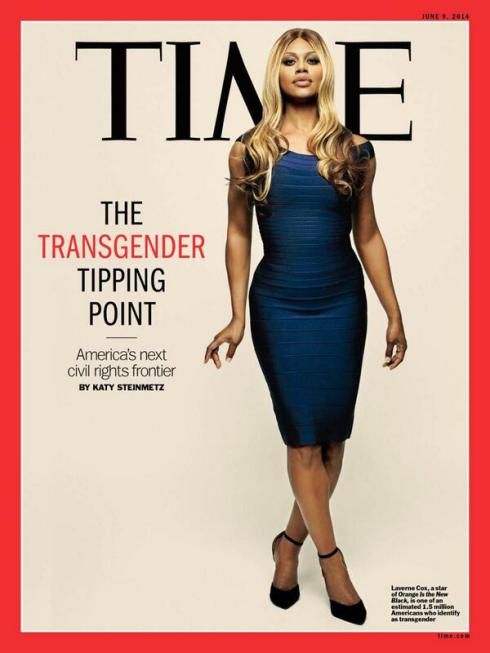
laverne-cox-timeThe Emmys made cultural history yesterday, nominating Netflix’s “Orange Is the New Black” actress Laverne Cox, who plays Sophia Burset in the prison drama, in the category of outstanding guest actress in a comedy series. It is the first time an openly transgendered actress has been nominated for an Emmy.

She joined several of her colleagues  on the show who were also recognized in various acting categories: stars Taylor Schilling, Kate Mulgrew, Uzo Aduba and Natasha Lyonne.

The problem is that Cox received the nomination for political and social reasons unrelated to her performing skills. This will be denied, of course, and since all awards are subjective, no one will be able to prove this is the case. It is, however. In the large, uniformly superb ensemble cast, Cox’s role is relatively minor, and I have a difficult time believing that anyone would objectively identify her as a standout in the show based on her acting. (In the current season, which I have seen in its entirety, her character is almost invisible). This isn’t intended to diminish Cox in any way, for in the role she plays, I cannot imagine it being played better. Nevertheless, there are many un-nominated actresses in that show—as well as other shows— whose characters are more vivid, who have to show more range, and who are more deserving of a nomination once the process is stripped of irrelevant political baggage. Among them: Taryn Manning, whose transformation into the complex religious fanatic Tiffany “Pennsatucky” Doggett is frightening; Yael Stone, as the heartbreaking stalker Lorna Morello; Samara Wiley, as te alcoholic moralist Poussey Washington, and several others.

Everyone is thrilled for Cox, with Cox, reasonably, leading the way. “I’m on cloud nine. I’m through the roof,” said the actress, whose path to an award was  paved when she was featured on the cover of Time magazine.“What a wonderful, wonderful day for “Orange” and for black trans-women,” she said.

Undoubtedly. It’s not such a great day for the acting profession generally, the Emmys, or the principle that awards based on merit should be decided based on merit, and not social and political agendas. I would say, “But that’s Hollywood,” except that it isn’t just Hollywood. Continue reading

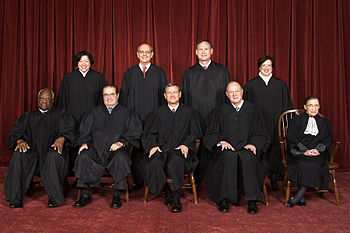
Ethics Dunce: Justice Sonia Sotamayor

We shouldn't need one of these at the Supreme Court.

We shouldn’t need one of these at the Supreme Court.

Supporters of Justice Sotamayor’s embarrassingly anti-judicial dissent in Schuette v. Coalition to Defend Affirmative, Integration and Immigration and Fight for Equality by Any Means Necessary betray their ignorance of law and worse, their endorsement of double-talk from the one place in our government where it should never be tolerated, the Supreme Court.

It’s not even debatable.

“The way to stop discrimination on the basis of race is to speak openly and candidly on the subject of race,” she wrote,  “and to apply the Constitution with eyes open to the unfortunate effects of centuries of racial discrimination.”  “Speak openly and candidly…”

How does Sotamayor speak openly and candidly?  Like this, from footnote 2 of her dissent…

“Although the term “affirmative action” is commonly used to describe colleges’ and universities’ use of race in crafting admissions policies, I instead use the term “race-sensitive admissions policies.” Some comprehend the term “affirmative action” as connoting intentional preferential treatment based on race alone—for example, the use of a quota system, whereby a certain proportion of seats in an institution’s incoming class must be set aside for racial minorities; the use of a “points” system, whereby an institution accords a fixed numerical advantage to an applicant because of her race; or the admission of otherwise unqualified students to an institution solely on account of their race. None of this is an accurate description of the practices that public universities are permitted to adopt after this Court’s decision in Grutter v. Bollinger, 539 U. S. 306 (2003) . There, we instructed that institutions of higher education could consider race in admissions in only a very limited way in an effort to create a diverse student body. To comport with Grutter, colleges and universities must use race flexibly, id., at 334, and must not maintain a quota, ibid. And even this limited sensitivity to race must be limited in time, id., at 341–343, and must be employed only after “serious, good faith consideration of workable race-neutral alternatives,” id., at 339. Grutter-compliant admissions plans, like the ones in place at Michigan’s institutions, are thus a far cry from affirmative action plans that confer preferential treatment intentionally and solely on the basis of race.”

Oh, look! A new euphemism, which is how partisans, activists, advocates and pols muddy public policy discussions by using carefully crafted words and phrases designed to mislead the public and hide what is going on!

Continue reading

Comment of the Day: “Ethics Quote of the Week: Justice Sonia Sotamayor”

Here is Chris Marchener’s Comment of the Day on the post, “Ethics Quote of the Week: Justice Sonia Sotamayor”: and the ongoing debate it has sparked here:

I am not a lawyer. do not play one on TV, nor did I spend the night in a Holiday Inn Express last night. BUT, my understanding of the decision was that the SCOTUS would not overrule the will of the electorate, who, after reasoned debate on the issue, voted to amend its state constitution to state unequivocally that no person shall be granted a preference based on some genetic characteristic, belief, religion, etc. Isn’t that what we are striving toward? They did not strike down nor address the merits of affirmative action.

I get Jack’s point that Justice Sotamayor’s dissent was not based on Constitutional law and was reflecting her own biases regarding race and gender.

Outside of this decision, there is no doubt that some people in this country have a cultural aversion to people of other races, nationalities, genders, lifestyles, Such aversions apply equally to all genders, races, nationalities etc. on a global scale. In the US. such personal aversions must not be a criterion for employment decisions, educational, or other economic opportunities.

To Mr. Green’s assertion, “You mean racists are the ones who talk about racism? How is that not like blaming the victim? This is a pernicious, evil lie – that the victims of racism are in fact the cause of racism because they have this nasty habit of pointing out the unpleasant fact of racism’s existence” : The evil lie is that racism and gender discrimination remains an institution perpetrated by white males such that all benefits inure to them within the economy of the US. Therefore, such institutional racism must continue to be addressed through the very means that created unequal opportunities in the first place. I have stated in earlier posts that any group that demands perpetual preferential treatment by virtue of race, ethnicity, gender or some other factor is guilty of the same institutional bias that we seek to overcome.

In Justice Sotamayor’s words  “Race also matters because of persistent racial inequality in society…” What does this mean? Does it mean that every race be identical in population size? Does it mean that income distribution within the racial sub-segment reflect the income distribution in the majority demographic? Or, does it mean that everyone has an equal chance based on persistence, education and intellect?

This is same Justice that said, “I would hope that a wise Latina woman with the richness of her experiences would more often than not reach a better conclusion than a white male who hasn’t lived that life,”

Blatant racism if we switched the nouns, And why just white men?

Later she said, “Whether born from experience or inherent physiological or cultural differences,” she said, for jurists who are women and non white, “our gender and national origins may and will make a difference in our judging.” To this I do not disagree. However, the difference does not mean that better decisions will be made just different decisions. If we accept the premise that physiological or cultural differences are acceptable biases in judicial rulings then no culture, race, or national origin is inherently racist. She cannot say that white European physiology or culture is inferior for is she does then the logical conclusion is that all others are cultures and genders are superior to the white European culture which is a racist statement.

She continues, “And race matters for reasons that really are only skin deep, that cannot be discussed any other way, and that cannot be wished away. Race matters to a young man’s view of society when he spends his teenage years watching others tense up as he passes, no matter the neighborhood where he grew up.”

To that I say, Why can’t they be discussed in any other way? I cannot wish away what others think, I can only think for myself. Why do you feel the need to tell me how I think and feel? Why does the young man sense the tension of others when he walks by? Are the passerby’s truly in a state of tension or has such hypersensitivity been planted within him through the rhetoric of those “leaders” who amass great wealth and power rationalizing every perceived slight as evidence of racism. We need to tell children that they can be anything they want provided they work hard in school and apply themselves. If we continually tell them the majority is against them and they have no chance without government protections then they will simply fail to strive for greatness, reinforcing within them the sense that majority society is against them. This is exactly what the self-described champions of racially equality seem to want. If it is not then I challenge them to try alternative tactics to get my support.

However, because there has been past injustice and we feel that we must compensate those affected by such injustice, we must ask who should pay the price for past injustice and for how long. Is evidence of economic disparity the only means to determine evidence of racism; I think not. It takes individual effort and if that effort is not forthcoming then failure to achieve is not evidence of racism. For those that advocate for affirmative action, should only the sons of whites who had the misfortune of being born into lower and middle-income American families bear the burden of reparations? I don’t think that the sons of well-connected whites suffer from being denied employment in favor of a greater, equally, or lesser qualified women or minority candidate as a result of ensuring affirmative action plan goals. Nor do I think that the daughters of many well to do citizens have ever faced any form of discrimination in their lives.
Continue reading

Ethics Quote of the Week: Justice Sonia Sotamayor

Sonia_Sotomayor

“Race matters. Race matters in part because of the long history of racial minorities’ being denied access to the political process…Race also matters because of persistent racial inequality in society…And race matters for reasons that really are only skin deep, that cannot be discussed any other way, and that cannot be wished away. Race matters to a young man’s view of society when he spends his teenage years watching others tense up as he passes, no matter the neighborhood where he grew up. Race matters to a young woman’s sense of self when she states her hometown, and then is pressed, “No, where are you really from?”, regardless of how many generations her family has been in the country. Race matters to a young person addressed by a stranger in a foreign language, which he does not understand because only English was spoken at home. Race matters because of the slights, the snickers, the silent judgments that reinforce that most crippling of thoughts: “I do not belong here.” In my colleagues’ view, examining the racial impact of legislation only perpetuates racial discrimination. This refusal to accept the stark reality that race matters is regrettable.”

—-Supreme Court Justice Sonia Sotamayor, dissenting in the case of Schuette v. Coalition to Defend Affirmative, Integration and Immigration and Fight for Equality by Any Means Necessary, in which a 6-2 majority ruled that Michigan voters could ban race-based preferences at universities without violating the Constitution.

This screed was remarkably unprofessional for a Supreme Court Justice, an emotional recitation of unsupported assertions, perceptions and complaints with no constitutional relevance. Sotamayor, you may recall, was nominated by the President in the midst of a public debate regarding the importance of “empathy” on the bench, code for “we need more women.” But the Constitution is supposed to be interpreted by principles of law and legal reasoning, not from “the heart.” Well, we clearly got the empathetic Justice he wanted, for better or worse. Continue reading

The Supreme Court Delivers An Ethical Opinion On Democracy, Affirmative Action, and Fairness

Good work, SCOTUS!

Good work, SCOTUS!

In SCHUETTE, ATTORNEY GENERAL OF MICHIGAN v COALITION TO DEFEND AFFIRMATIVE ACTION, INTEGRATION AND IMMIGRATION RIGHTS AND FIGHT FOR EQUALITY BY ANY MEANS NECESSARY, the U.S. Supreme Court just affirmed, 6-2, Michigan’s right to ban state affirmative action programs. The decision was narrow, not taking up the issue of affirmative action itself, but rather affirming the right of the citizens of the state to ban it at the ballot box.

You should read the decision  here, and not let journalists distort it for you.  My favorite quotes: Continue reading

The Strange, Sad, Ominous Case Of College Student Julian Batts and His Wheel Of Fortune Disaster

The solution is obvious: colleges should teach "Wheel of Fortune" skills...

The solution is obvious: colleges should teach “Wheel of Fortune” skills…

The Indiana University press breathlessly proclaimed it as a cause for campus pride:

An Indiana University honors student fulfilled a lifelong dream of appearing on the iconic television game show “Wheel of Fortune.” Julian Batts, a Hudson and Holland Scholar, a Herbert Presidential Scholar and a Hutton Honors College student from Indianapolis, will appear on the show Friday, April 11, as part of its annual “College Week.” “I’ve watched it as long as I can remember,” he said of the game show, which has been on the air for more than 30 years. “I have always had that desire to be on the show and solve puzzles in front of a live audience.”

Batts traveled to Culver City, Calif., and taped the episode in February. Students from Indiana State and Purdue universities also were selected to participate in “College Week” matches. The Carmel High School graduate is majoring in business and Spanish. He is actively involved at Rose Avenue Residence Hall and as an usher at the IU Auditorium. He participated in IU’s Intensive Freshman Seminar program and the IU Beginnings program, which introduces a small group of students to recruiters from top companies that partner with the Kelley School of Business. He also is the third generation of his family to attend IU, and both of his parents earned IU degrees.

“This was an opportunity of a lifetime for Julian, and we’re happy that he has had this experience to add to the many wonderful experiences he’s enjoyed as an IU student,” said James Wimbush, IU vice president for diversity, equity and multicultural affairs and dean of the University Graduate School.

…On April 11, he looks forward to getting together with friends so they can see how well he did. “Regardless of whatever is aired on TV, I am glad I did it. I wouldn’t trade it for the world. It was an experience I will never forget,” he said. A viewing party for Batts will begin at 6:45 p.m. in Room 150 of the Student Building on the IU Bloomington campus.

Do make a mental note of the last part. Even after the taping, Julian was proud of his performance, and was thrilled about a viewing party. This glowing story was written after the following fiasco occurred. Continue reading

What Is An Ethical Tiger Lily?

Believe it or not, this is Disney's version of an Indian chief.

Disney’s version of an Indian chief.

I recently watched the Disney “Peter Pan,” long my favorite of the classic animated films, which I had not seen from beginning to end in decades. I was genuinely shocked at the portrayal of the Indians, which would make the average movie Western seem politically correct and the Washington Redskins seem like a compliment. I know the story is a fantasy; I know that these are not supposed to represent real Native Americans, but a Victorian child’s visualization of the villains of their games. Nevertheless, it is hard to imagine the effect of such a film on a Native American child as being anything but devastating. The Neverland Indians, and their heroine, Tiger Lily, have been a human relations problem since at least the civil rights era, and the provocation is legitimate: did you recall (I had forgotten) that Tiger Lily belonged to the “Piccaninny tribe”? That James Barrie was a funny guy. Continue reading

Ethics Quiz: “12 Years A Slave” Plays The Racial Guilt Card On Oscar Voters

12_years_ad_2.jpeg

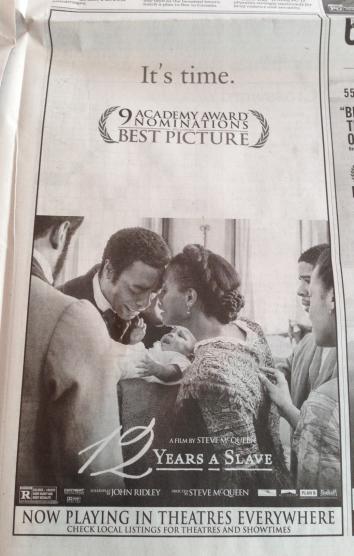
“It’s time.”

This is the  tag line in the post-Oscar nomination ads being prominently run in New York and California for  “12 Years A Slave,” a strong Academy Award contender (nine nominations, including best film).

Although there is room for disagreement, and the ad has the virtue of all clever advertising that it conveys different messages to different markets—Haven’t seen the film yet? “It’s time!”  Desperate to see the best movie you saw in 2013 finally get its due? “It’s time!”  When will the question of whether the most honored film of the last 12 months will win the biggest honor of them all be answered? “It’s time!”…or almost time, as the Oscar ceremonies are coming up on March 2—the consensus is that “It’s time” is mainly aimed at Oscar voters, and the message it conveys is, as Slate puts it, “it’s time for a movie about slavery, and with a significantly black cast and crew, to be recognized by the Academy of Motion Picture Arts and Sciences.” Film critic Phil Hammond puts it slightly differently:

“The ad not only can be interpreted as shining a light on a very dark period in American history, it also shines a light on the Academy’s fairly dismal record of awarding its top honor to any movie about the black experience. In fact there has been only one Best Picture winner in the 85 years the Academy of Motion Picture Arts and Sciences has been handing out Oscars that even remotely qualifies in this regard. In 1968, In The Heat Of The Night, a murder mystery set against the racial divide in a small Southern town, won Best Picture and four other Oscars just a few days after the assassination of Martin Luther King (the ceremony was even postponed two days out of respect). The votes were in before the King assassination, but it seemed then that “It’s Time” would have been an appropriate way to describe that victory. However, outside of lead actor Sidney Poitier — who also co-starred in another racially themed Best Pic nominee that year, Guess Who’s Coming To Dinner —  this movie  featured a largely white cast, white producer, screenwriter and director (Norman Jewison).”

If so many in the industry are interpreting the ad this way, it is fair to assume that this was at least one of the ad’s objectives, and on the assumption that it was an objective, your Ethics Alarms Ethics Quiz today is this:

“Is appealing to Oscar voters on this basis fair and ethical?”

I can see strong arguments for each position. Continue reading

Ethics Hero: Jerry Seinfeld

One wonderful thing about extreme success combined with middle age is that you can, if you have the integrity, speak unpopular truths without caring who objects. Thus it was the Jerry Seinfeld correctly dismissed as irrelevant and misguided the suggestion that seeking racial and gender balance should be an objective in his comedy shows. In response to a question challenging his Web series, “Comedians in Cars Getting Coffee“as too white and male, the comedian said:

“People think it’s the census or something, it’s gotta represent the actual pie chart of America. Who cares? Funny is the world that I live in. You’re funny, I’m interested. You’re not funny, I’m not interested. I have no interest in gender or race or anything like that, but everyone else is, kind of with their little calculating, “Is this the exact right mix?” To me, it’s anti-comedy.  It’s more about PC nonsense than ‘are you making us laugh or not’.”

Exactly. Not that the race and gender bean counters will let Seinfeld escape with an explanation of such obvious common sense. Here’s Mediaite’s Tommy Christopher playing his full hand of gender, race, guilt and quota cards: Continue reading

Law vs. Ethics, The Cynical “War on Women,” And Stacking The Deck for Hillary

Let me begin by reprinting, in its entirety, a post from the earliest days of Ethics Alarms, one then titled, The Difference Between Law and Ethics:

In the instructive category of “Lawsuits that demonstrate the distinction between law and ethics,” we have the Massachusetts case of Conley v. Romeri.

Ms. Conley met Mr. Romeri when they were both in their 40s and divorced. As romance beckoned, Ms. Conley told her swain that she was childless, and wanted to begin a family before her biological clock struck midnight. The defendant, who had sired four children already, told her “not to worry.” He had seen a fortune-teller who had predicted that he would increase his number of children from four to six.

That held Ms. Conley for seven months. Then he told her that he had been vasectomized years ago.

Ms. Conley sued the bastard, claiming that her now ex-boyfriend had fraudulently misled her into believing he could father little Conleys in order to prolong the relationship, and that his actions had thrown her into emotional distress and depression.

Let us pause here and say that Mr. Romeri is a cur. Knowing that Ms. Conley was desperate for children and running out of time, he nonetheless deceived her for his own purposes, costing her perhaps her only chance to have the family she desired. For the fans of Bill Clinton out there, he was also clearly adept at Clintonesque deceit: he said “don’t worry” about having children, not that he was capable of creating them; he said a fortune- teller has assured him that he would have more kids, but never said her prediction was plausible. Mr. Romeri, like millions of deceitful people before him, probably doesn’t think he really lied. But of course he did.

The Massachusetts Appeals Court, however, found that while Mr. Romeri may have behaved abominably, it was not the place of the law to punish him.

Such claims, the judges said,

“…arise from conduct so intensely private that the courts should not be asked to resolve them….It does not lie within the power of any judicial system to remedy all human wrongs. Many wrongs which in themselves are flagrant–ingratitude, avarice, broken faith, brutal words and heartless disregard–are beyond any effective remedy.”

Our hearts go out to Ms. Conley. But the law will never succeed in making people be honest, caring, and fair. Only we can do that by creating a society in which boys grow to manhood knowing that behavior like Mr. Romeri’s is wrong, and at the same time, a society where women take responsibility for their own welfare, without seeking government remedies for every challenge.

——————————————–

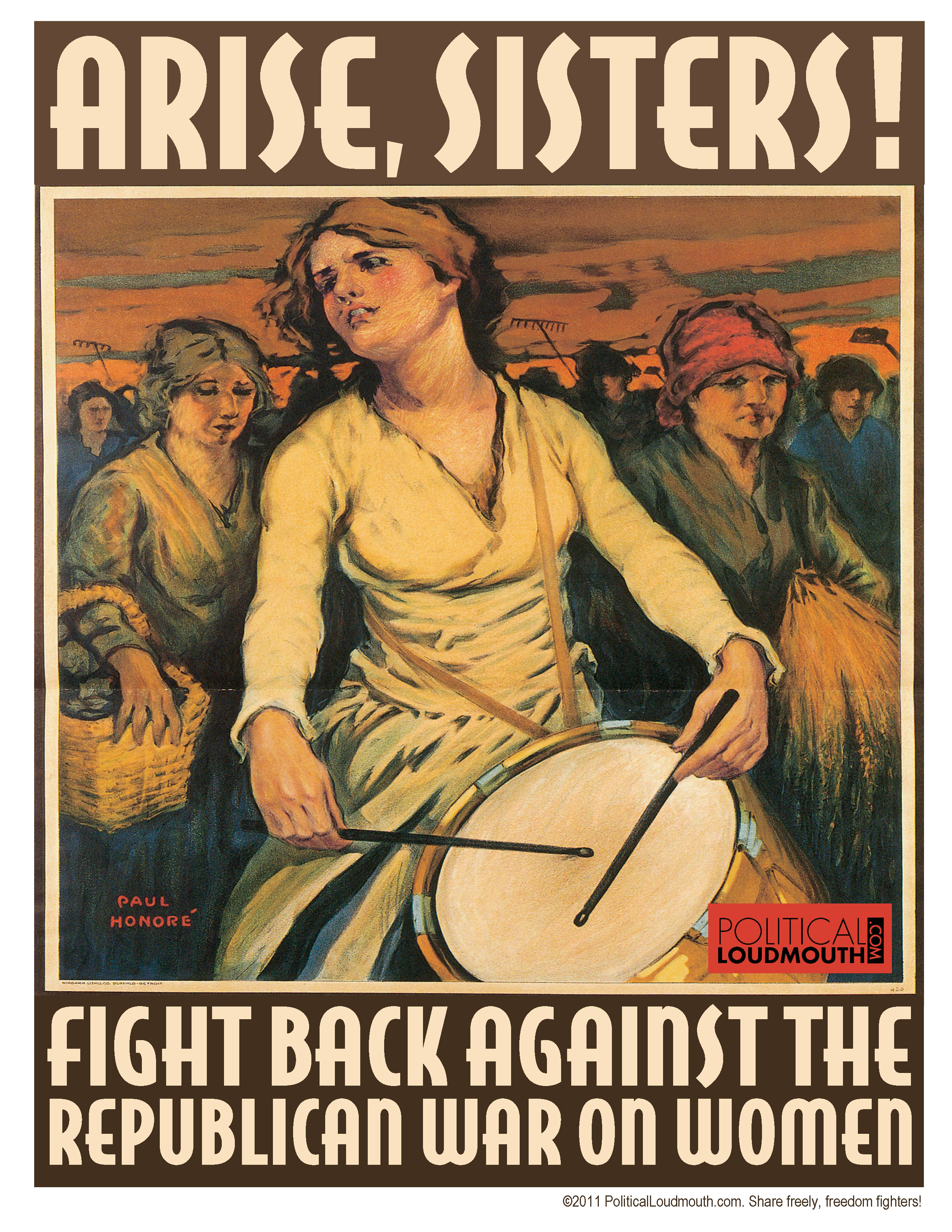
Reading this post again, and watching the (I think) overtly cynical and political effort by Democrats and the Obama Administration to increase the weight of the already heavy hand of the law in matters involving problems that are unique to or that disproportionately affect women, I think the importance of Conley v. Romeri extends beyond the original reason I posted it. Among other things, the case stands for the proposition that the government need not and should not treat women as if they are helpless against adversity, and must be accorded special privileges and protection Continue reading