What Michelle Obama Calls Racism…Today, Anyway

Target Michelle

The current People Magazine has a feature titled “The Obamas: How We Deal with Our Own Racist Experiences,” in which both Obama’s reflect on their personal experiences with a racist America. It begins like this…

“The protective bubble that comes with the presidency – the armored limo, the Secret Service detail, the White House – shields Barack and Michelle Obama from a lot of unpleasantness. But their encounters with racial prejudice aren’t as far in the past as one might expect. And they obviously still sting.”

Here is a relatively recent experience, the first one cited by Mrs. Obama in the article, that “stung”:

“I tell this story – I mean, even as the First Lady – during that wonderfully publicized trip I took to Target [in 2012], not highly disguised, the only person who came up to me in the store was a woman who asked me to help her take something off a shelf. Because she didn’t see me as the First Lady, she saw me as someone who could help her. Those kinds of things happen in life. So it isn’t anything new.” 

That’s right, Michelle feels—or says she feels—that this incident was proof of incipient racism, one of the “micro-aggressions” that white society inflicts on African Americans daily, sapping their self-esteem, confidence, and trust in society.

She’s right that it “happens in life” and isn’t new. In fact, it happened to me, in the local Target, coincidentally, just last month. A very short elderly Asian woman asked if I would take down a large container of laundry detergent from a high shelf. Obviously, she thought I worked at Target and was denigrating me, applying racial stereotypes to a large bald Greek-American man.

I can say with no hesitation whatsoever that what happened to Michelle at Target was not an incident of racial stereotyping. The photo above shows how Michelle was dressed on the fateful day, and anyone who would mistake her flowered blouse, Nike hat, shades and shopping cart as the uniform of a Target employee had recently escaped from a Home for the Bewildered. What wasn’t new about the encounter is that in a healthy, ethical community strangers should ask each other for kindly help and assistance, and normal, non-paranoid, non race-obsessed citizens—and especially their leaders, who are supposed to model responsible  behavior— ought not to be so warped by ideologically-dictated confirmation bias that their immediate reaction is, “Hmmmm…what did she mean by that?” Continue reading
The Professor and the Insensitive Law School Exam Question

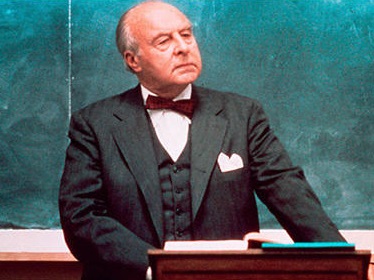
"Go ahead, tell Prof. Kingsfield that his exam is unfair because it triggers your emotions and you can't think straight. I dare you."

“Go ahead, tell Prof. Kingsfield that his exam is unfair because it triggers your emotions and you can’t think straight. I dare you.”

A Constitutional Law exam at UCLA Law School included this question:

CNN News reported: On Nov. 24, St. Louis County prosecuting attorney Robert McCulloch announced in a publicized press conference that Police Officer Darren Wilson (who has since resigned) would not be indicted in the August 9 shooting of Michael Brown. Michael Brown’s stepfather, Louis Head, was with hundreds of protesters assembled outside the police station, listening on loudspeakers and car radios when they learned Officer Wilson was not being charged. Standing on the hood of a car, Mr. Head embraced Michael Brown’s mother. Mr. Head asked someone for a bullhorn but it was not passed to him. He turned to the crowd, stomped on the hood and shouted, repeatedly, “Burn this bitch down!”

Police Chief Tom Jackson told Fox “News,” “We are pursuing those comments … We can’t let Ferguson and the community die [as a result of the riots and fires following McCulloch’s announcement]. Everyone who is responsible for taking away people’s property, their livelihoods, their jobs, their businesses — every single one of them needs to be prosecuted to the fullest extent of the law.”

County Attorney Robert McCulloch asks lawyers in his office whether to seek an indictment against Head by relying on a statute forbidding breach of the peace and another prohibiting rioting (six or more persons assembling to violate laws with violence). A recent hire in the office, you are asked to write a memo discussing the relevant 1st Amendment issues in such a prosecution. Write the memo.

The question is a fair and legitimate one, and very typical of law school exams, which often ask students to apply course content to current events. Nonetheless, it provoked a controversy.

Shyrissa Dobbins, a second-year law student in the course and is chair of the Black Law Students Association, complained, “Daily I think about Michael Brown and Eric Garner, and I have a challenge. Every day I think about this injustice and how I’m in a law school that won’t even make a statement about it.” Hussain Turk, a second-year law student who took the exam, argued that  exams should not ask students to address controversial events, and that the question was unfair, as it could be more emotionally difficult for black students to answer. “These kinds of questions create a hostile learning environment for students of color, especially black students who are already disadvantaged by the institution,” Turk said.

There is only one proper rebuttal for this foolishness:

“Grow up, deal with your biases, start thinking like lawyers or find a profession you can handle.”

Pathetically, the law professor, Robert Goldstein apologized in an email in an e-mail to students, saying, “I recognize … that the recent disturbing and painful events and subsequent decisions in Ferguson and New York make this subject too raw to be an opportunity for many of you to demonstrate what you have learned in this class this year,” and promised to discount scores students receive on the question if it lowers the overall score of the student.

Law school Dean Rachel Moran added to the misplaced sensitivity-fest, and her e-mail, said…

“In retrospect, however, he understands that the question was ill-timed for the examination and could have been problematic for students given the anguish among many in our community over the grand jury decisions in the Michael Brown and Eric Garner cases.”

Observations: Continue reading

Ethics Alarms Encore: “Tom Yawkey’s Red Sox Racism, and How Not to Prove It”

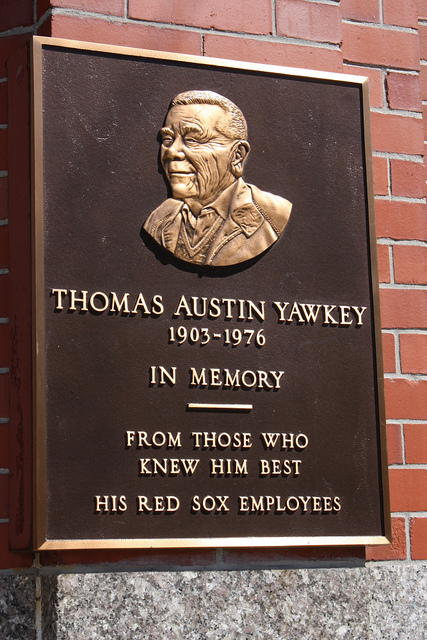
Yawkey TributeEvery now and then a comment out of the blue reminds me of a post that I had forgotten. That was the case here. Reading it again for the first time in five years, I was struck by how the crux of the post is still relevant today (that crux has nothing to do with baseball), and indeed how the intervening five years have made what I thought was a bad trend a genuine political and cultural malady.

And the World Series is going on, and I feel badly about the Red Sox having such a miserable season. This post, which few read when it was first published as the blog was attracting (let’s see…) less than 200 views a day as opposed to nearly 4000 a day now, is a good one, and I enjoyed it.  That “self-professed ethicist” has his moments…. Continue reading

Congratulations, Race-Baiters!

Stamp-Mission-Accomplished

On “Face the Nation” this Sunday, host Bob Schieffer mentioned to guest Elijah Cummings (D-MD) that it was being reported that many African-Americans are worried the Secret Service would better protect a white president. “Eighty-five percent of all African-Americans that come to me mention what you just said, Cummings replied, “and I don’t agree with it.”

Well, that’s mighty big of the Congressman. He has been one of the many black elected officials who have periodically claimed that criticism of the President stems from a race-based hatred unrelated to his performance or policies. A responsible black leader would have said, not “I disagree” as if this was a matter for rational debate, but rather, “This is obviously unfair and untrue.”

I think the Congressman should have said, to be completely candid, something like this:

Eighty-five percent of all African-Americans that come to me mention what you just said,and I must say, Bob, I think Democrats, liberal pundits, Hollywood, the civil rights establishment, activists and many others like Chris Matthews—all of MSNBC, really—Bill Maher and Eric Holder, should pause to pat themselves on the back. After all, handed a shining opportunity to ease the tensions of racism with the election of a black President, we’ve managed against all odds to convert the majority of the U.S. African-American population into a paranoid, racist, fearful, whites-hating bloc that we should be able to keep voting Democratic for decades, while we convince the growing Hispanic-American population that whites hate them too. Of course, we have to appreciate the efforts of the media in painting that Trayvon Martin tragedy as a mad racist shooting  harmless child for “walking while black”—that helped a lot.

Luckily, whites don’t attribute all of the endless screw-ups of government agencies under the supervision of this black President to his hatred of them, or we might really have a race problem in this country. But that would be racist, anyway.  Actually, we could use that.”


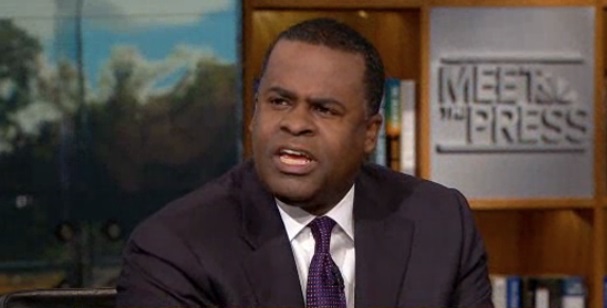
Ferguson Ethics Train Wreck Update: The Mayor of Atlanta Tells “Meet The Press” That “Justice” Means Prosecuting Officer Wilson

kasim-reed

There should be no question about it any more. The nearly unanimous position, stated or unstated, by elected Democratic and African American officials is that Officer Wilson, the Ferguson police officer who shot the unarmed, 18-year-old Michael Brown, should be charged with murder. That position represents a triumph of group identification, political expediency and bias over the rule of law and, yes, in defiance of that cynically wielded term “justice,” and it needs to be rejected and condemned at the highest levels of our society. Who is going to have the courage to do it?

Certainly not the news media. This morning on the David Gregory-less “Meet the Press,” the stand-in for the fired host interviewed Democratic Missouri Governor Jay Nixon, who talked exclusively in code about “justice” and “transparency.” Nixon, you will recall, has already stated his view that Wilson should be prosecuted, so his mouthing platitudes now about “transparency” ring like the sly plotting of the villains in old Westerns. You know the type: the cattle baron who owns the town and the sheriff devises a way to remove an obstreperous opponent who won’t toe the line by framing him and convicting him of murder. “Make it look niiice and fair, right by the book!” he snickers to his henchman. That was Nixon today.

Then the questioning turned to NBC round-table guest Kasim Reed, the African-American Mayor of Atlanta, who was asked about how to ensure a just result in the case. His answer was frank, if jaw-dropping: everyone, including jurors and officials, should see the incident “through the eyes” of Brown’s parents, “whose son was shot six times in front of four witnesses and left lying in the street for hours.” Continue reading

Comment of the Day: “Mid-EthicsTrainwreck Observations On Ferguson”

China Protest

How much fire power should a democracy’s police forces have at their disposal? Is the trend toward militarization in urban police departments an inherent threat to our liberty? These are interesting topics, and issues with public policy as well as ethical implications, brought to our attention by the armored vehicles we have seen prowling through the streets of Ferguson, Missouri.

I confess to neglecting these matters on Ethics Alarms, in part because the question of whether a police officer justly and legally shot (six times) and killed 18-year-old Michael Brown has been muddled by too many other considerations already. As a result, I haven’t given the issues much quality thought, other than my usual fascination at the ability of some committed libertarians to take a position dictated by their ideology without being troubled by the obvious practical problems associated with that position, a proclivity I would file under the heading of “Irresponsible.” Also, “Strange.” How can someone advocate virtually unregulated access to increasingly powerful weaponry by citizens—including criminals—and oppose sufficient arms in the hands of the police to protect the public from a misuse of that weaponry? Libertarians (and others) maintain that a prime purpose of the Second Amendment  is to prevent the government from disarming  citizens to dominate and control them. Agreed. But the unfettered freedom of law-abiding citizens to acquire the weapons they feel are necessary for whatever lawful purpose they choose will also result in the same weapons being available to those with less savory objectives in mind. I understand that the opposition to a police force armed to the teeth springs from either a distrust of government generally (libertarians and anarchists) or police specifically , especially by a segment of the population, African-Americans, who are otherwise favorably inclined toward a large, intrusive government—a contradiction as striking as that offered by the libertarian position, but understandable for those who live under the threatening authority of the Killer Klown act known as the Ferguson Police Department.

Fortunately, texagg04, a distinguished Ethics Alarms regular, has been inspired to delve into some of these questions, and others, in a superb post, the Comment of the Day, on the essay Mid-EthicsTrain Wreck Observations On Ferguson. Here it is: Continue reading

Wishing Ethics: What Should We WANT The Outcome To Be In Ferguson?

finger-crossed

The simple answer to the question in the headline is: we should all want the truth to come out, whatever it is, and be dealt with honestly and justly. I don’t think that result is possible, unfortunately, just as it proved impossible in the Martin-Zimmerman tragedy.If the truth could be determined, however…if an experimental, advanced video recorder just happened to capture everything that occurred between Officer Wilson and Mike Brown, including in the squad car; if it captured the incident from all angles, and we could hear and see everything that transpired between them, what would we want that to be, recognizing that the tragedy cannot be undone?

Would we want it to show that Mike Brown was murdered, that he was fleeing for his life when he escaped the car, then turned, fell to his knees ( as at least one witness claims) and was gunned down with his hands in the air? Obviously many Americans, including Brown’s family, the Ferguson protestors, many African-Americans, civil rights activists, police critics, politicians and pundits, have an interest in seeing this be the final verdict of investigators, for a multitude of reasons. The grieving family wants their son to be proven innocent of any fault in his own death. Others, especially those who prematurely declared Officer Wilson of guilty of “executing” Brown, have a strong interest in being proven right, for even though it would not excuse their unfair and irresponsible rush to judgment, such a determination would greatly reduce the intensity of criticism leveled at them.

[Side Note on Ethics Dunce Jay Nixon: That won’t stop the criticism here, however: Whatever the facts prove to be,  Gov. Jay Nixon’s comments are indefensible, and inexcusable. Now the Democrat is denying that they meant what he clearly meant to convey: calling for “justice for Brown’s family” and a “vigorous prosecution” can only mean charging Wilson, and that is what those calling for Wilson to be arrested took his comments to mean. If the Governor didn’t mean that, as he now claims, then he is 1) an ignoramus and 2) beyond incompetent to recklessly comment on an emotion-charged crisis in his state without choosing his words carefully.]

Or should we hope that the facts exonerate Wilson? After all, shouldn’t we want the one living participant in this tragedy to be able to have some semblance of a life without being forever associated with villainy? Certainly his family and friends, as well as member of the Ferguson police force who want their own ranks to be vindicated, and police all over the nation who have had their profession attacked and denigrated in the wake of the shooting, fervently hope that the narrative pushed by the demonstrators is proven wrong. Others want to see Wilson proven innocent for less admirable reasons. They want to use the incident to condemn police critics, and undermine and discredit civil rights advocates, especially long-time ideological foes like Al Sharpton. They want Eric Holder to look biased, (he looks biased anyway, because he appears to be taking sides) and to make the case—one that a single episode neither supports nor can possible rebut—that police do not have itchy trigger fingers when their weapons are pointed at young black men.

From the standpoint of ethics, which means that the best outcome will be the one that does the most good for society, the choice is complex.  Continue reading

Comment Of The Day #2: “Nobody Should Be Cheering The Poll Showing President Obama As Regarded As ‘The Worst President Since World War II’”

Film-ProjectorI had barely posted the first Comment of the Day on the recent post regarding the explosive poll showing President Obama sinking below all previous post-war Chief Executives in the public’s estimation, when another excellent deserving one, by Mark, arrived.

Mark doesn’t comment often, but when he does, his posts are always eloquent and thoughtful. Here is his Comment of the Day on the essay, Nobody Should Be Cheering The Poll Showing President Obama As Regarded As “The Worst President Since World War II”.

I don’t go all the way with you on this one, Jack, but certainly a part of the way. A few years ago I learned about projections – how we project what we want/see/expect onto other people even when, or especially when, the projection has nothing to do with who they really are, and the consequence of not seeing clearly the person in front of us. If nothing else, President Obama has been a victim of that idea.

In 2008, he was a blank screen onto which people projected what they wanted to see after the Bush years and a rapidly tanking economy. He was HOPE, CHANGE, and perhaps worse, we ennobled him with the idea that he was something other than a standard-issue Washington politician. The fact that he was African American only amplified the idea of his actually making a difference in Washington because he was, indeed, so different from any other candidate we had seen since Kennedy and his Roman Catholicism. I think our ultimate projection might have been that if we could do this, elect a black man, then we would bring change to the country simply by “curing” the centuries-old race issues in the US or making a good run at it. Projections are powerful and in the hands of a collective even more so. After a time during the 2008 election, it didn’t matter what he said or did, he WAS hope and change, not a candidate.

And, in the absolute cynicism of American politics, all the pollsters, pundits, and creatures of his campaign knew and exploited this (and they’ll do it again for someone else come 2016).

In the moment he was elected, as an African American, I felt something incredible – a man like me in the White House, a supreme victory after slavery, Jim Crow, and the spilled blood of Till and King. I also felt an unease – could he govern? We knew he could run a crackerjack campaign, but could he replicate that kind of success from the Oval Office? In 2008, I figured only time would tell and to an extent it has. He was neither an outsider to Washington nor a maverick, both projections, not to mention a relative lack of experience compared to other presidents. I will say – and I know you agree – that he did not come to Washington to cause harm, but with a deep love for the country and an expectation that he could do what he had intended and promised. Perhaps those were his own projections upon a system that had no intention of bearing them out. I don’t know.

Like I said – I won’t go all the way with you on this and the points of disagreement are about perception of events and we each have our own. I will not say, either, that he is the worse president since WWII – that is, again, a matter of perception. Where we absolutely agree is a share of this lies with the American people who have not figured out how to counter systems – both political and governmental – that are increasingly cynical, unethical, and devoid of any sense of the common good for our nation. “Have you no sense of decency, Sir?” is truer today than it was in 1954 and should be asked of every politician in Washington from the President on down. In the last eight years everybody of every political stripe has some blood on their hands for this mess. We lay it at his feet because – unfortunately for him – the buck does stop there.

So now we wait for the curtains to part on another blank screen onto which we’ll project our hope for a country that is different from the one we’re living in now. We’ll hear from sincere, well meaning candidates who will tell us what we want to hear rather than what is true and doable, and we’ll buy it. The first woman in the White House is ripe for that, as is the first Hispanic, or a TRUE American Tea Party candidate. They’ll all present themselves and we’ll beam on.

Continue reading

Ethics Quote Of The Week: Kareem Abdul-Jabbar.

“Shouldn’t we be equally angered by the fact that his private, intimate conversation was taped and then leaked to the media? Didn’t we just call to task the NSA for intruding into American citizen’s privacy in such an un-American way? Although the impact is similar to Mitt Romney’s comments that were secretly taped, the difference is that Romney was giving a public speech. The making and release of this tape is so sleazy that just listening to it makes me feel like an accomplice to the crime. We didn’t steal the cake but we’re all gorging ourselves on it. So, if we’re all going to be outraged…Let’s be outraged that private conversations between people in an intimate relationship are recorded and publicly played. Let’s be outraged that whoever did the betraying will probably get a book deal, a sitcom, trade recipes with Hoda and Kathie Lee, and soon appear on “Celebrity Apprentice” and “Dancing with the Stars.”‘

—Basketball legend Kareem Abdul-Jabbar, in an essay pointing out some of  hypocrisies and excesses in the reactions to the Donald Sterling saga.

"Gotcha! He's screwed now...but he's a racist scumbag, so it's perfectly OK."

“Gotcha! He’s screwed now…but he’s a racist scumbag, so it’s perfectly OK.”

Good for Kareem. I was just about to make this point myself, and preparing to be pilloried for making excuses for a racist. Kareem is a lot bigger than I am, and I’m happy to stand behind him.

I watched two African-American lawyers on CNN today erupt in over-the-top outrage that has become the norm in the “finger-wagging Olympics” that Abdul-Jabbar decries in the rest of his article. One of the lawyers called Sterling’s remarks defamatory—“defamatory?” Sterling didn’t say a word that was negative about blacks; he just said he didn’t want his girl friend taking photos with them. His comments constitute smoking gun proof of racial bias, sure, but they aren’t “defamatory.” The other lawyer called them “the most vile, disgusting...” on and on and on, comments that he had ever heard.  Really? I doubt that. You know, once you award the prize to Sterling’s racist comments, you have no more superlatives left  for really horrible racist remarks. The two sportswriters, Christine Brennan and Bill Rhoden, who preceded my commentary on NPR today, did the same thing. It was a contest over who could express the most outrage.

It is a small surprise, then, in this hyper-charged atmosphere, that the conduct of V. Stiviano is getting an ethics pass, as if betrayal doesn’t matter as long as the betrayed party is despicable, and what she did was justified because she exposed a racist to the world. It’s not justified. The ends don’t justify the means, when the means are betrayal and mean-spirited vengeance, and when the methods used threaten to become a social norm, turning American homes and bedrooms into Stalinesque trap where no secret is safe. We’ve seen this practice before and I’ve condemned it before: the Harvard Law student turned into a campus pariah by a jealous rival circulating a private e-mail to the people most likely to be offended by it; Alec Baldwin’s daughter releasing private communications with her intemperate father to harm his reputation; Mel Gibson’s girlfriend doing the same; e-mail jokes being intercepted and sent to political enemies as a tool of personal destruction; clumsy suitors having their fumbles turned into national ridicule by the objects of their affection. Continue reading

Ethics Quiz: “12 Years A Slave” Plays The Racial Guilt Card On Oscar Voters

12_years_ad_2.jpeg

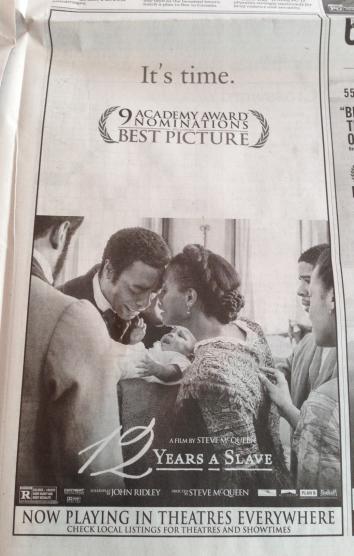
“It’s time.”

This is the  tag line in the post-Oscar nomination ads being prominently run in New York and California for  “12 Years A Slave,” a strong Academy Award contender (nine nominations, including best film).

Although there is room for disagreement, and the ad has the virtue of all clever advertising that it conveys different messages to different markets—Haven’t seen the film yet? “It’s time!”  Desperate to see the best movie you saw in 2013 finally get its due? “It’s time!”  When will the question of whether the most honored film of the last 12 months will win the biggest honor of them all be answered? “It’s time!”…or almost time, as the Oscar ceremonies are coming up on March 2—the consensus is that “It’s time” is mainly aimed at Oscar voters, and the message it conveys is, as Slate puts it, “it’s time for a movie about slavery, and with a significantly black cast and crew, to be recognized by the Academy of Motion Picture Arts and Sciences.” Film critic Phil Hammond puts it slightly differently:

“The ad not only can be interpreted as shining a light on a very dark period in American history, it also shines a light on the Academy’s fairly dismal record of awarding its top honor to any movie about the black experience. In fact there has been only one Best Picture winner in the 85 years the Academy of Motion Picture Arts and Sciences has been handing out Oscars that even remotely qualifies in this regard. In 1968, In The Heat Of The Night, a murder mystery set against the racial divide in a small Southern town, won Best Picture and four other Oscars just a few days after the assassination of Martin Luther King (the ceremony was even postponed two days out of respect). The votes were in before the King assassination, but it seemed then that “It’s Time” would have been an appropriate way to describe that victory. However, outside of lead actor Sidney Poitier — who also co-starred in another racially themed Best Pic nominee that year, Guess Who’s Coming To Dinner —  this movie  featured a largely white cast, white producer, screenwriter and director (Norman Jewison).”

If so many in the industry are interpreting the ad this way, it is fair to assume that this was at least one of the ad’s objectives, and on the assumption that it was an objective, your Ethics Alarms Ethics Quiz today is this:

“Is appealing to Oscar voters on this basis fair and ethical?”

I can see strong arguments for each position. Continue reading