Ethics Hero, Corporate Division: Merck

Sometimes, though their implacable foes would refuse to acknowledge it, big corporations do the right thing even without a metaphorical gun at their heads. This week’s Economist magazine relates an amazing example that the public needs to know about, especially since it challenges popular stereotypes about Big Pharma.

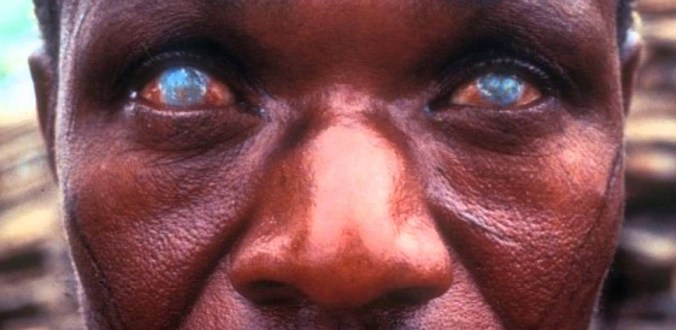
The Economist begins by horrifying us with a deadly aspect of life in third world countries that are hot and wet: “neglected tropical diseases,” or NTDs. These are neglected because the populations that suffer from them are poor and far away, but they affect more than a billion people. Among the scourges, all parasitic, are Buruli ulcer, Chagas disease, guinea-worm disease, leishmaniasis, river blindness, trachoma and yaws. There are 18 pernicious maladies currently listed as NTSs.

In the 1970s, mega-pharmaceutical firm Merck developed the drug ivermectin after tests on animals with parasitic infections. William Campbell, one of the firm’s parasitologists,told company executives that the new drug might be effective against the parasite that caused onchocerciasis, or river blindness, which  afflicts populations in in parts of Africa, Latin America, and  Yemen.  He was given the green light to find out.

The first human trial of ivermectin as treatment for river blindness took place in Senegal in 1981, on patients who had the early stages of the disease—itching, rashes— but no damage to their eyes yet. The results were encouraging,  indicating that ivermectin was safe for humans and highly effective at stopping the disease before it blinded its victims.  Merck, however, now faced the problem that has impeded cures for all the neglected tropical diseases: those who needed ivermectin were too poor to buy it, and so were the nations where they lived. Big corporations are not charities; they have investors, stockholders and a bottom line. They are not accustomed or programmed to give away their products.

Yet Merck made a corporate decision that Bernie Sanders and Elizabeth Warren say is impossible. Starting in 1987, it made an open-ended commitment to distribute as much ivermectin as was needed to eradicate the river blindness worldwide. In the next ten years, it swallowed the cost of 100 million doses. Continue reading

Comment of the Day: “Ethics Quiz: From The Ethics Alarms Mailbag…”

panhandlerThe ethics quiz based on a reader’s off-site query regarding the ethics of giving to panhandlers when they are unlikely to use the gift wisely prompted a rich and thought-provoking thread. There were many “Comment of the Day” worthy responses, but I chose this one to represent them, in part because it is the most altruistic in spirit.

Here is my old friend Mark’s Comment of the Day on the post, Ethics Quiz: From The Ethics Alarms Mailbag…

Back in the days when street folks still asked for a quarter, I used to pass the same guy every day and always gave him $.50 ($2.50 a week). A co-worker seeing me give money to the guy mentioned that the same street person usually arrived to his “office” in a cab. I thought about it for a second and decided that my $2.50 a week – constantly available to me and replenished on a bi-weekly basis – was not enough to challenge what he did with it after it left my hands.

I am also one who will invite someone into McDonald’s with me and have them order what they like. I keep a few dollars in the car for the men and women who haunt the very large intersection near my house. My end-of-the-year charity dollars go to the local food banks.

I am no paragon (I will, however, agree to “exceptionally soft touch” or “sap”). It is simply my own personal practice to help when I can with a fair certainty that I will not – God willing – in this lifetime lack for a dollar (or someone to help me). Perhaps it’s just so much new age crapola, but I believe we get back what we put out. For this sap, it’s just that simple. I have enough trouble sussing out my own motives without trying to figure out strangers with a hard-luck story.

My $2.50 🙂

Ethics Quiz: From The Ethics Alarms Mailbag…

burningmoneyimageReader and sometime commenter Elizabeth 2 e-mails…

Here’s a question for which I’d appreciate some input.

I am generally a sucker for street people who ask for money. I frequent the 7-11 for quick trips for needed household items, and over the past couple of months I’ve often seen a young woman outside, just sitting there.  She once asked me if I had any spare change:  I gave her $10.  A couple of weeks later, same question, same response.

Then a month or so after I had last given her money, I was in the same 7-11 and saw her buying lottery tickets.

Last week she saw me as I entered the 7-11, recognized me, and asked me again for “spare change.” I said “I don’t have any cash at all.  Sorry!”  I was not of a mind to help this young woman use my charity for the biggest scam of all time:  the Virginia Lottery.

My question is this:  if I am willing to part with money for a person who seems to need it, and to do so without the vetting that a charity usually gets from me, am I in any position at all to care or change my behavior because of the way the money is spent?  Admittedly I have no ability to realistically judge the true need of anyone who asks me for money, but if I have some evidence that makes me wary, should I act on it?

Or, since charity (monetary or otherwise) is an important pillar of character for me, should I simply give what I can when I can and make no judgement whatsoever?  After all, these people don’t have Form 990s for me to examine.

Your Ethics Alarms Ethics Quiz of the Day:

Is it ethical to withhold charity from a needy individual because you regard her likely use of your gift as irresponsible?

Continue reading

The Ethical Christmas Carol

Considering that Christmas is our culture’s ethical holiday, it is remarkable that only one traditional carol—and no modern holiday songs—celebrates ethical conduct. The one carol is “Good King Wenceslas,” and a strange one it is.

The lyrics are by J. M. Neale (1818-66), and were first published in 1853. Neale is a superstar in the Christmas Carol firmament: he also is responsible for the English lyrics of “Good Christian Men, Rejoice,” and “O Come, O Come, Emmanuel,” both of which you hear much more frequently than “Good King Wenceslas.” One reason is that the ethical carol tells a story in ten verses, and if you don’t sing them all, the story doesn’t make sense. There are very few recordings of the song in which all the verses are sung. Ten verses is also a lot to remember for any song. My elementary school used to teach the whole carol to sixth graders for the Christmas assembly, but let them have crib sheets. This was before it was decreed that allowing children to learn, sing and listen to some of the most lovely and memorable songs in Western culture was a form of insidious religious indoctrination.

Here is the whole carol:

Good King Wenceslas looked out
On the feast of Stephen,
When the snow lay round about
Deep and crisp and even;

Brightly shone the moon that night
Though the frost was cruel,
When a poor man came in sight,
Gath’ring winter fuel.

‘Hither, page, and stand by me,
If thou know’st it, telling
Yonder peasant, who is he?
Where and what his dwelling?’

‘Sire, he lives a good league hence,
Underneath the mountain,
Right against the forest fence,
By Saint Agnes’ fountain.’

‘Bring me flesh and bring me wine,
Bring me pine logs hither,
Thou and I will see him dine
When we bear them thither.’

Page and monarch forth they went,
Forth they went together,
Through the rude wind’s wild lament
And the bitter weather.

‘Sire, the night is darker now
And the wind blows stronger;
Fails my heart, I know not how,
I can go no longer.’

‘Mark my footsteps, good my page,
Tread thou in them boldly:
Thou shalt find the winter’s rage
Freeze thy blood less coldly.’

In his master’s steps he trod,
Where the snow lay dinted;
Heat was in the very sod
Which the Saint had printed.

Therefore, Christian men, be sure
Wealth or rank possessing,
Ye who now will bless the poor
Shall yourselves find blessing.

For one thing, “Good King Wenceslas” has little to do with Christmas Day, and doesn’t mention Jesus or the Nativity. The Feast of St. Stephen is also known as Boxing Day, the day after Christmas, December 26. It is a British Commonwealth tradition that never caught on in the U.S. In some European countries like Germany, Poland, the Netherlands and the Nordic countries, the day is celebrated as a Second Christmas Day. Continue reading

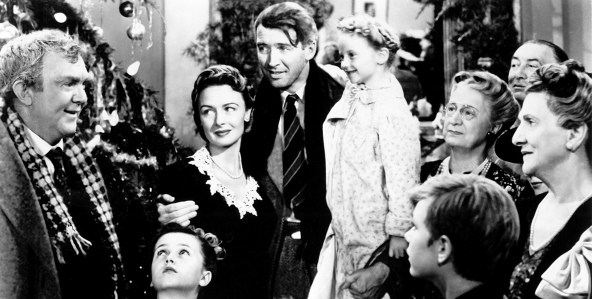
The Complete “It’s A Wonderful Life” Ethics Guide [UPDATED AGAIN! ]

 Once again, Ethics Alarms re-posts its ethics guide to Frank Capra’s 1946 masterpiece “It’s A Wonderful Life,”one of the great ethics movies of all time. It was written in 2011, and revised regularly since, including for this year’s version. I suspect we need it more in 2016 than usual.

It is fashionable now, and was even when the film was released, to mock its sentiment and optimism. On one crucial point Capra was correct, however, and it is worth watching the film regularly to recall it. Everyone’s life does touch many others, and everyone has played a part in the chaotic ordering of random occurrences for good. Think about the children who have been born because you somehow were involved in the chain of events that linked their parents. And if you can’t think of something in your life that has a positive impact on someone–although there has to have been one, and probably many—then do something now. It doesn’t take much; sometimes a smile and a kind word is enough. Remembering the lessons of “It’s a Wonderful Life” really can make life more wonderful, and not just for you.

Here we go:

1. “If It’s About Ethics, God Must Be Involved”

The movie begins in heaven, represented by twinkling stars. There is no way around this, as divine intervention is at the core of the fantasy. Heaven and angels were big in Hollywood in the Forties. Nevertheless, the framing of the tale advances the anti-ethical idea, central to many religions, that good behavior on earth will be rewarded in the hereafter, bolstering the theory that without God and eternal rewards, doing good is pointless.

We are introduced to George Bailey, who, we are told, is in trouble and has prayed for help. He’s going to get it, too, or at least the heavenly authorities will make the effort. They are assigning an Angel 2nd Class, Clarence Oddbody, to the job. He is, we learn later, something of a second rate angel as well as a 2nd Class one, so it is interesting that whether or not George is in fact saved will be entrusted to less than Heaven’s best. Some lack of commitment, there—then again, George says he’s “not a praying man.” This will teach him—sub-par service!

2. Extra Credit for Moral Luck

George’s first ethical act is saving his brother, Harry, from drowning, an early exhibition of courage, caring and sacrifice. The sacrifice part is that the childhood episode costs George the hearing in one ear. He doesn’t really deserve extra credit for this, as it was not a conscious trade of his hearing for Harry’s young life, but he gets it anyway, just as soldiers who are wounded in battle receive more admiration and accolades than those who are not. Yet this is only moral luck. A wounded hero is no more heroic than a unwounded one, and may be less competent as well as less lucky.

3.  The Confusing Drug Store Incident

George Bailey’s next ethical act is when he saves the life of another child by not delivering a bottle of pills that had been inadvertently poisoned by his boss, the druggist, Mr. Gower. This is nothing to get too excited over, really—if George had knowingly delivered poisoned pills, he would have been more guilty than the druggist, who was only careless. What do we call someone who intentionally delivers poison that he knows will be mistaken for medication? A murderer, that’s what.  We’re supposed to admire George for not committing murder.

Mr. Gower, at worst, would be guilty of negligent homicide. George saves him from that fate when he saves the child, but if he really wanted to show exemplary ethics, he should have reported the incident to authorities. Mr. Gower is not a trustworthy pharmacist—he was also the beneficiary of moral luck. He poisoned a child’s pills through inattentiveness. If his customers knew that, would they keep getting their drugs from him? Should they? A professional whose errors are potentially deadly must not dare the fates by working when his or her faculties are impaired by illness, sleeplessness or, in Gower’s case, grief and alcohol.

4. The Uncle Billy Problem

As George grows up, we see that he is loyal and respectful to his father. That’s admirable. What is not admirable is that George’s father, who has fiduciary duties as the head of a Building and Loan, has placed his brother Billy in a position of responsibility. As we soon learn, Billy is a souse, a fool and an incompetent. This is a breach of fiscal and business ethics by the elder Bailey, and one that George engages in as well, to his eventual sorrow. Continue reading

“The Magnificent Seven” Ethics (Spoiler Warning!)

I have noted more than once what an excellent ethics movie the original 1960 Western classic “The Magnificent Seven” is. Occasional  Ethics Alarms contributor and apparently retired ethics blogger Bob Stone made an excellent case for what he calls his favorite ethics movie here, but the screenplay makes its own case with exchanges like this one:

Harry (Brad Dexter): “There comes a time to turn mother’s picture to the wall and get out. The village will be no worse off than it was before we came.”

Chris (Yul Brenner): “You forget one thing — we took a contract.”

Vin (Steve McQueen): “It’s not the kind any court would enforce.”

Chris: “That’s just the kind you’ve got to keep.”

or the very first scene, where gunslinger Chris volunteers to drive a horse-drawn hearse to Boot Hill where a group of armed bigots are threatening to shoot anyone who tries to bury a recently deceased Indian, who lived in the town, in the town’s cemetery along with “decent white folks.”  Steve McQueen (Vin) goes along as Chris’s wing-man, and the first two of the seven team up for an act of pure altruism.

The remake of the film opened over the weekend, and in part because I’m doing a program for the Smithsonian about the lore surrounding the movie, I saw it. And took notes.

It’s not bad. I enjoyed it. It is yet another example of how Hollywood no longer trusts the Western genre or its traditional trappings: the heroes in this and the heroes in most modern Westerns are now portrayed as super-heroes, ridiculously fast on the draw, absurdly accurate with every shot, and able to ride like circus performers. At a certain point, this silliness leads to a damaging loss of suspension of disbelief. The intrusion of gratuitous diversity was also annoying: the end features three heroes riding into the sunset, and they consist of an African-American, a Native American, and a Mexican. How they missed including a handicapped gay woman is mystifying, and somebody should organize a protest. Well, at least all the whites and the Asian guy were killed. That’s something. Continue reading

A Donald Trump Ethics Lesson

nice-guys“Trump Once Cut Off Medical Care For Sick Infant To Spite the Parents,” shouts the Mediaite headline, thus showing that even somewhat ideologically balanced websites will slant their coverage to make Donald Trump look bad—-strange, because honest reporting  will usually do the trick. What a monster he must be! The problem with the headline is that it intentionally mischaracterizes the episode in question, and “poisons the well,”  framing the story so that a casual reader is likely to interpret it as negatively as possible. This is classic unethical journalism. It also shows how some journalists are incapable of reporting on politicians and leaders, whose world view is so different from theirs.

Fortunately, I should add.

The real story, related over the weekend by the  New York Times, is more complex. The Times told the sad tale of Trump’s older brother Freddy, who died of the effects of alcohol abuse before he was fifty after leaving the family construction business. Trump’s reflections on his brother are uncharacteristically sympathetic and gentle, and it is interesting that The Donald’s reaction to his brother’s fall includes never using tobacco or alcohol, a tribute to his self-discipline.

The incident that prompted the Mediaite hit job occurred after Freddie’s death. Here is how the Times describes it: Continue reading

Have A Happy Thanksgiving Everyone, And Don’t Forget To Review The Ethics Alarms Complete “It’s A Wonderful Life” Ethics Guide Before The Annual TV Screening!

It’s right here!

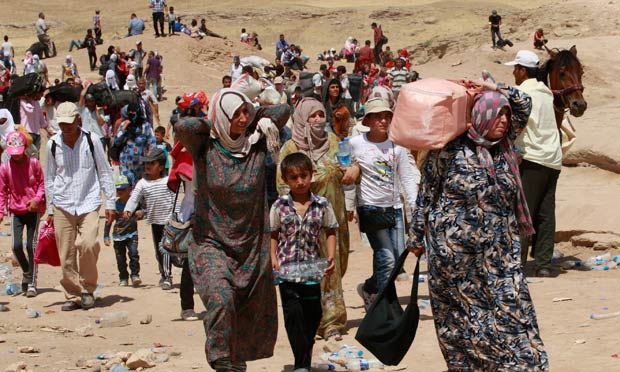
The Syrian Refugee Controversy: For The US Government, An Easy Ethics Call

Syrian refugees

That does not mean that it is an easy call for Barack Obama, whose perception of his duties and the stakeholders in his decisions is often confused.

The Question: Is it competent and responsible (ergo ethical) for the  the U.S. accept 10,000 Syrian refugees (or 65,000, as Hillary Clinton advocates) in the U.S., knowing that it is statistically certain that some of them will carry the threat of Islamic terrorism with them?

The Answer: No. Of course not. How can a rational person advocate such a foolish policy?

The answers to the last question are fascinating to speculate upon, and range from 1) “A rational person won’t,” to 2) “Willful blindness to reality” to 3) “Because of a profound misunderstanding of  the ethical priorities of government and leadership” to 4) “That’s a rational policy if the policy maker-wants  terror attacks.”

The proper analogy is admitting a refugee population with members suffering from a highly-communicable, infectious, incurable and fatal disease. No responsible government would risk bringing a plague into its population without being able to make certain—certain—that none of the refugees carried it. Thus there would be a quarantine period imposed on the refugees showing no symptoms, and those infected would not be allowed to enter the U.S. population at all. This is the same situation, except that the infectious, fatal, incurable contagion is radical Islam.

Dishonest and manipulative politicians like Hillary Clinton tacitly acknowledge the plague model when they say that refugees must be admitted to the U.S. but only after they are “thoroughly vetted.” They cannot be thoroughly vetted, however. Records from Syria are neither reliable nor available. Thus what such politicians are really saying is either “I don’t support taking Syrian refugees, but want you to think I do” or “I’m hopeless detached from reality.” The first is Hillary; the second is Barack Obama, who said yesterday,

“Slamming the door in their faces would be a betrayal of our values. Our nations can welcome refugees who are desperately seeking safety and ensure our own security. We can and must do both.”

We can’t do both. It can’t be done. His first sentence is pure demagoguery, and demonstrates, yet again, how shockingly ignorant the President is regarding the duties of his office. His essential duties are  to do what is in the best interests of the United States, its citizens, and its mission of promoting human rights in the world. When those objectives are in conflict, the President must put the welfare and security, long term and short term, of the citizens who elected him and the nation he leads above all else.

Why can’t Obama see that? I don’t know. I’ve given up trying to understand the man.

Objectively, the question of the Syrian refugees is an ethics conflict, when warring  ethical principles and systems contradictory results.On the side of accepting the refugees and the undeniable risks they carry, we have altruism, The Golden Rule, fairness, kindness, decency, tolerance, acceptance, compassion, and caring.

On the side of rejecting them, there is utilitarianism, responsibility, loyalty, process, competence, trustworthiness,  prudence, and due diligence.

For a leader, the choice is obvious, because for a leader, it can’t be a question answered objectively. The President of the United States is not permitted the luxury of altruism, or objectivity. He holds an office of trust, and is trusted to place  citizens above others. This decision involves more than values. It is a matter of leadership and government ethics.  However much Obama or anyone else believes that assisting the Syrian refugees, of any number, is objectively the “right thing to do,” the United States Government cannot regard it that way. It is bound by its own duties, standards and priorities to be partisan: this country comes first. The Syrian refugees present a real and existential peril that cannot be avoided, except by keeping them out.

Easy ethics call.

At least it should be.

Other points:

1. Nonetheless, it is Obama’s call. The 28 state governors who have announced that they will “not permit” Syrian refugees in their states are either ignorantly or for effect asserting a power they do not have. States cannot reject immigrants and refugees duly and lawfully admitted into the country by the Federal government. (According to the Obama Justice Department, they can’t reject illegal immigrants negligently admitted into the country by the Federal government’s incompetence and corruption, either.) These announcements of defiance are a bluff, but have undeniable political power. Continue reading

The Unlikely Ethics Dunce, And Why Nobody Pays Attention To Ethicists And I Don’t Blame Them

Wait, how can the nation's most famous ethicist be an Ethics Dunce? It's not easy...

Wait, how can the nation’s most famous ethicist be an Ethics Dunce? It’s not easy…

Ethicists have managed to make ethics nearly invisible in our cultural debates, and nearly useless as a decision-making tool, when it ought to be the most useful tool of all. They accomplished this over centuries of work, making the discipline of ethics abstruse, elitist, abstract, and worse of all, boring. Nobody should be bored with ethics, hence my statement, “Ethics isn’t boring, ethicists are.” Once ethics was pigeon-holed in the realm of philosophy, however (it belongs with “crucial life skills” and “critical thinking”) and philosophy became associated with scholarship, advanced degrees and academia, the jig was up.

The problem is that academic ethicists teach and write about abstract ethics, and life is not abstract. Their quest is for one formula to determine right from wrong, and life and human beings are more complicated than any one formula can encompass. When I started this blog, I got a lot of grad students writing me who demanded to know whether I was a Utilitarian,  Kantian Deontologist, a follower of Natural Law Ethics,  a Virtue Ethicist or a devotee of Stakeholder theory. My answer was “all of the above and none of them.” All of these and more are useful tools of analysis, but none work all the time, and the amount of words loaded into jargon to explain and debate the nuances of any of them render them all useless except for  writing scholarly papers.

The ethics that the public learns, as a result, are what pop culture and society teach them, and most of that isn’t ethics at all. For example, in the cable series “The Affair,” a well-educated older man was advising a young woman, the mistress in the affair, about how to think about the illicit relationship that broke up he lover’s marriage. Wise and thoughtful, he described his own adulterous affair, and then said, “What you did wasn’t wrong. You didn’t kill anybody. You didn’t break any laws.  Don’t be so hard on yourself.”  There is no ethics in that statement. Itis just employs two popular and facile rationalizations (#4. Marion Barry’s Misdirection, or “If it isn’t illegal, it’s ethical,” and #22, the worst of all, #22. The Comparative Virtue Excuse: “There are worse things.”) with another lurking but unspoken one, the Cheater’s Special, #23. Woody’s Excuse: “The heart wants what the heart wants,’ underlying the whole scene.

That’s ethics, I would guess, to about 90% of the population. Scary. This is, however, where ethicists have taken us. They could be so important to the culture, if they would get their heads out of their asinine models and explain ethical principles that are relevant to real lives in a manner that doesn’t make normal people become hostile to the subject.

This brings us to Peter Singer, Princeton’s acclaimed professor of bioethics who has been called the most influential ethicist alive. It is admittedly faint praise, but probably correct. Continue reading