Morning Ethics Warm-Up, 9/16/17: Amazon Purges Reviews For Hillary, Equifax Must Die, Making Literature More Diverse, And The Red Sox Get Away With It…

GOOD MORNING!

1 “It would be wonderful, wouldn’t it?”

This is the response that the widow of writer Roald Dahl to a reporter’s suggestion that Charlie, the hero of Dahl’s “Charlie and the Chocolate Factory” (aka “Willy Wonka and the Chocolate Factory:) should be made black in a future “reworking” of the book. Recently Mrs. Dahl has claimed that Charlie was originally supposed to be black, but that her husband changed the character before the book was published. She blames his agent, who was, she says (none of this is more than hearsay) afraid that the book wouldn’t sell as well in American with a black hero. She blames “American sensibility.”

No, it wouldn’t be wonderful to start changing the races (and inevitably, genders and sexual orientations) in “reworkings” of literary classics. It would be unethical and irresponsible, as well as a defilement of the author’s visions and creations. Whatever the reason was, and we cannot know it regardless of what Mrs. Dahl now claims, Charlie was white in Dahl’s book. If he had wanted his book to be about a black child, or a little girl, or a Muslim transsexual, the author would have made it so. If someone obsessed with tribal identity politics wants to write a new adaptation under their own name so we can jeer and mock him or her, swell. But it isn’t any more “wonderful” to “rework” Dahl’s own story this way than it is to make Bob Cratchit black, or Captain Ahab black, or Bigger Thomas in “Native Son” Asian-American.

Of course, a stage or film adaptation of the book can cast it any way it chooses.

2 The major business ethics story this past week has been that data security breach by credit giant Equifax. An estimated 143 million Americans now face identity theft for the rest of their lives because the company wasn’t competent to be in the business it was in. It’s that simple. The ways in which Equifax blundered into allowing all this data to be hacked are legion, with more revelations almost daily. My personal favorite is that it neglected to install a patch that would have made its files more secure, delaying for months for no good reason.

Business analysts point out that despite this massive demonstration of ineptitude, the company is not likely to suffer more than the cost and inconvenience of a class action lawsuit or five. The companies that pay Equifax weren’t harmed by the breach, just the lives of the credit-seekers who they use Equifax to check. Nobody seems to think that even this massive misconduct will put Equifax out of business.

The company has dumped some executives, and will probably dump some more, reorganize, and padlock that barn door securely now that the horse has fled. TooLate. The company is untrustworthy, and more than that, companies like Equifax that gather personal information about innocent citizens need to be scared sick about what will happen to them if they can’t keep the information from falling into malign hands. Equifax needs to be put out of business. Its leaders and management need to be imprisoned, fined so severely that they are reduced to eating cat food, or blacklisted so their future employment is limited to bait shops and traveling carnivals. Continue reading


How To Get Fired And Deserve It, By Washington Post Writer Fredrick Kunkle

I’m sure some will consider Washington Post writer  Fredrick Kunkle some kind of a hero, a whistleblower and a truth-teller. He isn’t.

Kunkle authored a frontal attack on his boss, Post owner and Amazon gazillionaire Jeff Bezos, in another publication, the Huffington Post. He doesn’t allege any illegal activity or genuine abuse. he just doesn’t like the way Bezos runs his business. His screed, and it is a screed, comes down to a labor vs management, anti-capitalist, crypto-Marxist bill of particulars arguing that Bezos has so much money he should spread more of it around to his employees.  Probably he should, but an employee who is being paid by such an individual is not ethically situated to make that accusation in public. This is disloyalty, and an intentional effort to harm his employer.

‘Bye!

What seems to have set Kunkle off was Bezos asking his Twitter follower how he should expand his philanthropic efforts:

But as Bezos, whose worth now exceeds $80 billion, loosens his pockets, it’s important to put his charitable giving — and the philanthropy of the super-rich — into perspective: Many people worked hard for Bezos to help make him so rich, and he has a record of treating them poorly. Amazon’s history of dodging taxes, its mistreatment of workers, and its ruthlessness toward even the smallest competitors have been well documented. It put ambulances outside distribution centers rather than install adequate air conditioning. It broke up a union organizing effort by closing the call center and dismissing everyone who worked there. The New York Times documented its punishing work environment in a front-page exposé. The company’s actions, as Forbes put it, hark back to an earlier time when workers were treated as “replaceable cogs in the machine.”  

“Replaceable cogs in the machine” means “if you don’t like it here, there are many equally qualified people who would love to have your job.” That is certainly true of the struggling newspaper industry. He calls his boss a tax dodger (if you avoid taxes using legally available means and laws, you aren’t “dodging” anything); ruthless, an abuser of workers, and most questionable of all, uses a New York Times  exposé as gospel. The Times is the Post’s rival. Its hit pieces on Bezos are hardly objective; heck, almost nothing the Times writes is objective (nor the Post, for that matter.) Continue reading

The Strange And Unethical Case Of The Aging, Ageless, Part-Time Actress

Cheer up, Junie! Remember the sage words of the great Satchel Paige: “How old would you be, if you didn’t know how old you was?”

Cheer up, Junie! Remember the sage words of the great Satchel Paige: “How old would you be, if you didn’t know how old you was?”

In October of 2011, Ethics Alarms offered an Ethics Quiz that asked, “Did the Internet Movie Data Base do anything unethical by publishing the actress’s real age without her permission?” The occasion was a lawsuit asking for over a million dollars in damages by an anonymous film actress who claimed that Amazon’s Internet Movie Data Base harmed her career by researching and publishing her real age without her permission. My conclusion at the time was that Actress X was

“shooting at the wrong villain. If there is age discrimination in Hollywood, confront it: a number shouldn’t disqualify her from any roles at all. I am not saying that fighting such a long-standing tradition in the show business culture isn’t a daunting task, but that’s the real problem, not a web service that conveys information about movies and movie stars by publishing facts.”

Well, it’s almost four years later, this dubious case has wound its way to trial, and we are now learning some fascinating things: Continue reading

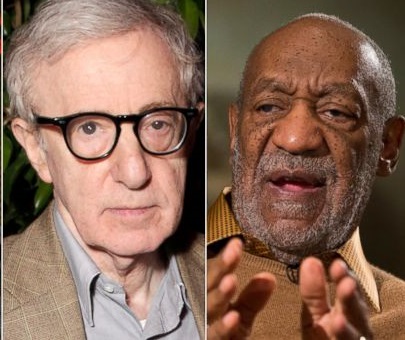
No, There’s No Comparison Between Bill Cosby And Woody Allen And No “Double Standard”

One of these things is not like the other....

One of these things is not like the other….

Newspapers should make us more informed and smarter, not less informed and dumber. Thus a Washington Post feature this morning qualifies as journalism malpractice, incompetence exemplified. Its theme: “Gee, why is Woody Allen signing a new deal to do a streaming comedy series for Amazon, while Bill Cosby lost his deal with NBC?” The print edition sub-heads: “Crisis responses may explain…”

No, they don’t. This is a false comparison based on superficial similarities: two comics who initially peaked in the same era, both in their seventies, shadowed now by sex scandals. The effort to use one to question the treatment of the other is either intellectually dishonest or so analytically unsound that it should forfeit the authors’ privileges of being assigned to write anything for mass consumption (the Post piece is by Stephanie Merry and Amy Argetsinger, and shame on them). The question of why Allen and Cosby are being treated differently in the court of public opinion isn’t worth asking, but since they asked, here are the obvious answers:

1. Woody Allen’s art, comedy, and persona have never had anything to do with virtue, stable families or being any kind of a role model. As a performer, he has presented himself as perpetually horny, neurotic, obsessed with sex and masturbation, prone to lying, and open to adultery, betrayal, stealing friends’ lovers; in “Manhattan,” he happily romanced a virtual child. In real life, he says things like “The heart wants what the heart wants,” which is a  rationalization for any act unethical or illegal, involving sexual or romantic desire. If you were ever a fan of Woody Allen after the age of 13, you were so because he was funny, accepting the fact that he is at best a sexually obsessed, maladjusted creep.

None of this is true of Cosby, who has always aimed his comedy at innocence, functional families and traditional virtues, and represented his own values as consistent with these when speaking for himself. Sex was not any part of Cosby’s art or image. He was an iconic good guy. Continue reading

Ethics Dunce: Novelist R J Ellory

“Jellybean”

Yes, he really did: best-selling British crime novelist R J  Ellory actually went on Amazon, and using fake names like “Jellybean” and “Nicodemus Jones,” wrote rave reviews of his own books . In one review, he called one of his novels a “modern masterpiece” and wrote that it “just stopped me dead in my tracks.”

How embarrassing. Sales a little soft lately, R J? He also used fake identities to post negative reviews of his rivals’ works. Continue reading

Ungrateful Consumer of the Year

“Don’t smile at me, you inconsiderate fool! Do you know what time it is? Why should I accept your wares before they were scheduled to arrive? I need my sleep, not that blue-collar peasant like you could comprehend that! Mark my words, your employer will hear of this outrage; now get back into your pathetic truck and only return when it is convenient for me!”

We don’t see this kind of unethical conduct that often, so it is worthy of note.

A consumer named Richard wrote to Consumerist to complain that his order from Amazon, which he ordered on a Friday and was scheduled for three-day delivery, arrived in only one day, on Saturday morning.  Naturally, he was outraged:

“Imagine my surprise to be woken up out of a sound sleep at 8am by the incessant ringing of my door bell .. probably 10 times. I’m thinking something bad happened. I jump up go to answer the door and find out it’s just OnTrac delivering my $23 package from Amazon! As much as I might appreciate getting something 2 days early, I (and my neighbors) appreciate our sleep even more. I called Amazon and the CSR was sympathetic but could do nothing but leave “feedback” with OnTrac. So fair warning… unless you need an early morning wake up call, don’t order from Amazon… because just because the order says Monday, doesn’t mean you won’t get someone leaning on your door buzzer until you give in and answer it, no matter the time of day.”

Not to leave you in suspense, Richard is what an old poker-playing buddy used to call a “jerkola.” I wonder what other examples of efficient service aggravate him. Does he get angry when repair men arrive at the start of the day, rather than making you wait all day at home wondering if they’ll arrive at all? Does he complain when airplanes arrive at their destination early? When Verizon doesn’t make you wait forever to talk to a real person after negotiating your way through phone-tree hell? How about the Department of Motor vehicles—does Richard get ticked off when they call his number before he need another shave? Continue reading

Ethics Quiz: Is There An Ethical Obligation To Help An Actress Lie About Her Age?

An actress who is, so far, unidentified is suing Amazon.com in federal court for over $1 million in damages for disclosing her age on its Internet Movie Database website, and refusing to remove the reference when she requested, then demanded, that it do so.

She says that IMDb misused her personal information after she signed up for the “industry insider” IMDb Pro service in 2008. Soon she saw that her legal date of birth had appeared on her online acting profile. IMDb refused to remove it.

Now, she says, she is being discriminated against in Hollywood for her age (40), as is its custom. Producers won’t hire her for younger roles, because she’s now regarded as “too old.” Yet she can’t get older roles either, because she still looks much younger. The lawsuit seeks $75,000 in compensatory damages and $1 million in punitive damages.

Your Ethics Quiz question of the day:

Did the Internet Movie Data Base do anything unethical by publishing the actress’s real age without her permission? Continue reading

Silly Job Interview Ethics

What does a silly interview tell you about your prospective employer?

A website called Glassceiling.com has been collecting strange job interview questions, and Fortune has reprinted some of them, offering guidance to job interviewees who might panic when asked such questions as this one, apparently part of the Goldman Sachs interview process:

“If you were shrunk to the size of a pencil and put in a blender, how would you get out?”

The trick, say the experts, is not to lose your cool. Such questions are asked, the experts explain, not to elicit a correct answer, but rather to gauge an applicant’s poise, grace, reaction to stress, creativity and humor. Continue reading