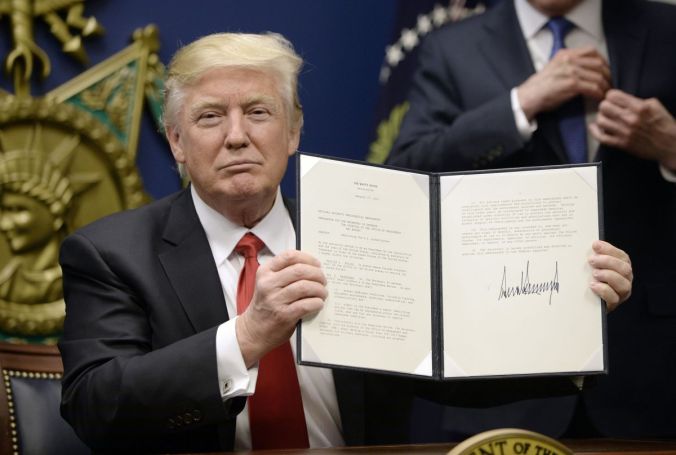
The Supreme Court properly and ethically killed the burgeoning liberal judicial theory that different Presidents have different restrictions on how they can exercise established Presidential powers. The majority in in the just announced decision in Trump v. Hawaii conclusively struck down a Hawaii judge’s ruling that Trump’s hostile comments about Muslims on the campaign trail rendered his travel restrictions unconstitutional, while a similar measure ordered by a nice President for the right intuited reasons would be presumably acceptable. This seemingly partisan ruling required substituting mind-reading for the President’s stated reasons for the Executive Order, and would have established a terrible precedent in a number of areas.
Sadly, this was another 5-4 ruling where the Court seemed to divide along ideological lines. However, since it seems clear that the five conservatives would have ruled the same way no matter which party’s President had issued the order, while the liberal bloc was indulging “the resistance” with a “Trump is special” approach, only one side of the political divide appears to have left integrity and and objectivity in their spare robes. Many, many commentators around the web have noted that this should have been a 9-0 decision, and that the political bias of the Hawaii decision was flagrant from the start. I agree. The President’s authority in this area is clear and unambiguous.
Writing for the majority, Chief Justice John Roberts wrote that the government “has set forth a sufficient national security justification” for its action. “We express no view on the soundness of the policy,” Roberts added.
More, from the holding: Continue reading

 Ethics Alarms