Please Resume Being Ethical: We’re Back!

A DSL catastrophe robbed ProEthics of internet connectivity mid-day Wednesday, and aside from about 45 minutes in a Thai restaurant in Shirlington, VA. yesterday where I could access a weak WiFi signal to post two previously-written essays, Ethics Alarms has been without a rudder. I’m back online now, for better or worse, and will be furiously catching up.

My first task will be to approve the comments of first-time participants in our daily roundtable here; I apologize profusely for the delay.

I know I missed you more than you missed me; anyway, there’s ethics to think about.

Back to work.

Robert Samuelson’s Brilliant, Ethical, Hopeless Proposal

Great idea, Robert. Too bad it requires courage and honesty.

I don’t generally regurgitate other writers’ essays, but in this case I am making an exception. Robert Samuelson, rare among op-ed columnists in that he is a truth-teller without party bias, has a column today that proposes a joint act of integrity and heroism by Barack Obama’s immediate predecessors. His idea, if implemented, could have a major impact on breaking the impasse in Congress that threatens the nation’s future. It could be accomplished without bureaucratic red tape, and is profoundly responsible and ethical. And it would burnish the legacies of two former presidents who could use some burnishing.

Will it happen? Never. That’s the disturbing part. Continue reading

Comment of the Day: “Follow Up and Clarification On The Hiroshima Apology Cable: I Was Wrong, I Apologize…and More”

Rick Jones, whose blog is a constant source of information, provocation and thoughtfulness, generously contributes his analysis to the botched Hiroshima apology story in this Comment of the Day.  To summarize: here and elsewhere, a Wikileaks-released diplomatic cable from 2009  prompted a stampede of mostly conservative news sources to report that President Obama had suggested the possibility of apologizing for the atom bombing of Hiroshima in World War II.  I encountered the story, tracked it in several sources that have proven reliable in the past, and commented on it, critically. About 24 hours later, a friend with impeccable diplomatic credentials and inside information properly chastised me for taking the bait, and offered conclusive evidence that the cable had been misinterpreted. You might want to read my post of last night apologizing to readers and the President that also raises the issues that Rick addresses in his Comment of the Day. I have a follow-up comment at the end:

“While I admire your acceptance of responsibility for what appears to have been a misinterpretation, your commentary raises other issues. Continue reading

Follow Up and Clarification On The Hiroshima Apology Cable: I Was Wrong, I Apologize…and More

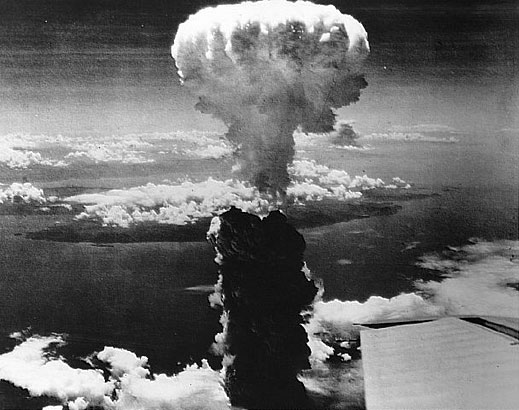
This is my indignation going up in smoke.

There are certain advantages that come from making an incorrect conclusion and publicizing it: sometimes you learn something valuable.

Here’s what I have learned about the diplomatic cable discussed in my post, “How Do I Write A Measured Ethical Analysis When I Am Shaking With Indignation and Rage?“:

1. The officer was reporting a hypothetical situation that the Japanese government official raised during the planning stage of the Obama’s visit.

2. The White House never proposed an apology. The fear of the Japanese was that if he went to Hiroshima, some groups within the country would expect an apology.

3.This key paragraph contains the officer’s assurance to the American Ambassador that the Japanese government would prevent any call, from the Japanese, for a public Presidential apology.

I have all of this from a reliable, credible diplomatic source who I know personally and who was in Japan at the time the cable was sent. This is no credit to me: I received an e-mail that said, in effect, “You Moron! You have no idea how to read diplomatic cables!!! Here’s what really happened…” Continue reading

How Do I Write A Measured Ethical Analysis When I Am Shaking With Indignation and Rage?

None of these men had the arrogance to believe it would be appropriate to apologize for the difficult choices made by their predecessors. They were right.

UPDATE, 10/13 Readers: This post has been proven wrong, based on a misinterpretation of a diplomatic cable that has been clarified to Ethics Alarms by a reliable and objective source. You can read  the explanation, and my apology, here.

I will try.

A secret cable dated Sept. 3, 2009 was recently released by WikiLeaks.  Sent to Secretary of State Clinton, it reported that Japan’s Vice Foreign Minister Mitoji Yabunaka told U.S. Ambassador John Roos that “the idea of President Obama visiting Hiroshima to apologize for the atomic bombing during World War II is a ‘nonstarter.'”*

The Japanese did President Obama and the United States an enormous  favor, but the utter foolishness and lack of comprehension of national principles, American history and the duties of presidential leadership shown by the fact that the idea of such an apology could get to the point where the Japanese had to reject it goes beyond mind-boggling and shocking to frightening, infuriating and offensive. Continue reading

Ethics Dunce, Ethics Hero: Name Calling and One-Way Civility On the Left

John Boehner was just like this during debt ceiling negotiations. Well, sort-of. OK, he really wasn't like this at all, but I don't like him, so it's not uncivil for me to say he was.

The popular Democratic, progressive, liberal and news media (I know I’m being redundant here) slur for the Republican House and its Tea Party warriors during and after the budget ceiling debate was “terrorists,” suggesting an analogy between the GOP insisting on major expenditure cuts in the budget as a condition for raising the debt ceiling, and political and religious extremists who threaten to kill people if they don’t get their way. Needless to say, it’s a disgraceful, dishonest, illogical and slanderous comparison. Whether the GOP’s negotiating stance was fair, reasonable or right can be debated; that the intent of the strategy was to strengthen the nation’s financial health is not.

To many of the Republicans involved, incurring more debt without a guarantee of serious deficit and debt reduction in the future was more dangerous than allowing the nation to default on its obligations. Add to that the fact that many in the Tea Party  leadership believe that the consequences of not raising the debt ceiling was overblown, and it is clear: the Republicans were using their control over the immediate fate of something progressives  wanted more than conservatives as a bargaining chip in a political disagreement. It may have been irresponsible; it may have been a risk; it may have been a bluff. But it was not terrorism. It was politics. Hardball politics no doubt, but well within accepted standards

Oh, I forgot: there is another reason the Republicans weren’t acting like terrorists. They weren’t threatening to kill anybody, and they didn’t kill anybody. Continue reading

More Advice Column Incompetence: The Case of the Jealous Sister

"My wife is behaving irrationally. Is it me, or might she have a teeny problem of her own?"

Once again an advice columnist’s response has me considering whether there needs to be a standard of malpractice for the profession, especially when desperate, trusting people rely on them in times of crisis. I agree that anyone who is prepared to adopt the recommendations of a stranger that are based on a probably inadequate and incomplete description of a dilemma, especially when the columnist could well be a college intern, the janitor or a lunatic, is in desperate straits indeed.  Still,  if you are going to give advice, it had better meet some bare minimum of competence—even if you are just an intern.

A sad and remorseful man wrote “Annie,” the Boston Globe’s advice maven, about whether there was hope for his marriage, which recently and unexpectedly exploded. Continue reading

Word Use Ethics

"Super Glue doll? "Mucilage buddy?" "Fly-paper friend"

Ah, politics! Words that are dishonest are winked at by the media without objection, and harmless terms generate apologies that support ignorance and vagueness.

I. Colorado Republican Congressman Doug Lamborn apologized yesterday for using the term “tar baby” during a Friday appearance on a Denver radio program.  Lamborn said this: “Even if some people say, ‘Well the Republicans should have done this or they should have done that,’ they will hold the President responsible. Now, I don’t even want to have to be associated with him. It’s like touching a tar baby and you get it, you’re stuck, and you’re a part of the problem now and you can’t get away. I don’t want that to happen to us, but if it does or not, he’ll still get, properly so, the blame because his policies for four years will have failed the American people.” Continue reading

“Twelve Angry Men,” A Million Angry Fools, and the Jury System

Their defendant was probably guilty too.

Ethics Alarms All-Star Lianne Best sent me this link about a member of the Casey Anthony jury who is going into hiding because of all the hate and criticism being directed at jury members and their controversial verdict. Her plight, which must be shared by other members of the much-maligned jury, highlights the unethical, not to mention ignorant, reaction of the public to the Florida ex-mother’s narrow escape from a murder conviction she almost certainly deserved.

The problem begins with publicity. We may need to re-examine the logic behind broadcasting high-profile cases. The combination of live courtroom feeds and quasi-semi-competent commentary gives viewers the mistaken belief that they are qualified to second guess the jury, and they are not. They are not because the jury is in the courtroom, and the viewers aren’t. The jury and TV watchers see different things; individuals communicate different emotions and reactions in person than they do on camera. There is only one fair and sensible way to answer those on-line instant polls that ask, “Do you think Casey Anthony should be found guilty?”, and that is “I don’t know.”

Most of all, the viewers and pundits are not present in the jury room. Continue reading

“Are You a Flake?” Ethics

"Are you Michele Bachman?"

With only four well-chosen words, Fox News anchor Chris Wallace accomplished several objectives Sunday, all of them in the best tradition of ethical, objective, responsible journalism.

The words were “Are you a flake?,” posed to Minnesota Congresswoman Michele Bachmann, who is running for President.  The question…

1. Properly forced a conservative darling to address her most striking weakness, belying Fox’s well-deserved reputation for bias toward figures its viewers admire…

2. Was a near-perfect example of the “off-the-wall” question technique, which has exposed more than one pretender to high office (Hello, Mike Dukakis!) as less than desirable.

3. Simultaneously gave Bachmann an opportunity to show how quick she could think on her feet while demonstrating important leadership traits like self-awareness, humor, wit, and grace, or, in the alternative, demonstrate the opposite.

How did she do? Well. Judge for yourself: Continue reading