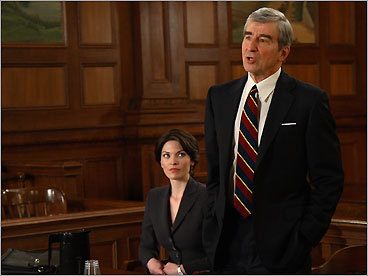
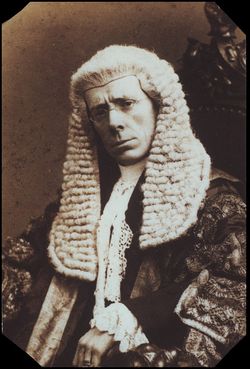
The Replacement Ref and the Conflicted Debate Moderator: How We Become Ethically Stupid

Note to NFL: Don’t hire Gwen Ifill as a replacement referee.

Poor Brian Stropolo was only behaving like a respected national journalist on the political scene; why didn’t it work?

Stropolo, on the crew of NFL replacement refs (that’s scab refs, if you belong to the NFL refs union, which is currecly locked out) was assigned to yesterday’s New Orleans Saints-Carolina game. He was suddenly pulled from the assignment by the league on  Sunday morning, when it came to the NFL’s attention that he had represented himself on his Facebook page as an enthusiastic Saints fan, even appearing on his page in a Saints uniform.

Imagine if Stropolo had made a controversial game-changing call that handed the game to his beloved Saints!  But then, it was up to Stropolo and the league  to imagine it long before any inappropriate game assignment was made. For Stropolo not to notify the league of his web-wide admission of pro-Saints bias when he was assigned to referee a Saints game shows a complete absence of ethics training, instincts and sensitivity. How could this not occur to him? How could the NFL not have a vetting process for refs that would discover team allegiances? Where is the Code of Conduct to remind clueless referees about the “appearance of impropriety,”and the importance of preserving the NFL’s integrity by avoiding any suspicion that referees are tilting games in the direction of teams they root for in their off days? Continue reading


Don’t Tell Us The Public “Doesn’t Care” About Incompetence and Corruption. It Has to Care.

The Washington Post broke the ethics story of the weekend, documenting a blatant conflict of interest on Capitol Hill that has many members of Congress making decisions on legislation directly affecting companies in their stock portfolios, and trading the stock contemporaneously with those decisions.

Based on the depressing dialogue on the Sunday public affairs shows regarding the Fast and Furious scandal—-especially the dialogue issuing from panelists who have obviously received and memorized received the Obama Administration and Democratic Party talking points—-I would assume that the American people can’t be bothered with this matter, and think it is a waste of time. After all, according to panelist after panelist who was either a mainstream media pundit or an Obama surrogate, all the American people care about is the economy and jobs. The fact that the U.S. Justice Department may be run by incompetents and law-breakers—who cares? The fact that nobody gets fired for approving a policy that breaks laws and gets innocent people killed—so what? The American people are, we are told, one-track mind morons, unable to focus on more than one problem at a time, and incapable of seeing the interrelations between problems. I wonder–might the fact that Congress may be corrupt and the Executive Branch, including Justice, may be irresponsible and inept have any bearing on the ability of the government to oversee the economy effectively? Don’t be silly, former New Mexico Governor and Clinton acolyte Bill Richardson told us yesterday. The public isn’t that sophisticated. The public doesn’t care about who’s cheating, who’s breaking the law and who’s incompetent! The people only want to talk about jobs! So, apparently, that is all the journalists and pundits should talk about, and all that policymakers should spend their time on.

No wonder none of those Sunday shows spent any time on this Post front page story: Continue reading

University Trustee Investment Conflicts: When the Stumps Start Showing

University boards are great for mutual back-scratching

Deep water hides all stumps, as the saying goes, and while the endowments of rich universities were piling up cash during the investment-friendly period before 2008, nobody questioned the universities’ choices of which companies and funds to invest in. Then came the meltdown, and endowments of over a billion dollars lost an average of 20% or more. That kind of hit has consequences, and among them were that a lot of programs got cut and a lot pf people lost their jobs.

That, in turn, provokes scrutiny: the deep water had receded, and the stumps were out to see in all their ugliness. As an article in Inside Higher Ed explains, among the stumps on display was the fact that many prominent universities invested their funds in places where their trustees had financial interests: Continue reading

Ethics Dunces: 29 Wisconsin Judges

Yes the gavel's fuzzy, but then so is the judgment of the person on the other end of it.

There is something seriously wrong with the ethical culture of the judiciary in Wisconsin. I suppose this was already obvious, as it is definitely a bad sign when two members of the state Supreme Court accused each other of physical attacks. Nonetheless, the news that 29 of Wisconsin’s sitting judges placed their names on the recall petition for Gov. Scott Walker would seem to settle any remaining doubts.

Is doing this a strict, slam-dunk, violation of the Wisconsin Code of Judicial conduct? No, probably not. It is in a gray area of the Code. Judicial ethics codes prohibit judges from becoming involved in political contests, but a recall petition a judge signs as a private individual (Personally and professionally, I don’t think it is possible for a judge to sign a petition as “a private individual”) don’t fit neatly into the definition of political activity. Other states, such as New York and New Mexico, have allowed judges to sign nominating petitions for candidates on the theory that it is the equivalent of voting, the right to which judges do not give up by ascending the bench.

Still, the judicial codes don’t exactly give a ringing endorsement to this kind of activity, and I would say the better interpretation is that the ethical rules preclude it. The ABA’s Model Judicial Code, for example, says… Continue reading

Now THIS Is What They Used To Call “Appearance of Impropriety”…

"So, Miss Scarlet!! At last you confess your guilt in this heinous crime! Now that that's over with, would you care to join me for dinner tonight?"

The prohibition against attorneys engaging in conduct that creates “the appearance of impropriety” was eliminated from the legal ethics rules (though not the judicial ethics rules) a long time ago, almost 30 years.  Periodically a case will arise in which its absence is felt. The nice thing about the appearance of impropriety category is that it was flexible enough to use to sanction lawyers who figured out ways to make the profession look slimy without running squarely afoul of other rules…like  San Diego prosecutor Ernie Marugg.

Marugg, it is alleged, used his defendants list as his little black book…seeking romantic relationships with the women he prosecuted after their trials were over. His habit was investigated one, but no specific ethical violation could be found. What would it be? Was he too easy on the women he was duty bound to prosecute zealously? One woman who pleaded guilty when Marugg prosecuted her  is now suing him, claiming that his personal  interest in her  caused him to be biased against her. Huh? How does that work? “You always hurt the one you love,” as the old song says? Continue reading

Ethics Dunces: The Nevada Ethics Commission, Which is Pretty Depressing.

An X-Ray of Caren Jenkin's head, ethics sector

Here at last may be the answer to the riddle of why state ethics commissions have so little effect on the persistent problem of unethical government.

The people who make up the membership of such commissions may not know the first thing about ethics. Take Nevada, for instance:

To celebrate the 35th anniversary of the Nevada Ethics Commission, its executive director, Caren Jenkins, organized a party at a Carson City restaurant.  She invited current and former commissioners and staff, and also the state’s top elected officials, whose conduct is reviewed by the commission, which can fine them substantially or even seek their removal from office and prosecution for violating state ethics laws.
The invitation included a request for $33 to pay for the event.

“It never even crossed my mind that this would be seen as questionable,” said Jenkins. Never crossed her mind. eh? The event has elected officials whom the commission has to objectively oversee socializing with their state-appointed watchdogs. The Ethics Commission chair solicited money from officials who must depend on the commission for discretionary ethics calls. Jenkins has apparently never heard of appearance of impropriety, conflicts of interest, or interference with independent judgment. The Chair of the Nevada Ethics Commission has ethics alarms about as well-maintained as those of Charlie Rangel or Marion Barry. And since none of her fellow members bothered to raise any objections over her plan, their ethics alarms are in similar disrepair.

Unbelievable.

Or all too believable, come to think of it.

Ethics Quiz: Should the State Department Be Buying and Distributing the President’s Books?

It's a State Department...and a nifty literary agent too!

It’s a little early for another Ethics Quiz, but this one is tailor-made.

The Washington Times reported today that The State Department has bought more than $70,000 worth of  books authored by President Obama. Hillary’s folks have been sending out copies as Christmas gifts, and stocking  libraries around the world with “Dreams from My Father.”  For example, the  U.S. Embassy in Egypt spent $28,636 in August 2009 for copies of the best-selling 1995 memoir, six weeks after it had placed another order for the same book for more than $9,000. At the same time, the U.S. Embassy in South Korea spent more than  $6,000 for its copies of “Dreams from My Father.” All of this comes from federal purchasing records.

The Times points out that the previous  State Departments resisted the impulse to buy books by former Presidents George W. Bush or Bill Clinton.

Are you ready for your Ethics Quiz? It’s a multiple choice:

For the State Department to spend $70,000 on its boss’s book is…. Continue reading

“Congratulations! Here’s a Bonus for Doing Such An Outstanding Job Investigating That Fiasco That Happened Because You Screwed-Up In The First Place!”

"Iolanthe's" Lord Chancellor has nothing on me: his nightmare* was only "love unrequited." Mine is the SEC.

[  I read about the following outrage before going to bed last night, and vowed to write a post on it in the morning. It literally gave me nightmares and an upset stomach, so disrupting my repose that I gave up and headed to the keyboard. I am writing this at 4:30 AM. I have never written anything at 4:30 AM before, but I have learned something useful for future reference: I’m not in a good mood then.]

And here we have a prime example of why 1) many people don’t trust the Federal government and 2) why they are 100% right to feel this way.

I’ll take “Incompetence, Failure of Accountability and the Appearance of Impropriety” for a thousand, Alex!

SEC  Inspector General H. David Kotz has issued a thorough report on the U.S. Securities and Exchange Commission, revealing that an employee who investigated Bernie Madoff in 2005 and 2006 and failed to notice that he was running a $50 billion Ponzi scheme was later rewarded by the agency with a cash bonusfor his fine work on the Madoff scandal after it was discovered, the lives ruined, the damage done. Continue reading

The Raymond Jefferson Mystery: Isn’t There Ethics Training for Obama Administration Officials?


Raymond Jefferson's government ethics tool box

Based on the sorry Raymond Jefferson scandal, I would assume that the answer to that question is: “What’s ethics training?” Sure, there are reams and reams of government ethics regulations; I’ve read a lot of them. Apparently there is no one making sure that high-ranking officials have read them or understand them, however.

Jefferson, the Assistant Secretary of the Labor Department’s Veterans’ Employment and Training Service appointed by President Obama to oversee a job-training program for veterans, has resigned following an inspector general’s finding that he violated federal procurement rules and ethics principles by fast-tracking lucrative consulting contracts to his friends. Jefferson, says the report from the Labor Department’s inspector general, engaged in “a pattern of conduct . . . which reflects a consistent disregard of federal procurement regulations, federal ethics rules and the proper stewardship of appropriated dollars.” Continue reading

The Case of the Excessively Flexible Lawyer

A Louisville lawyer named Keith Kamenish wants to defend Dion Neal, a drug dealer, against a murder-for-hire charge.  A police informant wearing a wire recorded a hit man as he said  that he was paid by Neal to kill a competitor for him. “I put 36 slugs in that nigger’s face and stood on his head,” the independent contractor boasted, according to a transcript of the conversation filed in court. “The whole head collapsed!”

Nice.

The government is trying to get Kamenish kicked off the case, and here is why: the guy whose head collapsed, LaJuante “B.B.” Jackson, was a Kamenish client at the time of his murder. Jackson was shot just four weeks after Kamenish got Jackson released on bond on a state drug charge; the lawyer’s blood- stained business card was found in Jackson’s wallet. Continue reading