“Congratulations! Here’s a Bonus for Doing Such An Outstanding Job Investigating That Fiasco That Happened Because You Screwed-Up In The First Place!”

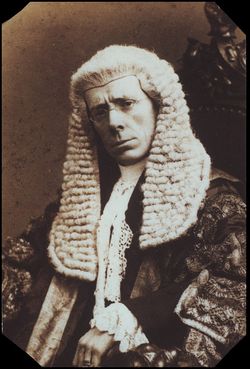
"Iolanthe's" Lord Chancellor has nothing on me: his nightmare* was only "love unrequited." Mine is the SEC.

[  I read about the following outrage before going to bed last night, and vowed to write a post on it in the morning. It literally gave me nightmares and an upset stomach, so disrupting my repose that I gave up and headed to the keyboard. I am writing this at 4:30 AM. I have never written anything at 4:30 AM before, but I have learned something useful for future reference: I’m not in a good mood then.]

And here we have a prime example of why 1) many people don’t trust the Federal government and 2) why they are 100% right to feel this way.

I’ll take “Incompetence, Failure of Accountability and the Appearance of Impropriety” for a thousand, Alex!

SEC  Inspector General H. David Kotz has issued a thorough report on the U.S. Securities and Exchange Commission, revealing that an employee who investigated Bernie Madoff in 2005 and 2006 and failed to notice that he was running a $50 billion Ponzi scheme was later rewarded by the agency with a cash bonusfor his fine work on the Madoff scandal after it was discovered, the lives ruined, the damage done. Continue reading

The Raymond Jefferson Mystery: Isn’t There Ethics Training for Obama Administration Officials?


Raymond Jefferson's government ethics tool box

Based on the sorry Raymond Jefferson scandal, I would assume that the answer to that question is: “What’s ethics training?” Sure, there are reams and reams of government ethics regulations; I’ve read a lot of them. Apparently there is no one making sure that high-ranking officials have read them or understand them, however.

Jefferson, the Assistant Secretary of the Labor Department’s Veterans’ Employment and Training Service appointed by President Obama to oversee a job-training program for veterans, has resigned following an inspector general’s finding that he violated federal procurement rules and ethics principles by fast-tracking lucrative consulting contracts to his friends. Jefferson, says the report from the Labor Department’s inspector general, engaged in “a pattern of conduct . . . which reflects a consistent disregard of federal procurement regulations, federal ethics rules and the proper stewardship of appropriated dollars.” Continue reading

The Case of the Excessively Flexible Lawyer

A Louisville lawyer named Keith Kamenish wants to defend Dion Neal, a drug dealer, against a murder-for-hire charge.  A police informant wearing a wire recorded a hit man as he said  that he was paid by Neal to kill a competitor for him. “I put 36 slugs in that nigger’s face and stood on his head,” the independent contractor boasted, according to a transcript of the conversation filed in court. “The whole head collapsed!”

Nice.

The government is trying to get Kamenish kicked off the case, and here is why: the guy whose head collapsed, LaJuante “B.B.” Jackson, was a Kamenish client at the time of his murder. Jackson was shot just four weeks after Kamenish got Jackson released on bond on a state drug charge; the lawyer’s blood- stained business card was found in Jackson’s wallet. Continue reading

The Supreme Court Saves An Ethics Principle

Mayor Quimby is honest about being corrupt. Isn't that good enough?

Rescuing the states’ power to insist on more ethical conduct from their elected legislators, The U.S. Supreme Court ruled Monday that there was no Constitutional prohibition on state rules against legislators voting on issues in which they have a private, personal interests.

The unanimous decision upheld a Nevada ethics law that governs when lawmakers recuse themselves from voting on official business because they might have conflicts of interest. The challenge to the  law came from Michael Carrigan, a conflicted city council member from the Sparks, Nev., who was reprimanded by the state ethics commission after he voted  on a casino proposal though his campaign manager had been hired as a consultant to the project.

The law prohibits a public official from voting on an issue when a “reasonable person” would suspect a conflict because of financial ties or the interest of a spouse or family member. This is the essence of “the appearance of impropriety.” It also includes “any other commitment or relationship that is substantially similar” to those spelled out.  Carrigan had argued that the Nevada’s law was overly broad and that he should be able to vote on the project, so long as he disclosed his relationship with the consultant.

Ah, disclosure! Continue reading

Appearance of Impropriety II: “Here’s Approval For That Deal You Wanted…What? Sure I’d Like to Work for You! Wow, I Never Saw THAT Coming!”

What's there to be suspicious about?

Meredith Attwell Baker, a member of the Federal Communications Commission who voted to approve Comcast’s takeover of NBC Universal in January, is leaving to  become senior vice president of government affairs for ….Comcast-owned NBC Universal.

Hey, why are you so suspicious, you jaded cynic, you? Comcast says it did not begin discussions with Baker about a possible job until after the takeover had her seal of approval. So it’s all on the up and up! Right? Right?

Okay, let’s say we believe that, since doing otherwise would amount to bribery. It doesn’t matter, and I don’t care. Taking a major job with  a company whose back you scratched with a favorable ruling as a government regulator looks terrible, promotes public distrust, erodes faith in regulatory structures, and is unethical. There are other jobs in the world for people with Baker’s credentials; she doesn’t have to take one that makes the U.S.  government’s business regulatory apparatus look like it’s fixed.

A condition of any regulator’s employment with a federal agency should be a pledge that he or she will never accept a paid position for a company that has benefited from the regulator’s rulings…not in a year, not in a decade, not ever.

Appearance of Impropriety I: Federal Judge in a Whites Only Club? Ethical, As Long As He Doesn’t Like The Policy. Wait…WHAT?

Our Motto: "Trying to find a qualified black member for 110 years...and still looking!"

Is it an ethical violation for a Federal judge to belong to a whites-only country club?

Sure it is. Was that so hard?

Apparently for a judicial appeals panel in Tennessee, it is.

In May of 2008, an anonymous woman complained to the chief judge of the 6th Circuit Court of Appeals that Federal bankruptcy  Judge George Paine II’s  membership in the ritzy Belle Meade Country Club violated the judicial ethics code of conduct that decrees that judges “should not hold membership in any organization that practices invidious discrimination on the basis of race, sex, religion, or national origin.”  This was a reasonable complaint to make, since the judicial codes for both Federal judges and Tennessee judges say that…

 CANON 2: A JUDGE SHOULD AVOID IMPROPRIETY AND THE APPEARANCE OF IMPROPRIETY IN ALL ACTIVITIES

2 C   A judge shall not hold membership in any organization that practices invidious discrimination on the basis of race, sex, religion, or national origin. Continue reading

Conflict of Interest, Lack of Integrity, Appearance of Impropriety…Other Than That, Gov. Walker, It’s A Great Hire!

"Why, no, his father's financial support played absolutely no part in his landing this plum job...I mean, just LOOK at him! He blew the competition away!"

Politics involves deals and trade-offs, quid pro quos and mutual back-scratching. The trick is to be a politician without undermining the public trust, and using those deals to benefit, not harm, the public interest. That means that certain deals, even relatively typical ones, may be unforgivable under certain circumstances. A prime example: Wisconsin Gov. Scott Walker’s hiring of Brian Deschane to oversee environmental and regulatory matters and a large staff at the Wisconsin Department of Commerce. Continue reading

Wisconsin Wars: The Democrats’ Unethical Ethics Complaint

Wisconsin Democrats have filed an ethics complaint against Governor Scott Walker.

The complaint, and the filing of it, are unethical. Really, really, really unethical. Here’s why. Continue reading

Mike Haridopolos’s Book: Whatever Was Going On, It Had To be Unethical

Four years and $152,000 for THIS??

What was going on here?

It has been revealed that new Florida Senate President Mike Haridopolos was paid  $152,000 in taxpayer money to write a book on politics for Brevard Community College four years ago.
All 175 pages of the resulting tome, “Florida Legislative History and Processes,” were published exactly once. The only copy of the 175-page, double-spaced manuscript can only be found, and read, at the school. The book Haridopolos produced didn’t satisfy the original contract’s requirement for a publishable, textbook-quality look at the development of the Florida Legislature, state constitution, the governor’s office and judiciary from pre-statehood until present. But heck..what do you expect? He was only paid a lousy $152,000! What do you want, “Doctor Zhivago?” Continue reading

The Conflict of Interest That Isn’t, But Looks Terrible Anyway

David Becker, the top lawyer at the Securities and Exchange Commission, is suddenly an embarrassment to his employers. He and his two brothers inherited more than $1.5 million in phony profits from their mother’s investment in $65 billion Bernard Madoff’s Ponzi scheme. Since the S.E.C. was famously asleep at its post regarding Madoff, its negligence and incompetence allowing him to destroy individual lives, charities and more, having a key lawyer at the regulatory agency profit from Madoff’s scheme, even by inheritance, looks corrupt and unconscionable.  Continue reading