
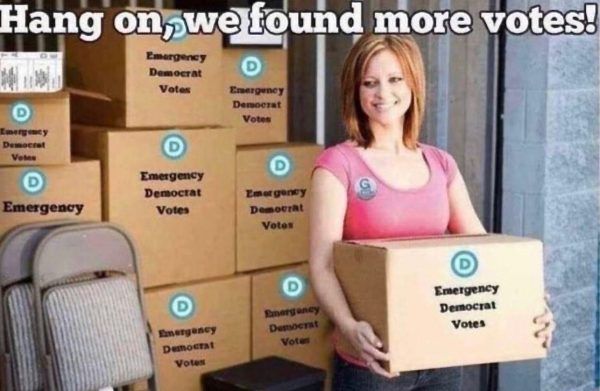
1. I had written some time ago that the best possible outcome ethically would be a Trump landslide, and the worst would be a Trump win in the Electoral College while losing the popular vote. Somehow I missed the obvious worst scenario, which is what we are getting: a mega-2000 mess, with multiple states in doubt for various questionable factors, resulting in litigation by both sides, stretching on into December.
This was one more example of how the false and biased polls interfered with legitimate analysis.
2. I have frequently praised Richard Nixon for passing on the opportunity to challenge the results in Illinois, Texas and other states after the 1960 election, and saying that it was more important to respect the process and not throw an election into turmoil. Of course, based on what we know about Nixon. That may have been a ploy and virtue signaling: while there was certainly some voting shenanigans, notably in Richard Daley’s notoriously corrupt Chicago, Nixon maybe have been told that he would lose anyway, and that challenging the results would make it harder for him to come back and win in ’64 or ’68. Nonetheless, Nixon set the norm, and Al Gore broke it in 2000. Now it seems insane for a party to not to challenge a close election if there seems to be any question about the legitimacy of the result.
That shift is also a reflection of the widening chasm between the two parties. There wasn’t much difference philosophically between the Democrats and Republicans in 1960, nor between Nixon and Kennedy. (There wasn’t much difference between their ethical instincts either, but we didn’t know that at the time.) Today there is every reason to believe that for a party to just shrug off the possibility that a Presidency has been stolen in the best interests of the nation is a breach of duty and a betrayal of the public trust.
However, a party (like the Democrats since 2016) or a candidate (like Hillary Clinton) continuing to deny the results after they have been validated is unforgivable and destructive.



 Ethics Alarms