Morning Pop Quiz On Ethics And Leadership: What’s Wrong With White House Spokesman Josh Earnest’s TSA Quote?

Here’s the quote, from Earnest’s  statement on behalf of the President:

“The President does continue to have confidence that the officers of the TSA do very important work that continues to protect the American people.”

Your pop quiz:

What’s wrong with it?

(It is very wrong.)

I’ll give you a minute (It took me 3 seconds) “Final Jeopardy” style:

Got it?

Here we go…. Continue reading

California Government Ethics: Water Sprinklers During A Drought…In The Rain

http://www.youtube.com/watch?v=unwSY1D8yzQ

The catastrophic shortage of water in California has prompted rationing and the looming prospect of permanent changes to the state’s economy and lifestyle. Yet this week a citizen with a cellphone captured video of California Department of Transportation sprinklers sewing the precious fluid along a freeway…as a light rain fell following a night of showers. Meanwhile, along the freeways, message boards are warning motorists of the importance of responsible water use in the drought, stating “Severe Drought. Limit Outdoor Watering.”

In my business and corporate ethics programs, I often use a hypothetical based on a true incident at the U.S. Chamber of Commerce, in which the staff was told that there would have to be a freeze on raises and new hiring because of financial challenges facing the association. They were told that everyone would have to sacrifice for the vital mission of the Chamber. That same week, the General Counsel’s office received a long-delayed remodeling, with expensive new furniture, artwork and carpeting. Morale plummeted, and the absence of trust in management was palpable. I use the incident to demonstrate the consequences of leadership hypocrisy and absence of integrity, when those in power hold themselves to different, and lower, standards than they claim to champion.

What California did was far, far worse. Continue reading

CNN’s Chris Cuomo Gets An Ethics Dunce Hat Trick: Law, Journalism And Civics

dunce capBad day at CNN. First John Berman turns the morning news into frat boy jokes about “big stones” —a testicles reference! HAR!–and then CNN’s AM Big Kahuna Chris Cuomo humiliates himself and everyone associated with him by tweeting,

“Hate speech is excluded from protection. Don’t just say you love the Constitution…read it.”

Wow. Not only is Cuomo spectacularly wrong, but he was smug and arrogant about it. Much as censorious fake liberals who want to impose speech and thought codes on us all would like it to be the case, “hate speech” has no special status in the Constitution at all, other than its status as “speech.” Reason, in a rebuke to Cuomo that drips with appropriate but still somehow inadequate contempt, points out:

Okay, let’s take Cuomo’s challenge. Let’s read the speech part of the Constitution. (I hope this doesn’t take too long; I hate reading.) Oh, good, the speech stuff is right there at the beginning of the “things you can do” section:

Congress shall make no law respecting an establishment of religion, or prohibiting the free exercise thereof; or abridging the freedom of speech, or of the press; or the right of the people peaceably to assemble, and to petition the Government for a redress of grievances. My copy of the Constitution seems to be missing this fabled “except hate speech, none of that” clause.

Well, then, it must be an exception found by the Supreme Court, right? Uh, no…Reason continues its schooling: Continue reading

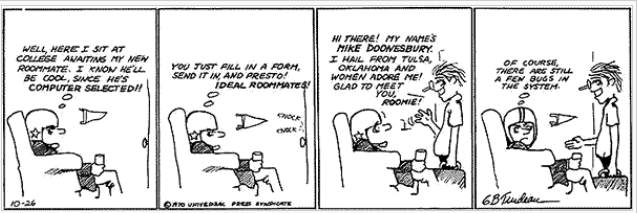
Unethical Quote Of The Week: Cartoonist Garry Trudeau

The exquisitely rendered artwork of Gary Trudeau, circa 1970.

The exquisitely rendered artwork of Gary Trudeau, circa 1970.

“At some point free expression absolutism becomes childish and unserious. It becomes its own kind of fanaticism.”

—-Doonesbury cartoonist and relentless critic of the Right, Garry Trudeau, in a speech delivered on April 10 at the Long Island University’s George Polk Awards ceremony, where he received the George Polk Career Award.

Trudeau is a Yale grad, so perhaps we should cut him some slack muddled thinking. (Kidding!) However, in making his weak case that legitimate and socially acceptable satire only consists of “punching up,” he appeared to be advocating government prohibition of certain kinds of speech, to be designated by Trudeau and his ideological allies, who, of course, know best.

In doing this, Trudeau came very close to aping the popular theme from activists on the Left, especially on campuses, that “hate speech isn’t protected by the First Amendment.” “Hate speech” is an invention of progressives, and is generally defined as political or social criticism of members in good standing of their club, or groups and individuals they sympathize with or approve of.  Saying that you hope Rush Limbaugh’s kidneys fail is funny and deserved;  saying Mike Brown engineered his own demise by attacking a cop is hate speech. It’s easy when you get the hang of it: just look at the world like Gary Trudeau.

Earlier in his speech, he talked about “red lines” in satire, and blurrily–that is, inarticulately enough that he has plausible deniability, called for restrictions on “hateful” cartoons like those that prompted Islamic assassinations in Paris: Continue reading

Hillary’s E-mail Ethics Breach: The Only Questions Are 1) “How Can Anyone Trust Her?” and 2) “Is there Nothing Her Supporters Won’t Excuse?”

hillary-clinton-pointing2The ethics issue here is very straightforward and uncontroversial. As the New York Times put it:

“Hillary Rodham Clinton exclusively used a personal email account to conduct government business as secretary of state, State Department officials said, and may have violated federal requirements that officials’ correspondence be retained as part of the agency’s record. Mrs. Clinton did not have a government email address during her four-year tenure at the State Department. Her aides took no actions to have her personal emails preserved on department servers at the time, as required by the Federal Records Act.”

I don’t know why the Times says “may have violated.” Her exclusive use of personal e-mail does violate the rules, and in fact the law, as the Times correctly states in the final sentence. Moreover:

1. This is a blatant example of Clinton again refusing to abide by rules and laws other officials are required to abide by. As the Washington Post notes, it was intentional: Clinton’s personal account was established on the same day that Clinton began her confirmation hearings to be Secretary of State., and the expiration on the domain is shortly after the 2016 election. Continue reading

Five Ethics Observations On The US’s Paris March Snub

world-leaders-paris-march

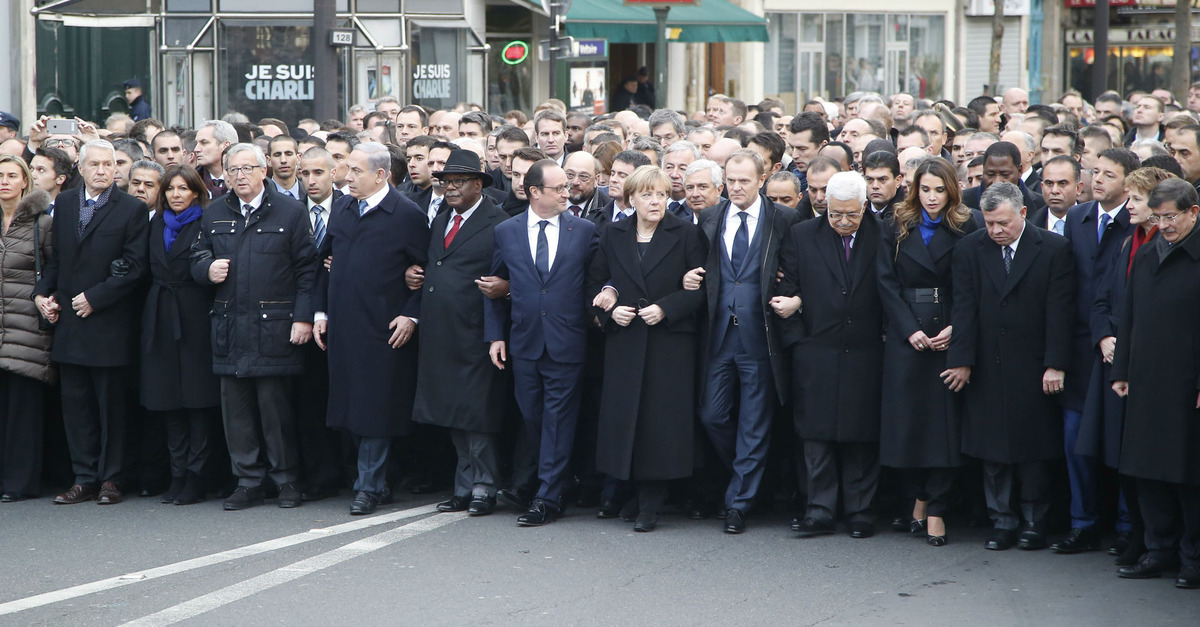
In case you didn’t catch it, more than 40 world leaders joined the start of a Paris march for unity against terrorism and for freedom of speech, linking arms in a demonstration of solidarity. Even Netanyahu and Abbas were there! The Paris march may have included more than 1.6 million marchers before it was done, reportedly the largest demonstration ever. More than three million have now marched across France in response to the deaths of 17 resulting from extremist attacks in Paris last week, beginning with the executions of the staff of the satirical newspaper, “Charlie Hebdo.”

You would expect, and I am sure that the world expected, that the United States of America, reputedly the leader of the free world and the nation that most symbolizes the human right of free speech, would have participated in the event with enthusiasm, conviction, and prominence. But no. President Barack Obama did not come to Paris to join with his fellow world leaders. He did not send Vice President Biden either. Though Attorney General Holder was in Paris, he was not directed to attend the march, and did not.  The United States was only represented by its ambassador, who is not a world leader, and whose job it is to attend routine functions large and small.

Initially the criticism of the obviously intentional snub was muted, with the toadying mainstream news media, as has been its standard operating procedure since 2008, acting and speaking as if there was nothing amiss. Fox News, also as usual, was the exception, but since that network is isolated and pigeon-holed as a reflexive Obama critic “no matter what he does,” this was initially ignored as more right-wing carping. Then, to his great credit, CNN’s Jake Tapper took to Twitter to say  that he was “a little disappointed personally” at the lack of a strong U.S. presence, and in a later statement, escalating to saying that he “was ashamed.” He then wrote in an opinion piece…

“I find it hard to believe that collectively President Obama, Vice President Joe Biden, Secretary of State John Kerry, Secretary of Defense Chuck Hagel, Treasury Secretary Jack Lew and Attorney General Eric Holder — who was actually in France that day for a conference on counterterrorism — just had no time in their schedules on Sunday. Holder had time to do the Sunday shows via satellite but not to show the world that he stood with the people of France?

There was higher-level Obama administration representation on this season’s episodes of “The Good Wife” on CBS.”

Good for Jake Tapper, one of the few relatively objective broadcast journalists who is worthy of public attention and trust. Continue reading

Unethical Quote of the Week: Ampersand on “Alas! A Blog”

Into the Woods

There is no reason in the world, other than Hollywood’s endless racism and lack of imagination, for this movie (or the original play, alas) to have an all-white cast. Why do movies feel like they’d rather die than show us a diverse cast? (And please don’t say “they cast the best people for the roles.” I thought the whole cast was good, but Streep was the only one who turned in a performance so unique that you couldn’t imagine anyone else doing the role.)

—–Ampersand, a.k.a. Barry Deutsch, opining on the assets and deficits of Rob Marshall’s film adaptation of “Into the Woods” on his blog

I hate to pick on Barry—OK, that’s not true, I enjoy it immensely—but this statement could stand as the distillation of knee-jerk liberal thinking on race, and it is wrong in so many ways that I hesitate to start counting. The sentiment, however, poses a nice counterpoint to the discussion here about the black James Bond controversy, so I can’t resist taking aim at it.

1. So casting a mega-million dollar film—-in a dicey genre (Have you heard? Big budget Hollywood musicals died in the Sixties…) and a limited audience—with actors who comport with that audience’s expectations of the musical the film is based on is racist, eh? More unfair words and inexcusable race-baiting were seldom uttered in word or written in ink. If a director had a vision that supported casting African American actors in traditional Grimms’ fairy tale roles and could make it work, I would salute him, but Rob Marshall had other priorities. He knew that every cut would be scrutinized and attacked by the Sondheim fanatics (which, by the way, are as white as a dove convention in a blizzard); he knew that the show itself was seriously flawed; he knew that every single adaptation of a Sondheim musical (“West Side Story” doesn’t count) has been a critical and box office bomb. He had every reason to keep his casting choices as close to the traditional images of the characters and the way they were portrayed on Broadway, and none of those reasons were racism.

2. It’s impressive how casually a race-obsessed progressive will accuse a professional of racism as a first response. Irresponsible, unfair, disrespectful, and in this case, ignorant of both commerce and art. Continue reading

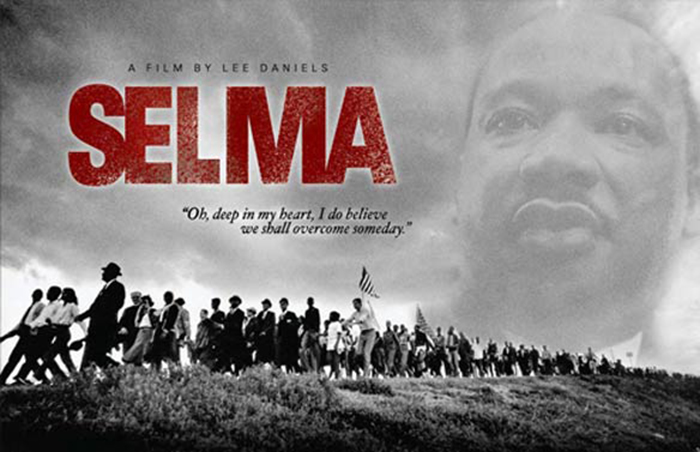
Ethics Quote Of The Month: Washington Post Film Critic Ann Hornaday on “Selma”

selma-movie

“How to reconcile facts and feelings, art and fealty to the truth? When filmmakers recall with pride about the deep reporting and research they’ve done for their projects, then they deserve to be held accountable for their projects. For fact-based films, accuracy becomes a formal element, along with acting, design and cinematography. It’s up to each viewer to identify the threshold where artistic license compromises the integrity of the entire endeavor. Cinema has more responsibility in this regard precisely because of its heightened realism, its ability to burrow into our collective consciousness and memory, where the myth has a tendency to overpower settled fact. But viewers have responsibilities, too. If accuracy has become a formal element of historical dramas, then the ensuing fact-checks have become just as integral a part of how we view them. That means it’s incumbent on audiences to engage in a mode of spectatorship that, rather than decide who’s right, can listen to and respect expert critiques, and still open themselves up to a piece of filmed entertainment that speaks to less literal, more universal truths.”

—–Ann Hornaday, Washington Post film critic, on the controversy regarding the counter-factual treatment of President Lydon Johnson in the new film, “Selma.”

The question of whether film makers have an ethical obligation to fairly represent history, and particularly individual historical figures, in their movies has been a topic visited frequently at Ethics Alarms, and I’m not going to re-hash conclusions that have been thoroughly discussed before, such as

…here, regarding the casting of “The Impossible” with a gleamingly light-skinned central family and the changing of the real life heroine from Spanish to British

…here,  discussing complaints that a fictional event was not portrayed accurately in “Noah”

…here, exploring the many falsehoods, some quite despicable, in James Cameron’s “Titanic”

…here, regarding unfair criticism of “Argo”

and here, discussing “Lincoln” screenwriter, playwright Tony Kushner’s inexcusable choice to represent a real life former Congressman voting against the Thirteenth Amendment abolishing slavery when in fact he voted for it.

The conclusion of that last one sums up the lessons of the rest, I think. Kushner’s defense against criticism of the collateral damage his invented facts wreaked was to argue that they were legitimate tactics in the pursuit of drama and “greater truths.” He then compared smearing the reputation of a Congressman, to the detriment of his descendants, to misrepresenting the kinds of socks Lincoln wore. (Kushner can be a brilliant writer, but his ideological utilitarianism is repellant.) I wrote:
Continue reading

Oddly, Though Ethics Alarms Had Already Named Comcast “Corporate Asshole Of The Year,” The Company Felt It Had Something Left To Prove…

ernestine

I really don’t understand this at all. In October, when the viral story of how Comcast managed to get a customer fired from his job for insisting that the communications giant address his legitimate complaints, I wrote:

I have never heard of even one customer of any company losing his job as a consequence of that company’s refusal to address legitimate complaints. That is why Comcast gets its Corporate Asshole of the Year award early. Nobody’s going to top this.

Yet amazingly, Comcast has managed to have yet another tale of atrocious service and customer abuse get widespread publicity. This video, by YouTube exhibitor Sweetlethargy, tells the whole  jaw-dropping story:

In any normal consumer setting, a customer able to prove that he was  induced by a company representative to purchase a service under false pretenses would immediately receive an apology, and the service promised for the price offered. In this case, however, as you can see in the excruciating video, Comcast’s reaction is, “Sorry, we won’t honor what you were told.” Translation: Screw you. Sue us. Good luck with that.

The is reminiscent of the running gag that was once famous on “Rowan and Martin’s Laugh-In,” the chaotic Sixties comedy show, in which comic Lily Tomlin would play a cruel, smug, nasal-voiced and snorting Bell telephone operator named Ernestine (above). Her specialty was telling infuriated customers who were receiving rotten telephone service that their complaints were futile. “We don’t care. We don’t have to care. We’re the telephone company!” she’d say.

Apparently this is Comcast’s attitude. Horror stories about Comcast service are all over the internet and social media, and heads aren’t rolling, the Board isn’t screaming, press releases aren’t issuing, and documented customer abuse keeps turning up. The company has nurtured a culture of carelessness, callousness and arrogance, and apparently believes that its services are too essential to suffer significant consequences.

What have you heard about Bell lately?

__________________

Pointer: Fark

Encore: “Ethics Call To Arms: Fight the ‘Fuck You!’ Culture”


kid fu

[This happens sometimes with 5000 posts in the bank: some topic causes me to find one that I can’t even remember writing, and I realize that I still agree with it, and if I forgot about, everyone else probably did too. The previous post led me to link to this one, and I decided that the list of steps I recommended to try to halt the culture’s slide into permanent vulgarity and incivility was worth re-posting, especially since five years ago the blog got less than a fifth of the traffic it does today. Thus I am re-posting this one, slightly edited to remove a few rhetorical excesses and outdated references, from November 18, 2010.]

“Every action done in company ought to be with some sign of respect to those that are present.”

This was the very first edict in the list of civility rules memorized by George Washington as a child, rules that shaped his character and significantly influenced not only his life and career but the fate of America. Like most of Washington’s 11o rules, the first has universal and timeless validity, pointing all of us and our culture toward a society based on mutual respect, caring, empathy, and fairness.

Recently, however, there has been a powerful cultural movement away from George’s rules and the culture of civility that they represent. Rudeness has always been with us, of course, and public decorum has been in steady decline since the Beatniks of the Fifties, to the point where it is unremarkable to see church-goers in flip-flops and airplane passengers in tank-tops. Something else is going on, however. Like the colored dots of paint in a George Seurat painting, isolated incidents and clues have begun to converge into a picture, and it is not one of a pleasant day in the park. I believe we are seeing a dangerous shift away from civility as a cultural value, which means that we are seeing a cultural rejection of ethics. Continue reading