Yet More Casting Ethics: “Hamilton’s” ‘No Whites Need Apply’ Open Casting Call

_hamilton

[ I am back from a speaking engagement that required over eight hours of driving, being in a supposedly “luxury resort” hotel room that had no Wi-Fi for most of my stay and no functioning TV for any of it,  and various other distractions and misadventures that prevented me from posting so far today. I apologize, though it is really the famous Omni Homestead in Hot Springs, VA. that should apologize. The good news is that my seminar was well-received, and that the disappointing trip–this time I was paid only with the supposedly sumptuous two-day  Homestead experience for myself and my long-suffering spouse, including outdoor activities that were impossible due to constant rain and a room with more things in poor repair than a Motel 6—is over.]


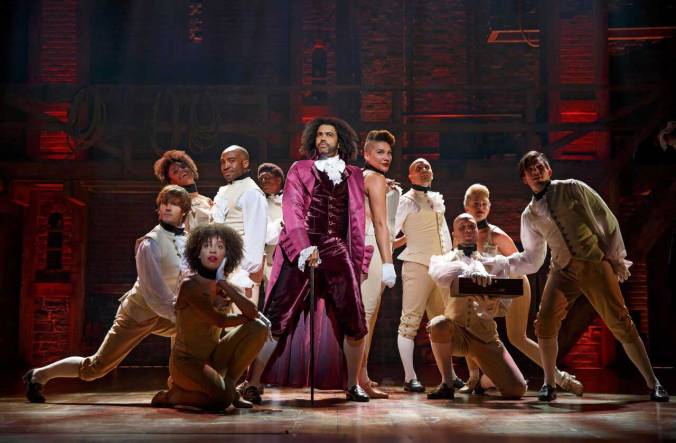
Broadway’s biggest hit, the Tony-winning  “Hamilton,” is under attack for, of all things, racism.

An open casting announcement on the show’s website read…

“Hamilton” is “seeking NON-WHITE men and women, ages 20s to 30s, for Broadway and upcoming Tours.”

Whaaaat? This joyous musical celebration of America’s founding and its Founders’ inspiration…engaging in racial discrimination? How could this be? Sniffed Actors Equity spokeswoman Maria Somma “The language … is inconsistent with Equity’s policy.”

Yes, this would be because Actor’s Equity has a lot of dumb policies, and like all unions, doesn’t really care about keeping the industry its members work in healthy, productive and profitable, only  making sure as many members as possible have jobs or at least shots at them. There is nothing whatsoever racist or discriminatory about a show that relies on the concept of non-white actors playing the very white Founding Fathers announcing that only actors who can fulfill that conceptual requirement will be considered for roles.

Civil rights attorney Ron Kuby, in an interview with the NY Daily News,  agreed the advertisement might technically violate the city’s human rights law, but that this is because casting is an anomaly. “It’s almost always illegal to advertise on the basis of race, but when you’re casting … it can be a bona fide occupational requirement,” he said. Continue reading
“The Affair” Smears An American War Hero

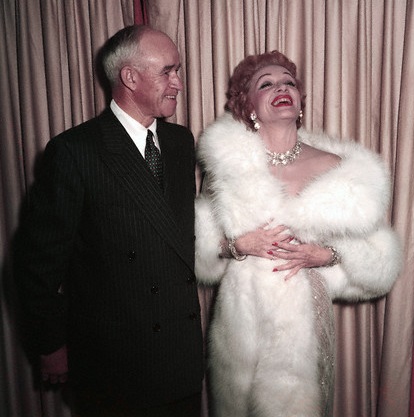
The General and friend.

                             The General and friend.

“The Affair,” Showtime’s much lauded soap opera, wrapped up its season yesterday, without me. There are some things I won’t forgive, and sliming the legacy and reputation of long dead individuals of character and accomplishment is one of them.”The Affair” was guilty of that the previous week. It is dead to me.

The background: General Omar Bradley is increasingly accorded credit for planning D-Day, and thus is owed a large share of the world’s gratitude for winning World War II. He was not flamboyant like Patton or MacArthur, and had no political aspirations, so despite his remarkable life in service of the United States, Omar Bradley is an undeservedly obscure historical figure. He is, also, beyond any controversy, an American hero.

He also was an especially ethical one, as indicated by three of his better known quotes:

“It is time that we steered by the stars, not by the lights of each passing ship.”

“We have grasped the mystery of the atom and rejected the Sermon on the Mount. The world has achieved brilliance without conscience. Ours is a world of nuclear giants and ethical infants. We know more about war than we know about peace, more about killing than we know about living.”

“Dependability, integrity, the characteristic of never knowingly doing anything wrong, that you would never cheat anyone, that you would give everybody a fair deal. Character is a sort of an all-inclusive thing. If a man has character, everyone has confidence in him. Soldiers must have confidence in their leader.”

Why the writers of “The Affair” decided smear Bradley, I cannot fathom. Nonetheless, any viewers of the show that watched the penultimate episode and who didn’t know who Bradley was, and many who did, left it with the belief that Bradley, a who by all accounts was faithfully and lovingly married to the his first wife throughout the war and until her death, had an affair with actress Marlene Dietrich, who traveled with the U.S. Army for nearly two years at the end of the war. “The Affair’s” self-obsessed and perpetually horny protagonist, a successful novelist, told his therapist—and boy, does he need one–that his new book would be a historical novel about Omar Bradley. Then he said that he was tempted to skip the affair with Marlene Dietrich, but then that was the most interesting thing about Bradley to him. Continue reading

Ethics Quote Of The Month: Washington Post Film Critic Ann Hornaday on “Selma”

selma-movie

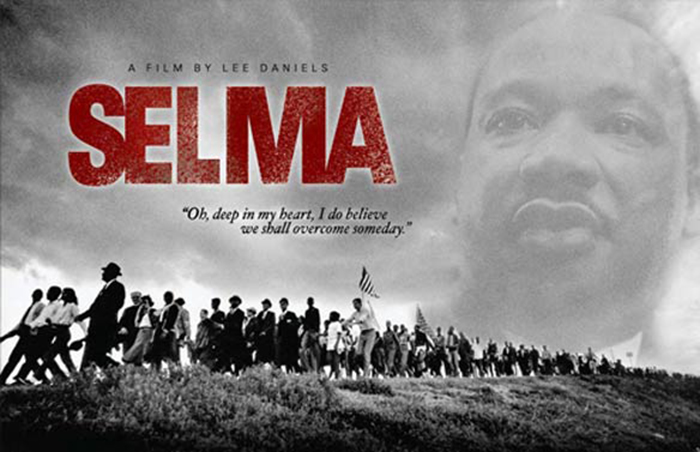
“How to reconcile facts and feelings, art and fealty to the truth? When filmmakers recall with pride about the deep reporting and research they’ve done for their projects, then they deserve to be held accountable for their projects. For fact-based films, accuracy becomes a formal element, along with acting, design and cinematography. It’s up to each viewer to identify the threshold where artistic license compromises the integrity of the entire endeavor. Cinema has more responsibility in this regard precisely because of its heightened realism, its ability to burrow into our collective consciousness and memory, where the myth has a tendency to overpower settled fact. But viewers have responsibilities, too. If accuracy has become a formal element of historical dramas, then the ensuing fact-checks have become just as integral a part of how we view them. That means it’s incumbent on audiences to engage in a mode of spectatorship that, rather than decide who’s right, can listen to and respect expert critiques, and still open themselves up to a piece of filmed entertainment that speaks to less literal, more universal truths.”

—–Ann Hornaday, Washington Post film critic, on the controversy regarding the counter-factual treatment of President Lydon Johnson in the new film, “Selma.”

The question of whether film makers have an ethical obligation to fairly represent history, and particularly individual historical figures, in their movies has been a topic visited frequently at Ethics Alarms, and I’m not going to re-hash conclusions that have been thoroughly discussed before, such as

…here, regarding the casting of “The Impossible” with a gleamingly light-skinned central family and the changing of the real life heroine from Spanish to British

…here,  discussing complaints that a fictional event was not portrayed accurately in “Noah”

…here, exploring the many falsehoods, some quite despicable, in James Cameron’s “Titanic”

…here, regarding unfair criticism of “Argo”

and here, discussing “Lincoln” screenwriter, playwright Tony Kushner’s inexcusable choice to represent a real life former Congressman voting against the Thirteenth Amendment abolishing slavery when in fact he voted for it.

The conclusion of that last one sums up the lessons of the rest, I think. Kushner’s defense against criticism of the collateral damage his invented facts wreaked was to argue that they were legitimate tactics in the pursuit of drama and “greater truths.” He then compared smearing the reputation of a Congressman, to the detriment of his descendants, to misrepresenting the kinds of socks Lincoln wore. (Kushner can be a brilliant writer, but his ideological utilitarianism is repellant.) I wrote:
Continue reading

Woody Allen, James Shigata, And Diversity Casting Ethics

You have no idea who this is, do you? Well, it shouldn't have turned out  that way...

You have no idea who this is, do you? Well, it shouldn’t have turned out that way…

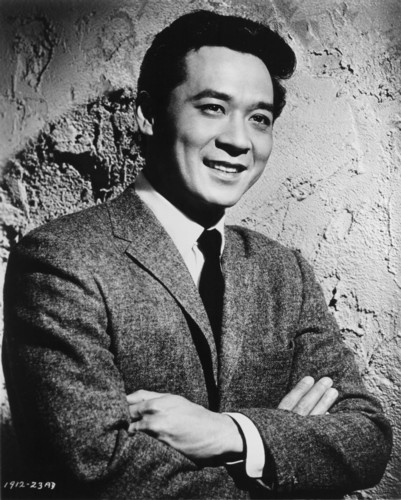
I’m sure you heard about James Garner’s recent death, but were you aware of James Shigata’s passing? Shigata, who died July 28 at the age of 85, was a contemporary of Garner’s, a superb actor, and like Garner, a leading man with leading man looks. James Shigata, however, was of Asian descent, though American through and through, and never escaped the perceived limitations of the shape of his eyes. Though he had a starring role in the hit film adaption of  the Rodgers and Hammerstein musical “Flower Drum Song” and routinely received critical acclaim for all of his film work, but though he got roles on television through the ’80s, he never was able to break through the typecasting straightjacket that deemed him only suitable for “Asian” roles. If you remember him as all, it is probably as the brave Japanese executive shot by Allan Rickman in “Die Hard.”

I thought about Shigata when I read a piece in Salon, noting that director Woody Allen didn’t cast African-Americans in his movies, and that his explanation why didn’t justify the neglect. Prachi Gupta writes, Continue reading

Ethics Quiz (Movie Division): “The Impossible,” Whitewashing, and Betrayal

"Bennett" and Belón

“Bennett” and Belón

I suppose some of you may have thought about this two years ago, when the Spanish film “The Impossible” was first released. I, however, take a while to catch up with my movie-viewing, and though the film was much praised by critics and got Naomi Watts an Academy Award nomination, I had not seen the film until recently. “The Impossible,” about as accurately as a motion picture can, tells the amazing story of how Spanish physician María Belón, her husband Enrique Álvarezs, and her three young sons miraculously  survived the 2004 Indian Ocean earthquake and tsunami when the family was on vacation in Thailand.

It is an engrossing, harrowing movie. I was surprised to find out, however that the family’s name wasn’t “Bennett,” and that they weren’t British, as the movie presented them. Apparently to maximize box office receipts, the film makers decided to take the heroic story of a real family and make the characters “more relatable” by recasting them as English-speaking Brits. There was a minor controversy about the film “whitewashing” the story*, but not much of that made it into the mainstream media. Belón, after all, is white. She was an active participant in the appropriation of story and that of her husband and sons, and they all profited from it, at least financially. Still, the movie’s point of view left a bad taste in the mouths of some international critics. Here is Australian critic Ruby Hamad:

“Based on the true story of a dark haired and darkish-skinned Spanish family, the filmmakers admitted to changing their nationality and casting lily-white actors in order to make the story ‘universal’. In other words, only white people can stand in for the human race as whole. For this reason, Thailand and its people are mere backdrops for the story of a Caucasian family who learn the hard way that even western privilege is no match for the brute force of mother nature.”

Your (two-year late) Ethics Alarms Ethics Quiz, therefore, is:

Is “The Impossible” unethical”?

Continue reading

The Oscar Nominee Truth Squad Goes After “Argo”

argo-poster

The ethics of using artistic license in films based on fact isn’t only being debated in the case of “Lincoln” as we approach the Oscar ceremonies: “Argo” is also under fire.

For some reason conservative radio hostess Laura Ingraham is fond of James Lipton, the unctuous host of PBS’s “Actor’s Studio” interview program. He sounds off frequently on her show, usually about films, and in his most recent gig was pontificating about the Academy Awards. Lipton seems to believe that bias is a condition one is helpless to adjust for: he kept announcing his preferences for various nominees based solely on their association with him or the Actor’s Studio, and explaining his choices by saying, “I’m biased, you see.”

Recognizing bias is just half the job, James. The other half is getting over it. Continue reading

Artistic License, History, and Lincoln’s Green Socks

Of course, some historical fabrications are harmless.

Of course, some historical fabrications are harmless.

Several well-placed critics are taking “Lincoln” screenwriter Tony Kushner to task for what they believe are unethical misrepresentations of fact in the much-praised, and supposedly scrupulously accurate film. He, on the other hand, is annoyed. Kushner counters that unlike in history books where a historian gives a well-researched “a blow-by-blow account,” it is reasonable and ethical for a screenwriter to “manipulate a small detail in the service of a greater historical truth. History doesn’t always organize itself according to the rules of drama. It’s ridiculous. It’s like saying that Lincoln didn’t have green socks, he had blue socks.”

I’m going to spare Kushner lawyerly word-parsing and not hold him to “a greater historical truth,” though I suspect that in his hands (he is a skilled political propagandist as well as writer), we would not be pleased with what that license would bring. A politically sympatico film director named Oliver Stone, for example, thought it served a greater historical truth to present completely fictional evidence that Lyndon Johnson was complicit in John F. Kennedy’s assassination, even though Stone’s vehicle, “JFK,” was marketed as a veritable documentary on the “truth” of the Kennedy assassination. Let’s just say that Kushner feels that in a work of entertainment and drama, strictly accurate representation of all historical facts is impossible and unreasonable to expect or require.

I agree. But there is a big, big difference between the ethics of showing Lincoln wearing the wrong color socks, and representing a highly dubious story as fact to denigrate the reputation of a probable hero, as James Cameron did in “Titanic” when he showed First Officer William Murdoch taking a bribe to let a passenger on a lifeboat ( fantasy), shooting a passenger (pure speculation), and committing suicide (denied by a fellow officer under oath at the inquest). Continue reading

“Titanic” Ethics

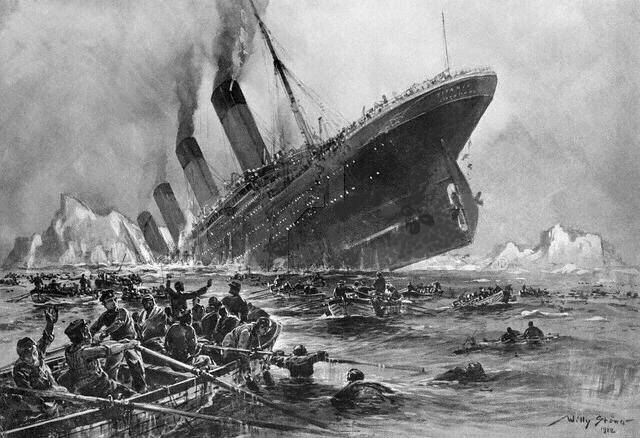
This is Titanic week, as all of you who don’t live in tunnels like prairie dogs must know. It has been a century since the sinking of the Great Unsinkable, with the deaths of 1500 souls including some of the great artistic, financial and industrial greats of the era. James Cameron’s 1997 film is also returning this week in 3-D, which means that the misconceptions, false accounts and outright misrepresentations the film drove into the public consciousness and popular culture will be strengthened once again. I think it would be ethical, on this centennial of the tragedy, for those in a position to do so to make a concerted effort to honor the victims and their families by honoring the truth. Thanks to Cameron, this is impossible. Continue reading

Incompetent Elected Official of the Month: Indiana State Senator Vaneta Becker

"All right, Jimi, you're busted. That will be $25!"

Indiana State Senator Vaneta Becker wants to establish a law that would impose a fine of $25 on any performer or citizen who significantly alters the lyrics or melody of The Star-Spangled Banner.  “I don’t think the National Anthem is something we ought to be joking around with,” she has said. “Singing our national anthem is a sign of gratitude to those who have served our country.”

One may notice a theme among those chosen here as incompetent elected officials: the complete unfamiliarity with core American values and ideals, often displayed in a misguided effort to protect those values. This is known as “ignorance,” or perhaps, in extreme cases, “utter stupidity.”  My presumption is that being ignorant or stupid renders an official incompetent to discharge the duties of lawmaking. Am I expecting too much? Continue reading