Comment Of The Day (1): “Observations On Britain’s Charlie Gard Ethics Fiasco”

I thought that the Charlie Gard story would stimulate some excellent thoughts on ethics and public policy from readers, and for once I was right. This is the first of two superb Comments of the Day it generated, and there were several others as well.

Here is Ryan Harkins’ Comment Of The Day on the post,  “Observations On Britain’s Charlie Gard Ethics Fiasco.”

The idea of the state telling me I could not seek medical aid for my child when I had both the money to pay for it and a provider willing to give me the services is terrifying. My sixteen-month-old daughter has been receiving the majority of her sustenance through a feeding tube for the past six months. Prior to that, we had been struggling to get her to eat enough calories so that she would gain just an ounce or two, only to find that weight gain vanish when she caught a cold or a stomach bug. Granted, the gastroparesis she suffers is not a severe condition, but without the feeding tube she would risk starving. The thought that the state might step in, tell me that they not only would not pay for my daughter’s tube and care any more, but also expressly forbid me from feeding my daughter through the tube, makes me shake uncontrollably. If I have to fight for my daughter without the state’s help, fine by me. But for the state to forbid me from fighting for my daughter? That is unconscionable.

However, at this time, I don’t have to face that issue. I live in a place and a time when I don’t have to contend with general threat, and my daughter’s condition is not terminal and readily treatable. I hope that my child-rearing and my fear for my daughter helps me to have empathy for the parents of Charlie Gard. I also hope that I can step back away from the emotional turmoil this issue raises and try to understand what is happening here.

The principle dilemma in the case of this poor baby boy lies in the fundamental tension between the fact that human dignity demands we do fight for life, while at the same time we know that we will all ultimately die. Because human life bears an intrinsic dignity, its wrong to deprive a human being of what it needs to survive. Because all humans ultimately die, it can become, through the use of extreme or unethical means, against human dignity to fight against death when death is inevitable.

Why would it be wrong, in some circumstances, to keep fighting against death? The most clear-cut examples are when the means of preserving life are unethical. Bathing in the blood of virgins, selling one’s soul to the devil, killing an innocent to harvest his organs, transferring one’s consciousness into the unwilling body of another — all these (fantastical as some of them are) represent tactics to extend life that obviously violate ethical principles.

What about less obvious examples? Let’s consider a man in a coma. His state is persistent, perhaps even vegetative, but his body is capable of processing food and drink, although he is incapable of eating and drinking orally. A feeding tube could provide him with all the nourishment he needs, and he could be kept alive for years in such a fashion. To stop feeding him through the tube would be to deliberately deprive him of sustenance he needs to survive, and thus would be unethical. Death is not inevitable in this case, except in the most sweeping sense.

In times past, a feeding tube would not have been possible, or if possible, not recommended because of infection, and thus this would not have been a serious alternative. Absent any means of delivering food to the man in the coma, no one could be faulted for not providing food. And if trying to use a feeding tube would actually kill him quicker, or have negligible effect, then the extreme measure of using a feeding tube would not be ethical. However, since we are at time with the technology that makes the use of a feeding tube fairly easy and safe, we no longer have that excuse to deprive a person of nutrients.

What about a slightly different case, when the man in the coma can no longer process foods even through a feeding tube? Then providing food actually causes harm without any gain. Perhaps nutrients could be provided through an IV, but one would be justified, and perhaps is even obligated, to stop providing food through the feeding tube.

Now, the most challenging cases are when a person is terminally ill, but there are procedures that exist that can extend life. To what extent are we obligated to provide care? It depends on the nature of the treatment, the cost of the treatment, and the effects of the treatment. A person is fully justified in accepting that death cannot be stopped and let the terminal illness run its course. A person is not justified in taking steps to deliberately end that life, but is justified in procuring palliative care that eases the pain of the dying, even if it hastens death. But one is not obliged to pay for or undergo an extensive, dangerous, expensive procedure that will not provide a cure, but only a short extension of life.

It should be clear, though, that just because one is not obliged to pay for or undergo extreme care, it does not follow that one is obliged to never pay for or undergo such procedures. If a person has the money and desire to attempt such care, and that care is available, that person should not be denied.

Is there any instance, then, when that person could be denied that extraordinary care? Again, we are assuming that the person can pay for it and the care is available, so we aren’t discussing an instance in which the terminally ill patient is displacing someone else’s care.

I personally cannot think of an instance in which we could rightly deny that care. What I do know is that, in Catholic theology, death does not mark the end of the existence of a person. The soul survives death, and the soul will be reunited with the body at the Resurrection. There is danger in pursuing treatments at any cost, and that danger lies in the denial of the afterlife. That has consequences for one’s eternal soul. Continue reading

Observations On Britain’s Charlie Gard Ethics Fiasco

A recipient of Great Britain’s national health care, infant Charlie Gard was born with  a rare genetic condition resulting in what is probably irreversable brain damage.  He cannot move his arms or legs, eat or even breathe without a ventilator.

After 10 months of being kept alive, Charlie’s caretakers, the Great Ormond Street Hospital for Children in London, announced that it was time for Charlie to die. Chris Gard and Connie Yates, Charlie’s parents, wanted to take him to the United States to try an experimental treatment available here. The doctors at the hospital refused to allow them to take the child, and vetoed their decision, even though the parents had received sufficient funds from donations to pay for the effort.  In  the resulting lawsuit, British courts sided with the hospital. The parents then brought the case  to the European Court of Human Rights, which declined to hear the case last week. The previous court rulings that it was in Charlie’s best interest to withdraw life support and that the state, not the parents, got to make this life and death decision stood.

The  parents, Chris Gard and Connie Yates, appeared on a video this week,, sobbing and saying their son would be removed from life support at the hospital. “He’d fight to the very end, but we’re not allowed to fight for him anymore,” Gard said in the video statement. “We can’t even take our own son home to die.”

Initially, the hospital would not delay the fatal  disconnection of the child from life support so family members could gather and say goodbye. It has since relented.

Observations: Continue reading

A “Saint’s Excuse” Classic: Athletes Forced To Endorse Positions They May Not Support

The United States Soccer Federation (USSF), aka U.S. Soccer, announced last week that the U.S. Men’s National Team and the U.S. Women’s National Team will wear rainbow-colored numbers during June, LGBT pride month, saying in part,

“In recognition of LGBTQ Pride month in June, U.S. Soccer will activate a number of initiatives in partnership with the You Can Play Project”…As the highlight, the U.S. Men’s and Women’s National Teams will wear pride-inspired rainbow numbers during the June friendlies. The MNT will debut the look for the World Cup Qualifying tune-up against Venezuela on June 3 at Rio Tinto Stadium in Sandy, Utah. The WNT will wear the kits in away friendlies against Sweden on June 8, and Norway three days later.”

The league, in short, is forcing players to make a political statement and support a cause they may, in fact, not support. Ethics foul. This is an abuse of the players’ autonomy and freedom of though.and speech. It is also unfair, and disrespectful of them as individuals. Other professional sports are equally abusive. Over Memorial Day weekend, for example, all Major League Baseball teams are wearing military-themed uniforms, caps and equipment, with stars symbolizing the five branches of the armed services on the sleeves. The uniforms will be auctioned off with the proceeds donated to veterans’ charities. It is a lovely gesture by MLB, but what if a player doesn’t want to support the military? What if he’s a pacifist? What if he objects to American militarism or the defense budget? Apparently none of this  matters to the teams or their sport.

This abuse of power, which is exactly what it is, is fueled by The Saint’s Excuse, #13 on the Rationalizations List, also known as “It’s for a good cause.”
Continue reading

Ethics Dunce: Hawaiian Airlines

I find this story hard to believe, and yet it is consistent with the disturbing trend of people and businesses taking unfair advantage of captive audiences and markets—what I recently termed the “The Hamilton Effect.” The attitude is, “we have you, you’re trapped, and you have no choice but to accept what we give you.” It is a breach of respect, fairness, autonomy, and the Golden Rule.

Before I saw this story today—it is a few says old, but I missed it–I was going to write about a more mundane example I encountered at the airport in Sacramento. I was getting on a long flight and an early one, so I bought more items than usual at an airport news store: a large bottle of water, a granola bar, orange juice, some yogurt, two newspapers and a magazine. After I paid, I asked for a bag, as I always do, and was told that it would cost 25 cents. I never heard of such a thing. I literally had more than I could carry without a bag, and told the clerk that if they were going to change the rules, I should have advance notice. There was no real option, however, unless I wanted to be thirsty and hungry on the airplane for a couple of hours, as well as bored with nothing to read.

All of the airport is like that, of course. Commentators as diverse as Jerry Seinfeld and Ralph Nader complain about it: you are suddenly in some alternate universe where everything costs twice as much. I bought a large size bag of M&Ms in Chicago that cost over seven dollars. “We have you, you’re trapped, and you have no choice…”

A 66-year-old man on a Hawaiian Airlines flight that had just left the West Coast for Honolulu found the cabin temperature chilly, and requested a blanket. He was incredulous when he was informed that there would be a $12 charge. I wouldn’t buy a typical airplane blanket for that, and this was a rental! It’s gouging, plain and simple, and the passenger said so. He then demanded to talk to an airline official, and was given the corporate phone number. During his irate conversation, the man told the company representative, “I’d  like to take someone behind the woodshed for this.”  That’s an old, barely used term for reprimanding or punishing someone, but it apparently frightened a culturally ignorant flight attendant, who informed the pilot that a passenger was threatening the staff.Naturally, the only thing to do was to dump excess fuel in the Pacific, turn the flight around, and go back to LAX. This cost about $12,000, and delayed the flight for nearly four hours.

Continue reading

Comment of the Day: “Ethics Quiz: From The Ethics Alarms Mailbag…”

panhandlerThe ethics quiz based on a reader’s off-site query regarding the ethics of giving to panhandlers when they are unlikely to use the gift wisely prompted a rich and thought-provoking thread. There were many “Comment of the Day” worthy responses, but I chose this one to represent them, in part because it is the most altruistic in spirit.

Here is my old friend Mark’s Comment of the Day on the post, Ethics Quiz: From The Ethics Alarms Mailbag…

Back in the days when street folks still asked for a quarter, I used to pass the same guy every day and always gave him $.50 ($2.50 a week). A co-worker seeing me give money to the guy mentioned that the same street person usually arrived to his “office” in a cab. I thought about it for a second and decided that my $2.50 a week – constantly available to me and replenished on a bi-weekly basis – was not enough to challenge what he did with it after it left my hands.

I am also one who will invite someone into McDonald’s with me and have them order what they like. I keep a few dollars in the car for the men and women who haunt the very large intersection near my house. My end-of-the-year charity dollars go to the local food banks.

I am no paragon (I will, however, agree to “exceptionally soft touch” or “sap”). It is simply my own personal practice to help when I can with a fair certainty that I will not – God willing – in this lifetime lack for a dollar (or someone to help me). Perhaps it’s just so much new age crapola, but I believe we get back what we put out. For this sap, it’s just that simple. I have enough trouble sussing out my own motives without trying to figure out strangers with a hard-luck story.

My $2.50 🙂

Ethics Quiz: From The Ethics Alarms Mailbag…

burningmoneyimageReader and sometime commenter Elizabeth 2 e-mails…

Here’s a question for which I’d appreciate some input.

I am generally a sucker for street people who ask for money. I frequent the 7-11 for quick trips for needed household items, and over the past couple of months I’ve often seen a young woman outside, just sitting there.  She once asked me if I had any spare change:  I gave her $10.  A couple of weeks later, same question, same response.

Then a month or so after I had last given her money, I was in the same 7-11 and saw her buying lottery tickets.

Last week she saw me as I entered the 7-11, recognized me, and asked me again for “spare change.” I said “I don’t have any cash at all.  Sorry!”  I was not of a mind to help this young woman use my charity for the biggest scam of all time:  the Virginia Lottery.

My question is this:  if I am willing to part with money for a person who seems to need it, and to do so without the vetting that a charity usually gets from me, am I in any position at all to care or change my behavior because of the way the money is spent?  Admittedly I have no ability to realistically judge the true need of anyone who asks me for money, but if I have some evidence that makes me wary, should I act on it?

Or, since charity (monetary or otherwise) is an important pillar of character for me, should I simply give what I can when I can and make no judgement whatsoever?  After all, these people don’t have Form 990s for me to examine.

Your Ethics Alarms Ethics Quiz of the Day:

Is it ethical to withhold charity from a needy individual because you regard her likely use of your gift as irresponsible?

Continue reading

Ethics Quiz: Dr. Phil, Shelley Duvall, And Exploitation

shelley-duvall

A 30-second promotional clip for today’s episode of “Dr. Phil” is disturbing, beyond question. It shows Shelley Duvall, from “The Shining,” “Popeye,” “Nashville” and other well-known films talking to the fake doctor about her mental illness.The syndicated advice show’s promo shows Duvall, almost unrecognizable, talking about how her “Popeye” co-star, the late Robin Williams, is alive and “shape-shifting.” She says she is being threatened by Robin Hood’s Sheriff of Nottingham, and that a “whirring disc” is inside her.

The ad ends with Duvall, 67, telling Phil McGraw, “I’m very sick. I need help.”

She certainly sounded like it, and looked like it too.

Now Dr. Phil is being criticized for exploiting a vulnerable mentally ill woman for her audience drawing powers. The daughter of Stanley Kubrick, who directed Duvall in her most famous role as Jack Nicholson’s terrorized wife in “The Shining,” is leading the charge. Vivian Kubrick called for a boycott of the popular daytime program, tweeting, “You are putting Shelley Duvall ‘on show’ while she is suffering from a pitiable state of ill health. Unquestionably, this is purely a form of lurid and exploitative entertainment — it’s appallingly cruel.”

Your Ethics Alarms Ethics Quiz of the Day:

Is it unethical for “Dr. Phil” to feature Shelley Duvall this way?

Continue reading

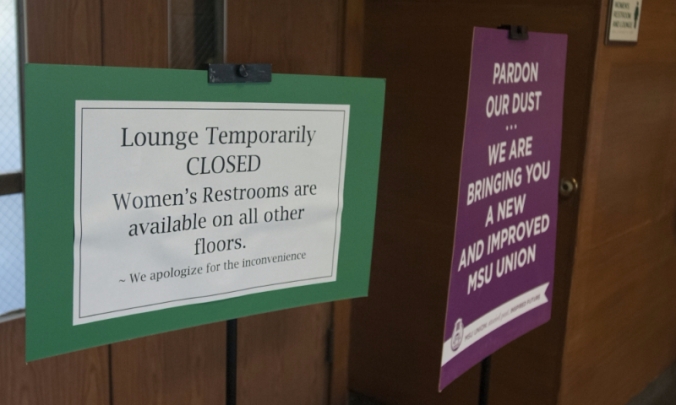
Ethics Dunces : Michigan State University Student Feminists

MSU womens_study_lounge

Higher education progressives, students, professors and administrators alike, are seriously confused about ethics, and some basic principles like fairness, respect, equity, and competence, not to mention common sense. How did they come to such a state?

For various reasons, none of them reasonable, Michigan State University had maintained that gender segregation was appropriate in the student Union, and  a study lounge there was designated for women only. Perhaps we can forgive the school’s initial judgment in this case, since the Union’s Women’s Lounge, located on the main floor of the MSU Union, debuted in 1925, just five years after women gained the right to vote.Men vastly outnumbered women then, and were looked upon as oddities, or perhaps temptation.

It is 2016, however, and women are demanding equality where it may already exist, and declaring gender discrimination where it may not, so the continued existence of the male excluding lounge was more than a bit anachronistic. After all, Harvard College just declared war on any male student who dared to belong to off-campus all-male clubs, since even freedom of association away from school is deeply offensive to the progressive values of Ivy League educators.

Then a University of Michigan-Flint professor named Mark Perry, filed a complaint to the Michigan Department of Civil Rights towards MSU alleging that the lounge violated federal anti-discrimination law, which it obviously does. Continue reading

Comment of the Day: “Ethics Dilemma: What Do You Do With Steve King?”

Pennagain, who also acts as the volunteer and indispensable Ethics Alarms proofreader, submitted this Comment of the Day, packed with ethics, and trenchant observations about how diverse cultures have enriched civilization. It begins with a quote from another commenter on Rep. King’s descent into white-supremacistspeak, and heads to wonderful places.

Here is Pennagain’s Comment of the Day on the post,  “Ethics Dilemma: What Do You Do With Steve King?”

Still, most of the really big failings over the ages have been ah, east of Suez.

Rewrite: Still, most of the big failings over the ages have been during the first couple of thousand years of any particular civilization. That’s considering national and natural barriers that don’t go along any particular meridian. If they last beyond a millennia or two, they’ve usually learned a thing or two.

Some of those things might be an understanding of the concept of comparative values and why basic ethical principles have always been in vogue – including under the Shogunates, the Mughal emperors, the dynasties of China (going back to 2100BC, by the way), and other long-lived non-democracies). Or why certain types of governments or power structures work best with certain cultures at certain times, barring catastrophic disasters and military dictatorships (North Korea is still in its 68-year-old infancy and ailing). Or why philosophies of aesthetics differ to an extent that makes comparing art or architecture, or its presence or absence idiotic. Or why a majority of us believe our own way is best (and some of the latter think they need to Disneyfy, Democratize, and Develop everyone everywhere else on the planet).

Example of some basic Asian principles aka Their Ethics: harmony, benevolence, righteousness, courtesy, wisdom, honesty, loyalty, filial piety.

All of the above can be incorporated into the principles of what us non-Asian, non-African folks call universal ethics; our ethics:

Continue reading

Comment of the Day: “Can Anyone Analyze The Orlando Mass Shooting Objectively?”

gun control nation

I was thinking about re-posting an essay here from 2012, when Humble Talent, one of Ethics Alarms’ most prolific and thoughtful participants, filed this comment on today’s observations about the post-Orlando shooting. Not to be a spoiler, but this quote at the end is simply a fact:

“What I’ve settled on, and this might be defeatist, but what I’ve settled on is that this is the price we pay for freedom. 3000 gun deaths a year In a population of 350,000,000 is the cost of freedom, and objectively, it’s probably even a good trade, even if subjectively it tastes like ash.”

In 2012, I reached the same conclusion:

“The right to be free creates the opportunity to be irresponsible, and ethics is the collective cultural effort to teach ourselves, our children and our neighbors not to be irresponsible without having to be forced to be responsible at gunpoint, with the government holding the gun. I know it seems harsh and callous to say so, but I am not willing to give up on ethics—the belief that enough of us can do the right things even when we have the freedom to do the wrong things—to prevent the occasional school massacre or murder-suicide.”

We’re both right. The right to arm ourselves is at the beating heart of American democracy, and those who would eliminate it understand neither the right, nor the United States.

Here is Humble Talent’s Comment of the Day on the post, “Can Anyone Analyze The Orlando Mass Shooting Objectively?”

I’m so… tired. I called it… I called it all: Terrorist attack on American soil, big, guns, Trump’s gamble paid, Islam, ISIS, Allahu Akbar, gay people targeted for being gay. I’ve never been so depressed at being so right. Continue reading