More Advice Column Malpractice: “Dear Prudence,” Elder Abuse and Voter Fraud

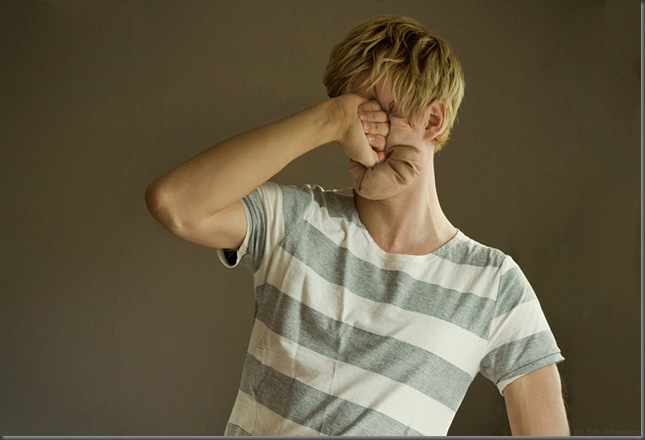
I have to wonder about the values, ethics and trustworthiness of any publication that employs an advice columnist as deeply incompetent and unethical as Emily Yoffe, a.k.a “Dear Prudence.” I’m sure that I would be compelled to correct her regularly if I read her responses with any frequency, which is one of the reasons I don’t read the column. 2011 Ethics Alarms Commenter of the Year tgt just flagged this horrific example of Emily’s craft, and correctly guessed my reaction, writing, “get ready to facepalm.”  Now that my visage is permanently concave, allow me to retort.

The query comes from a woman whose mother has filled in absentee ballots for her parents, voting her own preferences and not consulting them. Worse, the grandmother, who is suffering from Alzheimer’s, is a life-long partisan of the party her daughter voted against on her behalf.  The questioner asks “Prudence,” “Should I attempt to intervene in some way?” Continue reading

“Progressive” Totalitarianism In California: Legislative Quackery, and Wrong

Well, they did it.

If you think Jerry’s moonbeam has expired, you should see Linda…

The California Sate Legislature,  spurred on by State Senator Ted Lieu and with the approval of erstwhile “Governor Moonbeam” (nobody calls Jerry Brown this anymore since he went bald and gray, but he’ll always be that in my heart! ), has decreed that if you think your son or daughter may be confused about their sexuality, you’re out of luck, or you’d better move to a state that hasn’t made political correctness mandatory—which is to say, to this degree, anyway, any of the rest. It’s a truly sickening law, and the fact that none of the news reporting of it indicates that the reporters are properly nauseous scares the pants off of me.

I wrote about this despicable measure when it was still a twinkle in California’s jaundiced eye, and I’m not going to repeat myself—except to reiterate that my objections have nothing to do with believing that “gay conversion therapy”  is usually anything but a wishful and desperate brainwashing attempt by parents who are homophobic and whose religion teaches them that Satan just chose to give their son the Pervert Virus. Nonetheless, therapists talk, and this is a law that tells them what they can and can’t talk about. Ethics Foul I: abuse of power and violation of  Free Speech.  Continue reading

Policies Don’t Fix Unethical Professors

“Here is your assignment, class: Vote for who I tell you to.”

I saw this story and decided it was too obvious to write about. A community college math professor distributes to her class a pledge to vote for Obama and the Democratic slate, and demands that the students sign it—come on! Is anyone going to defend that as ethical? Then a reader sent me several links to the item (thanks, Michael), and after reading them, I was moved to reconsider.

The professor, Sharon Sweet, was put on unpaid leave pending an investigation; I can’t fault Brevard Community College (in Florida) for not firing her yet. What troubles me is the college’s statements that her conduct is just a breach of policy. BCC Spokesman John Glisch told the press that “The college takes this policy [prohibiting employees from soliciting support for a political candidate during working hours or on college property] extremely seriously. It is very important that all of our faculty and staff act in that manner at work and while they’re on campus.” So college provosts are reminding employees about the policy.

Let’s be clear. Associate Professor Sweet’s conduct was an abuse of power and position, an insult to the autonomy of the students and an attempt to take away their rights as citizens, disrespectful to them and the values of the nation, and an attempt to circumvent election laws and to subvert democracy. It was also, quite possibly, illegal. If a college needs to have a policy to stop teachers from behaving like that, it is hiring the wrong kinds of teachers—individuals whose ethics are those of totalitarian states, and whose respect for individual rights are nil. This was an ethical breach of major proportions, not a policy misunderstanding. No teacher should require a policy to tell her that this conduct is indefensible and wrong. Continue reading

Incompetent Elected Officials of the Month: The California State Legislature

California knows what’s best for your maybe-gay child, not your child’s therapist. Resistance is futile…

California’s legislature is poised to pass legislation that would ban state doctors, counselors and therapists from offering sexual orientation change efforts (SOCE) treatment for minors, and parents from seeking them. The rationale is a tangle of research, opinion, politics, ideology and political correctness that makes distinguishing legitimate reasons from illegitimate ones impossible. The end result, however, is a law that tells counselors and therapists what is appropriate treatment regardless of their expertise and the wishes of parents, because, of course, the typically moderately IQ-endowed legislators know best, or rather the gay rights advocates who dictate to them do. Either way, this is a serious intrusion of government into the counseling profession, free speech, parental authority and individual freedom, and any competent elected official would see that the second such an over-reaching and presumptuous bill reached his or her desk. Continue reading

Dwarf Tossing Is Back. So What?

The traditional "throwing out the first dwarf" ceremony....

Dwarf tossing, a bar sport or spectacle or satire or something, was briefly in the news early last decade. Helmeted and padded little people were used as discuses or bowling balls by large, burly, often intoxicated men. It was weird; it could arguably be funny. Advocates for the unusually small got the activity banned in Florida and New York, and in Canada, while bills to ban it failed, public opinion opposing the games pretty much made dwarf tossing obsolete, like making fun of Paris Hilton.

Now comes the news that a strip joint in Ontario is reviving the sport, and  has scheduled a competition. Critics are horrified and outraged, because, well, they are horrified and outraged. Dwarf tossing, they say, is unethical.

Why? Continue reading

Yuri’s Tweets, Flawed Analogies and the School’s Defenders

[Why is it that when I’m traveling and stuck in airports where the supposedly free WiFi doesn’t work and on airplanes that can’t keep on schedule, some post that I assumed was fairly straightforward turns into the Battle of Antietam? I apologize to the various commenter’s whose work product languished waiting for moderation—I just didn’t have the chance. This odyssey ends tonight; I apologize for slowing things down. On the other hand, it’s good to know that my presence is not required for there to be lively and interesting discussions here…thanks, everyone. Good work.]

Don Bosco Prep High School, Class of 1917-1918

That is not to say that sending gross, obscene, or abusive tweets is exemplary conduct; obviously it is not. I have concluded, however, that the proper and ethical use of social media is something that people, including minors, have to learn for themselves by trial, error, research, observing the mistakes and experiences of others, making dumb mistakes and suffering because of them.  Parents and schools, as well as the popular media, have roles to play by giving advice and calling attention to cautionary tales, but heavy-handed attempts to manage social media conduct attempted by authority figures who, as a general rule, neither use nor understand what they are attempting to regulate are both irresponsible and doomed to failure. Like it or not, social media is a primary, and growing, means of communication and interaction in American society, and students are wise….that’s right, wise...to learn how to use it. I was just speaking to a room full of lawyers, and asked them how many used Twitter. The answer: none. But their clients use Twitter, and their client’s adversaries use it, and certainly their children. Their bar associations are making rules about what these lawyers and judges should and shouldn’t be able to do on social media, and most of those bar committee members don’t use Twitter either.As a result, the various jurisdictions have inconsistent rules, based on a lack of knowledge, that are already archaic.

It is fine and responsible for any adult to try to warn a young person that comments on social media need to be considered carefully, that they have a reach far beyond any intended audience and are essentially broadcasts, and that messages or photos can reach people who they hurt or upset, or cause to have a poor opinion of the sender. Ultimately, however, the pioneers in this new frontier of personal expression and mass communication are going to have to learn their own lessons, and better that they learn them now than when they are members of Congress. All punishing students for their tweets teaches them is that people with authority abuse it, and that adults just don’t understand. Because, for the most part, they don’t.

Now the analogies and comparisons:

Public schools vs. Private schools: I gather that the theory here is that if a student voluntarily attends a private school, the student has voluntarily submitted to whatever the school regards as proper discipline, whereas public schools, since they are mandatory and creatures of the government, are constrained by the Constitution. I think I may have encouraged this by a careless reference to the ACLU, which was, of course, a mistake (and I have removed it.) This is ethics, not Constitutional law, and the values are autonomy, fairness, respect, privacy and abuse of power and authority, not Freedom of Speech. I have dealt with several private schools and one Catholic school, and none of them suggested in their printed materials or regulations that they reserved the right to punish my child for what he said, wrote, or communicated during non-school hours, or when he wasn’t physically on school grounds. Neither does Don Bosco, which states as its “philosophy”:

“Don Bosco Prep educates young men so that, through a process of self discovery, each student will come to recognize and acknowledge his talents and limitations, while pursuing academic, athletic, artistic and personal excellence.

“Mindful of both our role and responsibility as a Salesian college prep school, we respect each student as a unique individual. Through active presence in his life, we promote a joyful spirit, intellectual curiosity, self-esteem and emotional maturity. We encourage the development of character and personal responsibility, love for one’s fellow human beings, a concern for the environment and an active commitment to social justice, all of which serve as the cornerstone of each student’s spiritual growth.”

I take none of that, including references to being “an active presence” in a student’s life, “promoting” emotional maturity, and “encouraging” development of character to mean “we can punish your child for absolutely anything he does or says that we disapprove of, no matter where or when it occurs.” It, the school, does all of the things relating to its philosophy in the school, based on the student’s activities and interactions in the school. Any other reading is giving a group of strangers whose biases, background and motivations I can only guess at a blank check to manipulate a child’s life, thoughts and personal activities.

When one teacher from a private school called me to tell me that she felt it was cruel of my son to exclude a classmate whom he did not like from his birthday party, I told her that it was none of her business, and filed a complaint with the school.. Private school does not mean “we can meddle in your child’s private–as opposed to school—activities.

Catholic vs. Secular: All schools should teach character; it happens that Catholic schools do it with more fervor, but that gives them neither a greater obligation nor additional authority. Schools teach good conduct and civility by insisting on appropriate conduct and deportment in school. Are people really prepared to argue that a Catholic school can justify punishing its students for not doing household chores, not washing their hands after using the bathroom in their homes, being cruel to a younger sibling or being disrespectful to a parent? Not only is personal social networking use as unrelated to the school  as any of these, it is also far less significant. How much of a blank check do we want school administrators to have? The right answer to that is that they shouldn’t have a blank check at all, and being a Catholic school changes nothing.

High schools vs. Military Academies: This is just a bad analogy. The student at a military academy has no personal life, and has no privacy. The academy is in loco parentis; the student lives there; authority is total. There is an honor code and a code of conduct, and it applies to everything a student does, including communications. That’s the military. That’s not high school.

High Schools vs. College: Several commenters have referenced the incident from last March when Brigham Young University suspended a star basketball player for having pre-marital sex. Brigham Young is famous for its strict and far-reaching conduct code, which bans drinking, pre-marital sex and many other activities that are virtually courses at other schools. If a student agrees to attend B.Y.U., the student has also agreed to certain conditions unique to the university. Should a more typical college be applauded for suspending a student who has sex with his high school girl friend over Christmas break, in his parents’ home? No; this is none of a college’s business, and attempting to extend its authority beyond the campus and even over state lines in such a fashion is intolerable. If Yuri Wright and his parents signed a document promising that Yuri would never send an offensive tweet during his years at the school, I withdraw my condemnation of Don Bosco’s punishment.

High schools vs. the Workplace: It is true that if an employee engages in conduct outside of work that embarrasses or reflects badly on an employer, ot that interferes with the employee’s ability to do his or her job, the employer is behaving ethically if it chooses to terminate the employee. It is not ethical for an employer to terminate an employee for any private conduct it happens to disapprove of, however. It can’t tell me that I can’t drink or smoke or have sex with men in my own home. It  better not tell me that I can’t vote for Ron Paul or root for the Red Sox, either. The Naked Teacher Principle applies, of course: if I’m a Coca-Cola VP and a Facebook picture shows me chugging Pepsi, that image could undermine my effectiveness at work, and Coke can can me; it’s ethical. If I write an ethics columns for a newspaper and I am caught in an adulterous affair with Marianne Gingrich, the newspaper is only being responsible to fire its unethical, untrustworthy ethicist. None of this applies to Yuri’s tweets. They don’t reflect on the school, or shouldn’t, because the school shouldn’t have any control over his personal communications. They  don’t interfere with his studies, or make him a worse football player.

Expression vs. Conduct: Tweets aren’t conduct. Even if I accept the proposition that a school may, in extreme situations, have some legitimate role in attempting to control student conduct outside of school (and I’m not sure I do), allowing a school to punish a student for the content of his words, uttered or written away from school, is a slippery slope with no braking. If sexually and racially objectionable tweets can get a student expelled, why not tweets critical of President Obama, or cheering on Newt Gingrich? Does Don Bosco’s commitment to “social justice” mean that Yuri can’t tweet that Occupy Wall Street is a crock?

Attention Schools: You Do Not Own Your Students

This must stop.

Yuri? Your school just called; they want slightly more understated smile from you in the future. Or else.

Yuri Wright, a top ranked high school football player who is being sought by schools in the Big Ten, Pac-12, ACC, SEC and Big East, was expelled from Don Bosco Prep High School in Ramsey, N.J.for sending sexually graphic and racial Twitter posts to his more than 1,600 followers. The action jeopardizes his chances of getting a big-time football scholarship. Continue reading

The Fat Kid, the Slippery Slope, and the Cliff

"Bill! They're putting me in foster care! How will you make THAT funny?"

Several recent ethics issues have raised the slippery slope question, which is itself a slippery slope. The rationale for any reasonable principle or act can usually be ratcheted forward in degrees until it becomes malevolent, dangerous or repugnant, including freedom, trust, loyalty, charity and honesty. Thus the easiest argument, at least for the mentally dexterous, that anything is unethical is the dreaded slippery slope.

The simple rebuttal to this is usually “let’s wait and see.” To claim that conduct is unethical for what it might lead to rather than for what it actually does is often, perhaps even usually, based on an unwarranted assumption, or a worst case scenario specifically concocted to foil otherwise unobjectionable conduct. When it is not based on an unwarranted assumption, however, is when proposed conduct or a new policy permitting it shatters a social norm or cultural standard that had previously been considered sacrosanct. In these cases, the slope isn’t merely slippery—which suggests “Be careful where you step next!”—but greased, meaning there is no longer any traction at all to stop a rapid slide to the bottom. A better cliché to use in such cases is “opening the floodgates.” Or perhaps “off a cliff.”

The recent post about the Dartmouth researchers who suggested that all manipulations of graphic images of celebrities be labeled as such is, I would argue, more floodgates than slippery slope. There is no obvious delineation point to stop the principle behind this oppressive constraint on illusion from spreading far beyond its origin. Similarly, the argument being made by the family of the mother with Stage 4 cancer that US Air is ethically obligated to refund the non-refundable tickets they could not use because of her terminal illness has no clear limits or coherent application. Are the refunds required because the mother is terminal? If she goes into remission, would the family be obligated to give the money back? What if she was only paralyzed? If the whole family was squashed by a boulder, would the airline be obligated to refund the money to their next of kin? What if the mother wounded herself terminally in a suicide attempt—would that change US Air’s supposed obligation of compassion? If so, would that mean that if the mother’s Stage 4 breast cancer occurred because she neglected to follow a physician’s recommended treatment, US Air could then refuse to refund the money without being pilloried for it? Sometimes that greased slope carries us into a swamp.

Now from Cleveland comes the story of the 200 lbs. + 8-year-old Cleveland Heights boy who has been taken from his family and placed in foster care because county case workers decided that his mother wasn’t doing enough to control his weight.  Continue reading

Post-Thanksgiving Ethics Quiz: Is This Ethical? (Giant Lips Edition)

Jessica also apparently has only one eye…

Look at the bright side: at least she didn’t have octuplets.

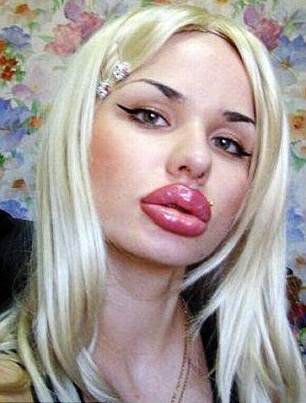
Kristina Rei, 22, of St. Petersburg, Russia, wants to look like Jessica Rabbit, so naturally she opted to get herself a pair of hugelips.She has undergone over 100 silicon-injection procedures, and considers it just the initial step in her quest to look like Roger Rabbit’s

Kristin’s hickies are deadly.

Toon wife from “Who Framed Roger Rabbit?”. “When I can afford it I want to enlarge my breasts from a C-cup to a DD, change the shape of my nose and I want to make my ears pointed like an elf,” she told reporters. “It’s good to be different.”

Well, she’s different, all right.

Your Post-Thanksgiving Ethics Quiz: Was it ethical for a plastic surgeon to give her the lips she wanted?

Plastic surgeons are subject to the Hippocratic Oath like other doctors, but in  cases of elective surgery the standards of what constitutes doing substantive harm to a patient are extremely elastic. None of the Codes of Ethics for plastic surgeons would clearly prohibit giving a patient lips that look like they belong on a Macy’s helium balloon, or similar exaggerated features. These lips make Kristina happy. Is she mentally ill? A doctor who suspected so would be wrong to submit to her wishes if they were based on clinically defective judgment, but the fact that a doctor thinks a patient will look like a freak if he does what she wants isn’t ethically dispositive. Continue reading

Scent Branding, Mind-Control, and Ethics

Agreed: this is scary. We're not there yet. We don't even know if "there" exists.

A recent article on the web that purported to explore the ethics of “scent branding” was fascinating for two reasons.

First, “scent branding” is a term I had never encountered before, for a practice that I had not focused on. About five seconds of thought, however, made me realize that indeed I was aware of the phenomenon, and had been for quite a while. “Scent branding”—using fragrances in a commercial environment to create a desired atmosphere and to prompt positive feelings, recollections and emotions from patrons—has been around a long, long time, though not under that label. When funeral parlors made sure that their premises smelled of flowers rather than formaldehyde, that was a form of scent branding. Progress in the science of scent allowed other businesses to get into the act: I was first conscious of the intentional use of smell when I spent a vacation at the Walt Disney World Polynesian Villages Resort. The lobby and the rooms had a powerful “tropical paradise” scent, a mixture of beach smells, torches and exotic fauna. It was obviously fake, like much in Disney World; also like much in Disney World, I found it effective, pleasant, and fun. I certainly didn’t think of it as unethical. I was normal in those days, however.

Well, more normal.

The second aspect of the article, entitled “Is it Ethical to Scent Brand Public Places?”, that caught my attention was that it had an obvious agenda. The piece was opposed to scent branding, and set out to find the practice unethical in order to justify condemning it. Continue reading