Morning Ethics Warm-Up, 5/14/2020: Only One Pandemic Note Out Of Five!

Good morning!

I am disgusted with this brain-dead talking point: perhaps my most Trump Deranged Facebook friend posted a rant–at least he wrote his own this time rather than searching the web for the latest from established “resistance” pundits (Dana Milbank, Paul Krugman, Joe Scarborough, about a hundred others)—making the “point” that President Trump wasn’t “elected to do heart surgery,” so the argument that Dr. Fauci’s opinions on the Wuhan virus shouldn’t dictate policy because “he wasn’t elected” were foolish. How did people like my friend get this way? He is obviously amazingly receptive to Democrat-crafted narratives, and probably hypnosis as well, so I guess I should be glad he doesn’t think he’s a chicken.

We elect leaders to consider and weigh many opinions of advisers, experts and specialists in narrow fields to balance those among other considerations in deciding what is in the best long and short term interests of the nation. That’s why, among other reasons, the we have a civilian in charge of the armed services. This increasingly popular (and tiresome) claim from the Left that if the recommendations of scientist aren’t followed, it is proof of ignorance and recklessness is logically, historically and politically unsupportable. If it’s sincere rather than a partisan tactic, it is ignorant  as well.

Scientists aren’t accountable to the public for their opinions; if they are wrong, they just come up with new theories and conclusions.  Scientists and health care specialists also, as we have said here many times, operate within the tunnel vision and priorities of their own specialties. All Dr. Fauci focuses on is the likely (as they appear at any given point) health consequences of national policy. Economic, security, political consequences are not his concern, nor should they be. Arguing that his position on the best national policy must be accepted by the President is irresponsible as well as incompetent, and this is true without even considering the fact that Fauci and the “experts” have been repeatedly wrong about the pandemic already, as Senator Paul pointed out this week.

1.How sports teaches character. I am going to have to take two hours out of my day because the MLB channel, improvising like crazy to come up with programming without any baseball games to cover, is replaying the 1975 World Series between the Boston Red Sox and the Cincinnati Reds, best known for Game 6, when Carlton Fisk hit a walk-off home run in the 12th inning of arguably the most exciting World Series game ever played. I was at Game Six and two more in that seven game series (thanks to the generosity of my late law school friends and classmates Mitch and Myron Dale, whose father was then president of the Reds), but it was one I didn’t see in person, Game 4, that was the Ethics Game.

Red Sox pitcher Luis Tiant, with his team facing a daunting three games-to-one deficit if it lost, pitched a nerve-wracking, complete game 5-4 victory, protecting a one-run lead for most of it despite lacking his best stuff against the toughest line-up in baseball. Nearly every inning, the Reds had men on base and threatened to take the lead; over and over again Sox manager Darrell Johnson trudged out to the mound to replace Tiant, only to have his ace shake his head, insist that he would get the job done, and demand that his boss return to the dugout. TV closeups of the Cuban’s grim and sweat-covered face showed pure determination as he took the fate of the team on his own back fearlessly and without hesitation. Tiant, an old man in baseball years, threw over 180 pitches that night in the era before they counted pitches; today, starters are seldom allowed to throw more than 100. Even more than the famous Curt Schilling “bloody sock” game in 2004, that athletic performance epitomizes for me the ethical virtues of professionalism, honor, perseverance, accountability, fortitude, courage and sacrifice. I have pictured Luis Tiant’s face  many times since when I have been under pressure to succeed, or facing a challenge while not feeling at my best. Continue reading
Now THIS Is Moral Luck And Chaos Theory! How An Unethical Practical Joke Got Its Target a Plum Job, And Pete Rose Banned From Baseball

Yes, this one is about baseball. Trust me, I can find baseball ethics stories even when there’s no baseball. It is also about moral luck, how unethical conduct can have good results and vice-versa, and Chaos Theory, which posits that in complex systems, even insignificant changes can  set into motion unpredictable chain reactions, and where they stop, nobody knows.

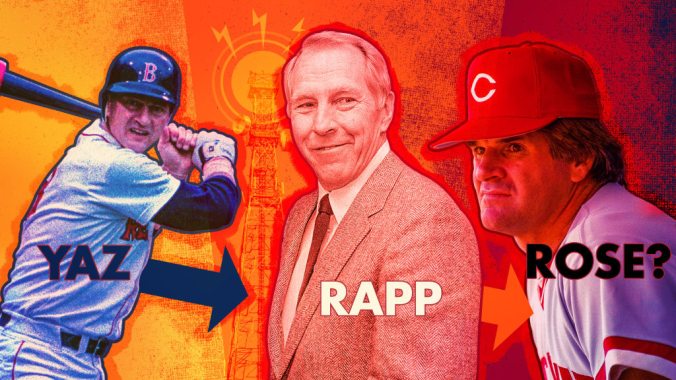
On Oct. 2, 1983, the Boston Red Sox said goodbye to Carl Yastrzemski at Fenway Park. I was there, along with my wife, thanks to the kindness of a good friend  (who eventually real-life de-friended me over a political disagreement in an episode I will never understand. I don’t like to think about it,) Yaz got a great send-off for his final game, with an hour-long pregame ceremony, the retirement of his No. 8 jersey and a letter, read aloud to the crowd, from President Reagan. Yaz, memorably, rounded the park, touching the hands of the fans, and dramatically ripped off his jersey as he went down the steps of the dugout for the last time as a player. I’ll never forget it.

Since the retirement of a Red Sox legend after 22 years was the biggest story in the city as well as in baseball,  the Boston sports talk radio show “The Sports Huddle” on WHDH decided to play a little joke. Let me interject here that “The Sports Huddle” was always a vile feature of the sports scene in Boston, uncivil, unfair, with loutish hosts and the kinds of callers who epitomized the worst stereotypes of Boston fans.  It’s gone now, and good riddance. But I digress….

The show decided it would be funny to ignore Carl Yastrzemski, who the show and its callers had been generally vicious about for a decade, and to devote its four-hours on Yaz’s day to a joke tribute to as unremarkable a baseball figure as they could find. The producers settled on the first-base coach of  the Montreal Expos,  55-year-old Vern Rapp, who had once managed the St. Louis Cardinals without distinction, and who had announced that he would end his baseball career at the end of the the 1983 season. Of course, only the most hard- core baseball fans in Boston would have any idea who Vern Rapp was.

The Sports Huddle jerks decided to play it all straight, presenting a solemn ,extended tribute to the mediocre, obsure,Expos coach. They tracked down former minor league teammates of Rapp’s,  friends  from his time in St. Louis, and  Cardinals broadcaster Mike Shannon, interviewing them all about Rapp’s fine qualities as a baseball man and human being, and how much baseball would miss him. Then they interviewed Rapp himself. Nobody suspected that it was all a put-on.

At least nobody dumped a bucket of blood on his head, like they did to Carrie White. Continue reading

Baseball May Be Missing, But Baseball Ethics Marches On; The MLB Verdict On The Boston Red Sox Sign Stealing Allegations

If you are just joining us, the Houston Astros (if you don’t know that’s a baseball team, then none of this will make sense to you, and neither does the United States in all likelihood) were slammed by Major League Baseball after it was determined that the team, primarily through the efforts of then-coach Alex Cora and veteran player Carlos Beltran, systematically utilized cameras at home games to steal catchers’ signs to opposing pitchers and relay them to Astros batters during their at-bats. This, the investigation found, continued through the 2017 season, post-season and World Series, which the Astros won. (Ethics Alarms covered the cheating scandal from many aspects, here.) The punishment meted out to the Astros was substantial, though not as severe as some, including me, would have liked. I think the team should have been stripped of their 2017 World Championship.

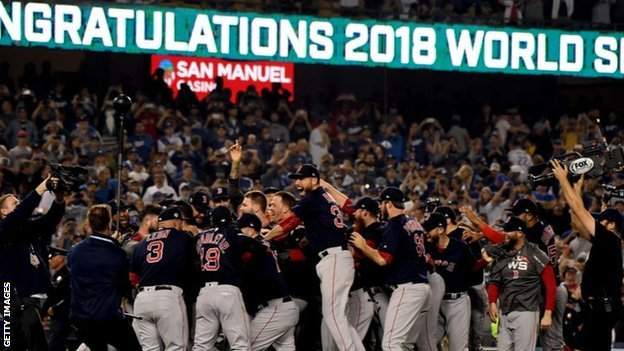
Shortly after the Astros scandal was first revealed by the baseball news media, the next year’s World Champions, the Boston Red Sox, were accused of another sign stealing scheme during 2018, one that involved using the team’s video replay equipment, which is near the dugout during games, to study the opposing team’s signs and relay them to batters. This seemed especially ominous since the bench coach  who had been identified as the mastermind behind the Astros scheme in 2017 was the manager of the Red Sox in 2018, and had led them to a record-setting World Series run.

MLB interviewed Red Sox players and management in a mysteriously long investigation, and only yesterday revealed the results and the sanctions. Boston’s video replay system operator J.T. Watkins was suspended without pay for one year, and banned from holding that same position with any team. Boston was stripped of the  its second-round draft pick in the2020  amateur.  Alex Cora, who was fired by the Red Sox in January after the revelations from the Astros investigation,  was suspended for this year, but only for his Astros conduct in 2017. The investigation exonerated him of any role in the Sox matter, which MLB found to be confined to Watkins acting on his own intermittently, and a few players. Continue reading

Morning Ethics Warm-Up, 4/7/2020: Is It Just Me, Or Does Anyone Else Feel Like They Are In A “Twilight Zone” Episode?

A really boring one.

Zombies would be an improvement…

1. More on my mask photo ethics conflict...I wrote about this in a comment on the post last night about Rep. Lee, but I’m still obsessing about it because I still don’t know what the ethical course is. When I saw that photo of Rep. Lee wearing her mask with her nose exposed (this makes her a nose-breathing idiot rather than a mouth-breathing idiot; it was also upside down), I was going to post it with two other photos showing elected officials doing the same thing. At literally the last second, an ethics alarm sounded. The other two officials, a city mayor and a member of Congress known to be, shall we say, an unlikely “Jeopardy!” contestant, were both black. In the case of Lee, who is the chair of a task force on the national response to the epidemic,the validity of pointing out the visual evidence that she’s an epic boob (we knew that, but still) is unassailable, perhaps even by the race-baiting standards of the Congresswoman herself, who  repeatedly attributed any criticism of Barack Obama to racism.

Objectively, however, when accompanied by two other photos of African-American political figures making fools of themselves, would not the array appear to be a racist “dog whistle”? I don’t need to be tarred as a racist—I already have lost considerable income because I dare to oppose the anti-Trump mobs—and this would invite that result. Moreover, as I also commented last night, conservative sites were stinking with racist comments about the Lee photo. (“If you let blacks vote, you get blacks in power over you. This applies to every other non-American race and culture too,” wrote one commenter on Instapundit.) Thus the Second Niggardly Principle seemed to be triggered:

“When an individual or group can accomplish its legitimate objectives without engaging in speech or conduct that will offend individuals whose basis for the supposed offense is emotional, mistaken or ignorant, but is not malicious and is based on well-established impulses of human nature, it is unethical to intentionally engage in such speech or conduct.”

In the narrow context of my post, I’m confident that this is the right call. In a larger context, however, the Third Niggardly Principle seems to apply:

When, however, suppressing speech and conduct based on an individual’s or a group’s sincere claim that such speech or conduct is offensive, however understandable and reasonable this claim may be, creates or threatens to create a powerful precedent that will undermine freedom of speech, expression or political opinion elsewhere, calls to suppress the speech or conduct must be opposed and rejected.”

Indeed Ethics Alarms has made a recent Third Niggardly Principle stand, refusing to accept the widespread ban on any designation of the virus that references its origins and the Chinese government’s role in turning it into a pandemic. I have done this even though the Chinese connection has led some thugs to attack Asian-Americans. I believe the principle that facts and words must not be suppressed because some may misconstrue them or react irrationally is a crucial one, and a principle that the totalitarian Left is working hard to deconstruct.

So in light of all the factors, what was, or is, the ethical way to handle this conflict?

2. Speaking of polls, here’s where the last one sits. Polling is still open, and you can vote as many times as you want, for different candidates. The poll asks you to choose which Democratic Presidential candidates would endorse withholding online classes from all public school students because poor students didn’t have WiFi access:

3. And speaking of masks, here’s what NBC Washington tweeted along with a photo of Virginia Governor Ralph Northam demonstrating the right way to wear a mask: Continue reading

Baseball Movie Ethics:The New York Times Comes Up With A Perfect List

There are three reasons for this post:

#1 is that I criticize New York Times reporters and writers so often for bias and incompetence that it is only fair that I give credit when one of them does something not only right, but exactly as I would have done it.

#2 is that the “something” is a list of the best baseball movies to watch while trying to endure both the anxieties of the Wuhan virus disruption and the delay of the baseball season.

#3 is that I am trying to scale down Part 2 of the Ethics Alarms inspirational films list (Part I is here), and this helps: I can remove the baseball movies now.

Times film critic Bruce Fretts picked what he called the ten best baseball films of the last 50 years. I would call them the best baseball films of all time. The one borderline pick he left out would be “The Lou Gehrig Story,” which is more a biography than a true baseball movie, and it’s also sad. Only two films on Fretts’ list are sad. Baseball movies shouldn’t be sad, though I agree with him on the exceptions.

I would add two more baseball movies if it was a Top 12: “The Sandlot” (1993), which brings back memories of my own pick-up baseball gang (and my late English Mastiff, Patience) and “Fever Pitch” (2005), which perhaps is more of a Red Sox movie than a baseball movie. (It had me from the moment Jimmy Fallon kissed his hand and deposited the love on a picture of Tony Conigliaro.) These, however really are the ten best.  Fretts listed them alphabetically, and I wouldn’t try to rank them. Continue reading

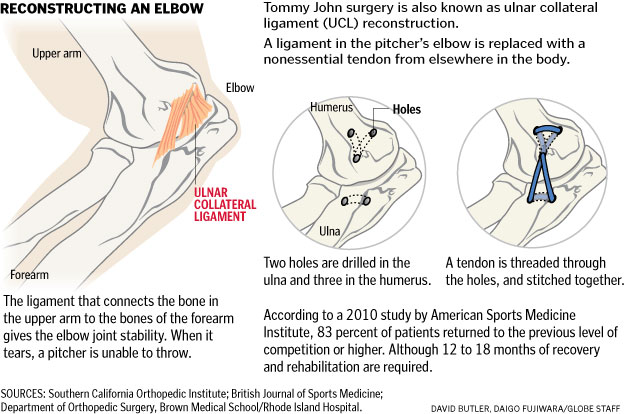
The Pandemic, Medical Ethics, And Baseball: What Exactly ARE “Essential Surgery And Medical Procedures”?

One of the policy and medical ethics issues that is looming larger as the pandemic continues is the requirement that hospitals not be burdened by  “non-essential surgery and medical procedures.”

I agree: it would have been better if  Ethics Alarms has more precisely defined “essential surgery and medical procedures”  in the previous post on the issue, when I examined the question of whether abortion can be ethically put in that category as Texas and Ohio have decreed. Abortion, as that post noted, is a particularly poor  choice for such analysis, given that our society cannot agree on what it is, other than the Supreme Court’s ruling that whatever it is, a woman has a Constitutionally right to do it.

Incidentally: can we agree that there is also a constitutional right to have any surgery or medical procedure? It hasn’t been specifically stated by the Court, but I assume that the abortion precedent applies to everything else as well, from having a kidney transplant to getting a wart removed to acquiring breast implants. These would all fall under the right of privacy and inalienable rights of life, liberty and the pursuit of happiness. Forbidding any surgery, non-essential or otherwise, is a big deal, and my guess is that a judicial challenge to the whole concept would stand a substantial chance of success. What is essential surgery to me might not be such to you, but frankly, my dear, I don’t give a damn, and unlike an abortion, my procedure isn’t killing anyone. Continue reading

Saturday Ethics Warm-Up, 3/28/2020: Well, In At Least One Respect, WW II Must Have Felt Like This…

“This” being that almost every single news item and media article related in some way to a single topic, the war then, the pandemic today. That’s one reason President Roosevelt asked major League Baseball to keep playing on, despite the fact that most of the game’s stars had enlisted or were about to,  leaving the teams to field old players, players who came out of retirement, minor leaguers, and such curiosities as Pete Gray, the one-armed outfielder. 

Wait: the baseball season was supposed to start two days ago, and is postponed at least until May. In that regard, at least, this is worse than World War II…

1. Speaking of baseball: Red Sox ethics! Major League Baseball approved a pool of 30 million dollars (That’s $1 million per club) to compensate ballpark employees during the enforced suspension of games. That left out the employees of subcontractors like Aramark, the company that supplies Fenway Park with food services, among other things. The Sox announced that it would add a half-million dollars to the $1 million for Aramark, a move that is expected to shame the other 29 clubs into similar moves.

2. You wonder why America’s children are growing up to be Marxists? Well, this doesn’t help: The following articles appeared this week in Teen Vogue:

3. From the front page of the Boston Herald:

I’m not going to track down the article; it would just ruin the wonderful picture in my head. Continue reading

Afternoon Ethics Warm-Up, 3/23/2020: Examining The—OH NO! I TOUCHED MY FACE!!!

1. From the “Futile isn’t Ethical” files. The hectoring over face-touching is annoying at a time when we need less annoyances. Here’s a useless article that gives elaborate strategies for eliminating face-touching only to admit toward the end that you probably can’t stop. I’ll wager that nobody can stop, since we do it thousands of times a day, often for good reasons, and that with all the other things we have to think about, thinking about NOT doing something natural all day long—which is essentially the strategy the three professors of psychology credited with the article recommend—will do more damage than it addresses.

Here’s a typical passage:

“Now that you are aware of the behavior you want to change, you can replace it with a competing response that opposes the muscle movements needed to touch your face. When you feel the urge to touch your face, you can clench your fists, sit on your hands, press your palms onto the tops of your thighs, or stretch your arms straight down at your sides.”

Here’s another idea that I’m sure everyone will want to adopt while they worry about their jobs, their friends, and where their next meal is coming from:

Self-monitoring is more effective when people create a physical record. You can create a log where you briefly describe each instance of face-touching. For example, log entries might say:

—Scratched nose with finger, felt itch, while at my desk
—Fiddled with eyeglasses, hands tingled, frustrated
—Rested chin on palm, neck sore, while reading
—Bit fingernail, nail caught on pants, watching TV

2. Baseball ethics fix: While there’s no baseball for an undetermined period, baseball continues to spark ethics consideration. Continue reading

From The Ethics Alarms Archives: “Age and the Judge,” And A Current Day Example.

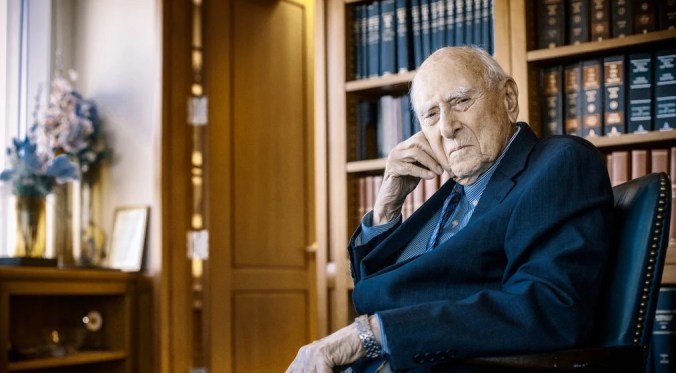
The discussions regarding Joe Biden’s age-related decline reminded me of a post that had been languishing on the runway since mid February. It was prompted by a tip from Neil Doer (I think it was Neil) who pointed me to this article about  a well-respected federal judge in Brooklyn, Jack B. Weinstein who was retiring after more than a half-century on the bench. He’s 98 years old, and it seems like he’s been an outstanding judge. My position was and is, however, that it is unethical for a judge, and indeed any professional, to continue in a position of responsibility at such an advanced age.

Obviously, I would apply that principle to politicians and leaders as well. This is another area where professional sports, especially baseball, provides useful case studies that can be instructive. Players who were great at 25 are also better when they are 40 than the more average players, whose natural decline as the result of aging will usually cause them not be able to perform  at an acceptable standard by late middle age. The great player often will still be good, but almost no player (almost) will be as excellent in his late 30s and early 40s as he was in his prime. As the financial benefits and other perks of playing major league baseball have increased over time, fewer aging greats are willing to go gentle into the good night of retirement. Their last years are often sub-par, certainly for them, or worse, but they will not voluntarily retire. Check the records of Miguel Cabrera, Pete Rose, Willy Mays, and Mickey Mantle, to name just a few.

Famously brilliant and contrary judge Richard Posner took the unpopular position among his colleagues that federal judges ought to have a mandatory retirement age. He recommended 80, but in his own case, when everyone expected him to stay until the bitter end, he retired at 78, because, he said, it was time. I’m not convinced that 80 isn’t still too old, but at least it’s a limit.

I remember well my one meeting with Antonin Scalia at a bar function not long after he had joined the Supreme Court.  He was relaxed and jovial, and when I asked him how long he thought he’d stay on the Court, he laughed and said that he couldn’t imagine staying until they “carried him out,” like so many other justices. He said it was important to leave the bench “while you still have most of your marbles.,” and to him, this meant before 80. He said he would stay about ten years.

Antonin Scalia died while still on the Court, in his 20th year of service, just short of his 80th birthday.

Here, from 2009, is “Age and the Judge.”

___________________________________________

Continue reading

Morning Ethics Warm-Up,2/25/2020: Remembering “Float Like A Butterfly, Sting Like A Bee” [CORRECTED]

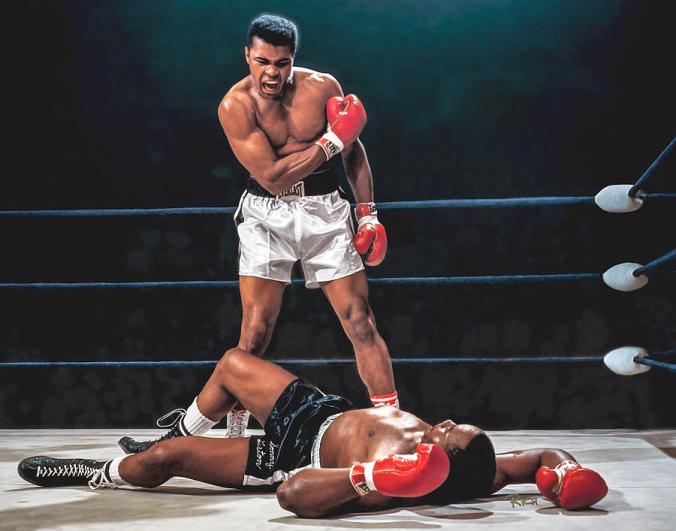
Notice of a correction: in the first version of this post, I mistakenly wrote that the famous photo above was  of the first Liston fight. It was not: this was the dramatic scene that ended the rematch. Thanks to Tim Levier for reminding me.

Good Morning!

1. Cultural literacy thoughts: I wonder…how many Millennial Americans—or among the post-boomer generations—recognize the context of the photo above? On this date in 1964, a brash 22-year-old black boxer named Cassius Clay (1942-2016) pulled off one of the great upsets in sports history, defeating world heavyweight boxing champ Sonny Liston, an 8-to-1 favorite, in a seventh-round technical knockout. The now iconic photo above captured the dramatic finale of the 1965 rematch, ending the speculation that Clay’s victory over the previously frightening Liston had been a fluke.

Indeed, the 1964 fight was just the beginning of a remarkable story.

After his stunning victory, the sudden celebrity attended a victory to a private party at a Miami hotel. In attendance was Malcolm X, the outspoken leader of the rising African American Muslim group known as the Nation of Islam. Two days later, Cassius Clay announced he was joining the Nation of Islam, and renounced his “slave name”  to adopt  the Muslim name, Muhammad Ali. As Ali, he became one of the most influential social and political figures of his era, affecting civil rights, politics, public attitudes, language and culture…and sports, of course, as  professional boxing’s greatest champion. After successfully defending his title nine times, Ali surrendered it in 1967 after he refused induction into the U.S. Army on the grounds that he was a Muslim minister and thus  a conscientious objector. His stand against the Vietnam War galvanized national opposition to the war, especially among students and the young. In 1971,  the U.S. Supreme Court overturned Ali’s draft evasion conviction, and in 1974, he regained his heavyweight title in a match against George Foreman in Zaire, enshrining his phrase “rope-a-dope” in our lexicon. Eventually Ali became  the first boxer to win the heavyweight title three times. His post-retirement diagnosis  of pugilistic Parkinson’s syndrome and the sad spectacle of the once loquacious and witty athlete’s slow decline into near speechlessness and impaired motor functionscontributed to the collapse of boxing’s popularity. Ali was awarded the Presidential Medal of Freedom by Ronald Reagan, and lit the Olympic flame at the opening ceremonies of the1996  Summer Games in Atlanta, Georgia.

My mother, who like virtually everyone in her first generation Greek family was uncomfortable around blacks, once met Ali, who was seated next to her at a Harvard College function when she was Assistant Dean of Housing. She said later that he was the most charming, charismatic, beautiful man she had ever met in her life.

2. You can lead an idiot to child-proof packaging, but you can’t make him think. A study in the Journal of Pediatrics aimed at figuring out why there has been a steep rise in accidental poisonings of U.S. children according to CDC figures has come to a disturbing conclusion. Researchers analyzed nearly 4,500 calls to five U.S. poison centers in Arizona, Florida and Georgia over an eight month period in 2017. They found more than half of the prescription medicine poisonings occurred because parents and grandparents removed  pills and medicines from child-proof packaging to make them more easily accessible, to help the adults remember to take them, or more convenient for travel. Continue reading