Baseball Ethics: Now THIS Is Cheating…

Yesterday I discussed the silly controversy over “torpedo bats,” which are completely legal despite some commentators who should know better calling the use of them by some players “cheating.” Lo and Behold, no sooner had I posted that essay than news of a player being caught really cheating shook the baseball world.

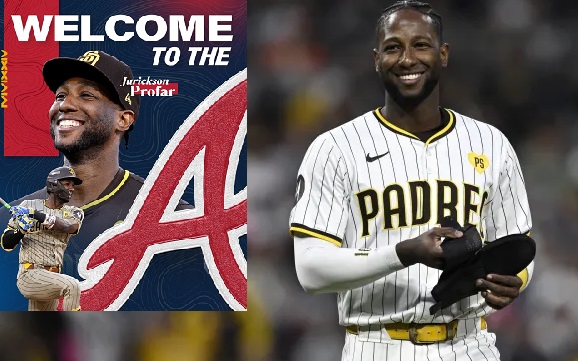
Major League Baseball announced that Braves outfielder Jurickson Profar has been suspended for 80 games after testing positive for the performance-enhancing drug Chorionic Gonadotrophin (hCG). Profar will be able to return during the season but won’t be eligible for the playoffs this year: that’s the restriction and part of the pentalty for all players in the year they serve a PED suspension.

The Braves released a statement that began, “We were surprised and extremely disappointed to learn that Jurickson Profar tested positive for a performance-enhancing substance in violation of Major League Baseball’s Joint Prevention and Treatment Program.”

Why were they surprised?

I wasn’t.

Continue reading →

Baseball Ethics: The Magic Bats!

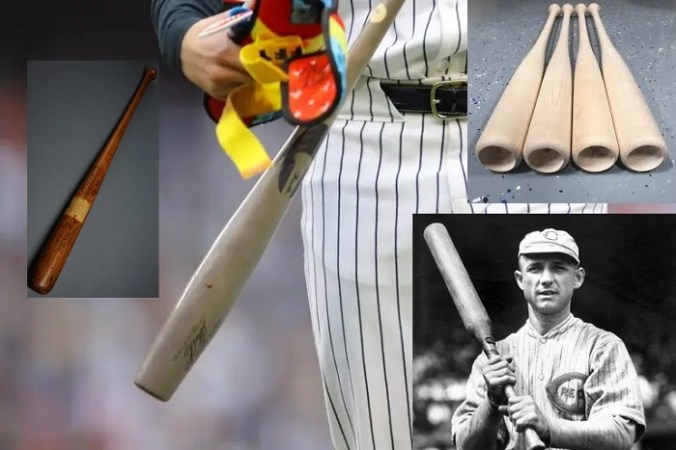
The New York Yankees opened their season by crushing the Milwaukee Brewers with a record number of home runs. Some of the homers were hit by players using a new bat design imagined by a one-time MIT physicist. The bat is shaped at teh end like a bowling pin, or a torpedo. The Yankees hit a franchise-record nine home runs in the first game—-notably the player who hit the most was Aaron Judge with three, and he used an old-fashioned bat. The series sweep served “as a live infomercial.”

The Yankees aren’t the only team with players using the new bats. The Cubs, Minnesota Twins, Toronto Blue Jays and Tampa Bay Rays have some players who are trying them out. “It’s legal,” says one enthusiastic player. “It’s under MLB rules and everything. Just basically moving the sweet spot down. Those balls that you’re getting jammed on are finding some barrels.”

Continue reading →

Friday Open Forum! (Help!)

I was a couple posts short yesterday: sorry. A lot was happening, but then a lot is always happening since the election: if I spent every waking hour at Ethics Alarms, I couldn’t keep up with all the events, stories and quotes that deserve posts. I checked out early yesterday because it was, after all, the beginning of the 2025 Major League Baseball season, which has disproportionately and illogically dominated my time and passion for at least six months of the year since I was 12. In return the game has taught me much about life, right and wrong, faith, loyalty, courage, chaos and the universe, so I am convinced the obsession has been worth all the lost hours, pain and distraction. (The Red Sox won in stirring fashion in Texas, 5-2.)

I find myself depending on the forum more than ever (and I still am looking for guest posts). There were at least two mind-blowing ethics items in the news yesterday, well, early this morning and yesterday. Elon Musk tweeted,

“On Sunday night, I will give a talk in Wisconsin. Entrance is limited to those who have voted in the Supreme Court election. I will also personally hand over two checks for a million dollars each in appreciation for you taking the time to vote. This is super important.”

Oh…what? What is that?

Then there was this, an Executive Order directing “the Vice President, who is a member of the Smithsonian Board of Regents, to work to eliminate improper, divisive, or anti-American ideology from the Smithsonian and its museums, education and research centers, and the National Zoo.”

Again: WHAT? What is “improper” ideology? What is “divisive” ideology? (What isn’t divisive ideology?) How does one measure “working” to do something? Has any previous executive order ever ordered a Vice-President to do something? I haven’t been to the National Zoo for a long time: is something sinister going on there?

(Thank you, Dana…)

Help me out here…

Your Baseball Ethics Lesson of the Week…The Buck Weaver Story

Baseball season starts next week, bringing me memories of my happy childhood in Arlington, Mass. and how I would pass the golden summers there metaphorically glued to my transistor radio for all 162 Red Sox games except for the very few that I attended or saw on TV. My team’s games were broadcast on WHDH 850 AM in those days, with Curt Gowdy doing the play-by-play. Right before each game was a favorite feature on that station: “Warm-up Time,” a 5 minute story from baseball’s rich and often strange history. “It’s Warm-up Time!” each segment began, “Your baseball story before every Red Sox game! Don Gillis reporting for Atlantic Refineries!” Don had a great voice and a rich delivery, and taught me a lot over the years.

Don introduced me to the strange and tragic saga of the 1919 Black Sox, the fixed World Series, the bizarre aftermath, and how baseball Commissioner Kenesaw Mountain Landis banned for life all eight of the players alleged to have participated in the plot to make the American League champion White Sox to throw the Series to the vastly inferior Cincinnati Reds.

Among the banned: superstar “Shoeless” Joe Jackson, whose supporters argue that he should be allowed into the Hall of Fame to this day. Joe was glamorized in the movie and novel “Field of Dreams.” His defense was that he accepted money from gamblers to throw the Series but still played his best—hardly an ennobling theory, but plausible, since by all accounts “Shoeless” was an illiterate dolt. His familiar story was featured on “Warm-Up Time,” but I was always interested in another one of the banned eight, third baseman George “Buck” Weaver, sympathetically played by John Cusack in the movie “Eight Men Out.”

Continue reading →

Can Shattered Trust Be Restored? Should it?

Last September I wrote about minor league catcher Derek Bender. He was playing for the Fort Myers Mighty Mussels, the Minnesota Twins’ Low-A affiliate, and was accused after a game of tipping off several hitters for the Lakeland Flying Tigers, a Detroit farm team, regarding the next pitches the Mighty Mussels pitcher was going to throw. Lakeland scored four runs in the second inning to win the game 6-0 and win the Florida State League West division, eliminating the Mighty Mussels from playoff contention.

Lakeland’s coaches alerted Fort Myers coaches regarding Bender’s alleged pitch tipping, and the fact that Bender had told several teammates that he was exhausted and wanted the season to be over was sufficient to convince the organization that Bender had deliberately lost the game for his own team.

The Twins released him. Despite his previous status as a high-rated prospect, the catcher is now a pariah in the game. MLB’s investigation has not been completed, though news stories last fall stated his pitch-tipping as fact. Bender’s agency representing him advised him to make no public statements until there was official report. That seems to have been bad advice: the belief that the player cheated to cause his own team to lose has taken hold as the accepted narrative.

Now he has given an extensive interview to The Athletic, the New York Times sports publication. He says he is innocent of the accusations. Bender met with investigators in November, going over the fateful inning pitch-by-pitch to prove that he was innocent. If the report concludes he did tip off opposing batters to his pitcher’s pitchers, Bender’s baseball career is almost certainly doomed.

Continue reading →

The NYT Tries To Create Sympathy For An Unsympathetic Jerk And Paints a Fresh Target On His Back

Is this New York Times piece deliberately making the situation it is reporting on worse, or is the writer (Brendan Kuty) just as clueless as his subject?

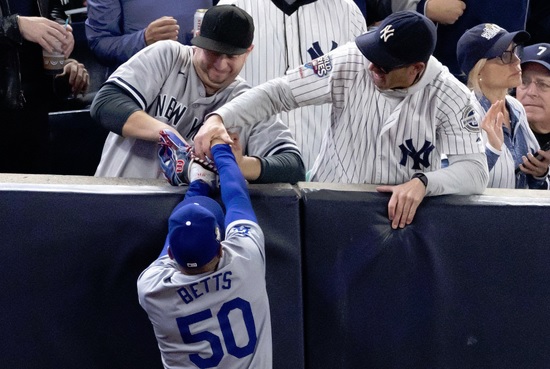
Baseball’s Spring Training is rapidly approaching, and so are media stories reminding us that it’s on the way. Today The Athletic, the sports publication that the New York Times owns and operates instead of its own sport page, ran a follow-up to the memorable (in a bad way) incident above that I wrote about here right after it occurred, during the World Series Two asshole Yankee fans (but I repeat myself—see? I’m getting ready for the season too!) nearly ripped Dodger outfielder Mookie Betts’ hand off trying to pry a foul pop out of his glove.

Interference was called, the Yankee batter (Gleyber Torres) was called out, and the two idiots were ejected from the game. For some reason it took Major League Baseball months to decide to ban the two from all ballparks for life, but that was ultimately the decision.

But The Athletic decided that it was time to try to make us feel sorry for Austin Capobianco, the jerk on the left in that photo whose name I had mercifully forgotten. We are told that he received a lot of mean phone calls, hate mail and mean messages on social media. Well, that’s what happens when you behave outrageously on national television and nearly hurt someone. An anonymous hater sent a box of poop to his home. Ew! and unethical, but there are a lot of crazy people out there (just look at yesterday’s protest against Elon Musk).

Continue reading →

Oh Yeah, Pro Sports’ Greedy Embrace of Legalized Gambling Is Really Going Well…

In 2023, Ethics Alarms tersely predicted, regarding the full and loving embrace with which professional sports is snuggling up to online gambling, “This will not end well.” Ah, but there’s money to be made….so, for example, Major League Baseball allows Red Sox Hall of Famer David Ortiz to shill for one of the big online betting concerns during local game broadcasts. Not surprisingly, given that it is the most unethical of all sports organizations, the NFL had the first betting scandal under the new gluttony: In 2023, “Isaiah Rodgers and Rashod Berry of the Indianapolis Colts and free agent Demetrius Taylor were suspended indefinitely for betting on NFL games. Tennessee Titans offensive tackle Nicholas Petit-Frere was suspended six games for betting on other sports.

Next came the betting scandal involving baseball’s most famous star, pircher-slugger Shohei Ohtani, whose translator was caught illegally using the star’s name to pay off a bookie. But of course, there was, and is, more to come.

Toronto Raptors player Jontay Porter was banned from the NBA after an investigation last year found that Porter tipped off bettors about his health and then claimed illness to exit at least one game, creating wins for anyone who had bet on him to under-perform. Porter also gambled on NBA games in which he didn’t play, and once bet against his own team. Now another NBA player, Miami Heat guard Terry Rozier, is under investigation. He is suspected of manipulating his game performance “as part of an illegal sports betting scheme”when he was a member of the Charlotte Hornets.

Wait: pro athletes today make millions of dollars. The 1919 Black Sox scandal (Second mention today!) happened because the players involved were being exploited by their team’s owner and were barely able to feed their kids. Why would millionaire jocks ever get involved with gamblers?

Continue reading →

Death of a Baseball Ethics Hero: Fay Vincent (1938-2025)

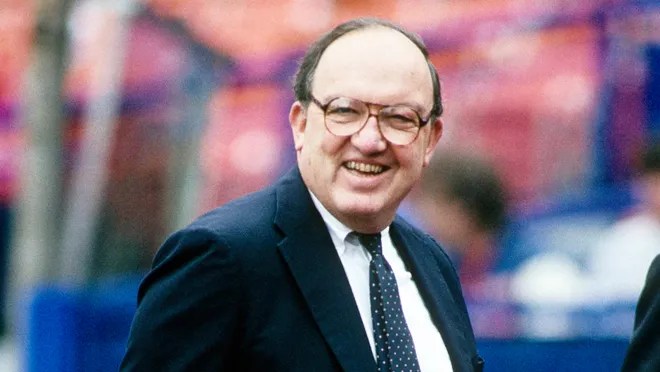
Fay Vincent, the last real Commissioner of Baseball, has died and attention should be paid.

The post of Commissioner of Baseball was created in the wake of the 1919 Black Sox scandal, with baseball’s future in doubt after the revelation that key members of the Chicago White Sox had accepted money from gamblers to throw the World Series to the vastly inferior Cincinnati Reds of the National League. The desperate owners turned to an austere judge, the wonderfully named Kenesaw Mountain Landis, who accepted the job provided that he had absolute power to act in “the best interests of the game.”

Landis ruled with an iron hand and baseball’s perpetually corrupt, greedy and none-too-bright owners backed off while he was in power, from 1920 until his death in 1944. Landis, in the harsh light of hindsight, is now vilified for not figuring out that keeping blacks out of the Major Leagues wasn’t in the best interests of baseball (or blacks, or sports, or democracy, or society, or the nation), but he proved a tough act to follow nonetheless.

Most of his successors were mere figureheads or knuckleheads, notable more for their non-decisions and bad ones than their actions in the “best interests of baseball.” Ford Frick, one of the longest serving Commissioners, is best known for his foolish insistence that Roger Maris didn’t really break Babe Ruth’s season homer record, a controversy decisively ended in the American League three years ago by Aaron Judge. Baseball collected weenies and fools in the role because the owners wanted it that way.

There were a couple of exceptions. Peter Ueberroth made the game infinitely more profitable and considerably more popular by modernizing its brandingm merchandising, promotion and marketing. Bart Giamatti , following in the fading footsteps of Judge Landis, courageously refused to issue The King’s Pass to Pete Rose, one of the most popular former players in the game, and banned him for gambling. But when Giamatti died suddenly from a heart attack after less than a year as Commissioner, he was succeeded by Fay Vincent, in a sequence a bit like when the Vice-President takes over when a POTUS dies. He had been deputy commissioner under his good friend Giamatti, and the owners of the major league teams confirmed him without qualms as the next Commissioner . They thought he was one of them: a corporate veteran and lawyer who had served in top executive roles for Columbia Pictures and Coca-Cola before Giamatti recruited Vincent as his right-hand man.

Vincent, however, was not what the owners wanted or expected. He was intelligent, courageous, far-sighted, and worst of all, as a passionate baseball fan, he took his job description seriously and literally. He didn’t work for the owners, though they could fire him. His stakeholders were fans and the game itself. Vincent’s vision for the job was reminiscent of the difficult ethical conflict accountants face: businesses hire them and pay their salaries, but their duty is to the public.

Continue reading →
Again, Hall of Fame Ethics, and Again, Ethically Inert Sportswriters Want To Elect Steroid Cheats

I know I’ve written a ridiculous number of posts about the logical, institutional and ethical absurdity of electing baseballs’s steroid cheats to the Hall of Fame in Cooperstown, but I have sworn to slap this down every time it rears its metaphorical ugly head until my dying day.

The 2025 Baseball Writers’ Association of America voted Ichiro Suzuki (one vote shy of being a unanimous selection), CC Sabathia and Billy Wagner into the Hall. Three quick ethics notes on this. First, whoever it was who left Suzuki off his ballot should be kicked out of the association using the equivilent of the Ethics Alarms “Stupidity Rule.” He is not only a qualified Hall of Famer, but belongs among the upper echelon of Hall of Famers with the likes of Ty Cobb, Babe Ruth, Ted Williams and Rogers Hornsby.

Second, I have no problem with CC Sabathia making the Hall, but that he was elected just a couple of months after Red Sox star Luis Tiant was rejected by a veteran’s committee, probably ending his Hall of Fame chances for good, shows just how arbitrarily the standards for Hall admission are applied. Tiant was objectively better than Sabathia, a bigger star, and while CC was a flashy presence on the mound, Tiant was more so. Luis (or “Loooooie!” as he was known in Fenway Park) died last year, and had said that if they weren’t going to let him into the Hall while he was alive, they shouldn’t bother after he was dead. Maybe the voters were just honoring his wishes…

Continue reading →

“And Now, The Rest of the Story!” MLB Bans Those Two Assholes For Life…

Hey, maybe Major League Baseball reads Ethics Alarms!

In this post in October, EA reported that in the bottom of the first inning in Game 4 of the World Series with the Yankees losing 2-0, NY lead-off hitter Gleyber Torres “hit a high pop-up into right field foul territory. Dodgers right fielder Betts caught the ball with his glove, but” Asshole #1 grabbed Betts’ glove with both hands, opened it, reached inside with his right hand and knocked the ball back onto the field, as Asshole #2 assisted him. It was on national television for all to see, so the umpires, thank goodness, got the call right and ruled fan interference. Torres was called out. I ruled it the most egregious example ever of fans deliberately trying to interfere with a player’s efforts during a baseball game, and called for Austin Capobianco (Asshole #1) and John P. Hansen (Asshole #2) to be banned from attending baseball games for life.

It took three months for some absurd reason, but Major League Baseball finally has banned them from attending games at big league ballparks, probably forever. Good.

The league sent a letter to A1 and A2 this week informing them of the decision.

“On Oct. 29, 2024, during Game 4 of the World Series at Yankee Stadium, you interfered with play by intentionally and forcefully grabbing a player. Your conduct posed a serious risk to the health and safety of the player and went far over the line of acceptable fan behavior,” said the letter, released today. “Based on your conduct, Major League Baseball is banning you indefinitely from all MLB stadiums, offices, and other facilities,” the letter continues. “You are also hereby banned indefinitely from attending any events sponsored by or associated with MLB. Please be advised that if you are discovered at any MLB property or event, you will be removed from the premises and subject to arrest for trespass.”

There is justice in the universe. I would have preferred to see the letter end with a promise that if either miscreant is discovered at any MLB property or event or even so much as wearing baseball cap, he will be summarily wrapped in unwashed jock straps and have his eyelids stapled open while he is forced to watch the execrable film, “The Babe Ruth Story” starring William Bendix (which Ted Williams called “the worst movie I ever saw,” though he never saw “The Exorcist II”) on an endless loop until he can’t stop screaming and begs to have his eyes gouged out. But that’s just me.

I can live with this resolution.