THIS is Hindsight Bias, So You’ll Know a Jerk When You Hear One

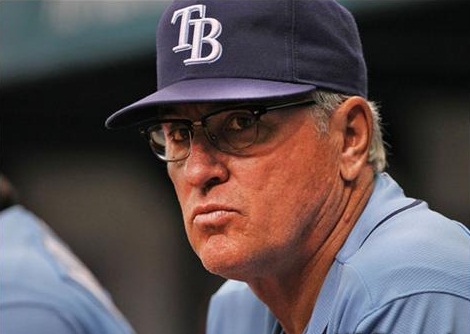
I haven’t watched a Red Sox game for over a month now; more on that soon. I do check on the game results however, and observed with interest that Red Sox manager Bobby Valentine, currently being dressed for the guillotine by New England sportswriters who want him punished for a miserable season in which his own work has been outstanding, is being criticized today in a textbook example of hindsight bias at work. I am flagging it for any of you who might want to explain the phenomenon to the next jerk who criticizes you for a reasonable choice you made not knowing how it would turn out, based on the jerk’s knowledge of how it in fact did turn out.

My least favorite personal run-in with hindsight bias was the time I lost a poker hand—and a lot of money– in Vegas despite having four of a kind in a game of seven card stud. The old man sitting next to me looking pathetic also had four of a kind, and in a higher denomination, the odds of two four of a kind hands appearing in the same deal in a non-wild card game being approximately six-gazillion to one. Naturally, I was betting the limit until the old man called my hand—he said later that he felt sorry for me. When he revealed that he had my four sevens beat with his four %$#@%$*& tens, it caused a genuine uproar in the casino, and the dealer said that he had never seen the like in eight years on the job.

“You should have known he had you beat,” said the ass sitting on my right. That’s hindsight bias. And so is this. Continue reading

Comment of the Day: “The Washington Nationals’ Stephen Strasburg Dilemma”

John Glass, a superb and eclectic D.C. area blogger at DramaUrge, weighs in with his usual lucidity on the Stephen Strasburg controversy. Here is his Comment of the Day on the post, The Washington Nationals’ Stephen Strasburg Dilemma: Continue reading

The Washington Nationals’ Stephen Strasburg Dilemma

The real problem with Stephen Strasburg’s pitching arm is that it’s attached to his neck…

I must apologize to those who care about baseball-related ethics matters. I have been so immersed in the problems dogging my sad and dispirited Boston Red Sox that I have neglected the more glaring ethics issue looming over my current home town team, the Washington Nationals, currently on top of the National League East and almost certainly bound for their first post-season appearance. They face that prospect, however, with a problem: before the season began, management pledged that Stephen Strasburg, the team’s young fire-balling ace who seems destined for a Hall of Fame career, will be shut down for good once he hits 180 innings or less. Strasburg has already had serious arm surgery once, and conventional baseball wisdom now holds that throwing too many pitches before a pitcher has matured risks his arm, his effectiveness and his career. What this means now, however, that was hardly conceivable when the pledge was made, is that the Nationals could be battling the best teams in baseball in pursuit of a World Series title with their best pitcher completely healthy but in mothballs.

I had only given this matter perfunctory focus, concluding as a fan that it was a screwball plan that would never be executed, and not thinking much about the ethics of the controversy—and as you might imagine, it’s a big controversy in the Washington area sports pages. It took respected baseball writer John Feinstein to shock me out of my apathy with his sensible and well-reasoned column on the issue today, that ended thusly:

“Pitching a healthy Strasburg in October is not a betrayal, it’s simply recognizing that circumstances have changed. Not pitching him is a betrayal: to the pitcher, to the team, to the fans and to the city.” Continue reading

Ethics Dunce: Suspended Giants Outfielder Melky Cabrera (And Not For The Reason You Think)

Who is “Melky Cabrera” really?

Melky Cabrera shocked Major League Baseball by getting caught mid-season using banned metabolic steroids, it’s true. It is also true that this marks him for all time as a cheater, and something of an idiot, since the penalties for PED (performance enhancing drug) use are devastating to a baseball player’s reputation and wallet, and because, unlike when Barry Bonds was breaking records and racking up MVP trophies while being juiced, the game has belatedly decided that it isn’t going to let games, championships and records be distorted by chemical means.

Melky, however, is special among baseball’s cheaters. Only he, as far as we know, decided to attempt an elaborate internet deception to try to duck responsibility after he had been caught.

From today’s New York Daily News: Continue reading

The Melky Cabrera Affair: When Fair Isn’t Fair

A useful tool, when the government decides that what you did should have been illegal.

Let me bring the non-baseball fans among you up to date, reminding you that while the immediate subject is baseball, the ethical implications of this story are far broader.

Melky Cabrera, until last season, was a standard issue major league outfielder of substantial but undistinguished abilities and accomplishments. Last season, playing with the frequent destination of such players, the Kansas City Royals, Cabrera suddenly and unexpectedly emerged as a star, surpassing all expectations and his previous levels of performance. The Royals traded him, like an over-priced stock, to the San Francisco Giants in the off-season, getting a package of players in exchange for one they probably thought was as valuable as he would ever be.

This season, however, he was even better.  Not only was he selected to the All-Star team for the first time, he was also on the way to leading the Giants to the play-offs and possibly a World Series appearance. Then, this week, a drug test came in positive for testosterone: steroids. By MLB’s rules, Cabrera was suspended from play for 50 games, effectively eliminating him from the Giants season and post season and, not incidentally, marking him as a cheat and an idiot.

And maybe a batting champion. When he was suspended, Cabrera was second in the National League in batting average, and had already amassed the necessary at bats to qualify for the championship (actually, there are some complications with that, but for all intents and purposes, that’s true). He’s only 13 points behind the leader, and averages tend to come down as the season drags on. Not only is Cabrera’s high average a likely product of pharmaceutically-aided cheating, but his suspension for getting caught at cheating may actually help him win the prestigious batting crown, by freezing his average at a lofty .346. Is this fair? Certainly not. Continue reading

A Trivial But Vivid Case Study In Unethical Journalism

“Wait…did we leave out something from that story?”

Yes, I know: it’s another Boston baseball story (“Yoooouk!”), and I’m sure there are similar stories from other cities. And yes, I know that the journalists at issue are sports writers, which have traditionally been to journalism what a Big Mac is to gourmet cuisine. Nonetheless, this is an instance where some members of the Boston media have gone out of their way to misrepresent the facts of a story specifically to impugn the character of an innocent athlete and to rile up people  –in this case, Boston Red Sox fans, who often mutate into something far scarier than “people”—who depend on them for information, and who can be counted upon to over-react to everything.

Red Sox starting pitcher Clay Buchholtz recently ended up in the hospital and on the disabled list with a dangerous episode of internal bleeding. After a few days he was released, weak and medicated, and told that he could resume normal activities immediately. Baseball needed to wait a bit longer, understandably, and anyway, he isn’t eligible to play in a game for two weeks. Last night, he attended an event that he had committed to attend before his medical problem, a charity event to raise money for the Greg Hill Foundation. Lest there be any question, this is a good thing, and noble. Buchholtz could have begged off, for he was just hospitalized and surely doesn’t feel great, but he didn’t, choosing instead to assist a group that raises funds to help local families touched by tragedy.

And here is how this is being covered by some of the Boston sports media: Continue reading

When Your Genius Is A Dunce: The Depressing Self-Outing of Rays’ Manager Joe Madden

I trusted you, Joe. You broke my heart..

Organizations and institutions tell us a lot about themselves by the individuals they hold up as exemplary. To cite an example much on my mind these days, the conservative blogosphere’s canonization of the late Andrew Breitbart, master of the intentional half-truth, makes me dubious about its reliability and integrity. On  the other side of the spectrum, the fact that so many Democrats, and especially Democratic women, worship Bill Clinton reflects horribly on their values and tolerance for hypocrisy. Now, in the wake of Roger Clemens’ well-deserved acquittal for denying under oath acts that he almost certainly did, we have strong confirmation that a prominent individual Major League Baseball holds up as exemplifying, in the immortal and irritatingly pretentious words of “Terence Mann” about that corn field in Iowa, “all that once was good and it could be again”* is in truth an Ethics Dunce, and a big one at that. His name is Joe Madden, the American League’s 2011 Manager of the Year, and I am disappointed and depressed. (Yes, I have named Joe an Ethics Hero in the past.) Continue reading

Hurray for the “O!” in “The Star Spangled Banner,” And The Man Who Put It There

Wild Bill Hagy, on the job

When the Washington Nationals hosted the Baltimore Orioles in an interleague baseball game, many Orioles fans attended to root for their team, the long-diminishes but suddenly (and, I fear, temporarily) resurgent O’s from Charm City. Nobody who has attended Orioles games in Camden Yards was surprised that the Orioles fans shouted out a loud “O!” as the National Anthem reached its climax, in the line, “Oh say does that star-spangled banner yet wave?” They have been doing this, joyfully and with full-throated enthusiasm, for over four decades.

Washington Post sportswriter Mike Wise to his keyboard to express his annoyance and indignation. Calling the O’s fans who engage in the traditional shout “cretins,” Wise wrote,

“…By claiming the lyrics, if only for a moment, you fundamentally undermine the idea that the song was written to unite instead of divide. A national anthem is a national anthem, not a convenient vehicle for one’s immense pride in his or her team.”

Allow me to retort!

Baloney. Continue reading

Comment of the Day: “Ethical If We Want It To Be: NBA Flopping and Fooling the Ref”

This is a wonderful comment by Dwayne N. Zechman, which goes to the heart of what makes sports ethics so perplexing. Let me leave it to Dwayne now, and I’ll have some comments at the end. Here is his Comment of the Day on the post Ethical If We Want It To Be: NBA Flopping and Fooling the Ref:

“I admit I’m having a little trouble with this one.

“If I understand correctly, your premise is that each sport has its rulebook, and what’s ethical or not is mostly determined by what’s in that rulebook. The outside margins of “mostly” come from long-standing traditions, and de facto rules related to safety or practicality. The game isn’t life–it’s a distinct “closed system” if you will, and the rules about life might not apply. Or perhaps it’s better to say that we can choose to declare (in the rulebook or through tradition) that certain rules of life do not apply within the game and that’s okay. Doing so diminishes neither the ethical rule nor the game itself.

“So the beginning of my trouble is that this smacks a little of a combination of “Everybody does it”, “If it isn’t illegal, it’s ethical”, and The Compliance Dodge. Okay, I can accept that, though, because we’ve already stipulated that specific ethical principles can be exempted from a game/sport.

“Next comes my own dissonance in trying to reconcile this article with other recent articles here on Ethics Alarms about pro football, where the same exemption of ethical principles is applied, but somehow shouldn’t be. Okay, I can accept this, too. There is a distinction in that an ethical principle shouldn’t be exempted from the game when there are clear, demonstrable consequences to the player that persist after the game is over and the player’s real life resumes. In a situation such as that, it’s impossible to exempt an ethical principle JUST for the game because the exemption itself renders the game no longer a “closed system”. Continue reading

Ethical If We Want It To Be: NBA Flopping and Fooling the Ref

“And in the category of Best Feigned Foul in An NBA Play-Off Game, the nominees are….”

Once again, the issue of players in professional sports intentionally deceiving the referees is enlivening the sports pages. I welcome it: the intersection of sports and ethics is always fascinating. This particular intersection is as old as sports itself. Is deceiving the referee (or umpire) for the benefit of one’s team competitive gamesmanship or cheating? Is it an accepted tactic, or poor sportsmanship? In short, is it ethical or unethical?

The current version of this controversy has broken out in the National Basketball Association, where  Commissioner Daniel Stern  has declared war on “flopping”—the maneuver where a player draws an undeserved foul on an opposing player by acting as if minor contact or even no contact at all was near-criminal battery. Stern has suggested that the NBA needs to start handing out major fines for these performances, which in the heat and speed of the game are often only detectable with the aid of slow-motion replay after the fact Continue reading