Topps’ Pete Rose Abuse

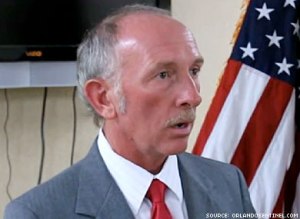
Pete Rose now, with his Playboy model wife (he calls his marriage "Tits and Hits"), and as a player, when the fact that he was a low-life didn't seem to matter.

Pete Rose now, with his Playboy model wife (he calls his marriage “Tits and Hits”), and as the  player called “Charlie Hustle,” when the fact that he was a low-life didn’t seem to matter.

Baseball season is fast approaching, and with it the usual welter of fascinating ethical issues that sport always generates. Here is an early one, arising out of one of the first signs of Spring Training, the release of the Topps’ baseball cards.

Pete Rose, as every educated American should know, was a wonderful player on the baseball field and a certifiable low-life off of it. Though he is the all-time leader in career hits, the former Cincinnati  Reds icon has been banned from baseball for two decades, the result of defying baseball’s “third rail” by gambling on the game after his playing career, when he was a manager. (Rose also lied about his conduct, helped send a Commissioner of Baseball to an early grave, and has served time for tax evasion…and even without all this, he would still be an insufferable slime-ball. Trivia note: Pete was in the very first group of “Ethics Dunces” in 2004, along with Bindi Irwin‘s dad, and Fox.  See? Nothing changes!) Never mind, though: Rose’s records have never been regarded as anything but legitimate, unlike those of baseball’s other living major miscreant, lifetime home run champ, steroid cheat and ethics corrupter Barry Bonds.

Yet as Aaron Gleeman reports on NBC sports, Topps is now, based on the evidence of its 2013 line of baseball cards, going out of the way to purge Rose’s name from all honor and memory: Continue reading

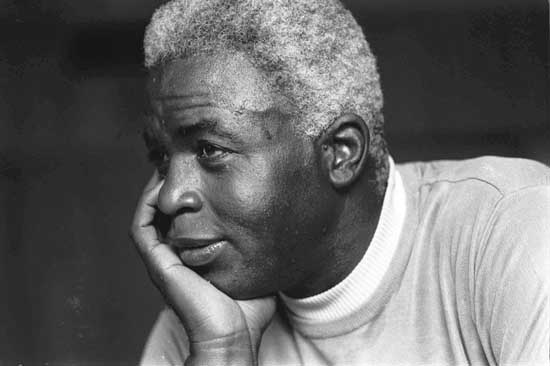
Today is Jackie Robinson’s birthday. He would be 94, but he lived only slightly more than half that long. He was one of our greatest ethics heroes, and I’d like to honor Mr. Robinson by reblogging a post from April 16 of last year.

Jack Marshall's avatarEthics Alarms

Yesterday, the media, history buffs and Kate Winslet fans were obsessed with remembering the Titanic, sometimes even with proper reverence to the 1500 men, women and children who lost their lives in the North Atlantic on April 15, 1912. A strong argument could be made, however, that the most significant event that occurred on April 15 took place in 1947, in Brooklyn, New York. For that was the day that Jackie Robinson ran out to his position at first base as a member of the Brooklyn Dodgers, and became the first African- American to play baseball in the Major Leagues since the earliest years of the game.

With that act, and his epic heroism for the rest of the season, Robinson changed baseball, sports, American society and history. It was a cultural watershed in a nation that had been virtually apartheid since the end of the Civil War, a catalytic…

View original post 781 more words

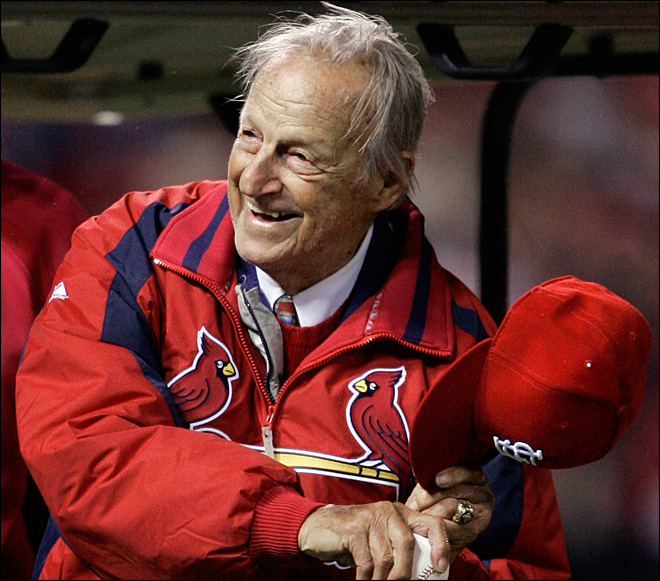
Ethics Hero Emeritus: Stan (“The Man”) Musial, 1920-2013

Stan Musial

Baseball great Stan Musial is a different kind of lifetime ethics hero, which is one reason it is important to so honor him. Unlike everyone who has ever received that designation here,  the iconic St. Louis Cardinal had no famous episode that crystallizes his character for posterity, no inspiring quotes attributed to him, nothing at all as impressive by itself as his athletic feats on the baseball field, which were among the most distinguished of any Major League baseball career. What was remarkable about Stan Musial is that over three decades in the public eye and four more after leaving it, he never did anything wrong.

Musial remained with one team his entire career, out of loyalty to the city and the fans who loved him. He never complained about where he batted in the order, or where he played; though he spent a lifetime being overshadowed in the sports pages by more colorful, edgier personalities like Ted Williams, Mickey Mantle and Willy Mays, he never whined about it, or made transparent efforts to seek the spotlight. He famously gave out autographs to all who asked with grace and a smile, even when the inflated price of athlete autographs soared. His team mates say that Musial visited children’s hospitals without the press or photographers in tow, because he performed such acts of kindness not for himself, but for the kids. Continue reading

Robert Griffin III, Wally Pipp, and the Catch-22 of Lies

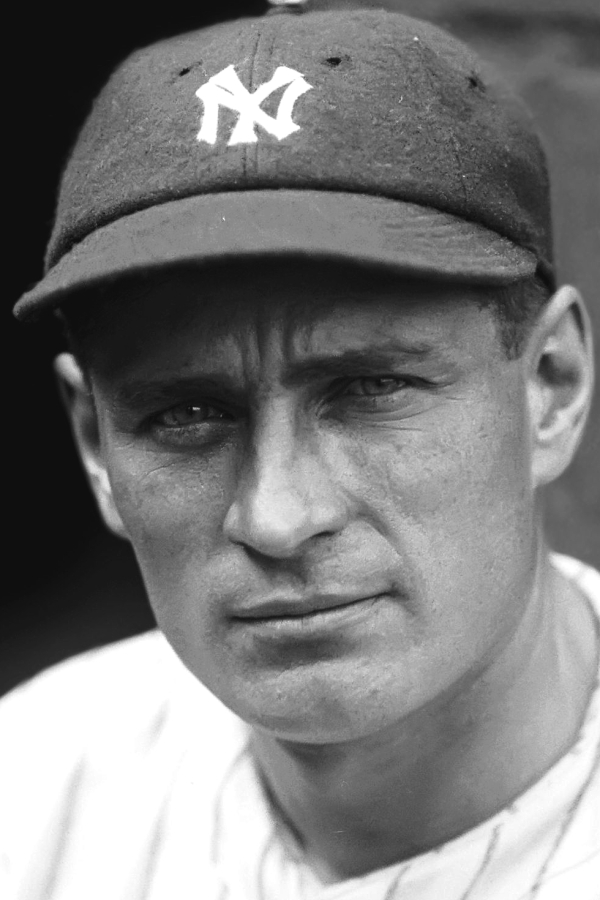
Dan Wetzel would have loved Wally Pipp

Dan Wetzel would have loved Wally Pipp

If you want to see the stark difference between the culture of baseball and the culture of football. look no further than Washington, D.C., where the city’s sports fans are in mourning for the second time in barely three months’ time. The surging Redskins just met play-off elimination, because their young star quarterback was injured but allowed to stay in the game. Back in October, the city’s new sports darlings, baseball’s Nationals, were eliminated in their first play-off round, in part, fans believe, because the team wouldn’t let its completely healthy young star pitcher play for fear that he would get injured.

This week everyone from my local sandwich shop proprietor to the driver of the cab I just got out of is furious  at Redskins coach Mike Shanahan for allowing the obviously hobbled Robert Griffin III to stay in the doomed game against the Seattle Seahawks when there was a competent back-up on the bench. And some, like Yahoo! sportswriter Dan Wetzel, are blaming Griffin, for “lying”:

“Robert Griffin III couldn’t do much of anything Sunday except lie, which is what he’s been trained to do in situations like this.
Lie to himself that he can still deliver like no backup could. Lie to his coach that this was nothing big. Lie to the doctors who tried to assess him in the swirl of a playoff sideline. So Robert Griffin III lied, which is to be excused because this is a sport that rewards toughness in the face of common sense, a culture that celebrates the warrior who is willing to leave everything on the field, a business that believes such lies are part of the road to greatness.” Continue reading

Torii Hunter and The Bigoted Teammate Principle

No, this isn't Detrot Tigers outfielder Torii Hunter. This is gay-bashing "Teacher of the Year" Gerald Buell. Six of one, half-dozen of the other...

No, this isn’t Detrot Tigers outfielder Torii Hunter. This is gay-bashing “Teacher of the Year” Gerald Buell. Six of one, half-dozen of the other…

Over at the NBC Sports baseball blog Hardball Talk, the baseball  writer/lawyer Craig Calcaterra explained today why the quoted comments of Detroit Tigers outfielder Torii Hunter regarding gay professional athletes are not just wrong, but misconduct. My message to Craig: “Bingo.”

In its recent article about closeted gay athletes, the Los Angeles Times quoted Hunter explaining why he felt having a gay team mate would be divisive:

“For me, as a Christian … I will be uncomfortable because in all my teachings and all my learning, biblically, it’s not right. It will be difficult and uncomfortable.” Continue reading

Of Course Barry Bonds Doesn’t Belong In The Hall Of Fame

Buy a ticket, Barry.

Buy a ticket, Barry.

A full complement of baseball’s steroid class is among the 37 players on the 2013 Hall of Fame ballot, so it was predictable that a new round of arguments would surface claiming that it is unfair, illogical, inconsistent or otherwise unseemly to exclude Barry Bonds and others from enshrinement. Predictable but frustrating: the arguments in favor of Bonds are arguments against maintaining ethical values, in baseball, sports, and American society.  It is also an annoying debate to engage in, and I have been engaging in it in various forms for many years, because Bonds’ defenders typically represent themselves as modern, reasonable, and realistic, while anyone making the quaint argument that cheating on a grand scale should earn shame rather than honors is mocked as judgmental, sanctimonious and naïve.  As ever, I am a glutton for punishment, and since otherwise wise and perceptive commentators like NBC Sports’ Craig Calcaterra choose to ally themselves with Bonds, I really am obligated to point out what a corrupt, illogical and unethical position it is.  If I and people like me don’t persist in this, we’ll have cheating approved as a cultural norm before we know what hit us.

Calcaterra has been supporting Bonds as a Hall of Fame candidate for a while now, but the title of his latest essay, “It’s Lunacy To Keep Barry Bonds and Roger Clemens Out of the Hall of Fame” is a gauntlet that begs to be picked up.  “Bonds and Clemens,” Craig writes, “ are two players who, in a just world, would be unanimous selections for induction…”  I find this an indefensible, even shocking, statement, both before and after the writer attempts to defend it. In a just world, a member of a profession who achieved his prominence in part by breaking the law and the rules, as well as lying about it, should be accorded the highest honor that profession has!  What an astounding point of view.

For simplicity’s sake, I’m going to leave Clemens out of this, in part because I can see a Hall of Fame voter credibly deciding that there isn’t enough evidence to conclude that The Rocket really did use performance enhancing drugs on the way to forging one of the top five pitching careers of all time, and in part because I suspect Craig of pairing Bonds and Clemens to make his various rationalizations more pallatable than they would be in defense of Bonds alone.  Belief in Roger’s steroid cheating rests entirely on the testimony of a proven liar and slime-ball, his former trainer. MLB’s Mitchell Report sided with the trainer, and I’m inclined to as well, but Clemens’ unfitness for the Hall of Fame, unlike Bonds (and Mark McGwire, Rafael Palmeiro, and some others), is not an open-and-shut case.

I give credit to Craig for not raising my least favorite of the Bonds defenses, that he has to be regarded as innocent because he has not been “proven guilty.” Calcaterra is a lawyer, and he understands the over-use and misuse of that cliché, as well as how it only applies when “guilty” means “you’re going to jail.” Indeed, he begins by conceding the obvious, that the evidence that Barry Bonds used steroids is overwhelming, which it is.

His first argument, however, is terrible. Under the ironic heading “Baseball Bonafides,” Calcaterra begins by reciting Bonds’ (and Clemens’) impressive list of achievements, which taken at face value show Barry Bonds to be one the best of the best, not just a qualified Hall of Fame baseball player, but an epitome of a Hall of Fame player along with such legends as Babe Ruth, Walter Johnson , Ted Williams and Willie Mays. “Put simply,” Craig says in conclusion, Bonds is an “immortal.” But he’s not-–not if he cheated, not if he achieved his historic status by corrupting his sport and lying to team mates and fans. And, as Calcaterra admits at the outset, this he did. As a result, the fact that Bonds won a record seven Most Valuable Player Awards is irrelevant. He cheated to win some of those awards. He gets no credit for them.  In Bonds’s case, “baseball bonafides” are not bona fide at all. Continue reading

I Guess Remembering “The Maine” Is Out of the Question

Hey, Matt: What was this? Anybody?

Hey, Matt: What was this? Hello? Anybody?

I was going to write a depressing post about how neither the Washington Post nor CNN, nor the Today Show (though I missed some of it, and can’t be completely sure) bothered to mention Pearl Harbor this morning, on the anniversary of the day when a sneak air attack by Japan nearly destroyed the U.S. fleet at Pearl Harbor at Oahu, Hawaii. 2,335 U.S. servicemen and sixty-eight civilians died in the attack, as 1,178 soldiers and civilians were wounded. The tragedy launched U.S. participation in World War II, which took another 416,000 American lives among the horrendous 60 million killed in that conflict. Naturally, none of this was deemed worthy of mention by our journalistic establishment, or perhaps they just forgot. After all, the Grammy nominations were announced last night.

Then I caught this exchange among Harold Reynolds, Ken Rosenthal, and host Matt Vasgersian on the MLB Network’s live off-season show, Studio K, leading into a story about the Philadelphia Phillies obtaining outfielder Ben Revere in a trade yesterday: Continue reading

The Ethics Attic: Notes From Around The Web

messy attic

[I’m still feeling lousy, so in an effort to conserve some energy while keeping the torch high, I’m presenting a few links that the ethics-minded might enjoy visiting. Normally I would write about some of these, so consider yourselves lucky.]

  • Historian Paul Finkleman delivers that harshest verdict yet on the hypocrisy of Thomas Jefferson regarding civil rights and slavery. You should then read David G. Post’s splendid contra essay here. (The last two sentences in Finkleman’s op-ed are pretty much indefensible.)
  • A fascinating reflection, inspired by the movie “Lincoln,” on Utilitarianism and “the ends justifies the means.”
  • In fact, the program is a benign one, but considering the issue raised in my last post, it is hard to imagine more perfect symbolism for the American public trading self-sufficiency for government protection than the trade described here.
  • If you missed the recent George Will column, a frightening one, about the assaults of free speech and thought around the campuses of American universities, you have another chance to read it, here.
  • I only recently learned that 3-D copiers are a reality, and Dr. Chris MacDonald, on his always excellent Business Ethics Blog, has some insight on their ethical implications here.
  • Once again this year, I have an essay in The 2013 Hardball Times Baseball Annual, and publisher Dave Studenmund references my analysis of the Stephen Strasburg affair here.
  • Finally, thanks to Mary Wright on the HR Gazette for posting the Ethics Alarms Apology Scale.

Don’t Listen To John Feinstein, Nats Fans: He’s Wrong, And He’s Bad For You

I know how you feel, Nats fans. BOY do I know.

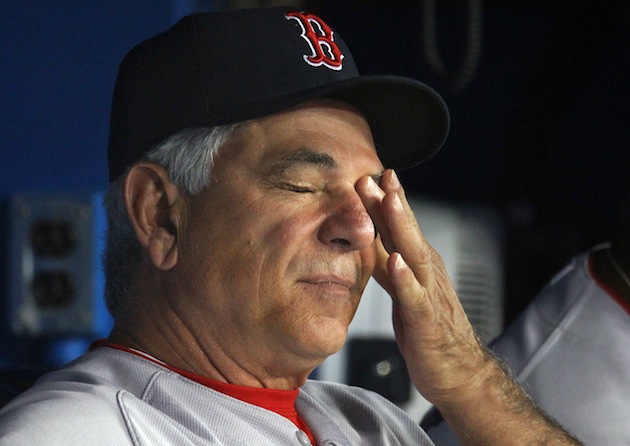
For me, as a Boston Red Sox fan, what befell the Washington Nationals last week stirred unpleasant memories of having my own hopes dashed by the cruel bounces and turns of that little white ball, as it turned my team from sure winners to embarrassed losers faster than you could say”Bucky Dent.” Luckily, as I have explained here, my temporary abandonment of the beloved Hose did not turn me into a Nationals devotee, so I could watch the horrors of the Nats’ ninth inning, decisive game catastrophe, which occurred when they were one strike away from victory and a step closer to their first World Series in 79 years, with analytical detachment. I have consoled my heart-broken friends, and am prepared to help them through the long, hard winter, when visions of “what ifs?”will dance through their heads instead of sugarplums. John Feinstein, the acclaimed sports writer, isn’t helping, however. Continue reading

Ethics Dunces: Atlanta Braves Fans

The Atlanta Braves lost the first ever National league Wild Card play-off game, 6-3, to the St. Louis Cardinals, thanks primarily to their own atrocious fielding (the Braves made three costly errors.) Nonetheless, many fans felt they “wuz robbed” because of a bizarre play in the 8th inning, when the Cardinals were rescued from a bases loaded, one out situation after the game’s left field umpire, Sam Holbrook, apparently feeling that he had to do something to justify being on the field (regular season games don’t have left field umpires), called the infield fly rule on a pop-up that landed safely in the outfield. The infield fly rule is designed to prevent sneaky double plays, and is called when an easy pop-up might be intentionally dropped by an infielder. Thus the ball is an out whether it is caught or not.

There were three problems with the call. First, it was called very late in the play, after it was evident that the Cardinals fielders might not catch it. Second, given its placement, letting the ball drop to try to get a double play really wasn’t an option. And, third, as I noted, the ball landed in the outfield, which an infield fly is not supposed to do. The Braves argued the call, to no avail.

Then the Braves fans at Turner Field, perhaps primed by left-over anger at the NFL’s departed replacement refs, proceeded to act like total jackasses by throwing every piece of junk and debris they could get their hands on down onto the field. Continue reading