Ethics Alarms Recap: A Long Weekend of Ethics

If the long Presidents Day weekend took you hither and yon and away from ethical dilemmas and controversies, welcome back! Here is what went on here in a lively three days:

Tim Wakefield, the Knuckleball, and Character

My favorite baseball player retired a few days ago. Tim Wakefield, a knuckleball specialist who had pitched the last 17 years with my home town Boston Red Sox, finally decided to hang up his spikes at the age of 45. There were several remarkable aspects to his long and successful career (he won 200 games, something the vast majority of major league pitchers never do), not the least of which was throwing the knuckleball almost exclusively, an infamous and rare pitch that is almost as difficult to throw as it is to hit or catch. (Former catcher Bob Uecker famously quipped that the best way to catch a knuckleball was to wait until it stopped rolling, and pick it up.) The most remarkable, however, was the way Wakefield always exhibited exemplary character, on the field and off of it. Continue reading

Ethics Dunce: Dennis “Oil Can” Boyd

Well, I can’t say I’m really very surprised.

And another mystery solved: Why was he called "Oil Can"? Because apparently that's what he has on top of his neck instead of a head.

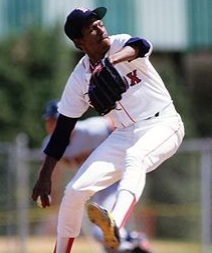
Former Red Sox pitcher Dennis “Oil Can” Boyd, one of my favorite characters when he was active, admitted this week that he was stoked up on cocaine when he pitched more often than not. “Oh yeah, at every ballpark. There wasn’t one ballpark that I probably didn’t stay up all night, until four or five in the morning, and the same thing is still in your system,” Boyd told WBZ NewsRadio 1030’s Jonny Miller in Fort Myers, Florida, where the Red Sox are about to start Spring Training.  “Some of the best games I’ve ever, ever pitched in the major leagues I stayed up all night; I’d say two-thirds of them. If I had went to bed, I would have won 150 ballgames in the time span that I played. I feel like my career was cut short for a lot of reasons, but I wasn’t doing anything that hundreds of ball players weren’t doing at the time; because that’s how I learned it.” Continue reading

Occupy Manny

Sing it, Manny! "You load 16 tons, and what do you get? Another day older and a pro-rated 20 million dollars a year.."

I admit it: Manny Ramirez’s existence is a constant irritant to me. I regard him as epitomizing the worst tendencies of professional sports stars, and the attitudes of the most conscience-free who walk among us who make/ society and the culture a little bit worse every day. I was thrilled when his baseball career came to an appropriately sordid end, with his being caught using performance enhancing drugs and retiring o avoid having to serve his suspension, and nauseated when he announced the end of his retirement a few weeks ago, hoping to lure some addled team owner into paying him a million dollars or so to hit home runs and loaf.

Now, thanks to the research skills of baseball blogger Craig Calcaterra, my morning began by learning that Manny is also akin to the recording stars, Hollywood actors, rich politicians and toadying business executives who have tried to pass themselves off as Occupy Wall Street’s virtuous and harshly exploited 99% despite all reason and evidence to the contrary. In an interview in Spanish, Manny was explaining that he might have to travel to Japan to play ball again, and said,“Somos un obrero y donde quiera que haya trabajo hay que ir a trabajar;” in English: “We are the working class and must go where there is work.”

“Working class!” Continue reading

Albert Pujols: Yes, He’s Disloyal, Greedy, and Confused.

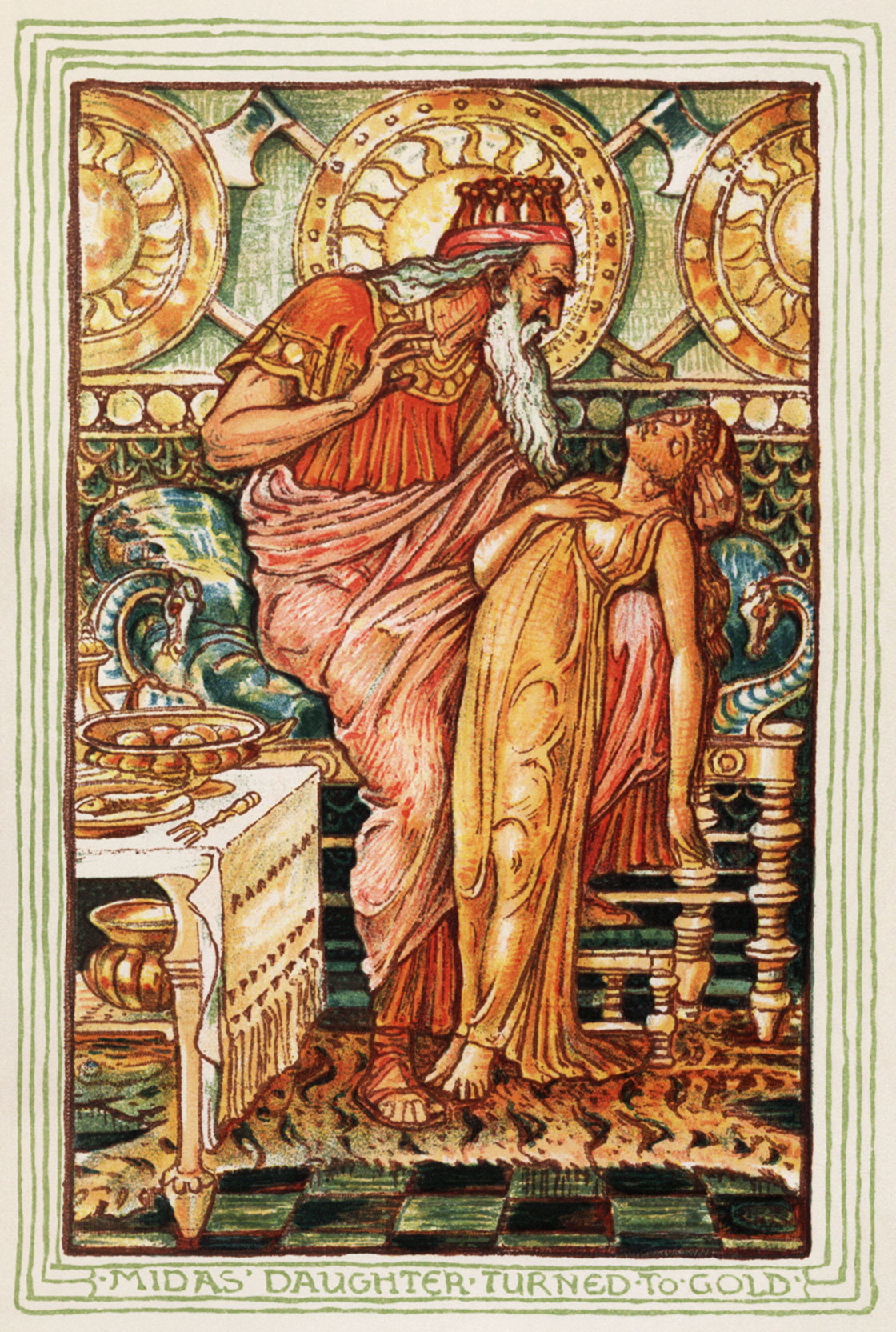
I'm sorry! This was supposed to be a picture of Albert Pujols, not King Midas. Well, six of one, half-dozen of the other...

Cardinal free agent first baseman Albert Pujols, generally regarded as the most talented baseball slugger alive, just jumped from his supposedly beloved St. Louis to the Los Angeles Angels because they offered him several more millions of dollars per year that he couldn’t possible spend if he tried than the Cardinals did. The attitude of most players, fans and sportswriters, not to mention the players’ union (naturally), is “Of course! Who wouldn’t?”

Who wouldn’t? A more ethical, less greedy, more thoughtful human being, that’s who.

The Angels won Pujols with an offer of $254 million dollars for ten years, making him the highest paid player on captivity. The Cardinals. on the other hand, whose fans had cheered him, embraced him and worshipped him, and which had established Pujols as one of the franchise’s icons fit to stand with Stan the Man Musial, Bob Gibson, Dizzy Dean and Lou Brock, had offered a measly $204 million for nine years, or about 23 million a year. The difference between the two offers is minimized, if not eliminated, by the cost of living disparity between the two locales: housing, for example, is about 250% more expensive in LA. Continue reading

Wild Card Ethics and Cultural Expectations

Bad ideas are contagious, especially popular ones.

Major League Baseball just expanded the number of teams that qualify for post-season glory from eight to ten. Yes, there are ethical calculations involved in this, whether baseball cares or not. Supposedly, questions of fairness were part of the reason for the change, though I doubt it—in pro sports, the engine of change is always profit. And whether the change results in more fairness or less depends on what you consider fair—or perhaps whether you are sleeping intents in various U.S. cities.

Sports is such a big part of our cultural consciousness that what the National Pastime calls fair and just cannot help but influence cultural standards. Before 1969, there were two leagues of eight, then ten, Major League teams, and the two teams with the best records in each league met in the World Series. It was a simple meritocracy, with just 10% of the teams being allowed to advance after the regular season. Oh, there was always complaining about how the rich Yankees got into the Series more often than not, while the Senators, Phillies, Astros and A’s never did, but nobody camped out in the middle of Manhattan to protest baseball talent disparity. If you lived in one of the smaller Major League cities you just scaled back expectations, that’s all. And if, by some miracle, you won, then victory was all the sweeter, because you had bucked the odds by being harder working, stronger, better. Continue reading

Now THIS Is An Offensive Team Name

The London, Ontario independent baseball team has decided to rename itself “The London Rippers.”

Jack's last victim: a logo, perhaps?

The city’s mayor has expressed concerns about the name, and good for him. This isn’t a manufactured political correctness complaint, based on the dubious logic that it demeans a group to honor it with an athletic team name. This is the opposite: a team name that honors a serial killer who disemboweled poor women in the slums of London in 1888. Misogyny isn’t cute or funny, and anyone who thinks that making Jack the Ripper a team symbol is anything but one more outrage perpetrated against his pathetic victims but gets indignant over the Atlanta Braves has his head on upside-down and backwards.

Now, I suppose it’s possible that an association of serial killers will protest that the name “London Rippers” dehumanizes them and puts them in the same category with lions, tigers and bears. In such an eventuality, I would side with the associations of lions, tigers and bears protesting that the name denigrates them. Sportswriting lawyer Craig Calcaterra, a sharp baseball mind whose NBC column alerted me to this story, somehow misses the point by a mile, writing:

“…Jack the Ripper did his work, like, 130 years ago. Murder is murder and it’s always awful, but at what point has enough time passed to where this kind of thing isn’t a problem?  And yes, I note the mayor’s nod to ending violence against women, but does a reference to a 19th century British serial killer who is more often fictionalized today than dealt with in his brutal reality really undermine those laudable aims?
I’m not saying it’s 100% fabulous. But really, kids were singing about Lizzie Borden taking an axe and giving her mother 40 whacks within a few years of that going down. Is it really too soon to be able to use a  long-dead historical figure as a mascot? There are a bunch teams called “crusaders” and the crusades were brutal. We still have Chief Wahoo around, and you can make an argument that the thinking behind that mascot (i.e. Indians are somehow less-than-human) represented way more death and destruction than anything Jack the Ripper did.”

Ugh. How many rationalizations are in this passage? Playground chants about Lizzie Borden (or the Black Plague, which is what “Ring around the rosey” is about) are not remotely comparable to naming a community’s baseball team after a serial killer. Playground refrains don’t become part of a community’s identity, and they don’t in any way bestow prestige on the dark subjects of their rhymes. Teams named after crusaders, warriors, braves and pirates don’t aspire to honor the deaths caused by these groups, any more than teams are named the Lions or Tigers because they have mauled people, or the Cardinals and Orioles are so named because the birds poop on our heads. There one reason, and only one, Jack the Ripper is famous. He slit the throats of desperate prostitutes and dissected them,: in the case of Mary Kelly, he minced his victim, leaving her internal organs on her night table. The London Ripper sent body parts of one victim to police, and taunted them. He didn’t possess a single admirable quality to justify a connection to a sports team, unless there are professional misogyny, mayhem or maniac leagues somewhere.

And Craig’s argument that is an expiration date on the offensiveness of trivializing tragedy is the worst of all. Seriously, Craig? So Penn State can call its wrestling team “the Molesters” in 100 years or so? What he’s really endorsing is ignorance. Kids who chant about the bubonic plague don’t realize it, and neither do their parents. That a lot of people don’t know the truth behind all the fictional Jack the Ripper tales is an argument for enlightening them, not pretending that killing prostitutes is just fun and games.

The mayor of London is right, Craig  is wrong, and if there ever was an inappropriate and harmful  team name, the London Rippers is it.

A Commercial Break

The new Hardball Times Baseball Annual 2012 is out today. As usual, publisher Dave Studenmund and his staff have done a terrific job gathering provocative commentary on the baseball season just ended, and have stuffed the book with the fascinating and useful statistics and analysis that makes the Hardball Times website such an enjoyable hang-out for baseball fans.

Dave consented to allowing this year’s Annual to include an essay on some of the important ethics issues that surfaced during the season, and it bears my name as author. I’m proud to be part of such an excellent publication.

If you are a baseball fan, I recommend The Hardball Times Baseball Annual 2012 heartily. You can order it, and many other nifty baseball books,  here.

Now back to our regularly scheduled ethics alarms…

Now THIS Is A Conflict of Interest!

The news is that negotiations between the Boston Red Sox and the Chicago Cubs over what the Cubs will pay the Sox as compensation for nabbing their tarnished boy genius General Manager Theo Epstein are not going smoothly, and no wonder. The situation as it stands is a conflict of interest classic, with no obvious solution. You don’t have to know a thing about baseball to love it: this was designed by the Ethics Gods as an exam question.

Consider: Continue reading

God, Accountability, and Adrian Gonzalez

That bishop move over North America? That's Carl Crawford missing the catch in the 9th inning. God has it all worked out.

Now before you start complaining that this is yet another Red Sox post, let me have my say. Yes, the incident that inspires it relates to the recent event that is slowly driving me to the brink of madness, the collapse of the Boston Red Sox(Go Rays!).  But it is not about baseball.

It is about the misuse of God.

Red Sox Boston Globe beat writer Pete Abraham, interviewed many of the fallen in the Red Sox clubhouse after Wednesday’s final humiliation, to gauge the reactions of the players. He got this response from Adrian Gonzalez, the  superstar first-baseman, who blamed the Boston failure to make the American League play-offs not on the team itself, nor on his own mediocre performance down the stretch, but on the Big Manager in the Sky, who as usual was moving in mysterious ways. Gonzalez told Abraham: Continue reading